Key Takeaways
- Techtronic Industries acquired Ryobi in 2000 and Milwaukee in 2005, but runs them as separate subsidiaries with distinct manufacturing and engineering
- Milwaukee tools carry a 5-year warranty and are often assembled in the US; Ryobi offers 3 years and manufactures primarily in China
- The Ryobi ONE+ ecosystem includes 300+ tools, the largest DIY battery platform, while Milwaukee focuses on trade-specific professional equipment
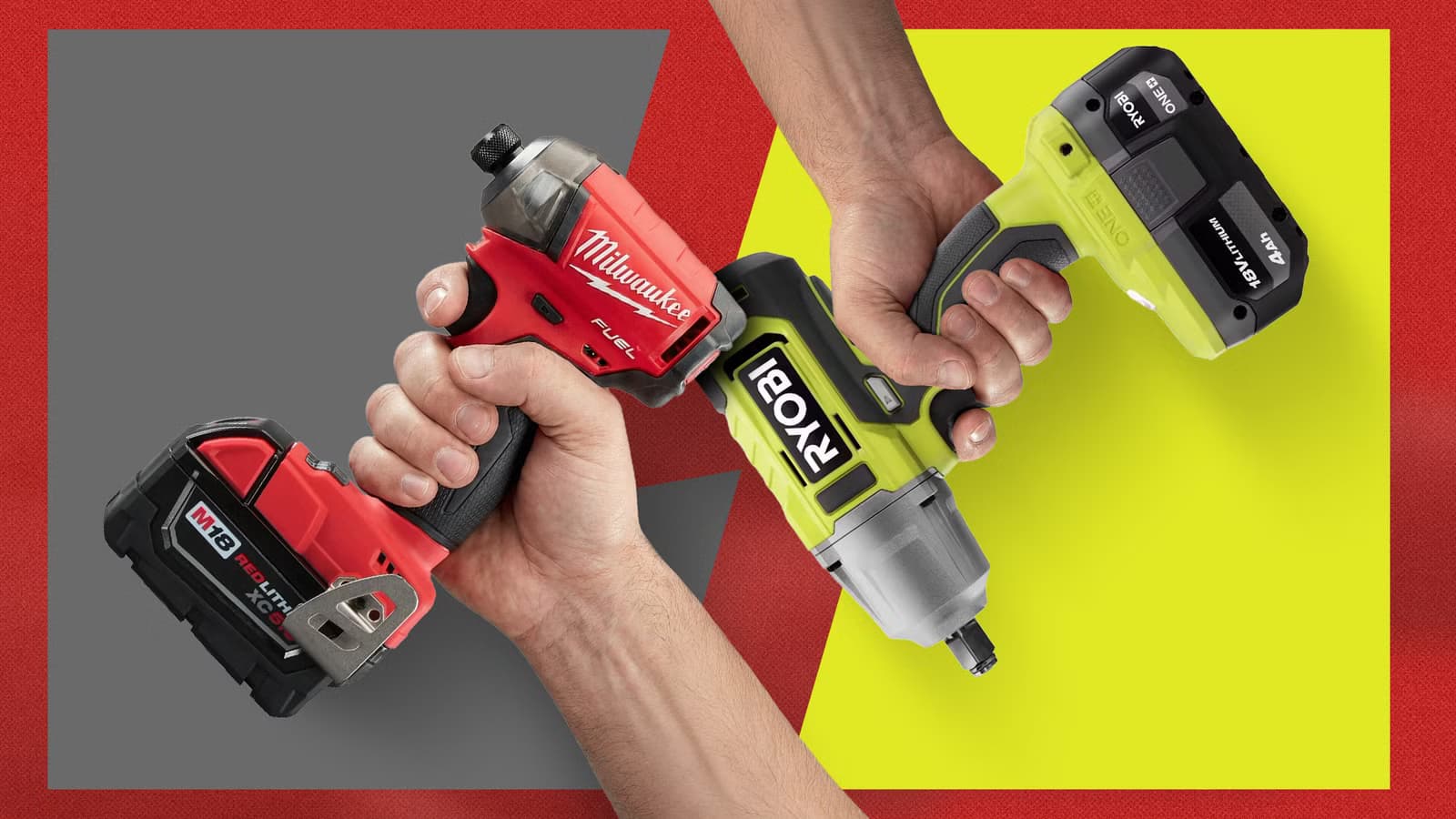
Ryobi and Milwaukee sit on the same shelves at Home Depot. They share a parent company. Online forums repeat the claim that Milwaukee is "just red Ryobi." It's wrong. The two brands operate as separate subsidiaries with different factories, engineering teams, warranty terms, and target customers. Pretending they're identical because Techtronic Industries signs both paychecks misunderstands how corporate tool portfolios work.
Who actually owns Ryobi and Milwaukee?
Techtronic Industries, a Hong Kong-based conglomerate, acquired Ryobi's power tool division in 2000. Five years later, TTI bought Milwaukee Tool. Both brands now fall under the same corporate umbrella, alongside Hoover, Dirt Devil, and several other household names.
But ownership doesn't mean consolidation. Milwaukee Tool still operates out of its headquarters in Brookfield, Wisconsin, with its own R&D, marketing, and product roadmaps. Some Milwaukee tools are assembled in the United States. Ryobi, by contrast, manufactures primarily in China and distributes almost exclusively through Home Depot in North America.
TTI runs roughly half its manufacturing in Hong Kong, with additional facilities across Vietnam, Mexico, Europe, and the US. The corporate structure lets each brand serve a distinct market tier without cannibalizing the other.
Why the price gap is real
Milwaukee drills cost more because they're built for daily professional use. The M18 FUEL line, for example, uses brushless motors engineered for higher torque, longer runtime, and survival on construction sites where tools get dropped, rained on, and run for eight-hour shifts.
Ryobi's ONE+ platform takes the opposite approach. It lowers the barrier to entry. A homeowner drilling a few holes per month doesn't need industrial durability. They need a tool that works, costs under $100, and runs on the same battery as their leaf blower. Ryobi's 18V ONE+ system now includes over 300 tools, the largest DIY battery ecosystem on the market.
Warranty and durability differences
Milwaukee backs its professional tools with a 5-year warranty. Ryobi's consumer line typically carries 3 years. That gap reflects expected use cases. A contractor burning through screws all day puts more stress on a drill in one month than a weekend DIYer does in a year.
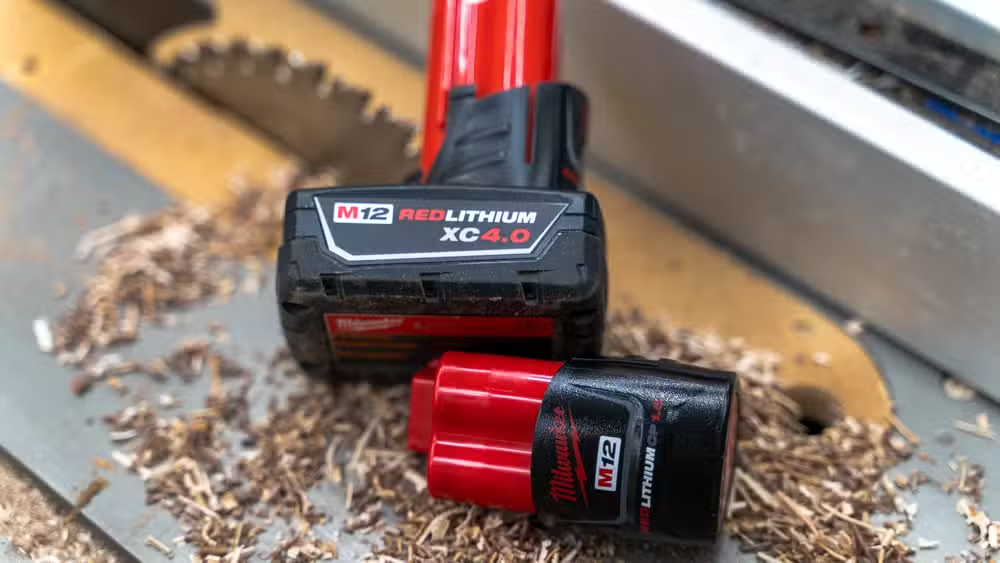
Internal components differ too. Milwaukee's REDLITHIUM batteries include overload protection and temperature management designed for sustained heavy loads. Ryobi batteries work fine for intermittent use but aren't engineered for the same abuse cycle.
The performance debate: do tests back up the price?
YouTube channels like Project Farm and Torque Test Channel have run head-to-head torture tests on Ryobi and Milwaukee tools. The results generally favor Milwaukee on raw power and endurance, but Ryobi often punches above its weight relative to price. A Ryobi drill might deliver 80% of the torque at 40% of the cost.
For professionals, that 20% matters. Electricians, plumbers, and framers need tools that won't quit mid-job. For someone hanging shelves twice a year, overpaying for headroom they'll never use doesn't make sense.
Which one should you actually buy?
The honest answer depends on how you'll use the tool. If you're a professional tradesperson, Milwaukee's durability, warranty, and trade-specific features justify the premium. If you're a homeowner or hobbyist, Ryobi's ecosystem breadth and price point make more sense.
| Factor | Milwaukee | Ryobi |
|---|---|---|
| Target user | Professional tradespeople | DIY and homeowners |
| Warranty | 5 years | 3 years |
| Primary manufacturing | US assembly (some tools) | China |
| Battery ecosystem size | 200+ tools (M18) | 300+ tools (ONE+) |
| Price tier | Premium | Budget to mid-range |
One rule of thumb from contractors: don't bring Ryobi to a production job site. It's not that the tools are bad. They're built for a different cadence of work. Confusing "good enough for me" with "identical product" misses the engineering and market segmentation that separates these brands.
Logicity's Take
TTI's dual-brand strategy is textbook market segmentation, not corner-cutting. Milwaukee and Ryobi don't compete. Milwaukee chases contractor loyalty with rugged specs and trade-specific innovations. Ryobi floods the DIY market with affordable entry points that lock buyers into its battery ecosystem. Both strategies work precisely because the products aren't interchangeable. The real question for buyers: are you building a deck once, or building decks for a living?
Frequently Asked Questions
Are Ryobi and Milwaukee made in the same factory?
No. While both are owned by TTI, they use different manufacturing facilities. Milwaukee assembles some tools in the United States and operates from Wisconsin headquarters. Ryobi manufactures primarily in China.
Can I use Milwaukee batteries in Ryobi tools?
No. The battery platforms are incompatible. Milwaukee uses M12 and M18 systems; Ryobi uses the ONE+ 18V platform. Third-party adapters exist but void warranties and aren't recommended.
Is Milwaukee worth the extra money over Ryobi?
For professionals who use tools daily, yes. Milwaukee's longer warranty, higher durability, and better sustained performance justify the cost. For occasional home use, Ryobi delivers adequate performance at a lower price.
Why does Home Depot sell both Ryobi and Milwaukee?
TTI has distribution agreements with Home Depot for both brands. Ryobi is exclusive to Home Depot in North America. Milwaukee sells through multiple retailers but maintains a strong Home Depot presence.
What's the biggest Ryobi ONE+ advantage over Milwaukee?
Ecosystem size and price. With 300+ compatible tools, Ryobi ONE+ lets budget-conscious buyers use one battery across drills, saws, blowers, and even outdoor equipment at a fraction of Milwaukee's cost.
Need Help Implementing This?
Whether you're outfitting a workshop or standardizing tools across a team, choosing the right platform matters. Reach out to Logicity for guidance on technology and equipment decisions that fit your actual workflow.
Source: How-To Geek
Huma Shazia
Senior AI & Tech Writer
Produced with AI assistance and reviewed by the Logicity editorial team. Learn more in our Editorial Policy.