Key Takeaways
- OnePlus Nord 6 has a 9,000mAh battery (largest in segment) vs Redmi Turbo 5's 7,560mAh
- Redmi Turbo 5 charges faster at 100W compared to Nord 6's 80W
- Nord 6 leads in connectivity with Wi-Fi 7 and Bluetooth 6.0 support
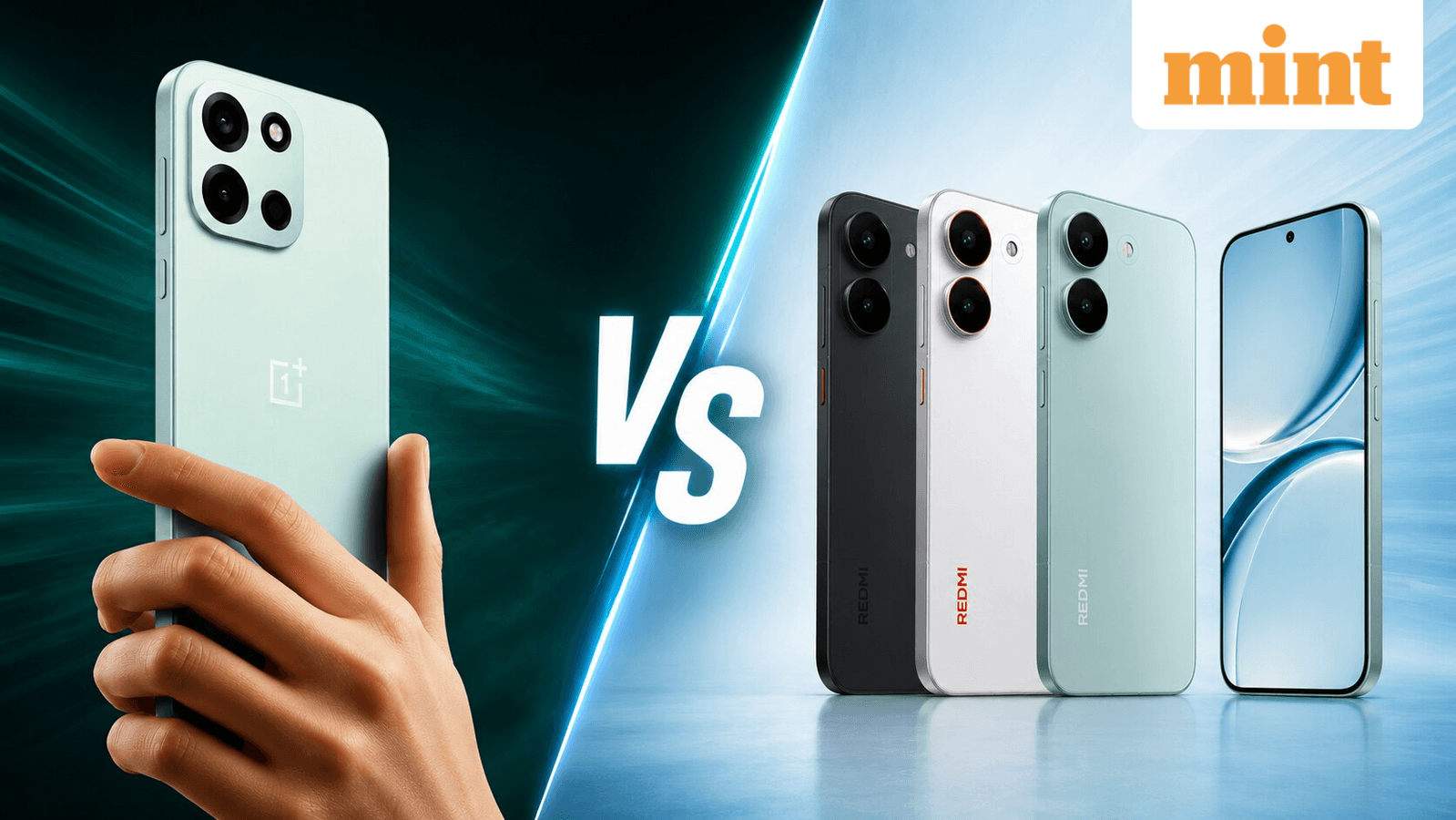
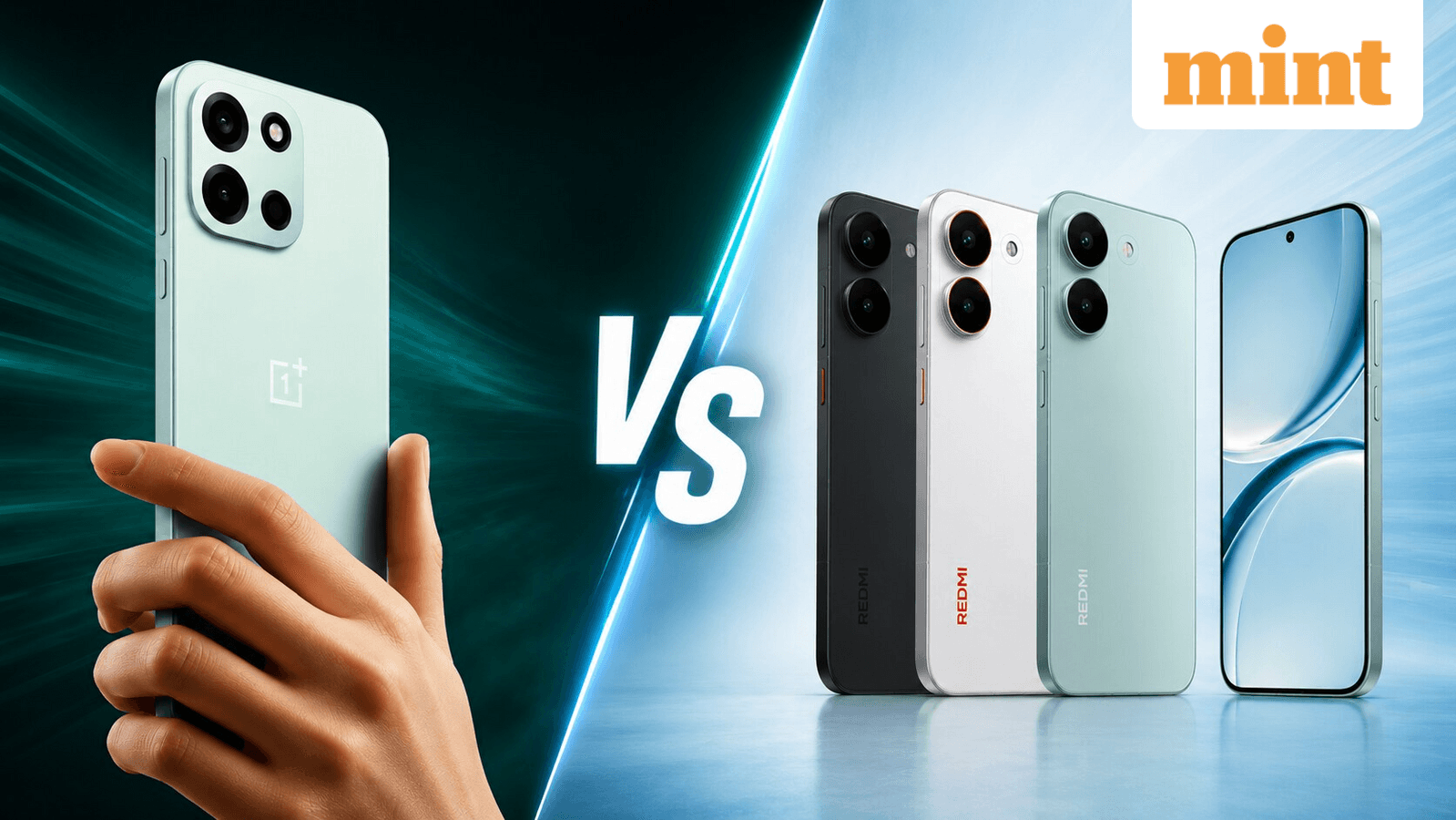
The mid-range gaming phone segment is getting crowded. OnePlus launched the Nord 6 earlier this year, and Xiaomi is preparing to bring the Redmi Turbo 5 to India. While Xiaomi hasn't announced Indian pricing yet, the phone already launched in China. That gives us enough to do a proper head-to-head comparison.
Both phones target the under-₹40,000 segment where buyers want flagship-level gaming without flagship prices. Let's break down where each phone excels and where it falls short.
Display: Size vs Portability
The OnePlus Nord 6 packs a larger 6.78-inch AMOLED panel with a 165Hz refresh rate. That's among the highest in this price range and makes a noticeable difference in fast-paced games. Peak brightness hits 3,600 nits, though the High Brightness Mode (HBM) caps at 1,800 nits on both phones.
The Redmi Turbo 5's display is slightly smaller, but that brings practical advantages. At 204g and 8.18mm thick, it's easier to hold during long gaming sessions. The Nord 6 weighs 217g and measures 8.5mm thick. That 13g difference matters more than you'd think after an hour of BGMI.
Both phones use 1.5K AMOLED panels, so sharpness is comparable. The choice here depends on whether you prioritize screen size and smoothness (Nord 6) or comfortable handling (Turbo 5).
Performance: Snapdragon vs Dimensity
The Nord 6 runs Qualcomm's Snapdragon 8s Gen 4 processor. The Turbo 5 uses MediaTek's Dimensity 8500-Ultra. On paper, both are capable gaming chips, but they take different approaches to power efficiency and sustained performance.
Both phones support LPDDR5X RAM and UFS 4.1 storage, which means fast app launches and quick game loading. Without detailed benchmark testing, it's hard to declare a winner. Real-world gaming performance will likely be similar, though thermal management could differ under sustained load.
Battery and Charging: The Biggest Divide
This is where the phones diverge most. The OnePlus Nord 6 packs a massive 9,000mAh battery. That's the largest we've seen in this segment. OnePlus uses silicon-carbon battery technology to fit this capacity without making the phone unreasonably thick.
The Redmi Turbo 5 opts for a smaller 7,560mAh cell but compensates with faster 100W wired charging. The Nord 6's 80W SuperVOOC is no slouch, but that 20W difference adds up when you need a quick top-up before heading out.
For heavy users who hate carrying a power bank, the Nord 6's endurance is compelling. Reddit users report getting 2.5 days of battery life, though they also complain about the weight. If you're near a charger often, the Turbo 5's faster charging might suit your workflow better.
Camera: Similar Rears, Different Fronts
Both phones share nearly identical rear camera setups: a 50MP primary sensor with OIS and an 8MP ultra-wide lens. For most daylight photography and video, expect comparable results.
The front cameras tell a different story. The Nord 6 gets a 32MP selfie shooter with autofocus and 4K 30fps video recording. That autofocus helps keep your face sharp even when you're not perfectly centered. The Turbo 5's 20MP front camera only supports 1080p video.
If you stream, create content, or just take a lot of video calls, the Nord 6's front camera is clearly superior.
Software and Connectivity
Both phones run Android 16, but with different skins. The Nord 6 uses OxygenOS 16, while the Turbo 5 runs Xiaomi HyperOS 3.
OxygenOS 16 ships with fewer pre-installed apps and no ads (so far). HyperOS 3 has improved significantly, but Xiaomi's software still tends to be busier. This is subjective, but OxygenOS generally gets better marks for clean design.
The Nord 6 also leads in connectivity. It supports Wi-Fi 7 and Bluetooth 6.0. The Turbo 5 is stuck on Wi-Fi 6 and Bluetooth 5.4. For most users today, this won't matter. But if you're buying a phone to use for three years, future-proofing favors the Nord 6.
Design and Build Quality
Here's where community reactions get interesting. The OnePlus Nord 6's plastic frame has drawn criticism on Reddit, with users calling it "cheap-looking" compared to the Turbo 5's metal-and-glass construction.
The Redmi Turbo 5 also features RGB lighting around the camera ring. Gamers love it. Everyone else finds it distracting. Whether this is a feature or a gimmick depends entirely on your aesthetic preferences.
Specs Comparison
| Specification | OnePlus Nord 6 | Redmi Turbo 5 |
|---|---|---|
| Display | 6.78" AMOLED, 165Hz, 3,600 nits peak | Smaller 1.5K AMOLED, 1,800 nits HBM |
| Processor | Snapdragon 8s Gen 4 | Dimensity 8500-Ultra |
| RAM/Storage | LPDDR5X / UFS 4.1 | LPDDR5X / UFS 4.1 |
| Battery | 9,000mAh | 7,560mAh |
| Charging | 80W wired | 100W wired |
| Rear Camera | 50MP OIS + 8MP ultrawide | 50MP OIS + 8MP ultrawide |
| Front Camera | 32MP with autofocus, 4K video | 20MP, 1080p video |
| Connectivity | Wi-Fi 7, Bluetooth 6.0 | Wi-Fi 6, Bluetooth 5.4 |
| Weight | 217g | 204g |
| Software | OxygenOS 16 (Android 16) | HyperOS 3 (Android 16) |
Which Should You Buy?
The OnePlus Nord 6 makes sense if you prioritize battery life, front camera quality, and future-proof connectivity. Its 9,000mAh battery is genuinely category-leading, and the 165Hz display is excellent for gaming.
The Redmi Turbo 5 appeals to users who want a lighter phone with faster charging and a more premium build. The 100W charging and metal-glass construction are genuine advantages.
Neither phone has a clear knockout advantage. Your choice depends on whether you value endurance (Nord 6) or charging speed and portability (Turbo 5).
✅ Pros
- • Nord 6: Largest battery in segment (9,000mAh) with 2.5-day endurance
- • Nord 6: Superior front camera with 4K video and autofocus
- • Nord 6: Future-proof Wi-Fi 7 and Bluetooth 6.0 support
- • Turbo 5: Faster 100W charging vs 80W
- • Turbo 5: Lighter at 204g with premium metal-glass build
❌ Cons
- • Nord 6: Heavier at 217g, plastic frame criticized as cheap
- • Nord 6: Slower charging at 80W
- • Turbo 5: Smaller battery (7,560mAh)
- • Turbo 5: Weaker front camera (20MP, 1080p only)
- • Turbo 5: Older Wi-Fi 6 and Bluetooth 5.4
Logicity's Take
More on smartphone pricing debates in the Indian market
Current smartphone deals if you're shopping now
Frequently Asked Questions
When will Redmi Turbo 5 launch in India?
Xiaomi has not announced an official India launch date yet. The phone is already available in China, so an India release is expected soon.
Which phone has better battery life: Redmi Turbo 5 or OnePlus Nord 6?
The OnePlus Nord 6 has a larger 9,000mAh battery compared to the Redmi Turbo 5's 7,560mAh. Users report 2.5 days of battery life on the Nord 6.
Is the OnePlus Nord 6 good for gaming?
Yes. The Nord 6 features a 165Hz display, Snapdragon 8s Gen 4 processor, and a massive battery. It's well-suited for extended gaming sessions.
Which phone charges faster: Redmi Turbo 5 or OnePlus Nord 6?
The Redmi Turbo 5 supports 100W wired charging, which is faster than the OnePlus Nord 6's 80W SuperVOOC charging.
Does the Redmi Turbo 5 have RGB lighting?
Yes. The Redmi Turbo 5 features RGB lighting around its camera ring, which is popular with gaming-focused users.
Need Help Implementing This?
Source: mint / Aman Gupta
Manaal Khan
Tech & Innovation Writer
Produced with AI assistance and reviewed by the Logicity editorial team. Learn more in our Editorial Policy.