Key Takeaways
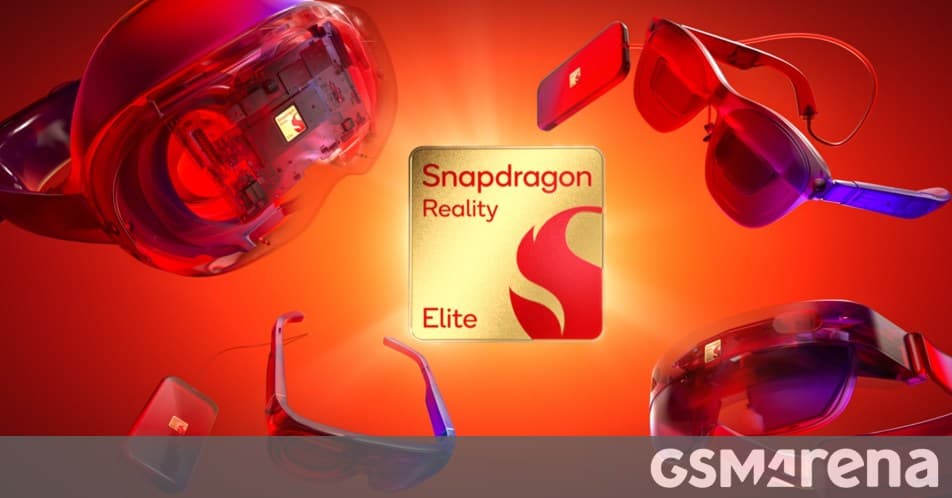
- Snapdragon Reality Elite delivers 48 TOPS of AI processing for on-device LLMs and vision models
- Performance jumps include 160% NPU gains, 60% GPU boost, and 30% faster CPU over XR2+ Gen 2
- XREAL's Project Aura will be the first device to ship with the new platform later this year
Qualcomm has unveiled the Snapdragon Reality Elite, its next-generation XR platform built around a 48 TOPS neural processing unit. The chip targets both standalone video-see-through headsets and lightweight tethered optical-see-through glasses, with the first commercial device, XREAL's Project Aura, expected to ship later this year.
The company positions the platform as a deliberate pivot toward on-device generative AI. Running large language models and large vision models locally, rather than offloading them to the cloud, cuts latency and keeps user data on the headset. That tradeoff matters for enterprise and consumer adoption alike. Nobody wants their living room scanned and sent to a remote server.
What performance gains does the chip deliver?
Compared to the Snapdragon XR2+ Gen 2, Qualcomm claims the Reality Elite offers 30% higher CPU throughput, 60% higher GPU performance, and a 160% jump in NPU capability. The display pipeline supports 4.4K resolution per eye at 90 frames per second, which should reduce the screen-door effect that still plagues lower-resolution headsets.
Qualcomm also touts improvements to video-see-through latency and color fidelity. The company credits an IP block called EVA, which provides hardware acceleration for computer vision tasks. Reducing the lag between what a camera sees and what the display renders is critical for mixed reality; even small delays make digital objects feel disconnected from the physical world.
How does it address the overheating problem?
Thermal management has been a persistent headache for standalone XR devices. A hot headset pressed against your face is uncomfortable at best, and it throttles performance at worst. Qualcomm says the Reality Elite runs up to 12°C cooler under load and delivers 20% longer battery life at identical workloads, optimizations spread across the CPU, GPU, and NPU.
Online communities have responded positively to that claim. Discussions on r/virtualreality and Hacker News highlighted thermal improvements as the most exciting announcement, with users hoping this finally enables lightweight glasses comfortable enough for all-day wear.
Which devices will ship with Snapdragon Reality Elite?
XREAL's Project Aura is confirmed as the launch vehicle. Play for Dream, a less well-known OEM, will also use the platform in upcoming devices. Qualcomm cited 60 million XR devices already in market, though it did not break down how many are consumer versus enterprise. The broader message: demand exists, and manufacturers need higher-performance silicon to meet it.
Amon's language is bold. Whether the chip lives up to "foundational shift" depends on whether OEMs can translate these specs into devices people actually buy. The Quest 3 proved consumers will pay for standalone mixed reality if the price and experience are right. Apple's Vision Pro showed they won't if the price is wrong, even with superior optics.
What does 48 TOPS of AI processing enable?
Qualcomm says the NPU supports advanced AI models including LLMs and LVMs directly on the headset. Practical applications include voice assistants that respond without cloud round-trips, real-time object recognition, and what enthusiasts are calling "spatial genAI," the ability to generate or manipulate 3D content based on natural language prompts.
The skeptic's question is whether 48 TOPS is enough. Running a useful LLM locally requires aggressive quantization, and even then, responses may lag behind cloud-hosted models. Still, for latency-sensitive tasks, like hand tracking or scene understanding, local inference wins.
Context on the chip fabrication landscape shaping next-gen silicon
What's the strategic significance of the rebrand?
The shift from "Snapdragon XR" to "Snapdragon Reality Elite" is not just marketing. It signals Qualcomm's intent to define a premium tier for spatial computing, much as it did with the Snapdragon 8 Elite for smartphones. The naming convention also distances the platform from the VR-centric "XR" label, leaning into mixed reality and optical see-through glasses, the form factors with the clearest path to mainstream adoption.
Ziad Asghar, Qualcomm's SVP for XR and wearables, emphasized building "purpose-built XR chipsets from the ground up." That's a shot at competitors using repurposed mobile silicon. Whether purpose-built architecture translates to a perceptible user experience advantage remains to be seen in shipping hardware.
Related coverage on display technology tradeoffs in consumer electronics
Logicity's Take
Qualcomm is betting that local AI processing, not cloud tethering, will define the next wave of XR devices. That bet aligns with privacy-conscious markets like Europe and enterprise use cases where data cannot leave the device. The real test comes when XREAL ships Project Aura: if the 12°C thermal reduction holds in practice, Qualcomm will have solved the problem that makes current headsets sweaty and uncomfortable. If it doesn't, the spec sheet is just noise.
Frequently Asked Questions
When will devices with Snapdragon Reality Elite be available?
XREAL's Project Aura is confirmed for later this year, with Play for Dream also planning devices using the platform.
How much faster is Snapdragon Reality Elite than the previous generation?
Qualcomm claims 30% faster CPU, 60% faster GPU, and 160% faster NPU compared to the Snapdragon XR2+ Gen 2.
What resolution does Snapdragon Reality Elite support?
The platform supports up to 4.4K per eye at 90 frames per second.
Can Snapdragon Reality Elite run large language models locally?
Yes, the 48 TOPS NPU is designed to run LLMs and large vision models on-device without cloud connectivity.
Does the chip support both standalone and tethered headsets?
It powers both all-in-one video-see-through headsets and lightweight tethered optical-see-through devices.
Need Help Implementing This?
If you're building XR applications or evaluating spatial computing platforms for enterprise deployment, Logicity's consulting partners can help you navigate hardware selection and integration. Contact us for introductions to specialists in AR/MR development.
Source: GSMArena.com / Sagar
Manaal Khan
Tech & Innovation Writer
Produced with AI assistance and reviewed by the Logicity editorial team. Learn more in our Editorial Policy.