Key Takeaways
- Amazon's content curation balances nostalgia titles with award winners to serve multiple audience segments
- Streaming platforms use psychological thrillers and action films strategically to maximize watch time metrics
- Oscar-nominated content like American Fiction signals prestige positioning that justifies subscription costs
According to [How-To Geek](https://www.howtogeek.com/prime-video-movies-watch-this-week-april-20/), Amazon Prime Video's April 2026 lineup features five carefully selected films designed to deliver emotional impact and long-lasting viewer engagement, from Robin Williams comedies to Oscar-nominated satire.
Here's what business leaders miss when they scroll past streaming recommendations: Amazon isn't just suggesting movies. They're executing a retention strategy worth studying. Prime Video's weekly curation tells you exactly how the company thinks about subscriber churn, content licensing ROI, and audience segmentation. This week's five picks aren't random. They're a masterclass in content strategy.
What Does Prime Video's Content Strategy Reveal About Retention?
The five films Amazon highlighted this week aren't accidental. They represent distinct audience segments that streaming services fight to keep engaged. Let's break down the business logic behind each pick.
Robin Williams' classic comedy targets the nostalgia segment, viewers aged 35-55 who associate the platform with comfort content. This demographic has the highest household income but also the highest churn risk when they feel the catalog doesn't speak to them. A single well-timed recommendation can extend a subscription by months.
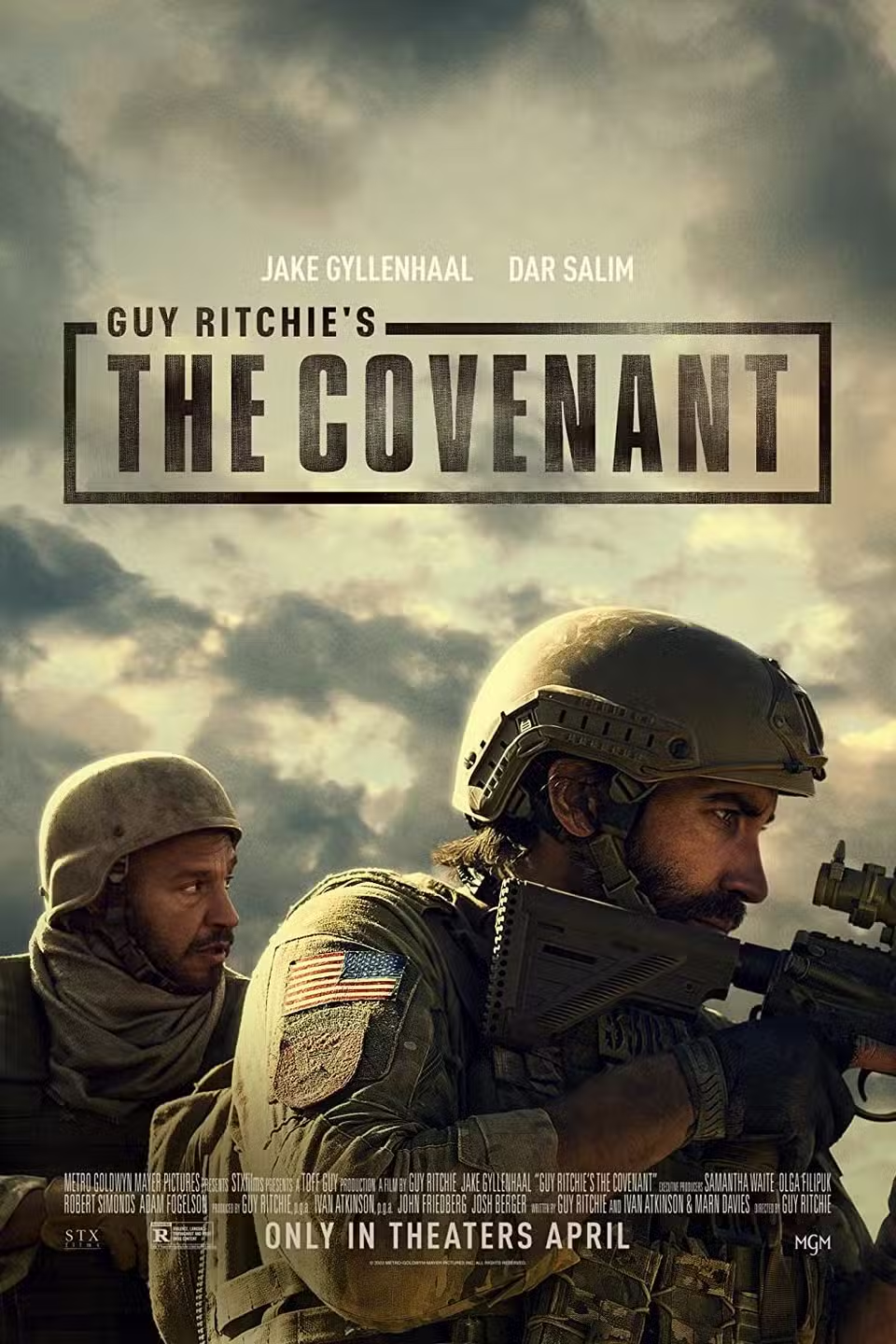
Guy Ritchie's war thriller serves the action-hungry audience that drives watch-time metrics. These viewers consume content faster but engage more frequently. They're the ones who'll watch three films in a weekend, boosting Amazon's internal engagement scores that inform content acquisition decisions.

Executive Summary
Amazon's content curation strategy balances four key metrics: subscriber retention through nostalgia, watch-time through action content, prestige positioning through award winners, and discovery through genre variety. Business leaders can apply the same segmentation thinking to their own content and product strategies.
How Do Streaming Platforms Use Award-Winning Films for Positioning?
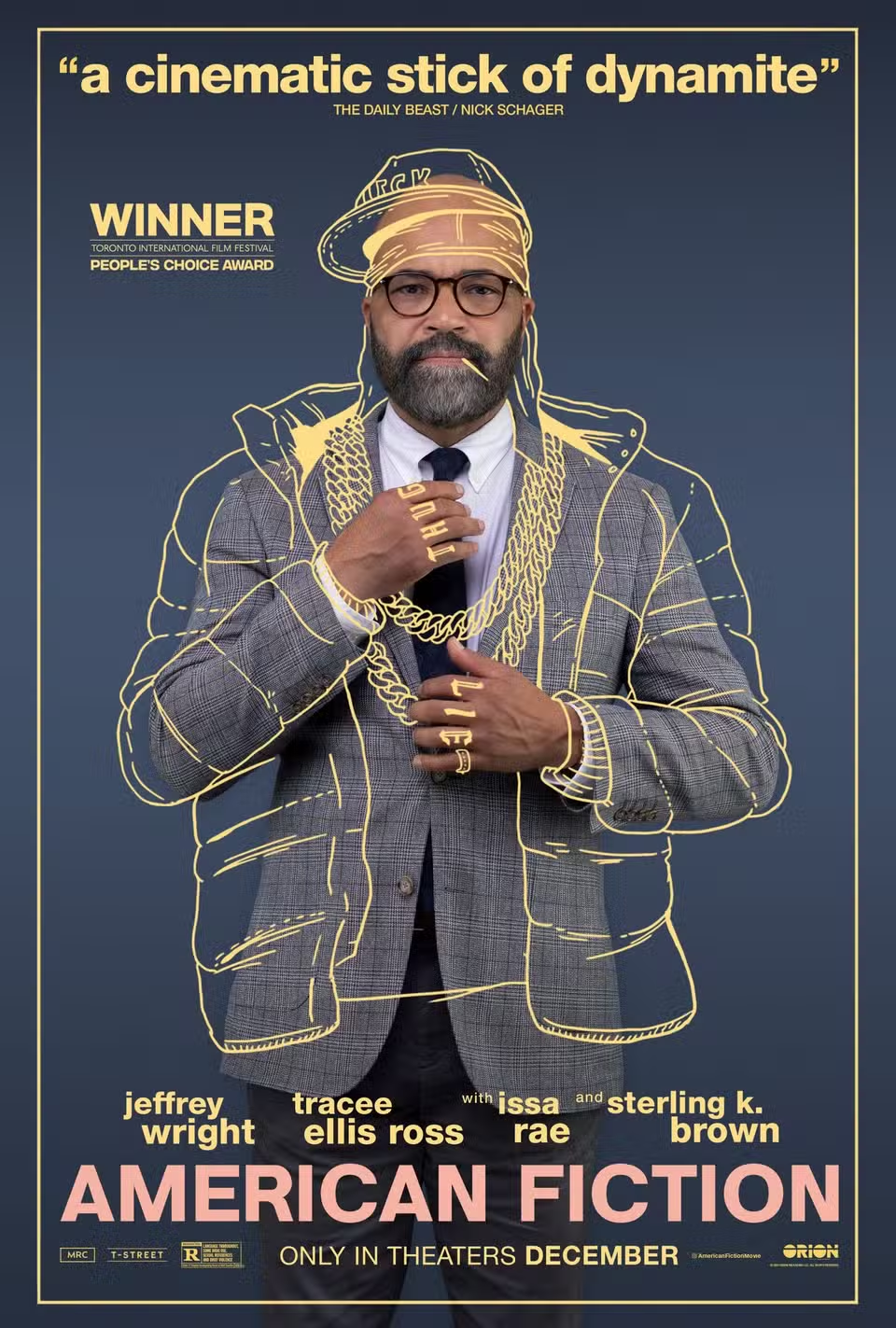
American Fiction, the 2023 Oscar-nominated dramedy with a 93% Rotten Tomatoes score, isn't just good content. It's a positioning tool. When Prime Video promotes prestige films, they're telling subscribers their $14.99/month buys access to the same quality they'd find at an art house cinema.
This matters for any business selling subscriptions. The perceived value of your offering isn't just about quantity. It's about whether customers feel they're getting something special. One prestige title can justify an entire catalog in a subscriber's mind.
The film's satirical take on pop culture and literary stereotypes also serves a specific audience: educated professionals who want content that makes them think. These subscribers have the lowest churn rates because they see the platform as part of their identity, not just a utility.
Deep dive into how streaming platforms plan quarterly content drops for maximum business impact
Why Does Amazon Mix Psychological Thrillers with Action Films?
David Fincher's The Game (1997) and Jet Li's martial arts showcase represent two different engagement strategies. Psychological thrillers keep viewers glued to screens because they demand attention. Miss five minutes and you've lost the plot. This drives completion rates, a key metric for content performance.
Action films serve a different purpose. They're perfect background content that still registers as a "watched" title. Viewers might have them on while cooking or working out. Either way, Amazon counts it as engagement. Smart content strategists understand that not every piece needs deep attention to deliver value.
| Content Type | Primary Metric | Audience Segment | Churn Impact |
|---|---|---|---|
| Nostalgia Comedy | Retention | 35-55 age group | High reduction |
| Psychological Thriller | Completion rate | Engaged viewers | Medium reduction |
| Action/Martial Arts | Watch time | Casual viewers | Low but consistent |
| Oscar-Nominated Drama | Perceived value | Educated professionals | Highest reduction |
| Director-Driven Content | Discovery | Film enthusiasts | Medium reduction |
What Can CTOs Learn from Streaming Content Architecture?
Behind every recommendation is infrastructure. Amazon's ability to surface the right content to the right viewer at the right moment requires real-time data processing at scale. The technical decisions that enable this curation strategy are worth understanding for any technology leader.
Prime Video's recommendation engine processes viewing history, pause patterns, rewind behavior, and even time-of-day preferences. This isn't just machine learning for its own sake. Every algorithmic improvement translates directly to subscriber retention dollars.
For CTOs evaluating their own recommendation or personalization systems, the lesson is clear: the technology investment only makes sense when tied to measurable business outcomes. Amazon doesn't build better algorithms because they're interesting. They build them because each percentage point of improved retention represents millions in annual revenue.
Understanding infrastructure dependencies when building recommendation systems
How Should Leaders Think About Content ROI in 2026?
The streaming wars have forced platforms to get ruthless about content ROI. Every film in this week's Prime Video lineup represents a licensing decision that someone had to justify with numbers. The era of throwing money at content libraries is over.
Classic films like The Game cost relatively little to license compared to new releases, but they deliver consistent viewership year after year. This is the content equivalent of investing in dividend stocks versus growth stocks. Boring, reliable, and profitable.
For business leaders managing any kind of content library, whether it's training materials, documentation, or customer resources, the principle applies. Your best-performing evergreen content often costs a fraction of new production but delivers comparable engagement.
What Does Curation Quality Signal About Platform Health?
When a streaming platform's weekly picks feel thoughtful rather than random, it signals organizational health. Someone with taste and business acumen is making decisions. When picks feel like algorithm soup, it often indicates internal chaos or over-reliance on automation.
Prime Video's April 2026 selections show intentionality. The mix of decades (1990s through 2023), genres (comedy, thriller, action, drama), and audience segments suggests a human editorial layer working alongside algorithmic recommendations. This hybrid approach tends to outperform pure automation.
- Robin Williams comedy targets nostalgia-driven retention
- Guy Ritchie war film serves action-hungry watch-time metrics
- Jet Li martial arts appeals to international and action crossover audiences
- American Fiction provides prestige positioning and critical credibility
- The Game offers psychological thriller engagement for dedicated viewers
Logicity's Take
From our perspective building recommendation systems and content platforms for startups, Amazon's curation approach validates what we've seen in practice: human editorial judgment plus algorithmic surfacing beats either approach alone. We've helped clients in the Indian market implement similar hybrid content strategies using Next.js frontends with headless CMS backends like Sanity. The technical architecture matters less than the strategic clarity. What Amazon does brilliantly is tie every content decision to a measurable retention metric. For Indian tech businesses watching the streaming wars, the takeaway isn't to copy Amazon's scale. It's to copy their discipline. Every piece of content you create or curate should answer the question: which specific audience segment does this serve, and how will we know if it worked? We've seen startups waste months on content that felt right but wasn't tied to any retention or engagement KPI. Amazon's weekly picks prove that even entertainment giants obsess over this alignment.
Prime Video Strategy: Key Business Lessons
- Segment your audience and serve each segment intentionally, not accidentally
- Balance cost-efficient catalog content with prestige positioning pieces
- Tie every content decision to a measurable retention or engagement metric
- Use human editorial judgment alongside algorithmic recommendations
- Understand that perceived value matters as much as actual volume
Frequently Asked Questions
How much does Prime Video spend on content licensing?
Amazon's estimated content spending reached $16.9 billion in 2025, though the company doesn't break out licensing costs separately from original production. Classic catalog films like those featured this week typically cost significantly less to license than new theatrical releases, often 40-60% less.
Is streaming content curation worth the investment for smaller platforms?
Yes, but scale appropriately. Human editorial curation becomes cost-effective once your library exceeds roughly 500 titles. Below that, automated recommendations based on viewing history provide 80% of the benefit at 20% of the cost. The key is tying curation to measurable retention metrics.
How do streaming platforms measure content ROI?
Primary metrics include cost-per-view (licensing cost divided by total views), retention impact (whether viewers who watch specific content stay subscribed longer), and completion rates. Sophisticated platforms also track downstream engagement, measuring whether one title leads viewers to watch additional content.
What technology powers streaming recommendation engines?
Most major platforms use collaborative filtering combined with content-based recommendations. Amazon specifically uses deep learning models that process viewing patterns, pause behavior, time-of-day preferences, and device usage. The infrastructure requires real-time data processing capabilities and significant compute resources.
How can non-streaming businesses apply these content strategy lessons?
Any subscription business can apply these principles. Segment your customers, create content that serves each segment's specific needs, measure which content drives retention, and balance evergreen material with fresh prestige pieces. The streaming playbook works for SaaS documentation, training libraries, and customer education programs.
Another example of platform strategy decisions that impact long-term business positioning
Need Help Implementing This?
Logicity builds recommendation systems, content platforms, and retention-focused web applications for startups and growing businesses. If you're thinking about content strategy, audience segmentation, or personalization infrastructure, we'd love to talk. Our team has shipped similar systems using Next.js, Sanity CMS, and AI-powered recommendation engines. Reach out to discuss how these streaming industry lessons apply to your specific business challenges.
Source: How-To Geek
Huma Shazia
Senior AI & Tech Writer
Produced with AI assistance and reviewed by the Logicity editorial team. Learn more in our Editorial Policy.