Key Takeaways
- Pathfinder will carry terrestrial data centre-class GPUs, not the low-power edge processors typical of current satellites
- Sarvam's AI models will run onboard, processing hyperspectral data in real time without sending raw imagery to Earth
- Pixxel's new Gigapixxel facility can produce 100 satellite units and will design the Pathfinder
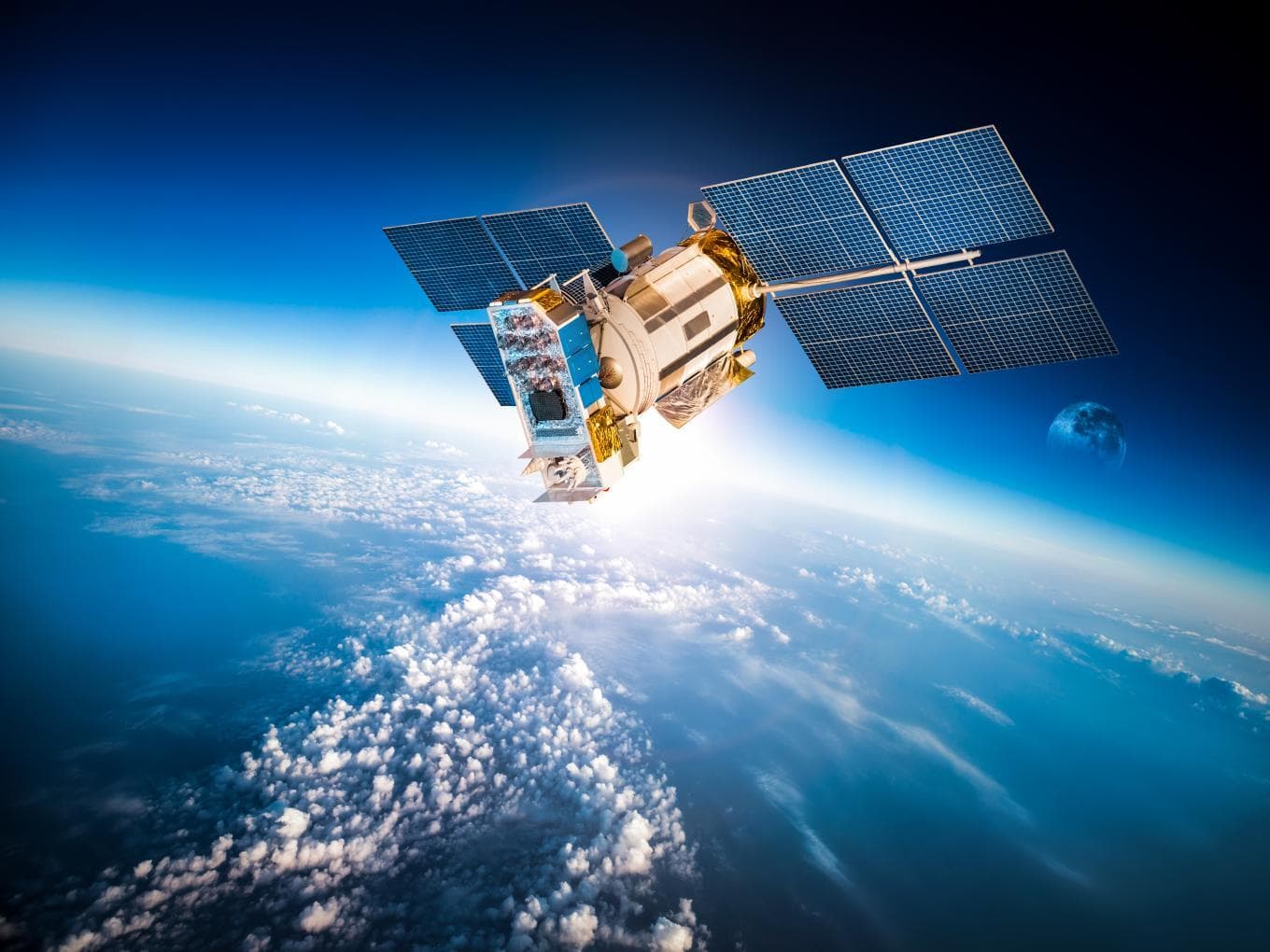
Pixxel, the Google-backed spacetech startup, will launch India's first orbital data centre satellite in the last quarter of 2026. The 200-kg satellite, named Pathfinder, will carry full data centre-class GPUs rather than the low-power edge processors found on most orbital computing platforms today.
The startup has partnered with AI company Sarvam to build the satellite. Pixxel will handle design, launch, and operations. Sarvam will run its AI training and inference stack directly onboard.
Why Build a Data Centre in Space?
Ground-based data centres are running into hard limits. They need more land, more energy, and face tighter environmental regulations. Pixxel CEO Awais Ahmed sees orbital infrastructure as a way around those constraints.
“Ground-based data centres are facing increasing constraints around energy, land, regulation, and scale, and the current model is becoming harder to sustain environmentally. Orbital data centres open up a new frontier, where compute can be powered by abundant solar energy, operate closer to space-based data, and move beyond some of the limits faced on Earth.”
— Awais Ahmed, Pixxel cofounder and CEO
The logic is straightforward. Satellites already collect vast amounts of imagery. Sending all of it back to Earth for processing creates delays. If you put the compute where the data is captured, you skip that bottleneck.
What Pathfinder Will Carry
Pathfinder will include two main payloads. First, Pixxel's hyperspectral imaging camera, which captures data across hundreds of spectral bands rather than the standard red-green-blue of conventional cameras. Second, Sarvam's full-stack language models running on the satellite's GPU layer.
The combination allows the satellite to capture high-fidelity hyperspectral data and analyse it immediately. Sarvam's foundation models will identify patterns, detect changes, and generate insights in real time. No waiting for ground station passes or data download queues.
Pixxel says the entire value chain stays within India. The satellite is designed and built domestically. The AI models are Indian. The compute happens in orbit.
Gigapixxel: The Manufacturing Backbone
Before Pathfinder launches, Pixxel will open Gigapixxel, a manufacturing facility designed to produce up to 100 satellite units. Pathfinder will be the first satellite designed at this facility.
The facility signals Pixxel's shift from building individual satellites to establishing a production line. That capacity matters if orbital data centres prove commercially viable and demand scales.
Target Customers
Pixxel and Sarvam are targeting organisations with compute-intensive needs that might benefit from orbital deployment. The companies mention strategic and commercial applications but don't name specific customers yet.
Potential use cases include environmental monitoring, resource management, and any earth observation task where speed matters. A mining company tracking deforestation, a government agency monitoring flood damage, or an agricultural firm assessing crop health could all benefit from real-time orbital analysis.
Technical Gamble
Putting data centre-class GPUs in orbit is not trivial. GPUs generate heat. Heat dissipation in a vacuum is harder than on Earth. Power requirements are substantial even with solar panels. And if something breaks, you cannot send a technician.
Pixxel is betting that the advantages outweigh these engineering challenges. The payoff is real-time analysis without the latency, bandwidth costs, or ground infrastructure of traditional satellite operations.


Logicity's Take
This is an ambitious bet on space-based compute at a time when AI workloads are crushing terrestrial data centre capacity. Pixxel and Sarvam are not the only ones eyeing orbital infrastructure, but they may be the first to ship something real. The Q4 2026 timeline is aggressive. If they hit it, India gets a meaningful lead in a category that barely exists yet.
Frequently Asked Questions
When will India's first orbital data centre satellite launch?
Pixxel plans to launch Pathfinder in Q4 2026.
What makes Pathfinder different from existing satellites?
It will carry terrestrial data centre-class GPUs instead of low-power edge processors, enabling full AI inference in orbit.
Who is building the AI models for Pathfinder?
Sarvam, an Indian AI startup, will provide the full-stack language models that will run onboard the satellite.
What is Gigapixxel?
Gigapixxel is Pixxel's upcoming manufacturing facility with capacity to produce 100 satellite units. Pathfinder will be designed there.
What are the use cases for orbital data centres?
Environmental monitoring, resource management, and any earth observation application where real-time analysis matters more than waiting for ground-based processing.
Need Help Implementing This?
If your organisation is evaluating space-based infrastructure, AI-driven earth observation, or compute-intensive satellite applications, we can help you understand the landscape. Reach out to Logicity for analysis tailored to your technical and strategic needs.
Source: Inc42 Media / Anjali Jain
Huma Shazia
Senior AI & Tech Writer
Produced with AI assistance and reviewed by the Logicity editorial team. Learn more in our Editorial Policy.