Key Takeaways
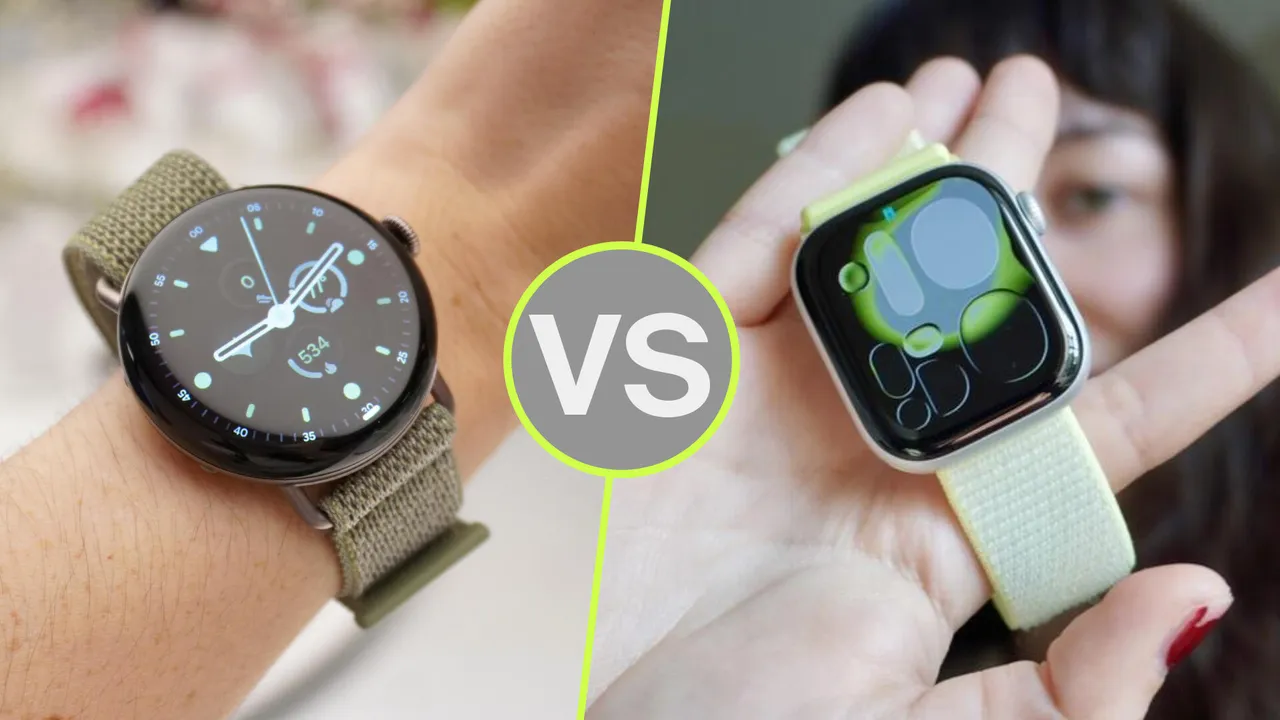
Apple Watch vs Pixel Watch : Can Pixel Watch Replace Apple Watch?
- Both smartwatches start at $399, but the Pixel Watch 5 has a brighter 3,000-nit display versus the Apple Watch's 2,000 nits
- Pixel Watch 5 introduces blood-free insulin resistance tracking, a feature Apple lacks entirely
- Apple Watch 11 remains the only option for iPhone users, while Pixel Watch 5 pairs exclusively with Android
Google's Pixel Watch 5 and Apple's Watch Series 11 both retail for $399, putting them in direct competition for the first time at identical price points. The Pixel Watch 5 brings blood pressure and insulin resistance tracking to the table, while Apple doubles down on its established health ecosystem. For anyone shopping for a premium smartwatch this fall, the choice hinges on your phone, your health priorities, and how much you value AI assistance on your wrist.
| Specification | Google Pixel Watch 5 | Apple Watch Series 11 |
|---|---|---|
| Price | $399 | $399 |
| Sizes | 41mm / 45mm | 42mm / 46mm |
| Peak brightness | 3,000 nits | 2,000 nits |
| Processor | Snapdragon W5 Gen 2 Accelerated | S10 chip |
| Storage | 64GB | 64GB |
| Satellite connectivity | Yes (with LTE) | Yes (with LTE) |
| Battery | 325mAh / 465mAh | 327mAh / 363mAh |
| Insulin resistance tracking | Yes | No |
| Blood pressure monitoring | Yes | No |
Where the Pixel Watch 5 pulls ahead
Google's biggest advantage is health tracking that Apple simply does not offer. The Pixel Watch 5 can monitor insulin resistance trends without requiring a blood sample. Passive sensors on the wrist track monthly shifts in metabolic health, and if the watch detects sustained elevated levels, it sends an alert prompting you to check your routines.
This is not a gimmick. Insulin resistance is a precursor to Type 2 diabetes, and catching it early can meaningfully change outcomes. Apple has been rumored to be working on glucose monitoring for years, but the Watch Series 11 ships without it.
Deep dive into Google's new health sensors
The display is another clear win. At 3,000 nits peak brightness, the Pixel Watch 5 outshines the Apple Watch 11's 2,000 nits by 50 percent. In daily indoor use, you will not notice the difference. On a sunny trail run or cycling through midday glare, you will.
Design choices matter too. The Pixel Watch 5 ships in four colors, Obsidian, Fog, Olive, and Canyon, with the Olive model featuring a new Satin Pyrite casing. Google has carved out a more fashion-forward identity for its wearable, while Apple's design language has remained largely static since Series 7.
Where the Apple Watch 11 holds its ground
Apple's edge is ecosystem lock-in, and that is not a criticism. If you own an iPhone, the Pixel Watch 5 is not an option. Google's wearable requires an Android phone with Google Play Services. Apple Watch, conversely, will not pair with Android. The choice is made for you.
For iPhone users who accept that constraint, the Apple Watch 11 delivers a mature, tightly integrated experience. iMessage notifications, Apple Pay, the Fitness+ subscription, and seamless handoffs to other Apple devices all work exactly as expected. Third-party app support on watchOS remains broader than on Wear OS, though the gap is narrowing.
The S10 chip is Apple's latest silicon for wearables, and while Google's Snapdragon W5 Gen 2 Accelerated is competitive, Apple's vertical integration tends to produce smoother animations and longer software support. Apple typically supports its watches for five to six years. Google has not matched that track record yet.
AI and software: two different philosophies
Google pairs the Pixel Watch 5 with Gemini Intelligence and a feature called Google Health Coach. The idea is proactive, personalized nudges, not just data collection but suggestions based on your patterns. ZDNET's Nina Raemont described the distinction last year: the Apple Watch is a health tracker first, while the Pixel Watch is "an AI smartwatch that just so happens to have advanced health-tracking capabilities."
That framing holds for the new generation. Apple's Siri on the wrist remains limited compared to what Gemini can do with context. If you want your smartwatch to remind you to hydrate based on your sleep quality and upcoming calendar, Google is ahead. If you want a reliable, no-surprises fitness companion that syncs perfectly with your iPhone, Apple wins.
How AI defines Google's 2026 hardware strategy
Battery and sizing
Battery specs are closer than they look. The larger Pixel Watch 5 (45mm) packs a 465mAh cell versus the Apple Watch 11's 363mAh in its 46mm variant. Google needed more capacity because Wear OS historically consumes more power than watchOS. Real-world endurance testing will reveal whether that larger battery translates to longer runtime or merely parity.
Size options are nearly identical. Google offers 41mm and 45mm; Apple offers 42mm and 46mm. Both companies include satellite connectivity on LTE models, useful for backcountry emergencies.
Logicity's Take
Google is no longer building a cheaper Apple Watch alternative. At the same $399 price, the Pixel Watch 5 competes on features, not value. For Android users, the insulin resistance tracking alone could justify the purchase, a genuinely novel health capability with clinical relevance. Apple Watch buyers are paying for integration and software maturity. Neither is the wrong choice; they serve different ecosystems with different priorities. If you are a CTO evaluating wearables for enterprise wellness programs, the health data gap is the deciding factor.
Who should buy which?
✅ Pros
- • 50% brighter display at 3,000 nits
- • Insulin resistance and blood pressure tracking without blood draws
- • Gemini AI integration with proactive health coaching
- • More color and finish options
❌ Cons
- • Requires Android phone, no iPhone support
- • Shorter software support history than Apple
- • Wear OS app library still trails watchOS
Pros: Seamless iPhone integration, Larger third-party app ecosystem, Longer expected software support, Mature fitness and health platform. Cons: No insulin resistance or blood pressure monitoring, Lower peak brightness, Design unchanged for several years.
The decision reduces to your phone. iPhone users get the Apple Watch; Android users get the Pixel Watch. But within the Android camp, Google has made a convincing case that its wearable is no longer playing catch-up. The health features are genuinely ahead. Whether that matters depends on what you want from a $399 device strapped to your wrist.
Frequently Asked Questions
Can the Pixel Watch 5 pair with an iPhone?
No. The Pixel Watch 5 requires an Android phone with Google Play Services. It cannot connect to iPhones.
Does the Apple Watch Series 11 track insulin resistance?
No. Apple Watch Series 11 does not include insulin resistance or blood pressure monitoring. These are exclusive to the Pixel Watch 5.
Which smartwatch has better battery life?
The Pixel Watch 5's larger model has a 465mAh battery versus the Apple Watch 11's 363mAh. Real-world endurance depends on usage and software efficiency, which requires hands-on testing.
Need Help Implementing This?
If you are evaluating wearables for enterprise health programs or employee wellness initiatives, contact Logicity's advisory team for vendor-neutral guidance on device selection and data integration.
Source: Latest news
Manaal Khan
Tech & Innovation Writer
Produced with AI assistance and reviewed by the Logicity editorial team. Learn more in our Editorial Policy.