Key Takeaways
- FDA-cleared temperature accuracy of ±0.3°C eliminates need for separate thermometers
- Energy leak detection can reduce HVAC costs by identifying insulation failures
- Zero additional hardware cost for Pixel 8 Pro and newer device owners
According to [MakeUseOf](https://www.makeuseof.com/most-pixel-owners-ignoring-one-of-phones-strangest-built-in-sensors/), most Google Pixel owners are completely ignoring one of the phone's most practical built-in sensors: an FDA-cleared infrared thermometer that can take accurate body temperatures and detect thermal variations in your environment.
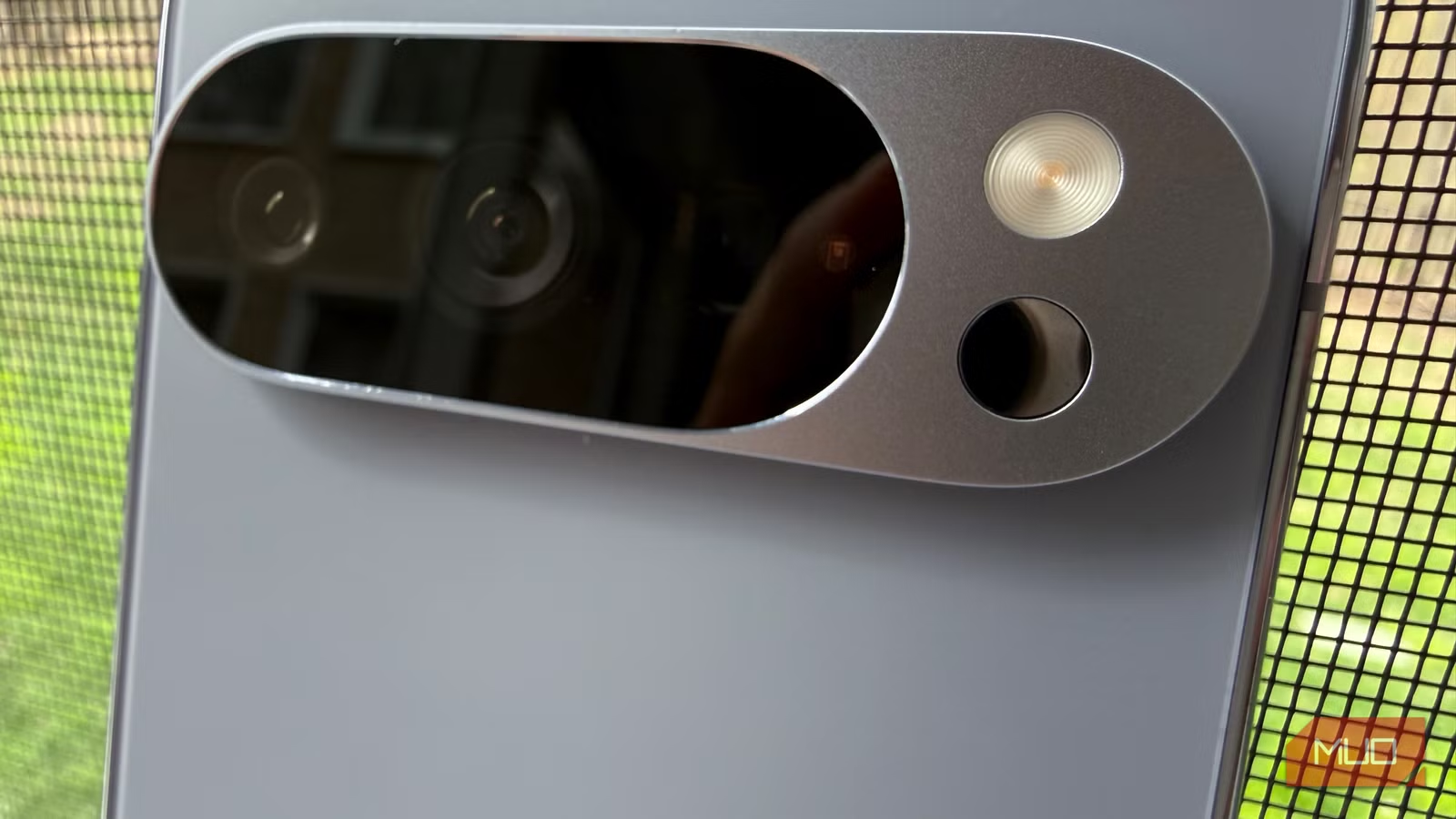
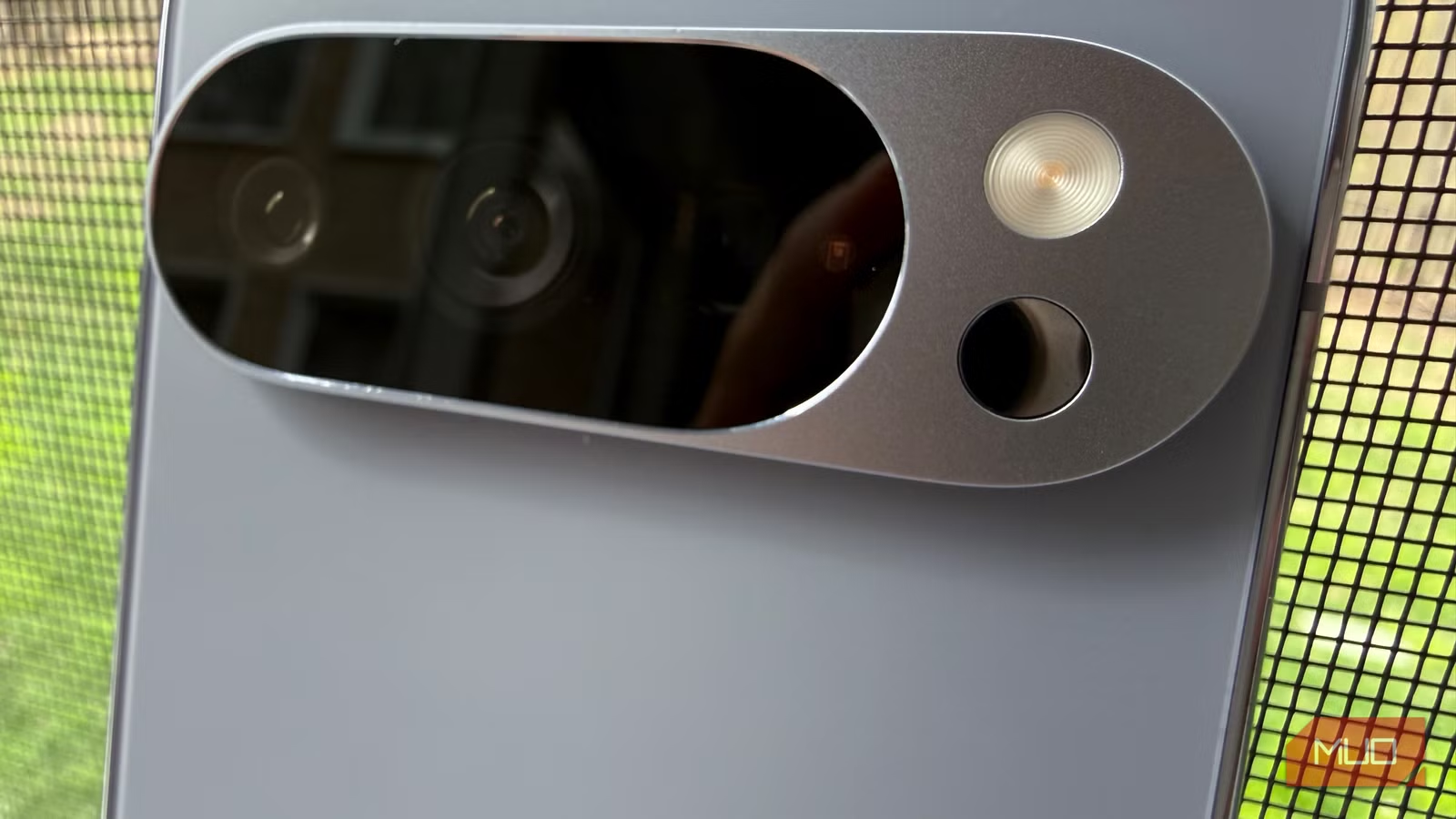
Here's the business case that caught my attention: your Pixel 8 Pro or newer already has a medical-grade temperature sensor sitting unused under the camera flash. That small black dot represents zero additional hardware investment with measurable operational benefits. For companies already issuing Pixel devices to employees, that's value left on the table.
What Is the Pixel Infrared Sensor?
The sensor is an infrared thermometer built into Pixel 8 Pro, Pixel 9 Pro, Pixel 9 Pro XL, Pixel 10 Pro, and Pixel 10 Pro XL devices. It sits on the camera visor under the flash. Google went through the FDA De Novo clearance process in 2024, which is reserved for novel devices making specific medical claims.
Clinical trials validated the sensor's accuracy against traditional temporal artery thermometers. The result? Your phone can now do what a $40-60 medical thermometer does, with the same regulatory approval.
Executive Summary
Google Pixel Pro devices include an FDA-cleared infrared thermometer with medical-grade accuracy. Business applications include employee health monitoring, facility thermal audits, and equipment temperature checks. Zero additional cost for organizations already using Pixel devices.
Why Should CFOs Care About a Phone Thermometer?
Let's do the math. A mid-size company with 200 employees might spend $2,000-4,000 annually on thermometers for wellness checks, first aid kits, and facility management. These devices get lost, batteries die, and they need regular replacement.
If your organization already issues Pixel Pro devices to managers or field staff, you've already paid for this capability. The Thermometer app is pre-installed. Training takes five minutes. The sensor works indefinitely without consumables.
But the more interesting application isn't body temperature. It's facility management.
How Can Businesses Use Pixel Thermal Detection?
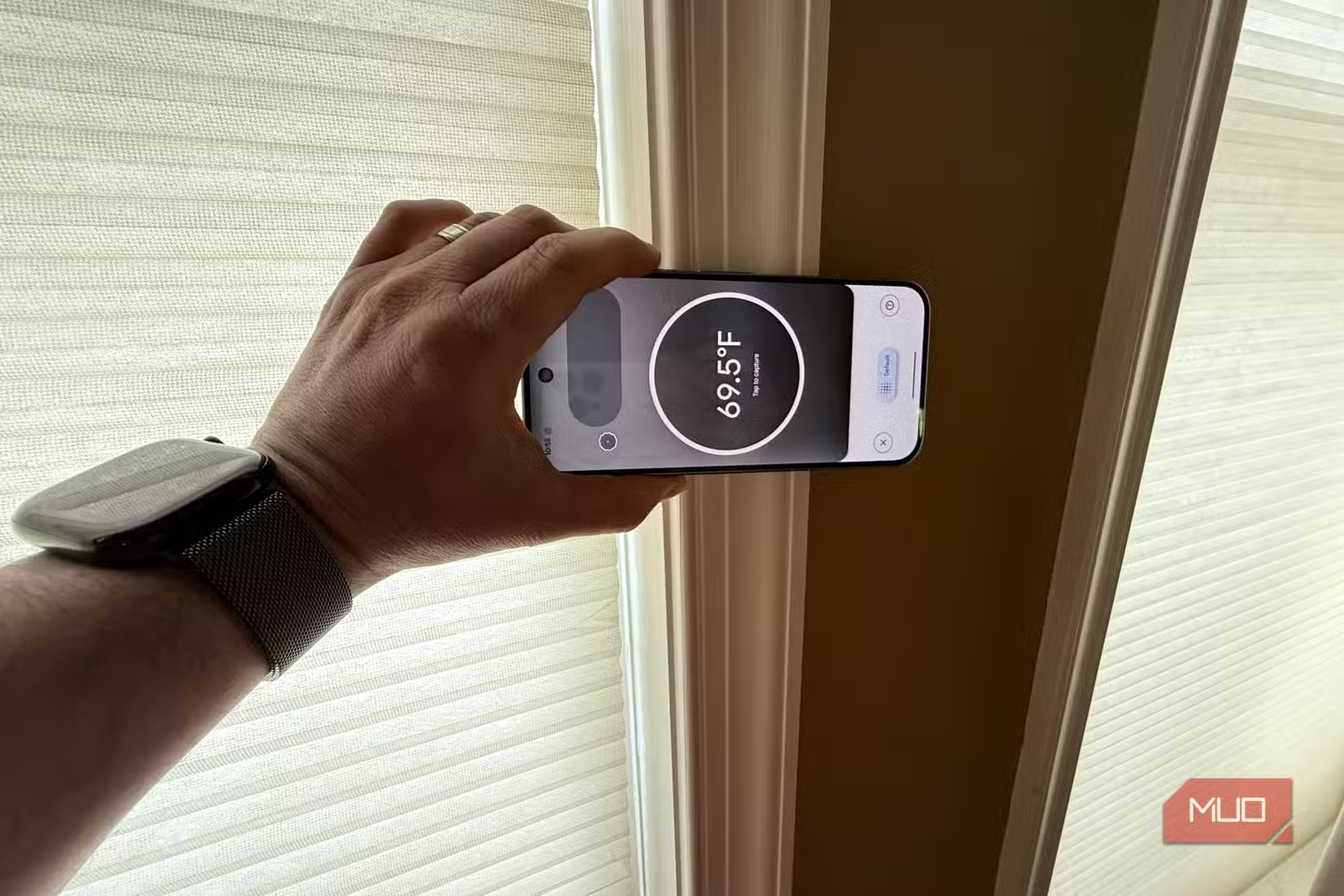
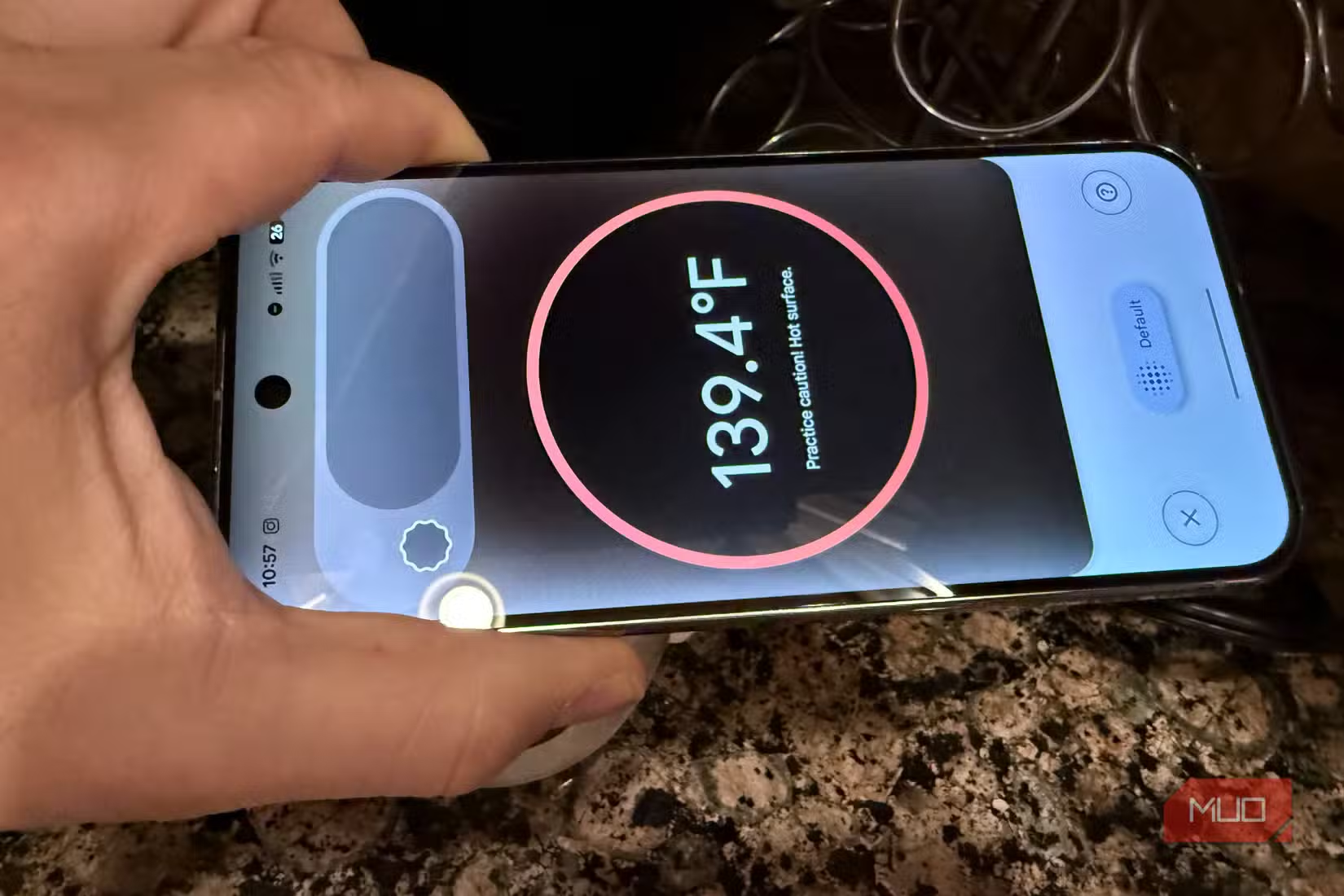
The sensor functions like a basic thermal camera. Point it at walls, windows, doors, or equipment and you'll get temperature readings that reveal what your eyes can't see. This matters for three specific business scenarios.
- Energy leak detection: Find drafts around windows and doors, identify insulation failures, spot HVAC inefficiencies before your utility bill does
- Equipment monitoring: Check server room temperatures, verify refrigeration units, monitor machinery that shouldn't be overheating
- Safety inspections: Identify electrical hotspots, verify heating equipment is functioning, check that emergency exits aren't creating thermal bridges
A professional thermal imaging survey costs $300-800 for a small commercial space. Your facilities manager with a Pixel Pro can do preliminary checks for free, identifying problem areas before calling specialists.
More strategies for reducing operational technology costs
Pixel Infrared Sensor vs. Dedicated Thermal Cameras
Let's be clear about limitations. The Pixel sensor isn't replacing professional thermal imaging equipment. But for many business applications, it doesn't need to.
| Feature | Pixel IR Sensor | Basic Thermal Camera | Professional FLIR |
|---|---|---|---|
| Cost | $0 (included) | $200-400 | $2,000-15,000 |
| Accuracy | ±0.3°C | ±2-3°C | ±0.1°C |
| Visual Output | Numeric reading | Basic heat map | Detailed thermal image |
| FDA Medical Clearance | Yes | No | No |
| Best For | Spot checks, body temp | General surveys | Professional inspections |
The Pixel wins on accuracy for point measurements. It loses on visualization. You won't get the colorful heat maps that make thermal cameras so intuitive. But for checking if a specific spot is warmer than it should be, the Pixel delivers.
How to Use Pixel Temperature Sensor for Business
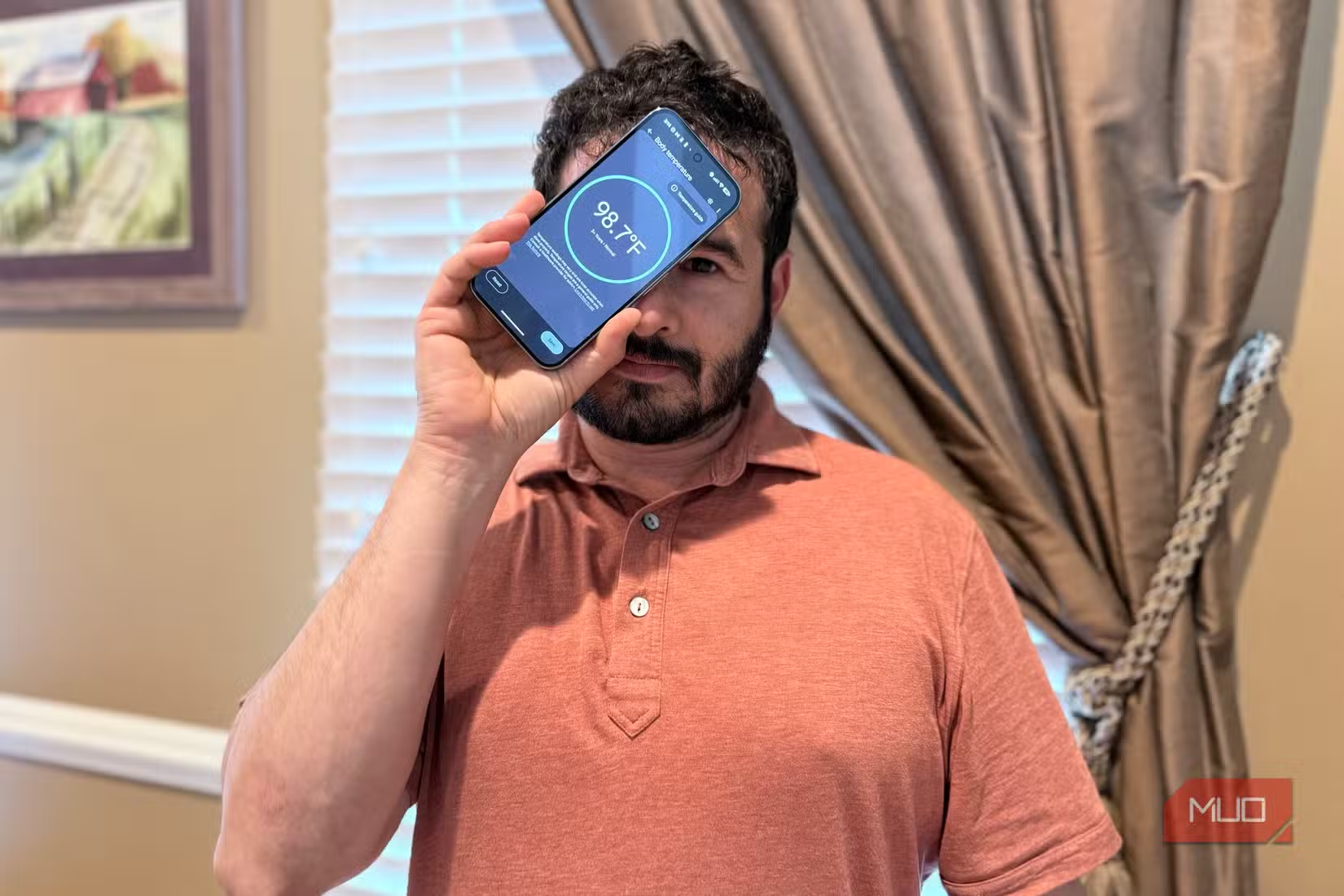
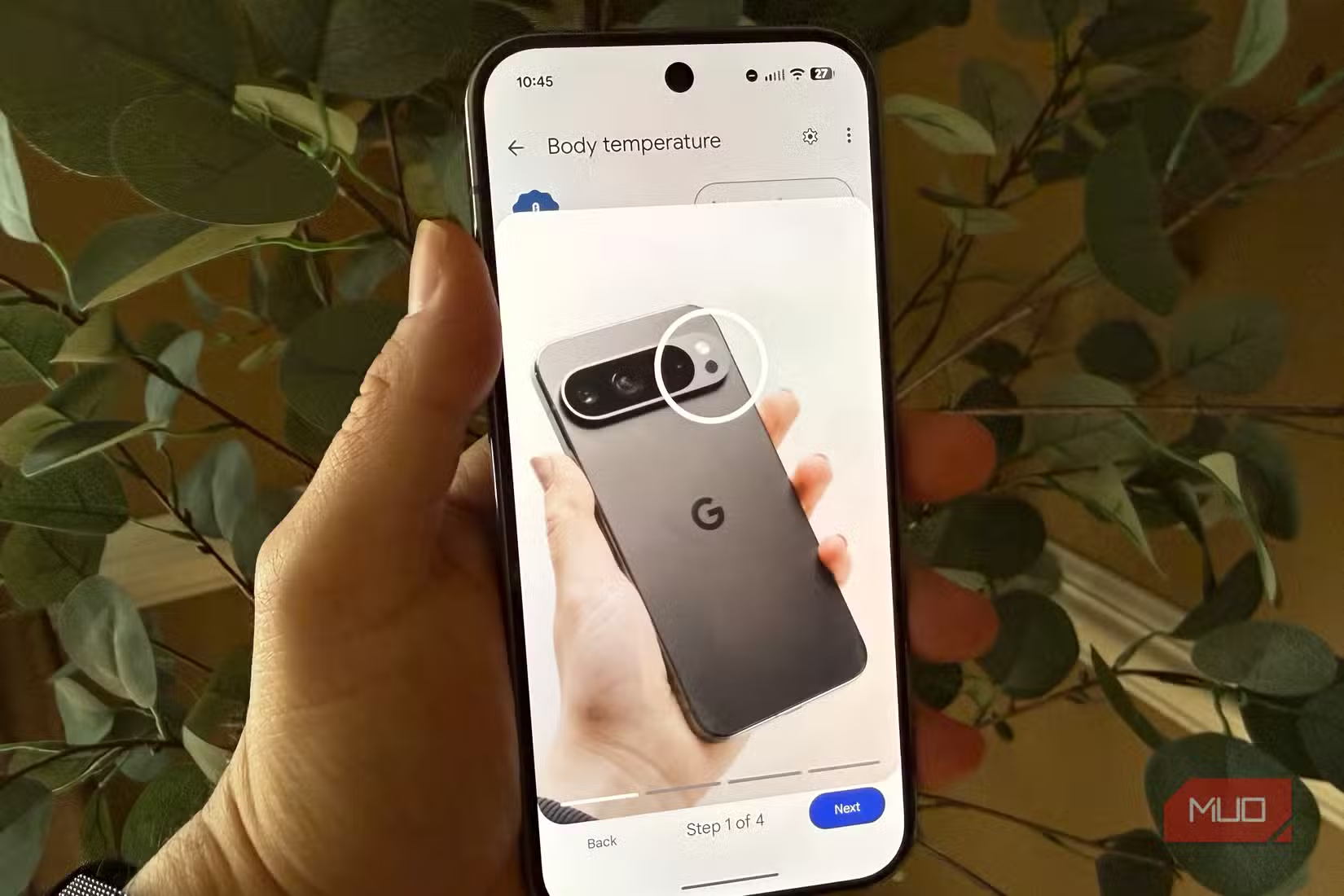
The process is straightforward. Open the Thermometer app (pre-installed on compatible Pixels), point the sensor at what you want to measure, and hold steady for a few seconds. For body temperature, the app guides you through a forehead-to-temple sweep that takes about five seconds.
- Thermometer app is pre-installed on Pixel 8 Pro and newer Pro models
- Body temperature mode includes audible instructions for self-measurement
- Object mode works on any surface from about 2 inches away
- Readings can be saved and tracked over time for monitoring trends
The app stores readings with timestamps. If you're monitoring a sick employee's fever progression or tracking temperature variations in a problem area of your building, you've got documentation built in.
What Are the Practical Limitations?
Before you add this to your operations playbook, understand what the sensor can't do.
✅ Pros
- • FDA-cleared accuracy for body temperature
- • No additional cost for existing Pixel Pro users
- • Readings saved automatically with timestamps
- • Works on any surface for object temperature
❌ Cons
- • No thermal imaging or heat maps
- • Requires close proximity (about 2 inches)
- • Only available on Pro models, not standard Pixels
- • Single-point measurement, not area scanning
The close proximity requirement matters. You need to be within a couple inches of what you're measuring. For body temperature, that's fine. For checking a ceiling for insulation problems, you'll need a ladder.
Understanding when hardware features deliver real value vs. marketing hype
Should You Factor This Into Device Procurement?
Here's the strategic question: does this sensor justify choosing Pixel Pro over alternatives for your corporate device fleet?
Probably not on its own. But if you're already evaluating Pixel devices against Samsung or iPhone for other reasons, the infrared sensor adds incremental value that most competitors don't offer. It's a tiebreaker, not a primary decision factor.
For organizations in healthcare, facilities management, food service, or manufacturing, the utility increases. A restaurant manager checking refrigerator temperatures. A nurse doing quick fever screenings. A maintenance supervisor checking HVAC components. These are real use cases where the sensor pays for itself in convenience.
The Bigger Picture: Smartphone Sensors as Business Tools
The Pixel infrared sensor represents a broader trend: smartphones becoming legitimate measurement and monitoring devices for business applications. We're seeing similar evolution with LiDAR sensors for spatial measurement, advanced cameras for document scanning, and NFC for asset tracking.
The question for IT and operations leaders isn't whether to buy specialized equipment. It's whether the devices you're already purchasing can handle additional functions that previously required separate tools.
How leading companies maximize value from existing technology investments
Frequently Asked Questions
Frequently Asked Questions
Which Pixel phones have the infrared temperature sensor?
The infrared thermometer is available on Pixel 8 Pro, Pixel 9 Pro, Pixel 9 Pro XL, Pixel 10 Pro, and Pixel 10 Pro XL. Standard (non-Pro) Pixel models do not include this sensor.
Is the Pixel thermometer accurate enough for medical use?
Yes. Google received FDA De Novo clearance in 2024. Clinical trials showed accuracy of ±0.3°C compared to FDA-cleared temporal artery thermometers, meeting medical device standards.
Can the Pixel sensor replace a professional thermal camera?
Not entirely. The Pixel provides accurate point measurements but doesn't generate thermal images or heat maps. It's best for spot checks and preliminary assessments rather than comprehensive thermal surveys.
How much could a business save using Pixel sensors instead of dedicated thermometers?
Savings vary by organization size. A company that would otherwise spend $2,000-4,000 annually on thermometers, replacements, and batteries could eliminate these costs entirely if they already deploy Pixel Pro devices.
Does the Pixel thermometer work on objects or just body temperature?
Both. The Thermometer app has modes for body temperature (FDA-cleared) and object temperature. Object mode works on walls, equipment, food, beverages, or any surface you need to measure.
Logicity's Take
We build AI agents and automation systems for businesses, not thermal imaging solutions. But this Pixel sensor story illustrates a principle we see constantly in our work: companies underutilize the technology they already own. Our clients often come to us wanting custom-built solutions when the tools they need are already sitting in their existing stack, unused or misconfigured. The Pixel infrared sensor is a perfect example. It's been shipping on Pro devices since 2023, yet most organizations have no idea their employees are carrying FDA-cleared thermometers. The same pattern repeats with AI features in productivity software, automation capabilities in CRMs, and analytics tools buried in platforms teams use daily. For Indian businesses evaluating device procurement, the practical takeaway isn't about this specific sensor. It's about auditing what capabilities you're already paying for. Before your next technology purchase, ask your IT team: what can our current devices do that nobody knows about? The answer usually saves more money than the new purchase would.
Need Help Implementing This?
Logicity helps businesses extract maximum value from their technology investments. Whether you're building AI-powered automation, optimizing your tech stack, or evaluating which tools your organization actually needs, our team can help. Get in touch to discuss how we can streamline your operations.
Source: MakeUseOf
Manaal Khan
Tech & Innovation Writer
Produced with AI assistance and reviewed by the Logicity editorial team. Learn more in our Editorial Policy.