Key Takeaways
Workday acquires Pipedream: expanding AI integration platform
- Workday acquired Pipedream in December 2025, creating uncertainty about its long-term standalone availability
- Zapier offers 9,000+ app integrations versus Pipedream's 3,000+, with simpler task-based pricing
- Pipedream remains the stronger choice for developer-heavy teams who need Node.js, Python, Go, or Bash support
Pipedream vs Zapier was already a nuanced decision for operations teams. Workday's acquisition of Pipedream in December 2025 tips the scales further. If you're building workflows that your business will depend on for years, platform stability now matters as much as feature sets.
Disclosure
Some links in this post are affiliate links — Logicity earns a commission if you sign up, at no extra cost to you. We only link products we have used or actively recommend.
The acquisition isn't bad news for everyone. Workday customers will see tighter integrations with HR, finance, and IT systems. But for RevOps teams running Zapier competitors as standalone automation layers, the question becomes: will Pipedream remain a product you can buy directly, or will it fold into Workday's enterprise suite like HiredScore and Peakon before it?
What does the Workday acquisition mean for Pipedream users?
Workday announced the Pipedream acquisition in December 2025. The stated goal: build an "end-to-end AI agent development stack" using Pipedream's 3,000+ connectors. That sounds promising for enterprise buyers already locked into Workday's ecosystem.
Workday says it wants to maintain Pipedream's value to the broader ecosystem. But history suggests caution. ScoutRFP, Peakon, and HiredScore were all absorbed into Workday as native features after acquisition. Standalone availability wasn't the priority.
For RevOps teams, the practical concern is migration risk. If Pipedream becomes Workday-only in 18 months, you're rebuilding workflows from scratch. Zapier, as an independent company with 15+ years of development history, doesn't carry that question mark.
Who should use Pipedream vs Zapier?
The core difference hasn't changed: Pipedream is developer-first, Zapier is everyone-first. That distinction matters more than any single feature comparison.
Pipedream supports Node.js, Python, Go, and Bash directly in workflows. If your team thinks in code and wants fine-grained control over every step, Pipedream delivers. You can sync workflows to GitHub, deploy MCP servers, and build custom integrations without waiting for official connectors.
Zapier's visual builder lets non-technical users create workflows without touching code. That's not a limitation. It's a scaling advantage. When marketing, sales, and customer success teams can build their own automations, your engineering backlog shrinks.
Zapier does offer code steps for developers who need them. Python and JavaScript are available within any workflow. The difference is that code is optional, not required.
How do integrations compare?
Zapier connects with over 9,000 apps. Pipedream offers around 3,000. That's a 3x gap. For RevOps teams stitching together CRMs, marketing tools, billing systems, and data warehouses, connector coverage directly affects what's possible without custom development.
| Feature | Zapier | Pipedream |
|---|---|---|
| App integrations | 9,000+ | 3,000+ |
| Code languages | Python, JavaScript | Node.js, Python, Go, Bash |
| Visual builder | Full-featured | Available, less robust |
| AI copilot | Zapier Copilot | String AI assistant |
| Enterprise security | SOC 2 Type II, SSO, audit logs | SOC 2 Type II, SSO, HIPAA (Business plan) |
| Pricing model | Task-based | Credit-based |
Zapier also maintains connections automatically. When an app updates its API, Zapier's team handles it. Pipedream Connect lets developers expand integrations faster, but the maintenance burden shifts to your team.
How does pricing work for each platform?
Zapier uses task-based pricing. A task is a single action: send an email, create a record, update a field. Paid plans start at $19.99/month for individuals or $69/month for teams up to 25 users. The free tier includes 100 tasks/month.
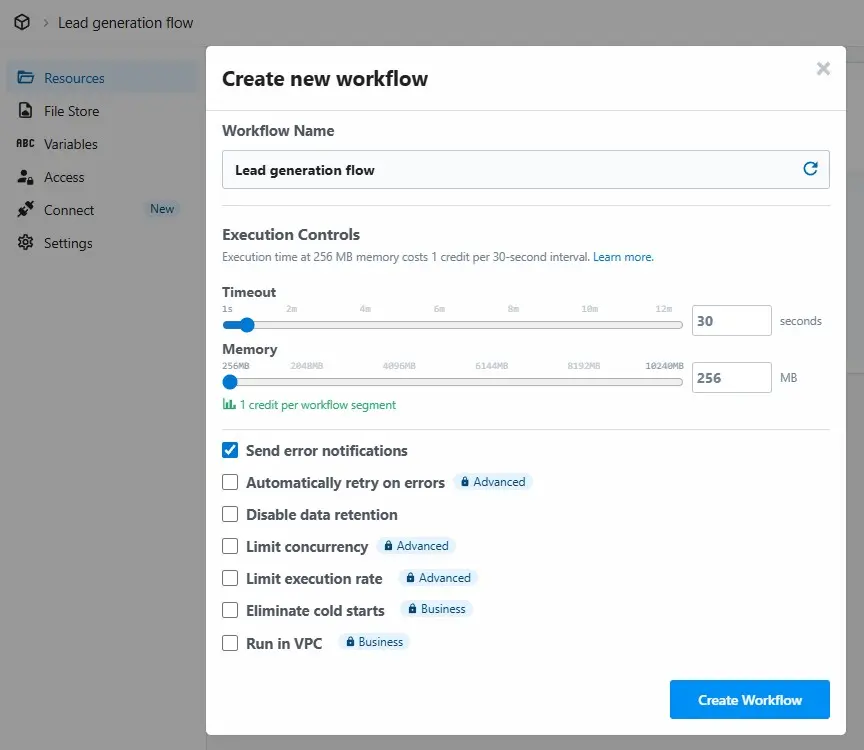
Pipedream uses credit-based pricing. Credits are consumed based on compute time, not just actions. Plans start at $29/month for 2,000 credits, or $49/month for unlimited workflows and apps. The free tier offers 100 credits/month.
Task-based pricing is easier to predict. You know roughly how many automations will run each month. Credit-based pricing requires understanding compute consumption, which varies by workflow complexity. A simple webhook trigger costs less than a Python script parsing large datasets.
What about AI features?
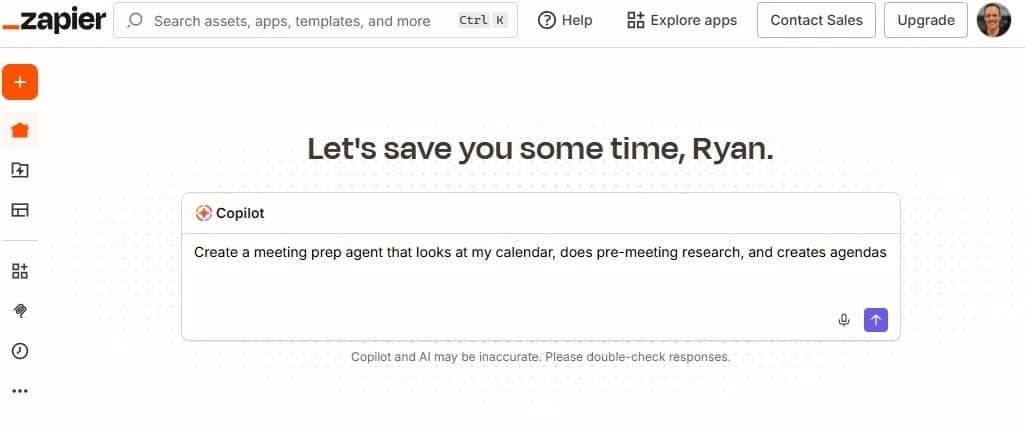
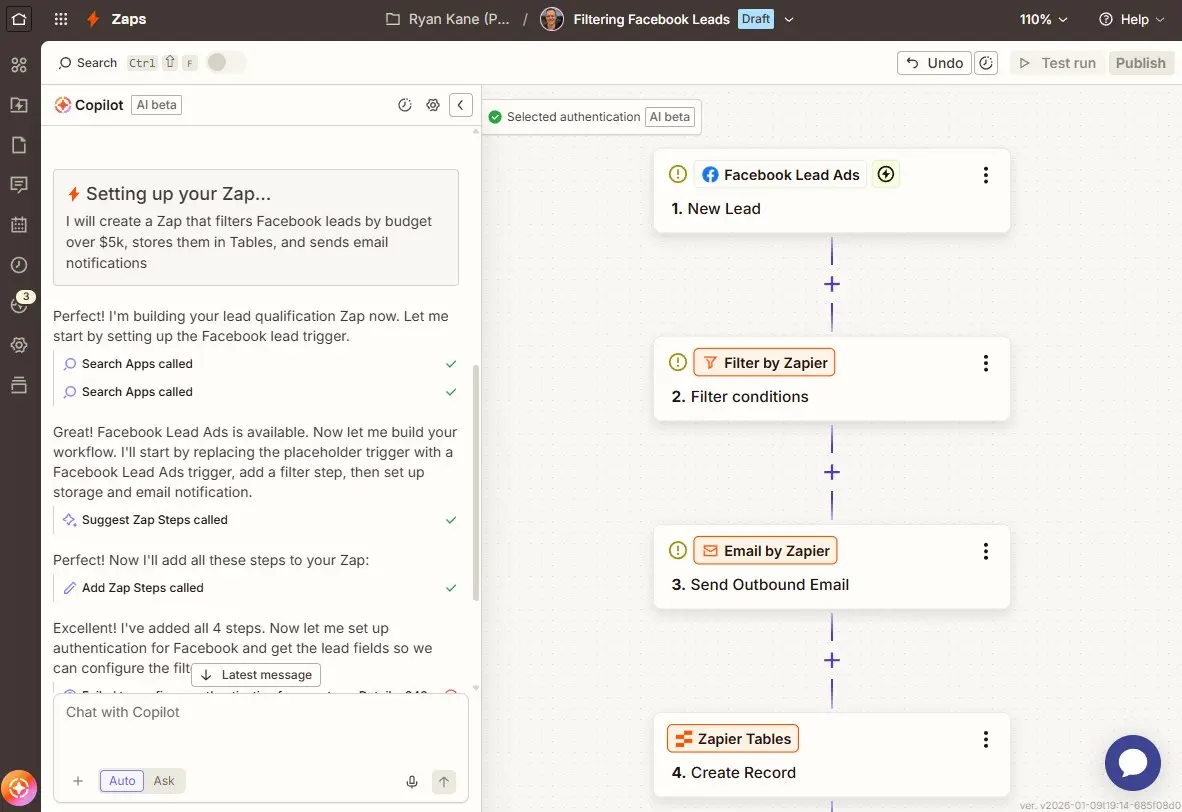
Both platforms have added AI assistants. Zapier Copilot builds multi-product workflows, agents, databases, and forms from natural language prompts. You can also access Zapier from other AI tools through the Zapier MCP server.
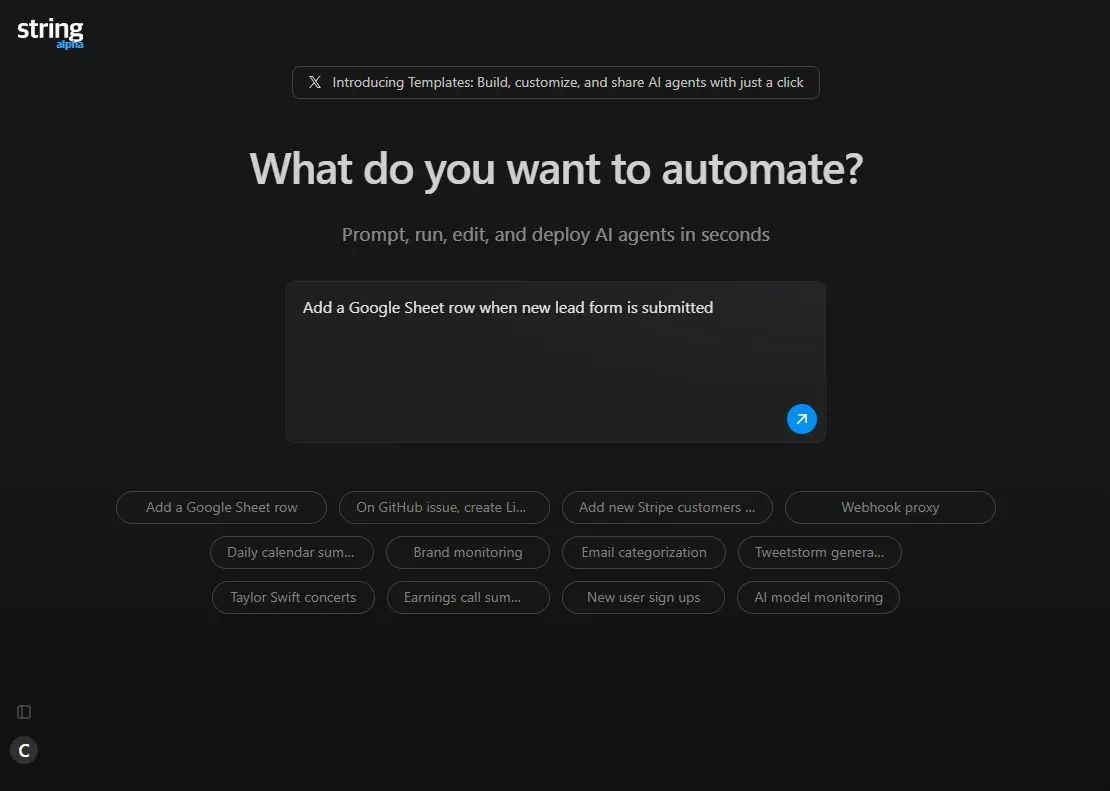
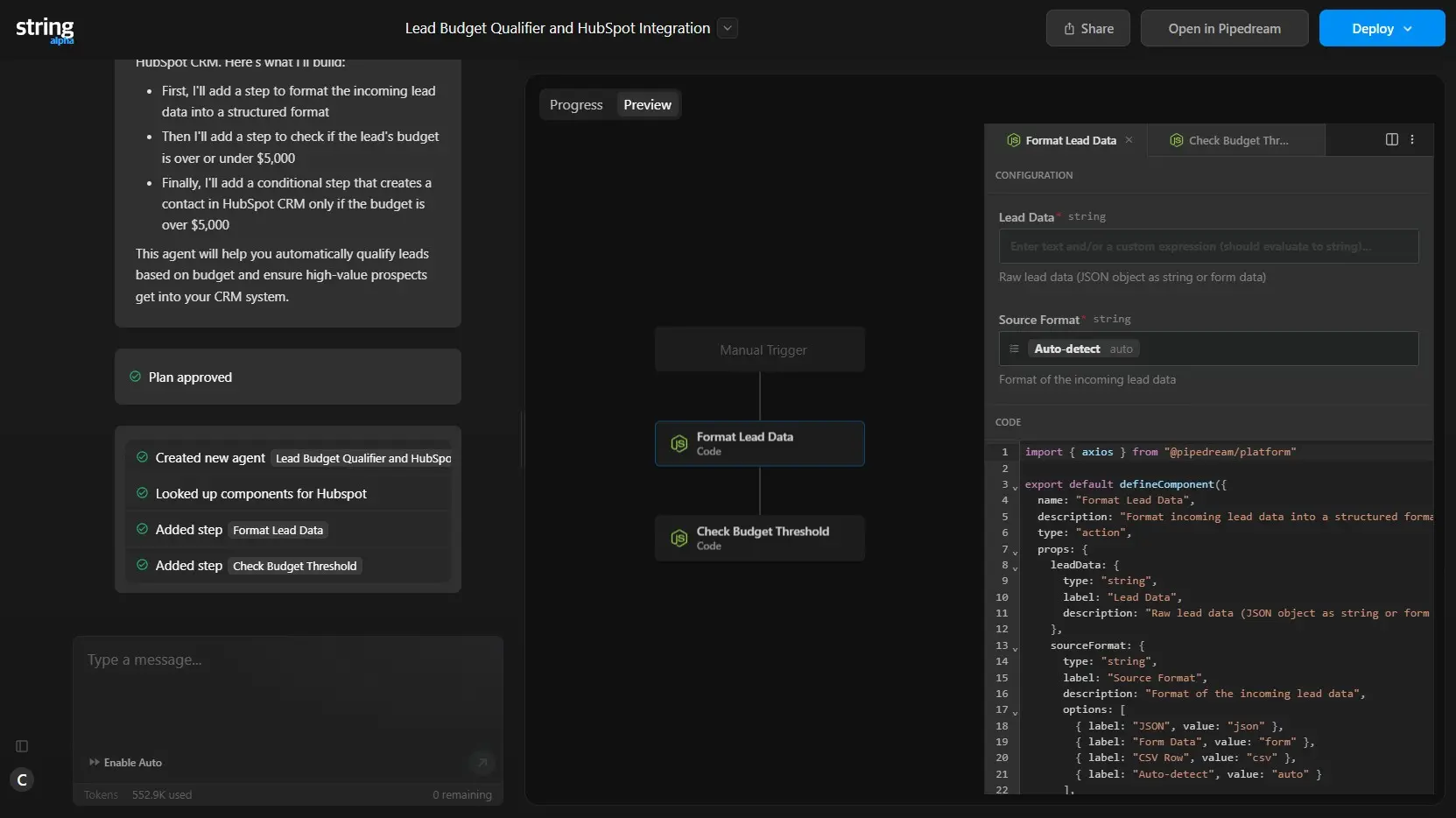
Pipedream's String AI assistant focuses on workflows and agents, with output that tends toward code-heavy implementations. That's useful if you're comfortable reading and editing code, less so if you want pure no-code AI automation.
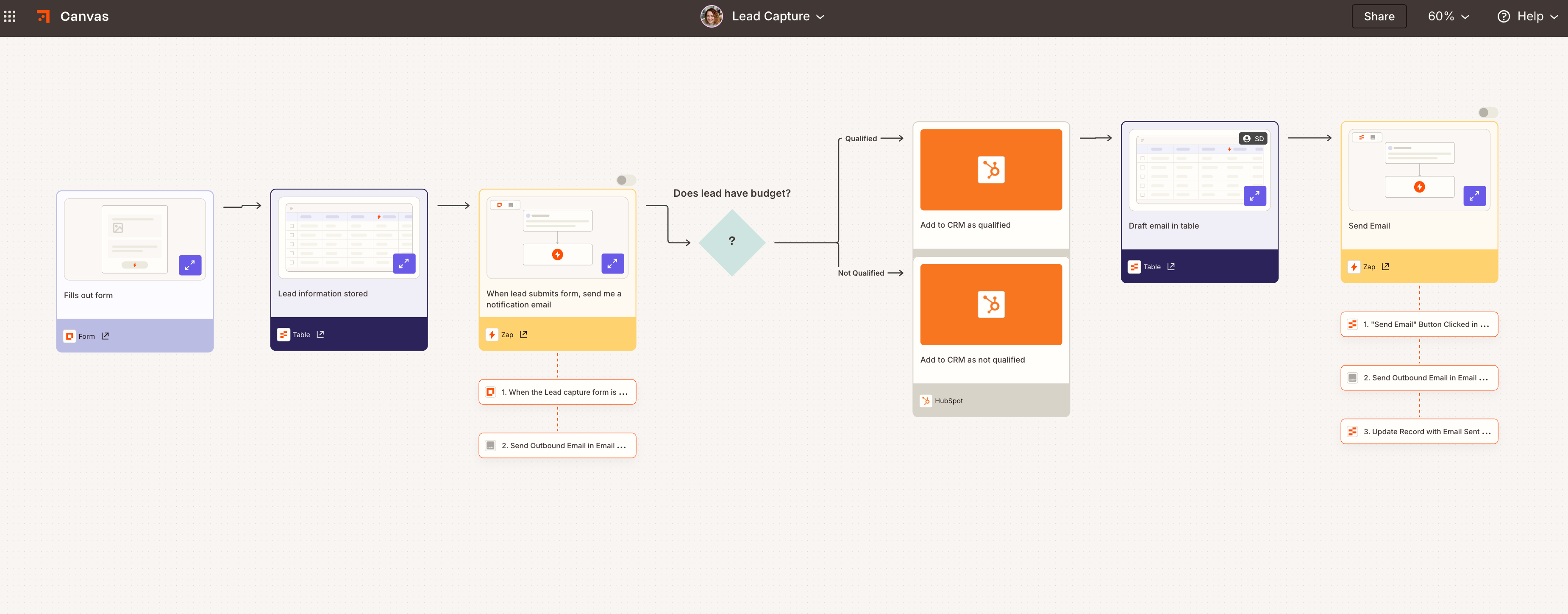
Zapier's broader platform scope includes tables, forms, and process mapping alongside workflows. Pipedream offers basic data storage but lacks the same breadth. For RevOps teams building complete operational systems, the platform scope difference is significant.
Enterprise security and compliance
Both platforms meet enterprise security standards. SOC 2 Type II certification, GDPR compliance, and SSO are available on both. Pipedream adds HIPAA compliance on Business plans, which matters for healthcare-adjacent operations.
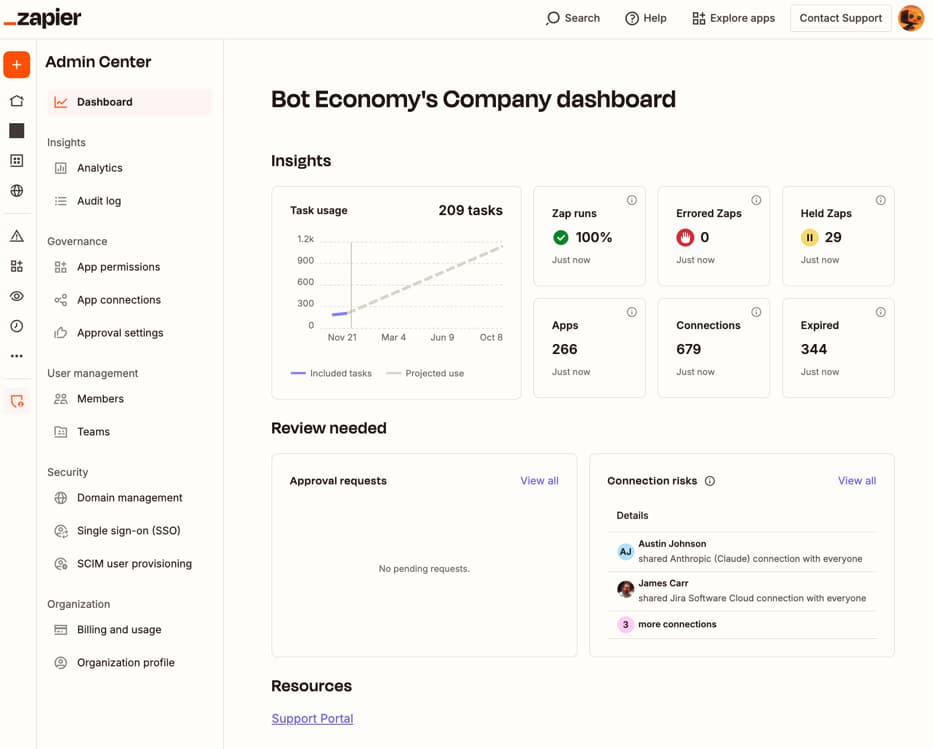
Zapier offers audit logs on Team and Enterprise plans, with a unified admin hub for managing users and permissions. Pipedream's audit logs require the Business tier.
Logicity's Take
For RevOps teams, the Workday acquisition is the deciding factor. Pipedream's developer tools are genuinely strong, but platform risk outweighs feature advantages when you're building operational infrastructure. Zapier at $69/month for 25 users offers predictable pricing and no acquisition uncertainty. If you need alternatives to both, [Make](https://logicity.in/r/make) starts at $9/month with visual workflow building, and [n8n](https://logicity.in/r/n8n) offers self-hosted options for teams that want full control over their automation stack.
Frequently Asked Questions
Is Pipedream still available after the Workday acquisition?
Yes, Pipedream remains available as of early 2026. Workday has stated it wants to maintain value to the broader ecosystem, but long-term standalone availability isn't confirmed.
Which is better for non-technical users, Pipedream or Zapier?
Zapier is designed for non-technical users first. Its visual builder requires no code. Pipedream offers no-code options but they aren't as robust, and the platform assumes developer familiarity.
How many app integrations does Zapier have compared to Pipedream?
Zapier offers 9,000+ app integrations. Pipedream has around 3,000. Zapier also maintains these connections automatically when APIs change.
Is Pipedream cheaper than Zapier?
Pipedream's entry price is higher ($29/month vs $19.99/month), but the unlimited workflows tier at $49/month can be cheaper for high-volume usage. The credit-based model makes costs less predictable.
Can developers write code in Zapier?
Yes. Zapier supports Python and JavaScript code steps within workflows. The difference is that code is optional, not required for building automations.
A deeper comparison of Zapier against Microsoft's automation platform for enterprise environments
Need Help Implementing This?
Choosing between automation platforms is step one. Building workflows that actually improve your operations is step two. Reach out to our team for implementation guidance tailored to your RevOps stack.
Source: The Zapier Blog
Manaal Khan
Tech & Innovation Writer
Produced with AI assistance and reviewed by the Logicity editorial team. Learn more in our Editorial Policy.