Key Takeaways
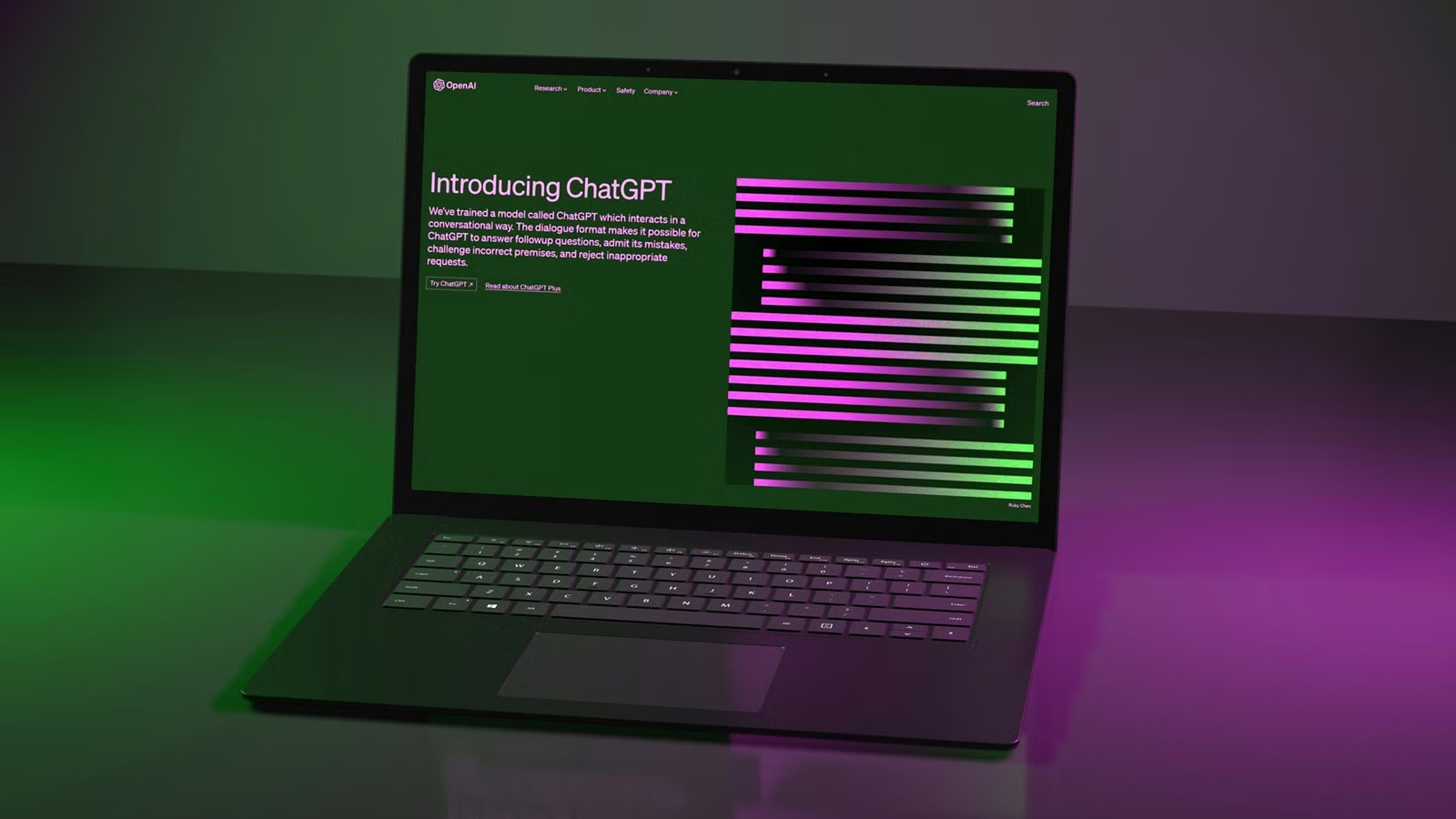
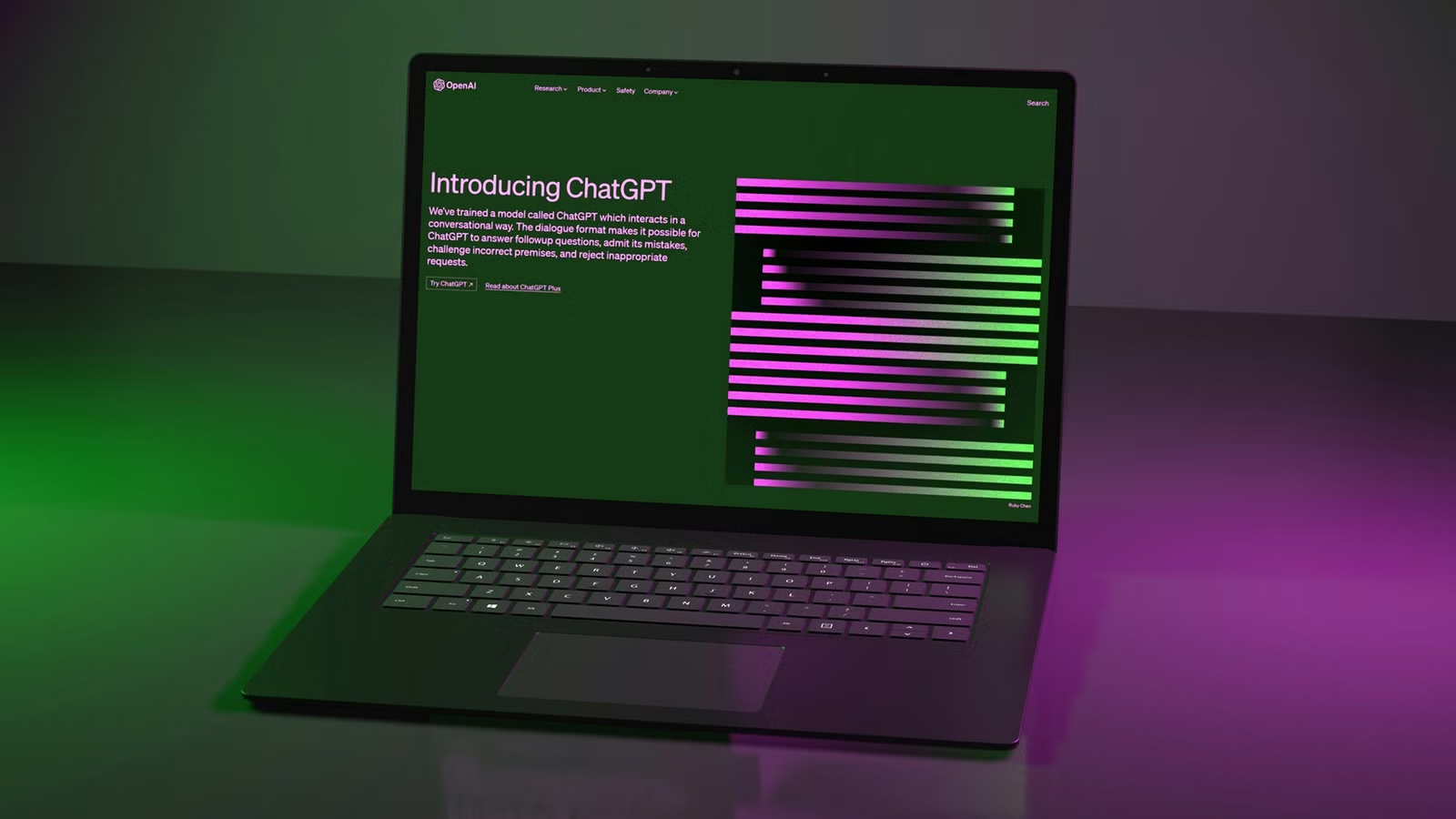
- OpenAI is weeks away from launching a redesigned ChatGPT that bundles multiple tools into one interface
- The super app will include Codex coding tools, image generation, and third-party integrations with Canva and Booking.com
- The timing aligns with OpenAI's expected IPO in September 2026 and growing competition from Google's Gemini
What's in the ChatGPT Super App?
According to sources speaking to The Financial Times, OpenAI's redesigned ChatGPT will roll together several products that have operated separately until now. The new interface will include coding tools (previously offered through Codex), image generation capabilities, and applications from partners like Canva and Booking.com.
The super app will launch first on web and mobile. Past reporting from CNBC and The Wall Street Journal suggested it might also include a built-in browser, though this hasn't been confirmed.
The shift represents a fundamental change in what ChatGPT is. Instead of answering questions, it will complete tasks. You could use a single interface to write an app, design its graphics, and book travel to promote it.
“We are moving from a world where you talk to an AI to a world where the AI does the work for you.”
— Unnamed Senior OpenAI Employee, The Financial Times
Why Now? IPO Pressure and Competition
The timing isn't accidental. OpenAI is expected to go public as soon as September 2026, with competitor Anthropic planning a similar move. A super app aimed at enterprise customers gives OpenAI a stronger story to tell investors: we're not just a chatbot, we're a productivity platform.
OpenAI reportedly aims to capture 50% of its revenue from enterprise clients by the end of 2026. A work-focused tool that handles multiple tasks could help justify the company's steep costs and losses to prospective shareholders.
Competition is also heating up. Google's Gemini has moved toward multi-purpose AI models, and the industry broadly is shifting toward AI agents that execute tasks rather than just respond to prompts. OpenAI needs ChatGPT to keep pace.
Google's competing AI platform is also adding task-execution features
What Users Are Saying
Reaction online has been mixed. On Hacker News and Reddit, some users are excited about AI agents handling complex workflows like booking travel or managing coding projects. Others worry about feature creep.
Long-time power users have been particularly vocal. The concern: OpenAI is prioritizing aggressive monetization over improving the underlying language model. Some argue the interface is already becoming bloated, and this will make things worse.
Privacy concerns have also surfaced. Deeper integrations with third-party services like Booking.com mean more data flowing between platforms. For enterprise users handling sensitive information, this could be a sticking point.
The Platform Play
Beyond the immediate product, OpenAI is making a platform bet. A super app could attract more partners to build ChatGPT applications. That extends the use case beyond work into daily life. Need to plan dinner? Book a doctor's appointment? The goal is for OpenAI's platform to handle more of your computing needs.
This is the same playbook WeChat executed in China and that other tech giants have attempted elsewhere. Bundle enough services into one interface, and users stop opening other apps. Whether Western users will embrace that model remains an open question.
Logicity's Take
Frequently Asked Questions
When will the ChatGPT super app launch?
According to The Financial Times, OpenAI is weeks away from rolling out the redesigned ChatGPT, with web and mobile versions coming first.
What features will the ChatGPT super app include?
The super app will bundle coding tools (Codex), image generation, and third-party apps from partners like Canva and Booking.com into a single interface.
Will the ChatGPT super app have a browser?
Past reporting from CNBC and The Wall Street Journal suggested a built-in browser might be included, but this hasn't been confirmed.
Why is OpenAI launching a super app now?
The timing aligns with OpenAI's expected IPO in September 2026 and increasing competition from Google's Gemini and other multi-purpose AI platforms.
Will the ChatGPT super app be free?
OpenAI hasn't announced pricing details. Current ChatGPT+ subscribers get unlimited conversations and faster response speeds, and the super app will likely follow a similar freemium model.
Need Help Implementing This?
Source: How-To Geek
Manaal Khan
Tech & Innovation Writer
Produced with AI assistance and reviewed by the Logicity editorial team. Learn more in our Editorial Policy.