Key Takeaways
- NVK now supports DLSS experimentally by importing Nvidia's pre-compiled CUDA binaries rather than reimplementing the upscaler
- The feature landed in Mesa 26.2-devel but remains behind an experimental flag due to known bugs
- NVK runs at roughly 50% of Nvidia's proprietary driver speed, and the team reports being resource-constrained
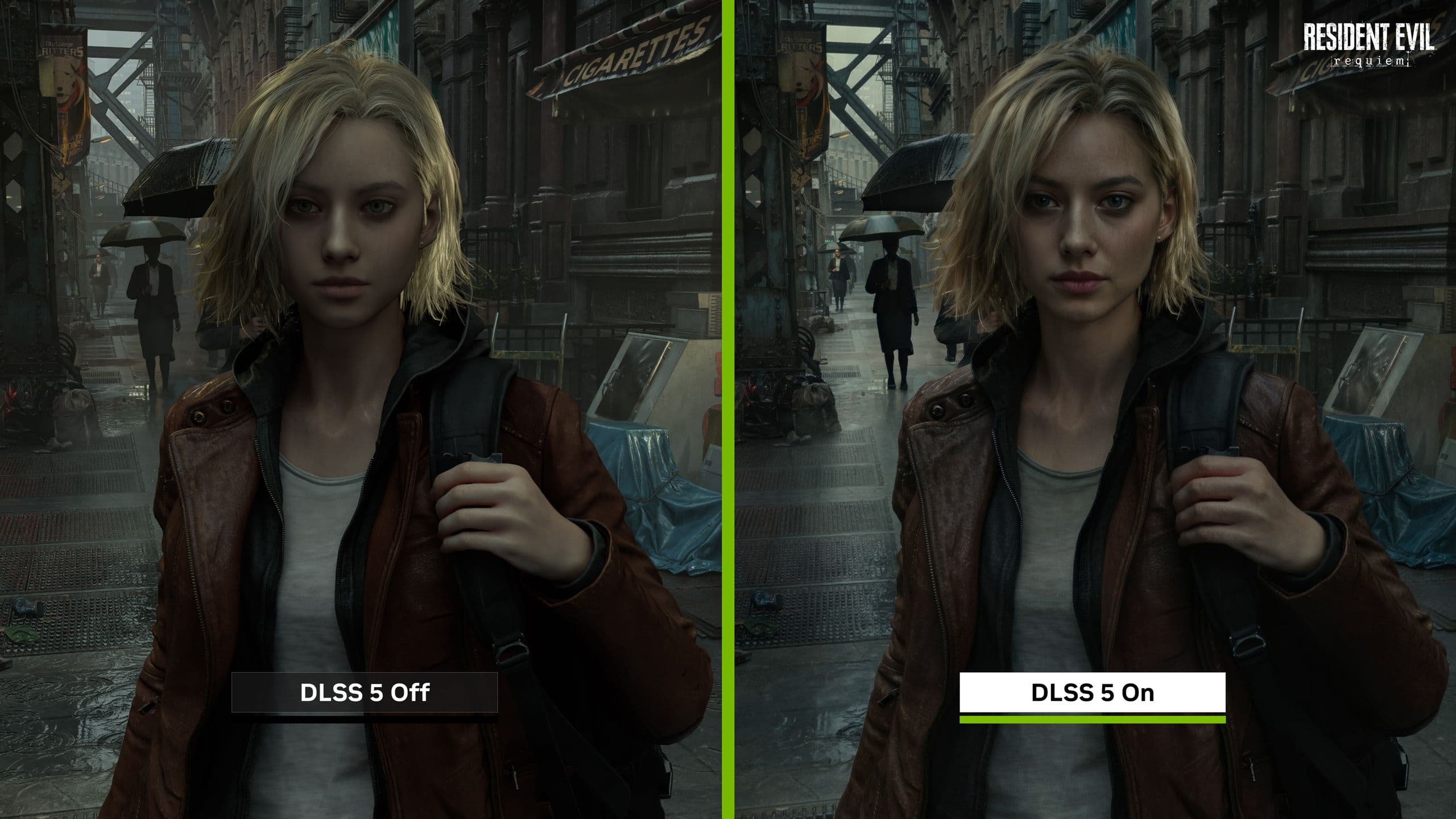
NVK, the community-built open-source Vulkan driver for Nvidia GPUs, now has experimental DLSS support. The code landed in Mesa 26.2-devel this week, bringing Nvidia's AI upscaling technology to Linux users who prefer open-source graphics stacks. The implementation takes a pragmatic shortcut: it loads Nvidia's own pre-compiled CUDA binaries instead of reimplementing the proprietary upscaler from scratch.
This closes one of the larger feature gaps between NVK and Nvidia's proprietary Linux driver, which has supported DLSS for years. The open-source driver still trails in raw performance and feature completeness, but DLSS support removes a significant reason gamers might stick with the closed-source alternative.
How NVK runs DLSS without reimplementing it
The technical approach relies on VK_NVX_binary_import, a Vulkan extension that lets applications load CuBIN files. These are pre-baked CUDA binaries that Nvidia compiles for specific GPU architectures. NVK imports them and runs them on the GPU directly, sidestepping the need to reverse-engineer DLSS's AI models or neural network inference code.
Autumn Ashton opened the original pull request for this extension last year. Thomas Andersen revived the work roughly two months ago to resolve merge conflicts and push it across the finish line. The feature sits behind the NVK_EXPERIMENTAL=dlss environment variable because bugs remain.
The limitation is clear: NVK can only run DLSS on GPUs where compatible pre-compiled bytecode already exists. Nvidia's proprietary driver avoids this constraint by compiling PTX, its intermediate assembly language, down to GPU bytecode at runtime. NVK lacks an equivalent path because it can't translate Nvidia PTX into NIR, the intermediate representation that Mesa drivers compile from.
Where NVK fits in the Linux graphics stack
NVK began in 2022 as a from-scratch Vulkan driver led by Collabora's Faith Ekstrand, alongside Karol Herbst and Dave Airlie at Red Hat. It supports Turing (RTX 20-series and GTX 16-series) and newer architectures. In late 2024, it became the first open-source Vulkan driver for Nvidia hardware to pass Khronos conformance, reaching Vulkan 1.4 provisional spec.
The driver runs on the Nouveau kernel driver and is entirely separate from Nvidia's own open-source kernel modules, which the company ships alongside its proprietary user-space stack. That separation matters for users who want a fully open-source graphics pipeline without any Nvidia proprietary code in user space.
DLSS support across the broader Linux gaming stack remains patchy. As of late 2024, Nvidia's DLSS 4 was still unsupported in Valve's VKD3D-Proton translation layer, which converts DirectX 12 calls to Vulkan for games running through Proton. NVK's new capability doesn't directly solve that problem, but it does demonstrate that DLSS can run outside Nvidia's proprietary driver.
Performance and resource constraints
At the XDC2025 conference in November, Ekstrand gave a frank assessment of NVK's current state. The driver runs at around 50% of the official Nvidia driver's speed in many titles. Ray tracing support is still in progress. Ekstrand said the team is "barely keeping the lights on" with current developer resources.
That 50% figure explains why NVK remains a passion project rather than a daily driver for most Linux gamers. DLSS might help bridge part of that gap by enabling AI upscaling from lower render resolutions, but the underlying driver performance still needs significant work.
The resource constraint is a recurring theme in open-source graphics development. NVK has benefited from Nvidia's 2022 decision to release GPU documentation, which made the project viable in the first place. But documentation is not the same as engineering headcount. The team depends on contributors from Collabora, Red Hat, and the community, none of whom are funded specifically to reach feature parity with Nvidia's in-house driver team.
Why this matters for Linux gaming
For users who value software freedom, NVK represents the only path to modern Vulkan gaming on Nvidia hardware without proprietary user-space code. Adding DLSS, even experimentally, removes a major missing feature that previously forced a tradeoff between principles and performance.
The workaround of loading pre-compiled CUDA binaries is legally clean but architecturally limited. It works where Nvidia has published compatible bytecode. It doesn't work where they haven't. Future GPU generations will require Nvidia to continue publishing compatible CuBIN files, or NVK's DLSS support will stall.
For Valve's Steam Deck and the broader SteamOS ecosystem, NVK's progress is worth watching. The Steam Deck runs AMD hardware, but Nvidia-based handhelds exist, and desktop Linux gamers with Nvidia cards form a significant market. A mature NVK with DLSS support could eventually reduce reliance on Nvidia's proprietary driver across the Steam Proton stack.
Frequently Asked Questions
Does NVK DLSS support work on all Nvidia GPUs?
No. NVK supports Turing (RTX 20-series, GTX 16-series) and newer architectures, and DLSS only works where compatible pre-compiled CUDA bytecode exists for the specific GPU.
Is NVK ready for daily gaming use?
Not for most users. NVK runs at roughly 50% of the proprietary Nvidia driver's speed, and ray tracing is incomplete. It passed Vulkan 1.4 conformance but remains a work in progress.
How do I enable DLSS in NVK?
Set the environment variable NVK_EXPERIMENTAL=dlss before launching your game. The feature is experimental and has known bugs.
Is NVK the same as Nvidia's open-source kernel modules?
No. NVK is a community-built Mesa driver running on the Nouveau kernel driver. Nvidia's open-source kernel modules are separate and ship with Nvidia's proprietary user-space stack.
Logicity's Take
NVK loading CUDA binaries to run DLSS is clever engineering, but it's also a concession. The open-source driver can't replicate DLSS, so it runs Nvidia's proprietary code in a sandboxed way. That's pragmatic, but it means NVK's DLSS future depends on Nvidia's continued willingness to publish compatible bytecode. If Nvidia ever decides to restrict CuBIN distribution, this entire capability vanishes. The real test is whether NVK can close the 50% performance gap. DLSS might mask some of that deficit, but raw driver overhead still dominates gaming performance.
If you're building a Linux gaming setup with NVK, a high-refresh 1440p monitor pairs well with DLSS upscaling
Need Help Implementing This?
If you're deploying Linux gaming setups for your studio or need guidance on open-source GPU driver configurations, Logicity can connect you with specialists. Contact us for vendor-neutral advice on graphics stack optimization.
Source: Latest from Tom's Hardware
Manaal Khan
Tech & Innovation Writer
Produced with AI assistance and reviewed by the Logicity editorial team. Learn more in our Editorial Policy.