Key Takeaways
- NVIDIA's core network was not compromised. The breach affected only systems run by GFN.am, the Armenian regional partner.
- Exposed data includes full names, email addresses, phone numbers, dates of birth, and usernames. No passwords were leaked.
- A threat actor using the ShinyHunters nickname offered the stolen database for $100,000 in Bitcoin or Monero.
What Happened
NVIDIA has confirmed that user data from its GeForce NOW cloud gaming service was exposed in a breach. The company told BleepingComputer that the incident was limited to Armenia and caused by a compromise at GFN.am, a regional partner that operates the service there.
"Our investigation found no impact on NVIDIA-operated services. The issue is limited to systems run by a third-party GeForce NOW Alliance partner based in Armenia," NVIDIA said in its statement. "We are working closely with the partner to support their investigation and resolution. Impacted users will be notified by GFN.am."
The breach occurred between March 20 and 26, according to GFN.am. Users who registered after March 9 are not affected.
What Data Was Exposed
GFN.am confirmed that the following information was compromised:
- Full name (for users with linked Google accounts)
- Email address
- Phone number (for users who registered via mobile operator)
- Date of birth
- Username
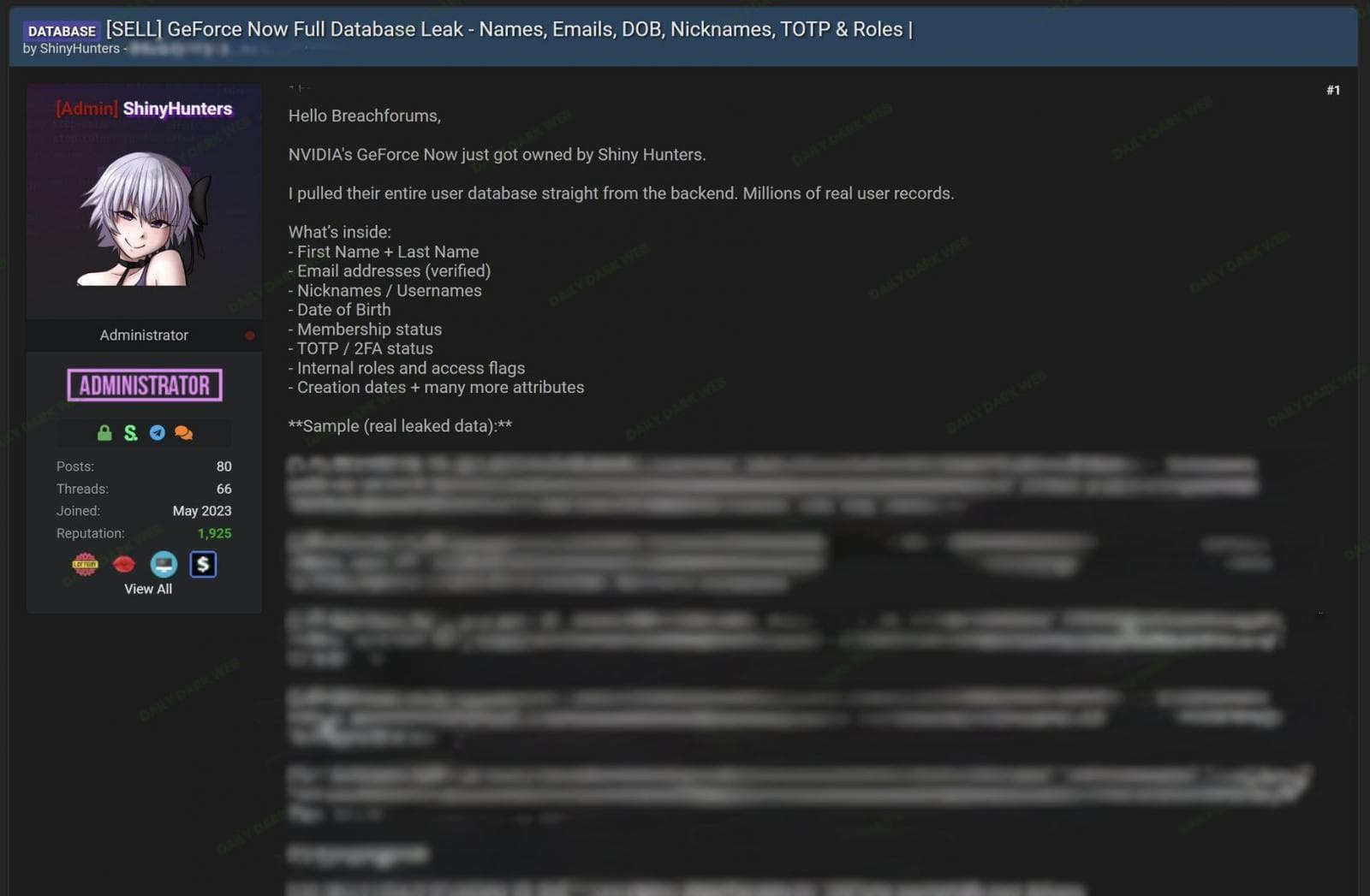
No account passwords were exposed in the incident. However, the threat actor's original post claimed the stolen data also included membership status and 2FA/TOTP status, which could reveal which accounts have weaker security configurations.
The Threat Actor's Claims
Last week, a threat actor using the nickname ShinyHunters posted on a hacker forum claiming to have breached GeForce NOW and stolen millions of user records. The actor offered the full database for $100,000, payable in Bitcoin or Monero, and posted samples of the stolen data as proof.
BleepingComputer found that the threat actor's post has since been removed from the forum. It's unclear whether the database was sold or if the post was deleted by the seller or forum administrators.
How the Alliance Partner Model Works
NVIDIA uses a "GeForce NOW Alliance" model to reduce latency in specific regions. Regional partners like GFN.am operate independent infrastructure, including their own authentication systems, customer databases, and billing platforms. This means their data is separate from NVIDIA's global network.
GFN.am manages GeForce NOW operations not just in Armenia but also in Azerbaijan, Georgia, Kazakhstan, Moldova, Ukraine, and Uzbekistan. NVIDIA has not confirmed any impact on users in those countries.

The Security Trade-Off
The Alliance model lets NVIDIA expand into regions where building its own data centers would be impractical. But it creates a security trade-off. Each partner runs different infrastructure with different security practices. A breach at one partner doesn't compromise NVIDIA's core, but it still affects users under NVIDIA's brand.
This incident highlights a common challenge for companies that rely on third-party partners for regional operations. The weakest link in the chain can still damage the brand and expose customer data, even if the main company's systems remain secure.
What Affected Users Should Do
If you used GeForce NOW through GFN.am before March 9, watch for phishing attempts. Attackers now have your name, email, and potentially your phone number. They could craft convincing messages pretending to be from NVIDIA or GFN.am.
- Be suspicious of emails or texts asking you to "verify" your account or reset your password
- Enable 2FA on any accounts that share the same email address
- Monitor your email for unusual login attempts or password reset requests
Logicity's Take
Frequently Asked Questions
Was NVIDIA's main network breached?
No. NVIDIA confirmed its own systems were not affected. The breach was limited to infrastructure operated by GFN.am, a third-party regional partner in Armenia.
What information was stolen in the GeForce NOW breach?
The exposed data includes full names, email addresses, phone numbers, dates of birth, and usernames. Account passwords were not compromised.
How much did the hacker want for the stolen data?
The threat actor, using the ShinyHunters nickname, asked for $100,000 payable in Bitcoin or Monero.
Are GeForce NOW users outside Armenia affected?
GFN.am also manages services in Azerbaijan, Georgia, Kazakhstan, Moldova, Ukraine, and Uzbekistan, but NVIDIA has not confirmed any impact on users in those countries.
When did the breach occur?
The cybersecurity incident took place between March 20 and 26. Users who registered after March 9 are not affected.
Need Help Implementing This?
Source: BleepingComputer
Huma Shazia
Senior AI & Tech Writer
Produced with AI assistance and reviewed by the Logicity editorial team. Learn more in our Editorial Policy.