Key Takeaways
- Project Solara uses an Android-based OS (MDEP) instead of Windows, with AI agents running primarily in Azure cloud
- Qualcomm handles portable and wearable silicon while MediaTek powers stationary devices
- Microsoft won't manufacture hardware directly but will control chip certification similar to Google's GMS model
Microsoft is betting that the next wave of enterprise hardware won't run apps at all. At Build 2026 on June 2nd, the company announced Project Solara, a platform for devices where AI agents handle workflows instead of users clicking through software.
The core idea: strip away the traditional operating system and replace it with a thin client that connects to cloud-hosted AI agents. Your device becomes an interface to Microsoft's Azure infrastructure, not a standalone computer.
“We are moving from computing that helps you do a task, to hardware that understands the goal and executes the workflow autonomously.”
— Satya Nadella, CEO at Microsoft
Android, Not Windows
Here's the surprise: Solara doesn't run Windows. Microsoft's Applied Sciences Group built a lightweight edge OS called the Microsoft Device Ecosystem Platform (MDEP) on the Android Open Source Project (AOSP). The choice signals that Solara devices are meant to be thin clients, not full PCs.
MDEP pairs with Azure-hosted agent services and persistent cloud-based state. Steven Bathiche, Microsoft's Corporate Vice President and Technical Fellow in the Applied Sciences Group, described the architecture in characteristically abstract terms.
“The 'operating system' is liminal, transcending the device and the cloud. The system brings a lightweight window to the edge, where the agent manifests and where the state, via Azure, can encompass a constellation of specialized devices.”
— Steven Bathiche, Corporate Vice President and Technical Fellow, Applied Sciences Group at Microsoft
Translation: the device is dumb, the cloud is smart, and AI agents are the interface layer.
Qualcomm and MediaTek as Silicon Partners
Microsoft won't build Solara hardware itself. Instead, the company partnered with Qualcomm for portable and wearable form factors and MediaTek for stationary devices. OEMs will manufacture the actual products using Microsoft's reference designs.
The control mechanism matters. Microsoft is implementing an "approved chipsets" requirement that gives it certification-level authority over which hardware qualifies for the platform. This mirrors Google's GMS certification model for Android. If you want the full Solara software stack and Azure integration, you use approved silicon.
Two Reference Designs: Desk Hub and Wearable Badge
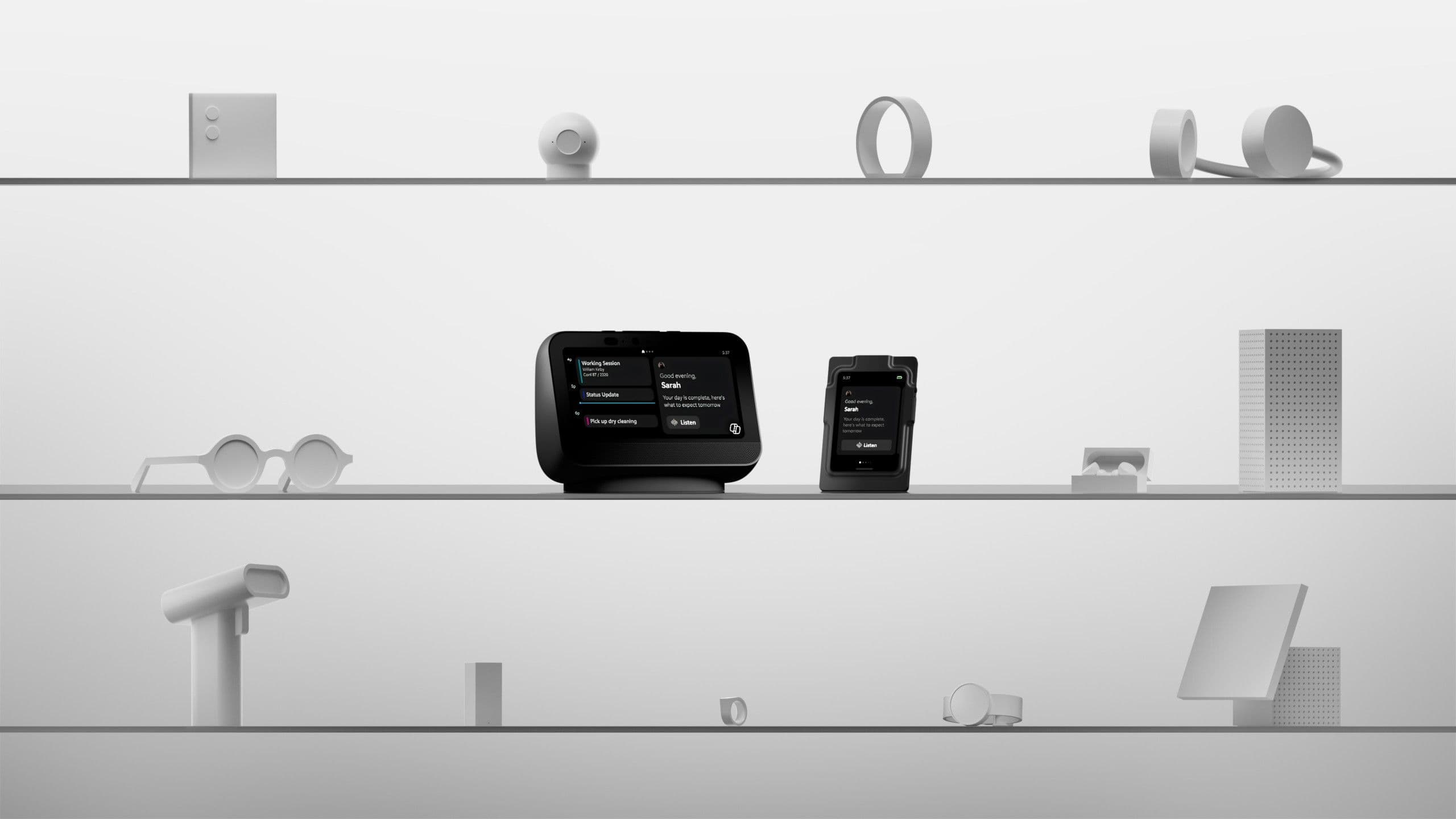
Microsoft showed two concept devices to demonstrate what Solara hardware might look like.
The desktop companion runs on MediaTek IoT silicon. It includes a display, camera, UWB presence sensor for automatic login and lock, dual far-field microphones, and two USB-C ports. Connect it to an external display and it can serve as a Windows 365 cloud PC client.
The wearable badge targets frontline workers like nurses and retail staff. It runs on Qualcomm hardware and packs a touchscreen, Hello for Business fingerprint sensor, far-field high-SNR microphone array, side-facing camera, and connectivity options including 5G, WiFi, Bluetooth, and GNSS.
The Security Question
An Android-based OS handling enterprise workloads raises obvious security questions. Microsoft's answer is centralized control through Azure. The platform includes what the company describes as centralized security, management, and orchestration capabilities.
Early reactions from technical communities are mixed. HackerNews discussions have focused heavily on whether this architecture creates ecosystem lock-in. IT subreddits are more optimistic about simplified device management through Microsoft Intune. The wearable badge concept has drawn skepticism about practical utility.
Another major platform using AI for device-level security
What This Actually Changes
Project Solara represents Microsoft's attempt to define what "agent-first" hardware means before competitors do. The pitch is that AI agents should be the primary interface for enterprise users, automating multi-step tasks that previously required navigating software manually.
The practical implications depend on whether these agents actually work better than apps. A frontline worker with a Solara badge doesn't launch an inventory app. They ask the agent to check stock levels, and the agent handles the rest. If the agents are good, this removes friction. If they're not, it adds a layer of AI confusion to every task.
Logicity's Take
Frequently Asked Questions
What operating system does Project Solara use?
Solara devices run the Microsoft Device Ecosystem Platform (MDEP), a lightweight OS built on the Android Open Source Project (AOSP) rather than Windows.
Will Microsoft sell Solara hardware directly?
No. Microsoft is releasing reference designs for OEMs to build from, partnering with Qualcomm and MediaTek for silicon. Microsoft controls certification but doesn't manufacture end products.
What's the difference between Solara and a regular Windows PC?
Solara devices are thin clients designed to interface with AI agents running in Azure cloud, not fully self-contained computers. They run apps through cloud services, not locally installed software.
When will Solara devices be available?
Microsoft announced the platform at Build 2026 but has not provided specific availability dates for OEM devices based on the reference designs.
Need Help Implementing This?
Source: Latest from Tom's Hardware
Huma Shazia
Senior AI & Tech Writer
Produced with AI assistance and reviewed by the Logicity editorial team. Learn more in our Editorial Policy.