Key Takeaways

- Klaviyo offers superior eCommerce automation and predictive AI, but costs nearly double Mailchimp at high contact volumes.
- Mailchimp covers more marketing channels (ads, social, website builder) and is easier for beginners to learn.
- Both start at $20/month for 500 contacts; Klaviyo's free tier is more generous with 250 contacts and $5 monthly SMS credits.
Klaviyo and Mailchimp target different audiences, and their branding makes that obvious. Mailchimp leans friendly and accessible; Klaviyo's jet-black site name-drops Fortune 500 clients and uses terms like "agentic commerce." But the choice isn't as simple as vibes. Mailchimp has quietly grown powerful, while Klaviyo serves eCommerce brands of all sizes, not just enterprise. For SaaS founders weighing email platforms, the decision hinges on what you actually need: broad marketing channels or deep automation.
Disclosure
Some links in this post are affiliate links — Logicity earns a commission if you sign up, at no extra cost to you. We only link products we have used or actively recommend.
| Category | Klaviyo | Mailchimp |
|---|---|---|
| Ease of use | Intuitive but steeper learning curve | Beginner-friendly, quick to start |
| Pricing (500 contacts) | $20/month | $20/month |
| Free plan | 250 contacts + $5 SMS credits/month | 250 contacts, no automation |
| eCommerce depth | World-class integrations, Customer Hub, Helpdesk add-ons | Basic integrations, no dedicated eComm support tools |
| Marketing automation | AI-powered flows, predictive analytics | 100+ templates, less advanced |
| AI features | Composer builds campaigns from prompts, churn prediction | Intuit Assist for content and segments |
| Marketing channels | Email, SMS, WhatsApp, Instagram, landing pages | Email, SMS, ads, social scheduling, website builder (no WhatsApp) |
Which platform is easier to learn?
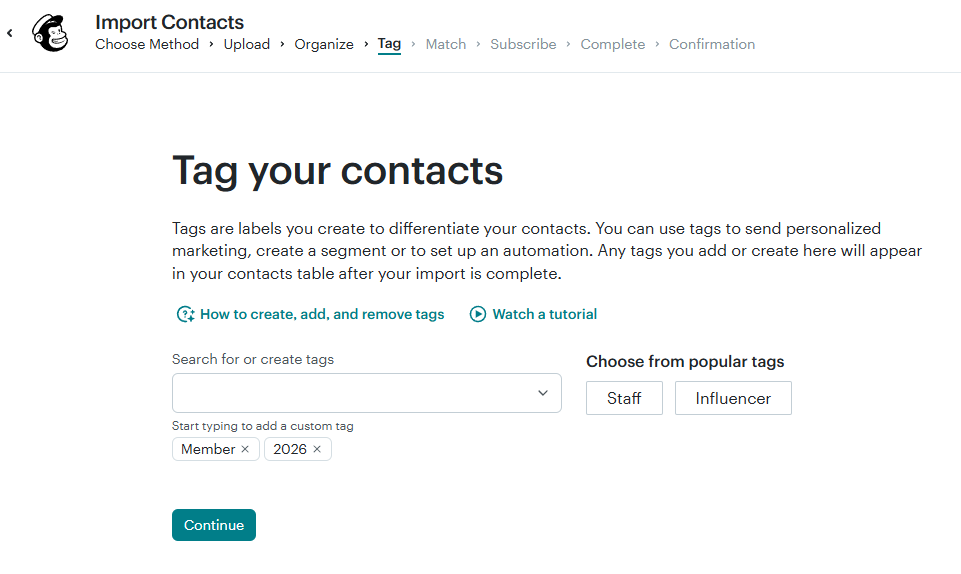
Mailchimp wins here. It was built for small business owners with no marketing background, and it shows. The interface uses plain language: clicks, sales, customer loyalty. A first-time user can send a campaign within an hour.
Klaviyo's interface is clean, but its feature depth creates friction. Segments, flows, and predictive analytics are powerful once you understand them. But "once you understand them" is doing a lot of work. Expect a few days of ramp-up before you feel confident.
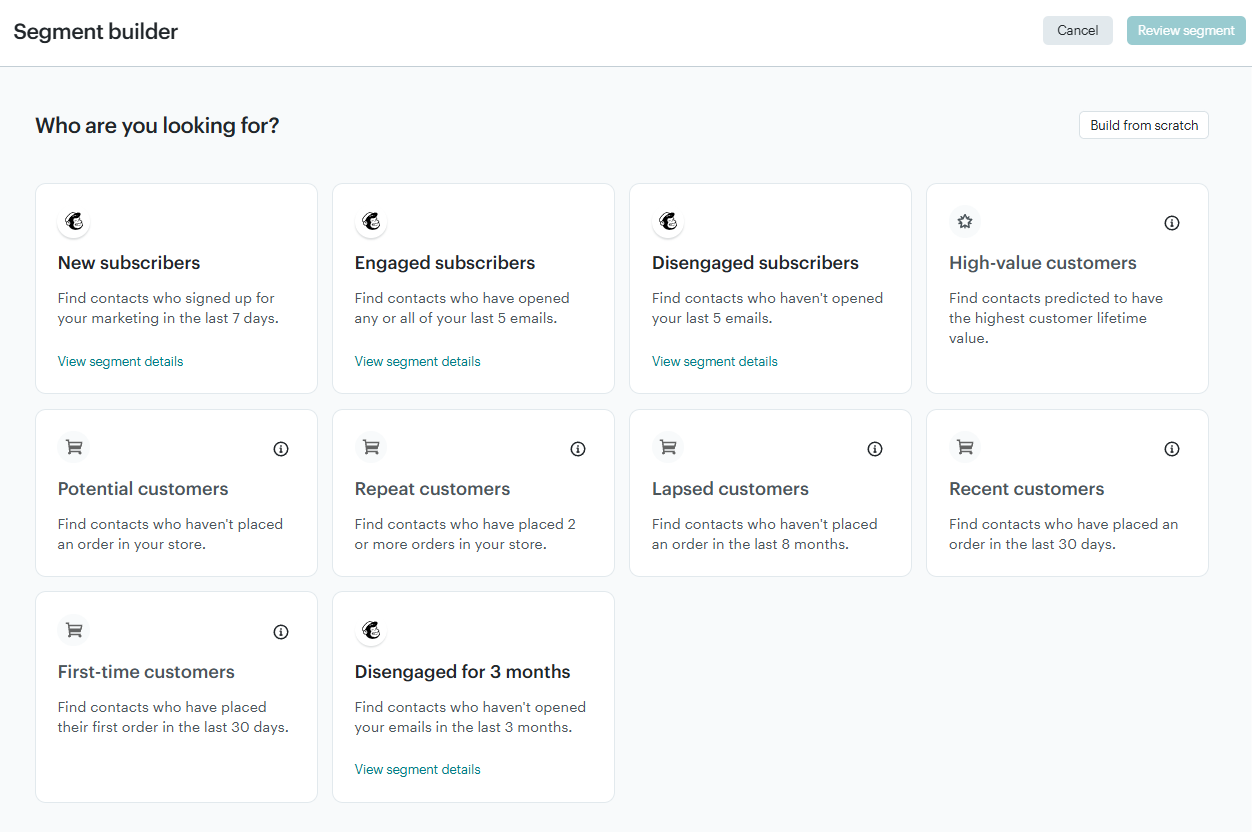
How does pricing compare at scale?
Both platforms start at $20/month for 500 contacts. At that level, the difference is negligible. But as your list grows, Klaviyo costs nearly double what Mailchimp charges. If you're running a high-volume newsletter or a SaaS with thousands of users, Mailchimp's pricing becomes more attractive.
Klaviyo's free tier is more generous. You get 250 contacts plus $5 in monthly SMS credits, roughly 150 messages, at no cost. Mailchimp's free plan caps at 250 contacts and excludes automation entirely, which limits its usefulness for anything beyond basic sends.
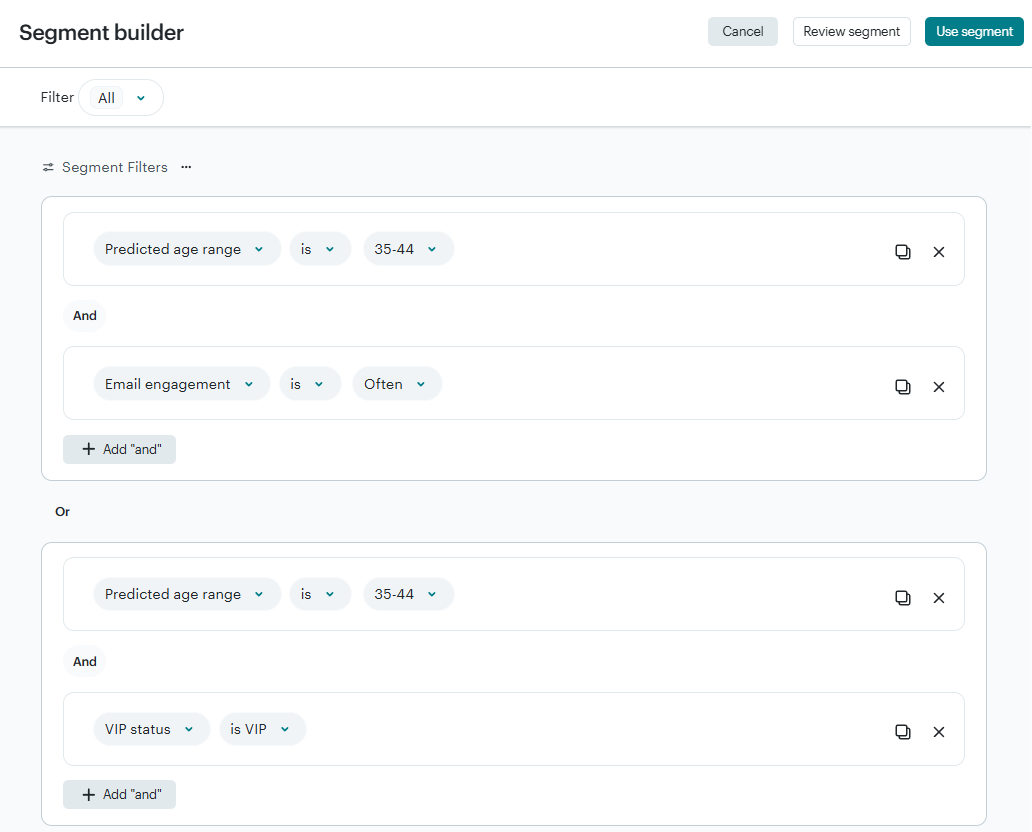
For early-stage SaaS, Klaviyo's free plan offers more value. For growth-stage companies with large lists, Mailchimp's paid tiers are cheaper.
eCommerce automation: Klaviyo pulls ahead
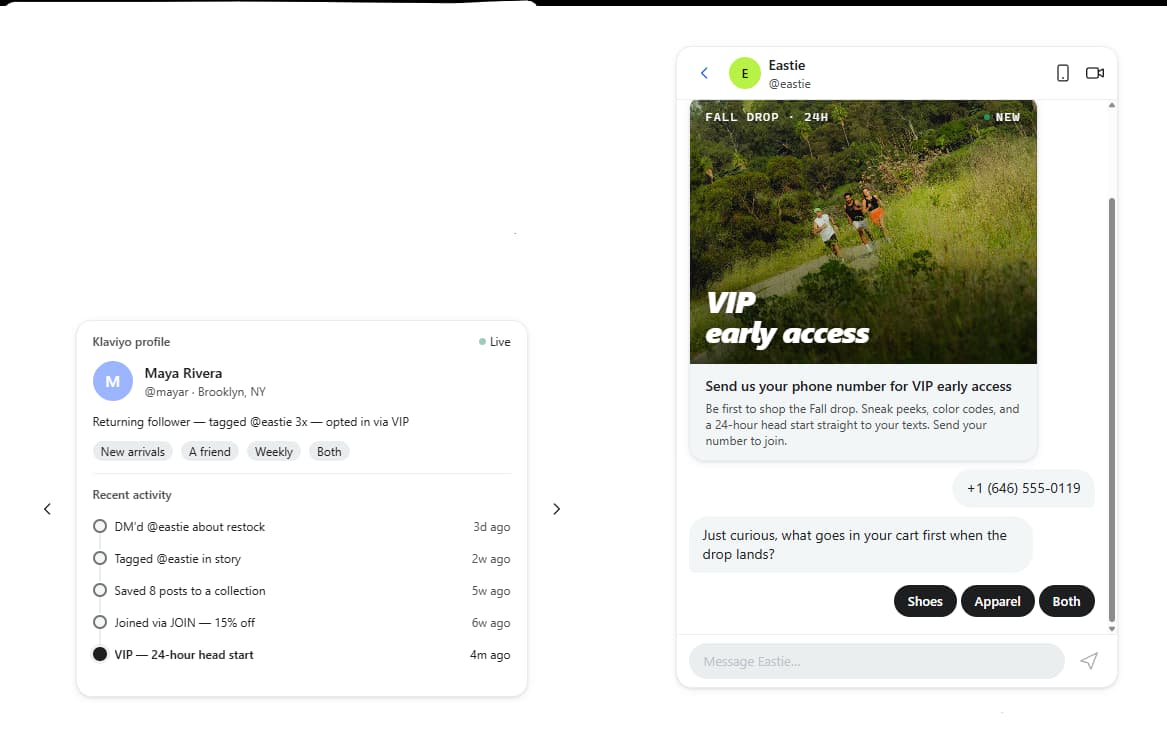
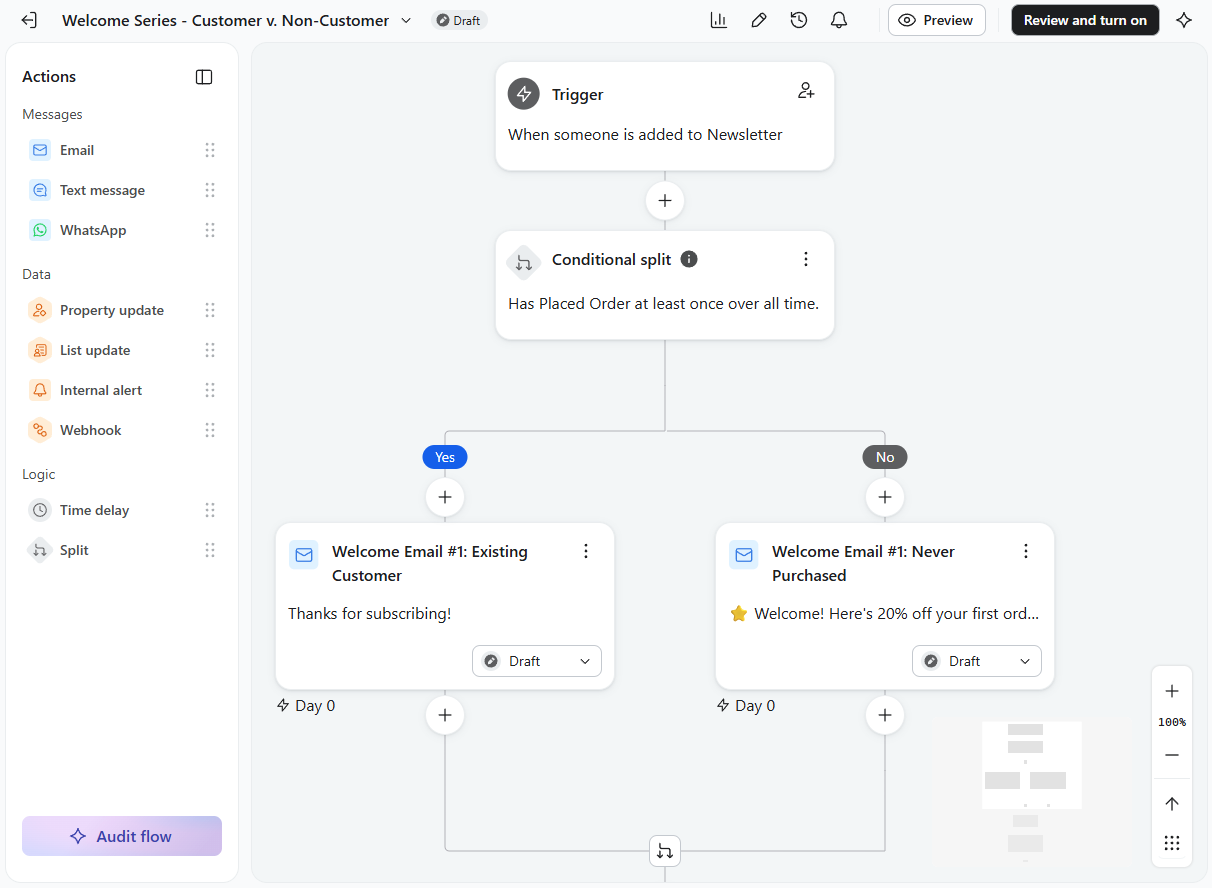
Klaviyo was built for eCommerce, and it shows. Its integrations with Shopify, WooCommerce, and other platforms are deep. Abandoned cart flows, browse abandonment triggers, and post-purchase sequences work out of the box with minimal configuration.
The real differentiator is Klaviyo's customer service suite. Customer Hub, Customer Agent, and Helpdesk are add-ons that let you handle post-purchase support directly within the platform. If you're running a Shopify store and want unified marketing plus support, this matters.
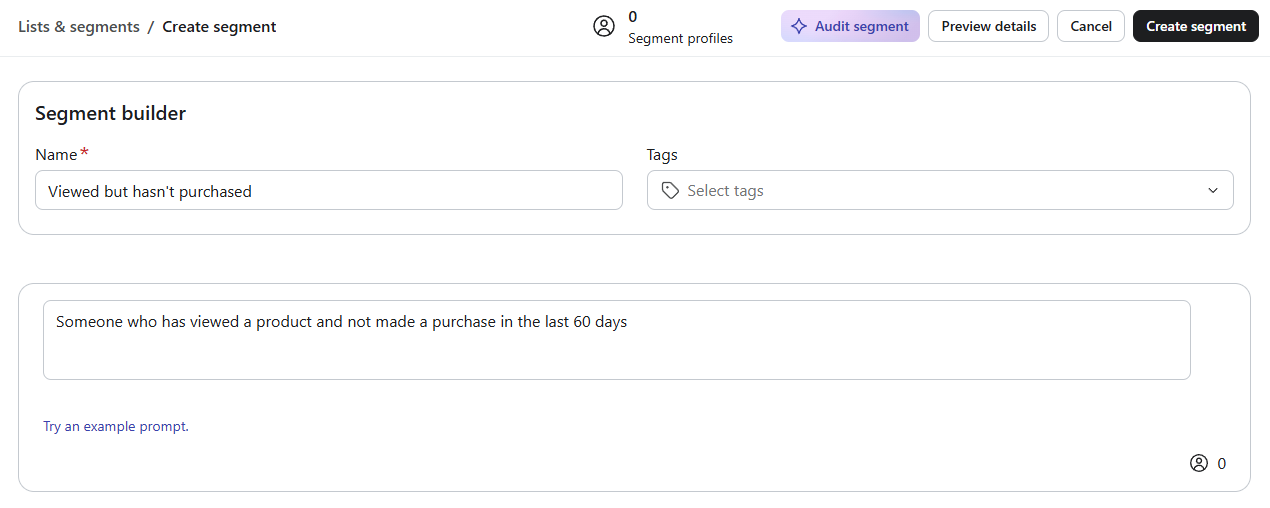
Mailchimp integrates with major eCommerce platforms, but it lacks dedicated tools for customer service. For a small shop with simple needs, Mailchimp works fine. For anything beyond basic transactional emails, Klaviyo offers more control.
AI features: Klaviyo's Composer vs Mailchimp's Intuit Assist
Klaviyo's AI goes further. Composer generates full campaigns from a single prompt, analyzes your account, and surfaces recommendations. Predictive analytics forecast churn risk and optimal reorder timing. If you want AI that actually influences strategy, not just drafts copy, Klaviyo delivers.
Mailchimp's Intuit Assist handles content generation and builds segments with AI suggestions. It also offers AI-powered flow templates. These are useful but modest. Mailchimp has signaled a larger AI update is coming, but as of August 2026, Klaviyo's AI capabilities are ahead.
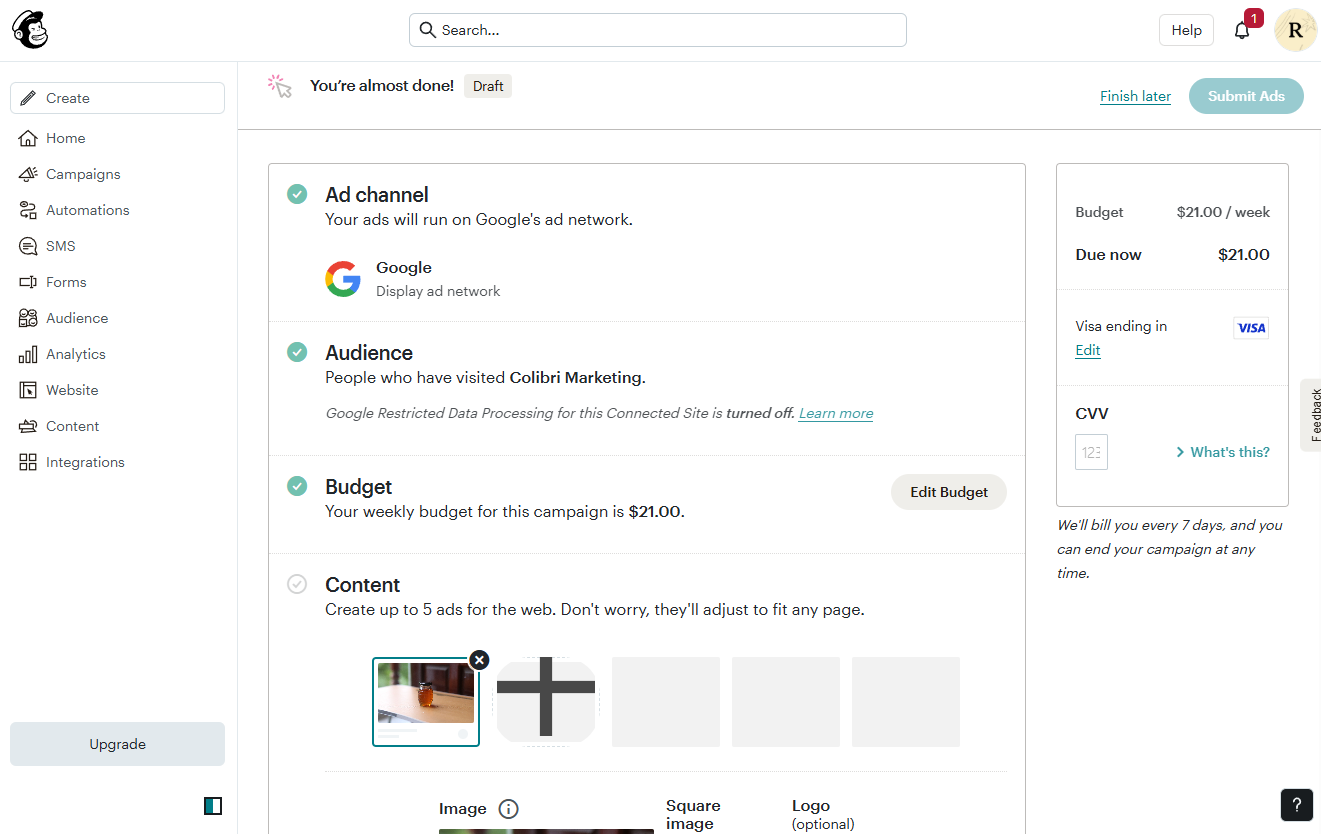
Relevant if you're building marketing automations that need to connect email platforms to your broader stack.
Marketing channels: Mailchimp covers more ground
Mailchimp offers email, SMS, landing pages, paid ads, popups, social post scheduling, surveys, and a built-in website builder. For a small business that wants one platform for everything, this breadth is hard to beat.
Klaviyo covers email, SMS, WhatsApp, Instagram marketing, and landing pages. No ads, no social scheduling, no website builder. If your strategy centers on owned channels and you don't need ad management, this is enough. If you want to run Facebook ads and schedule tweets from the same dashboard, Mailchimp is the better fit.
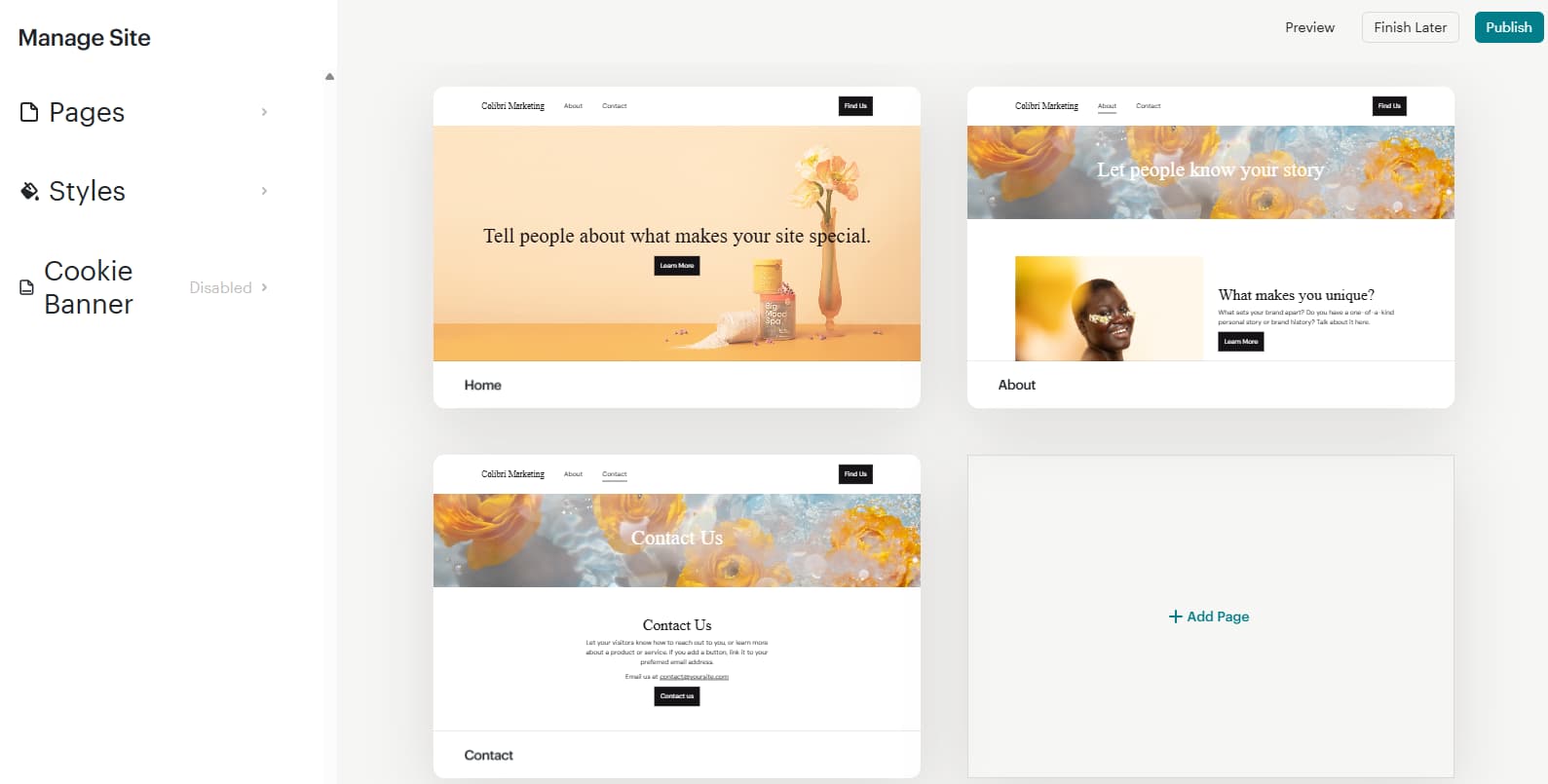
For SaaS founders focused on product-led growth, Klaviyo's channel mix is usually sufficient. For founders running content or community plays that involve heavy social presence, Mailchimp simplifies the stack.
Analytics and reporting
Both platforms offer strong analytics, but they serve different needs. Klaviyo provides dozens of prebuilt reports and a flow analytics dashboard that tracks performance across channels. If you're optimizing complex automations, this granularity helps.
Mailchimp's analytics are easier to read. Built-in click maps, engaging visualizations, and clear eCommerce stats make it simple to understand what's working. For a founder who checks metrics weekly rather than daily, Mailchimp's approach is less overwhelming.
Both platforms integrate with hundreds of apps and connect to Zapier, so neither locks you into a closed ecosystem. If you're already using ActiveCampaign or Customer.io elsewhere in your stack, migrations are straightforward.
Logicity's Take
For most SaaS founders, the decision comes down to growth stage and channel strategy. Klaviyo is the better pick if you're selling products (not just subscriptions), need sophisticated automation, or want AI that predicts customer behavior. Mailchimp wins if you're early-stage, want an all-in-one tool for marketing plus basic ads and social, or prioritize ease over depth. At scale, Mailchimp's pricing advantage matters; Brevo and Customer.io are also worth evaluating if cost is the primary constraint.
Another tool comparison for SaaS teams evaluating their core stack.
Frequently Asked Questions
Does Klaviyo work for SaaS, or is it only for eCommerce?
Klaviyo's strongest features target eCommerce, but SaaS companies selling physical products or running product-led growth with transactional emails can use it effectively. Pure B2B SaaS with sales-led motions may find HubSpot or ActiveCampaign a better fit.
Can I migrate from Mailchimp to Klaviyo without losing data?
Yes. Klaviyo offers a direct import from Mailchimp, including contacts, segments, and historical engagement data. Most migrations complete in under an hour.
Which platform has better deliverability?
Both maintain strong sender reputations and offer domain authentication. Deliverability depends more on your sending practices than the platform itself.
Need Help Implementing This?
If you're evaluating email platforms and want a second opinion on what fits your SaaS, reach out to our team. We've helped dozens of founders pick and migrate their marketing stacks.
Source: The Zapier Blog
Manaal Khan
Tech & Innovation Writer
Produced with AI assistance and reviewed by the Logicity editorial team. Learn more in our Editorial Policy.