Key Takeaways
- The iPhone Ultra is Apple's first foldable, expected to launch with the iPhone 18 lineup in September
- Leaked renders suggest a 4.7mm unfolded thickness and no built-in MagSafe support
- The device may feature a 5.5-inch cover display and 7.8-inch inner screen
What the Leaked Renders Show
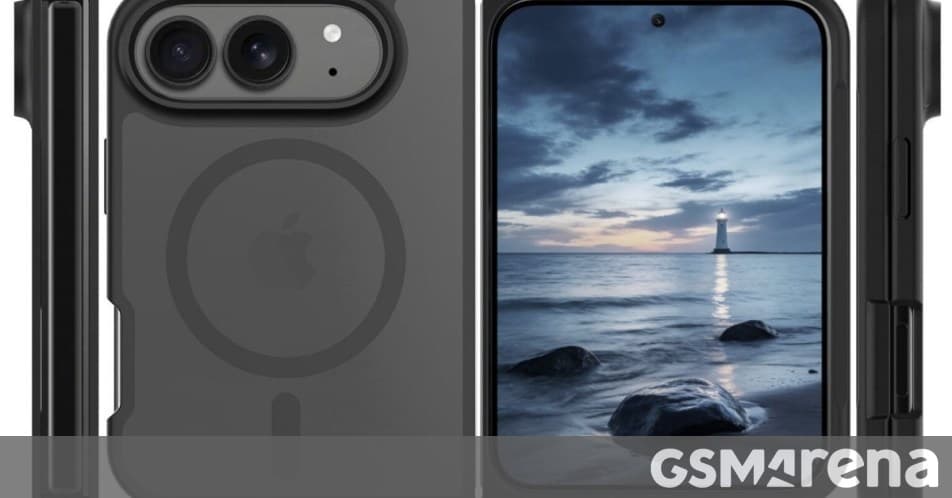
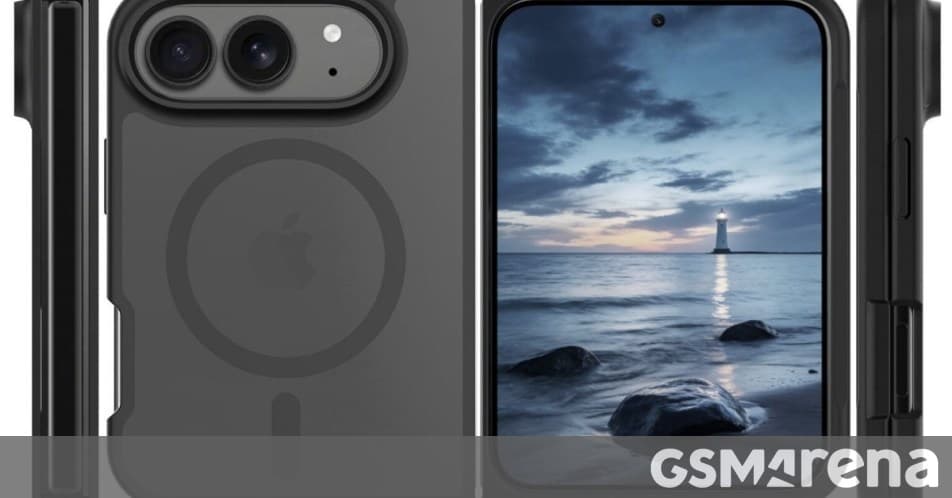
A case manufacturer has given us our clearest look yet at Apple's upcoming foldable iPhone. The leaked renders, which show the device from multiple angles, reveal a black-finished phone with a horizontal folding mechanism.
The most notable detail: the iPhone Ultra appears to lack built-in MagSafe support. If accurate, users would need a case to enable magnetic wireless charging. That's a significant departure from Apple's current lineup, where MagSafe has become a core feature since its 2020 debut.
Button placement differs from standard iPhones too. The volume buttons sit along the top edge rather than the left side, while the power button remains on the right. A cutout below the power button suggests an antenna band, a common design element in foldables that need to maintain signal strength across hinged surfaces.
Camera Design Borrows from iPhone Air
The rear camera setup looks familiar. Apple appears to be using a dual-camera module housed in a design similar to the iPhone Air. Reports suggest a 48MP primary sensor, matching the current iPhone Pro lineup's main shooter.
This is a conservative choice for a flagship foldable. Samsung's Galaxy Z Fold series uses triple rear cameras, and competitors like Honor have packed even more sensors into their folding phones. Apple seems to be prioritizing thinness over camera versatility.
Specs: What We Know So Far
The rumored specifications paint a picture of a device built around portability and display real estate.
- 4.7mm thickness when unfolded, 9.23mm when folded
- 5.5-inch cover display for quick tasks
- 7.8-inch inner screen with a wider aspect ratio
- A20 Pro chipset
- Battery capacity around 5,500mAh
- Touch ID integrated into the power button
The 4.7mm unfolded thickness would make this one of the thinnest foldables on the market. For comparison, Samsung's Galaxy Z Fold 6 measures 5.6mm unfolded. The tradeoff is clear: Apple is betting that customers will sacrifice MagSafe and camera count for a slimmer profile.
Touch ID Returns
One surprising detail: Touch ID may return via the power button. Apple moved away from fingerprint sensors with Face ID in 2017, except for the iPad and lower-cost iPhones. A foldable presents unique challenges for Face ID. When folded, the front-facing camera may be partially obscured, making a fingerprint sensor a practical backup.
This mirrors Samsung's approach with the Galaxy Z Flip and Fold lines, which use side-mounted fingerprint sensors.
Launch Timeline
The iPhone Ultra is expected to debut alongside the iPhone 18 Pro lineup in September. Apple has never released a foldable phone, making this a major expansion of its hardware portfolio. The company has watched Samsung, Huawei, and others iterate on foldable designs for years before entering the market.
Community Skepticism
Reactions on Reddit's r/Apple and Hacker News have been mixed. Many users are excited about Apple's hardware design shift but concerned about the potential lack of MagSafe. For power users who rely on MagSafe chargers, car mounts, and wallet attachments, requiring a case to enable these features feels like a step backward.
Technical discussions have focused on the A20 Pro chip's thermal efficiency. A 4.7mm chassis leaves little room for heat dissipation, and the large folding display will demand significant power. Whether Apple can balance performance and thermals in this form factor remains an open question.
Logicity's Take
Frequently Asked Questions
When will the iPhone Ultra foldable be released?
The iPhone Ultra is expected to launch alongside the iPhone 18 Pro lineup in September, likely September 2026.
Will the iPhone Ultra have MagSafe?
Based on leaked case renders, the iPhone Ultra may not have built-in MagSafe support. Users might need a compatible case to use magnetic wireless charging accessories.
How thick is the iPhone Ultra?
The device is rumored to measure 4.7mm when unfolded and 9.23mm when folded, making it one of the thinnest foldables if accurate.
What size screens will the iPhone Ultra have?
Reports suggest a 5.5-inch cover display for use when folded and a 7.8-inch inner screen when unfolded.
Will the iPhone Ultra have Face ID?
The device is rumored to feature Touch ID integrated into the power button. It's unclear if Face ID will also be included.
More on Apple's recent strategic moves
Need Help Implementing This?
Source: GSMArena.com / Siddharth
Manaal Khan
Tech & Innovation Writer
Produced with AI assistance and reviewed by the Logicity editorial team. Learn more in our Editorial Policy.