Key Takeaways
- Modern OTA antennas cost $15-40 and deliver uncompressed HD signals from major networks without internet
- Free apps like NewsON stream live local broadcasts from 275+ stations on any device
- Network tuners like HDHomeRun let you watch antenna TV on phones and tablets throughout your home
The local news problem with cord-cutting
Replacing Netflix or HBO is easy. Finding a free replacement for your local 6 o'clock news, weather alerts, and community coverage? That's where most cord-cutters hesitate. Bryan Wolfe, a tech journalist at MakeUseOf, faced the same concern when he canceled his cable subscription two years ago.
His conclusion after living without cable: "I actually watch more local news now, and I don't pay anything for it." The methods he uses require either a one-time hardware purchase or nothing at all.
Method 1: The OTA antenna (best picture, no internet required)
Modern antennas look nothing like the rabbit ears from the 1980s. They're thin, flat, and can hide behind a TV or stick to a window. A decent one costs $15-40. That's it. No monthly fees.
An over-the-air antenna pulls broadcast signals directly from major networks: ABC, CBS, NBC, FOX, and PBS. Because the signal is uncompressed, picture quality is often sharper than cable. More importantly, it works when your internet goes down. During severe weather, when you most need local emergency broadcasts, your antenna keeps working even if your Wi-Fi or fiber line fails.
Upgrade: Network tuners for whole-home access
Want to watch antenna TV on your phone, tablet, or any streaming stick in your house? Plug your antenna into a network tuner instead of directly into your TV. The SiliconDust HDHomeRun Flex 4K and Tablo boxes are the main options. These devices broadcast the antenna signal over your home Wi-Fi, letting you watch live local channels through a dedicated app on any device.
The HDHomeRun Flex 4K has four built-in tuners. Two support 4K broadcasts. You buy it once, and there's no subscription required for basic functionality.
Method 2: Free streaming apps (no hardware needed)
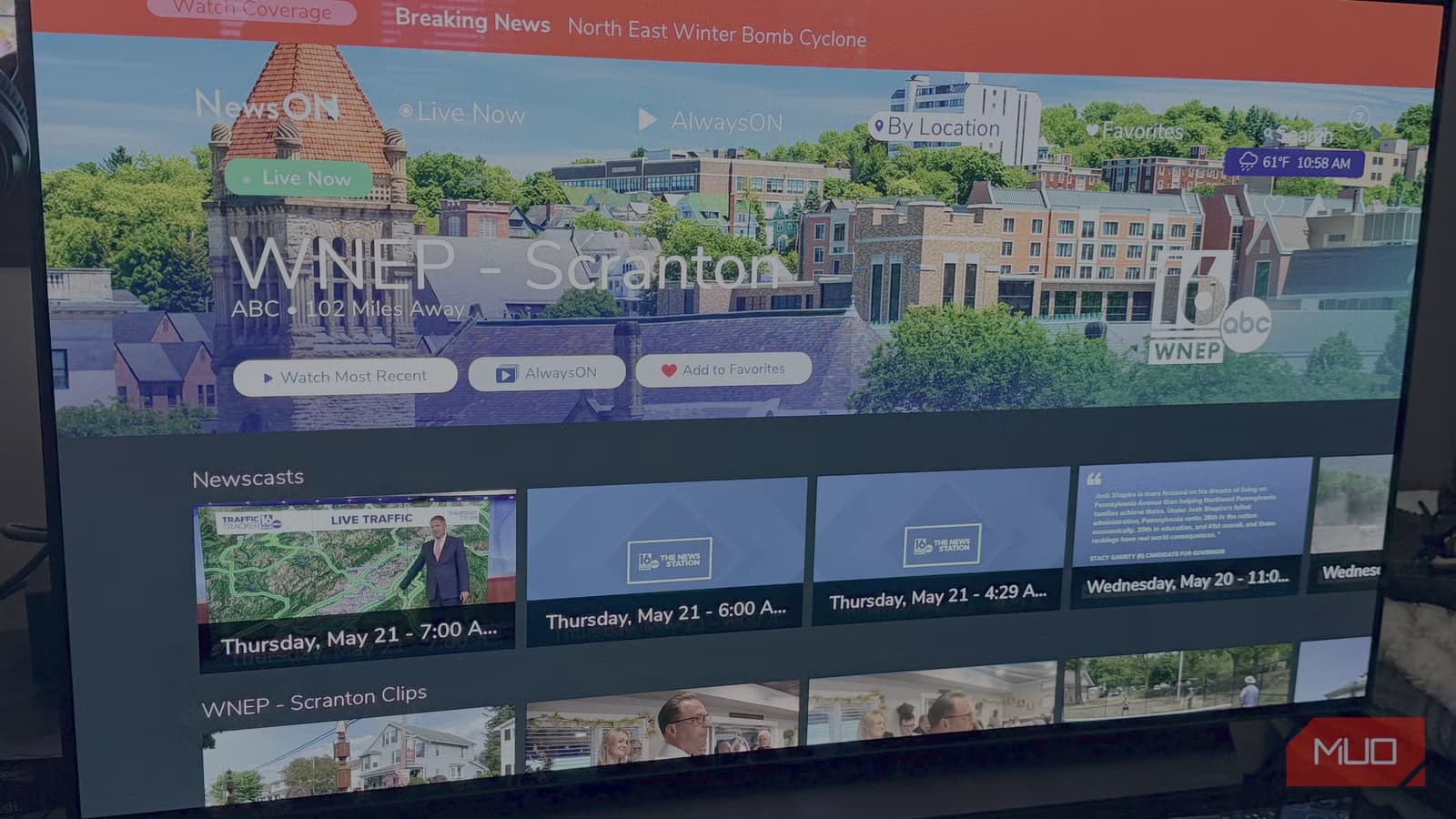
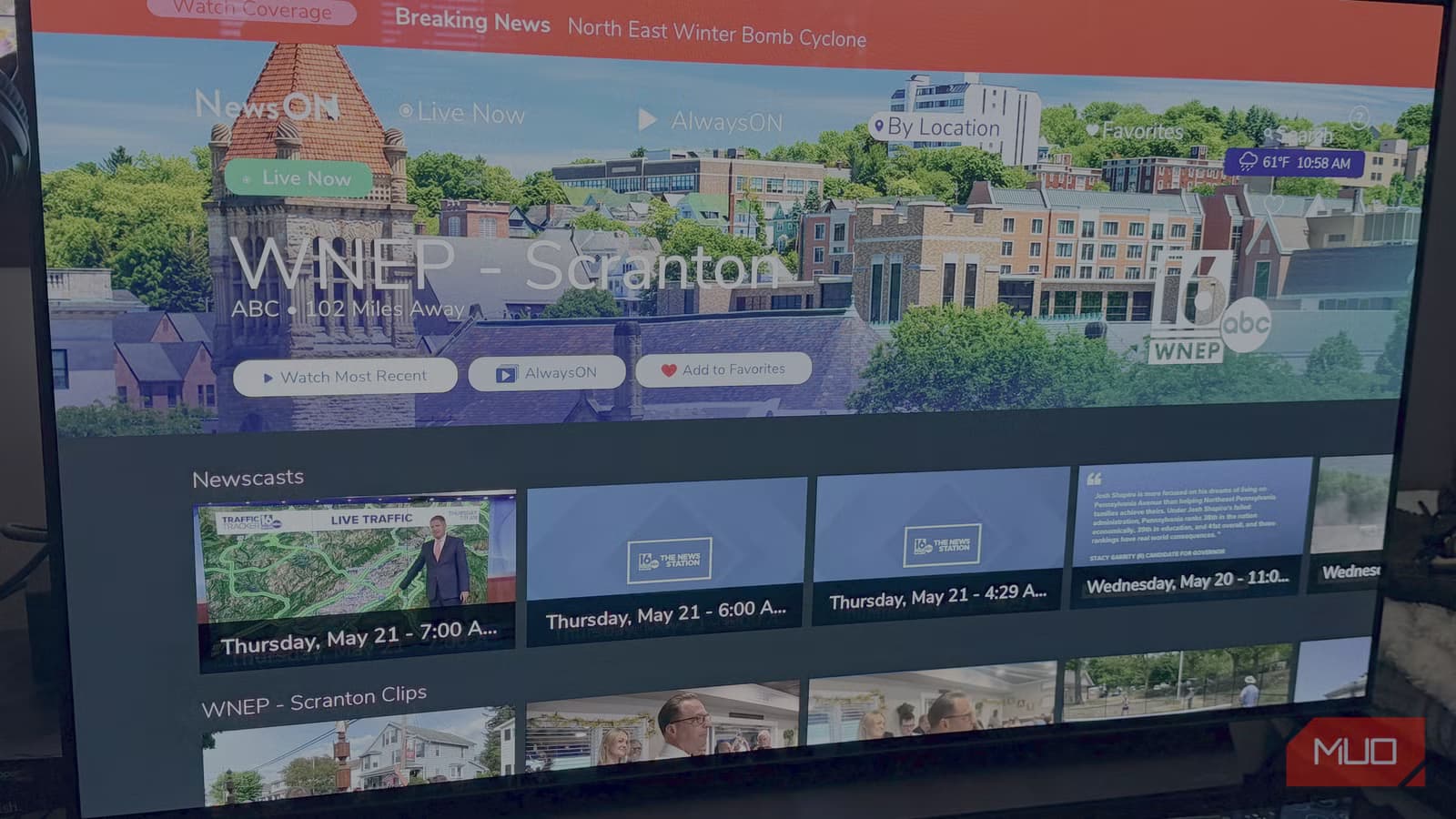
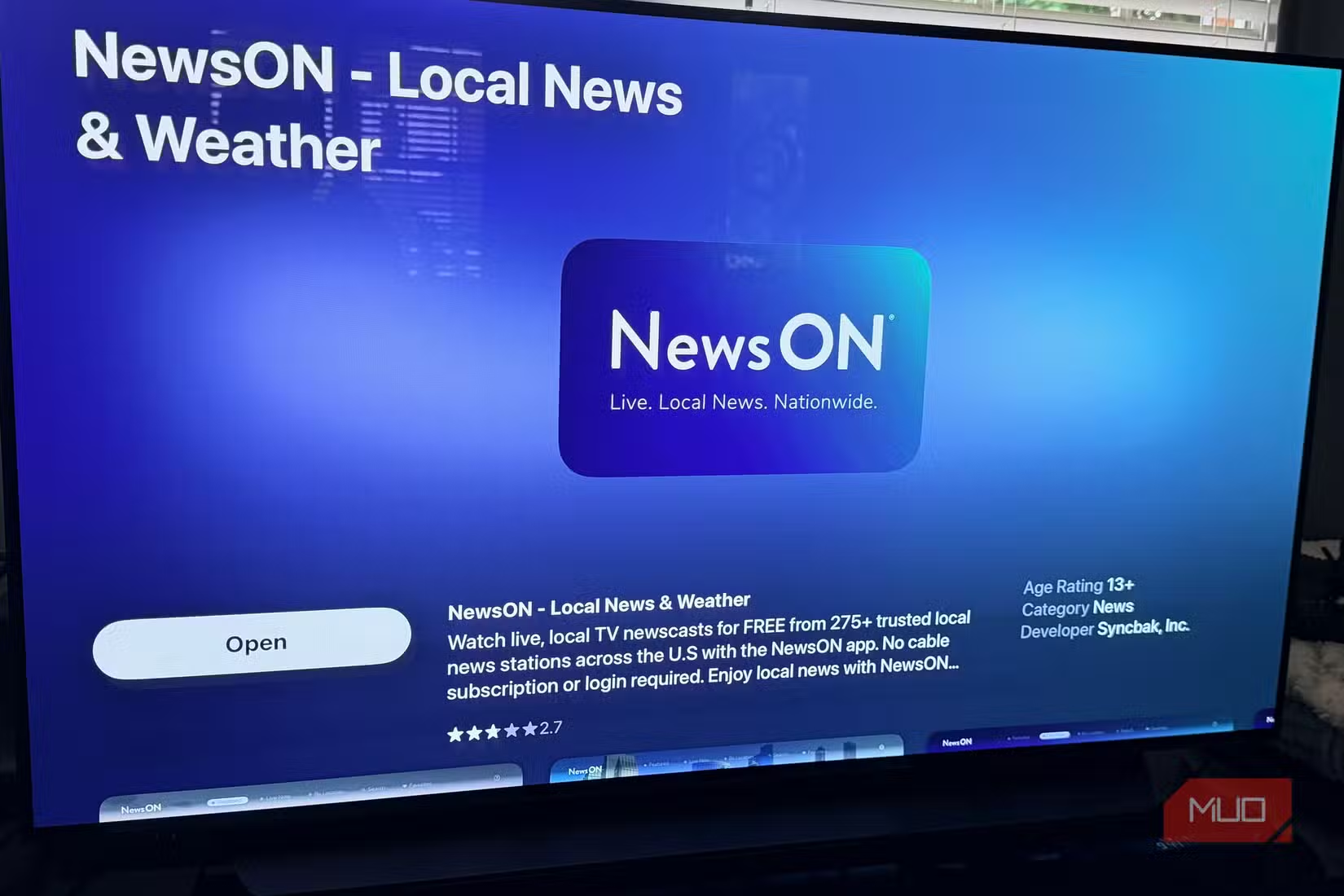
If you don't want to buy anything, free ad-supported streaming apps now carry live local news. NewsON is the standout option. It streams live broadcasts from over 275 local stations across the country. You pick your market, and it shows you what's airing on local affiliates right now.
NewsON works on Apple TV, Roku, Fire TV, iOS, and Android. No login required. No fees. The trade-off is ads, but that's true of broadcast TV anyway.
Other free options
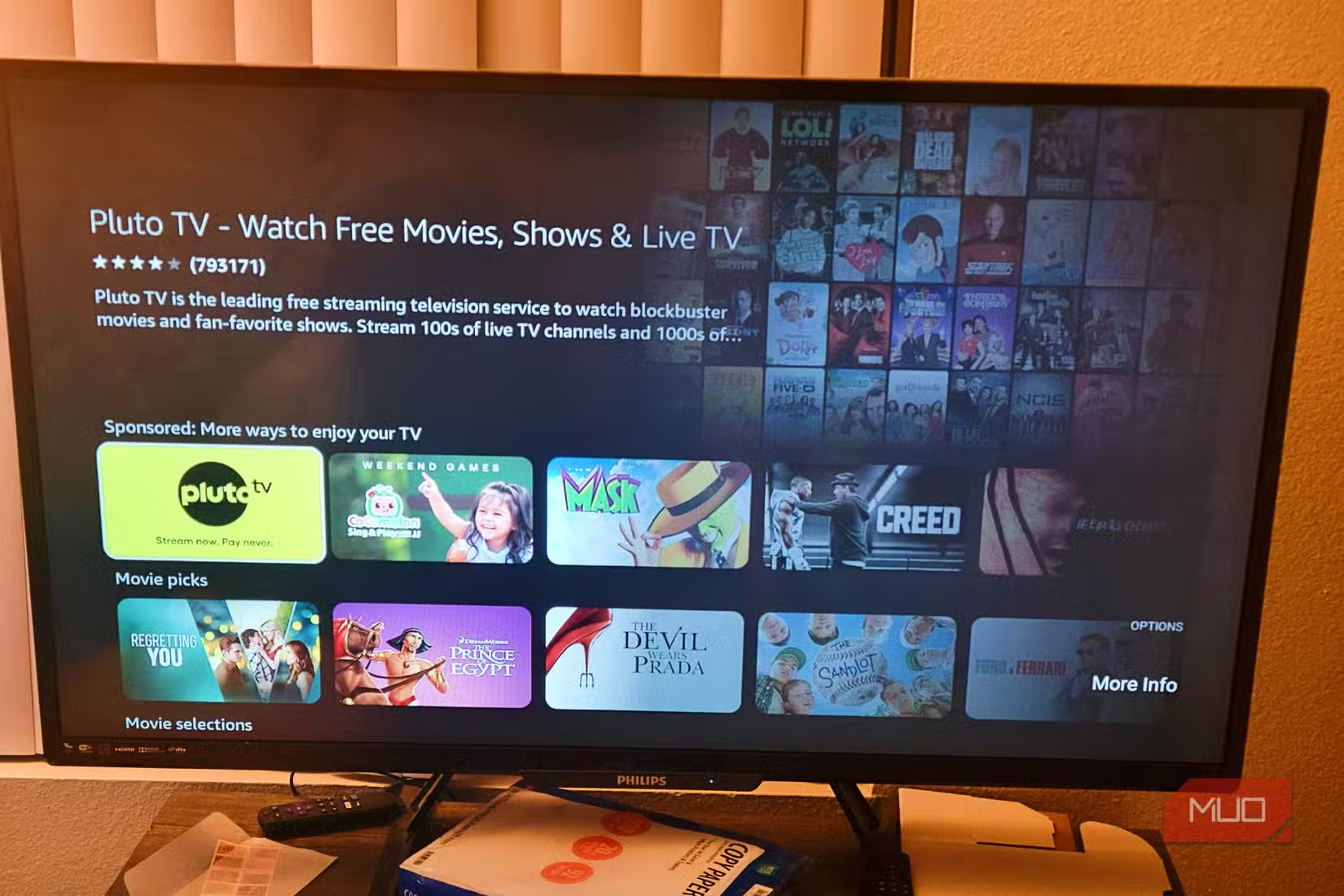
- Pluto TV: Offers some local news channels, though selection varies by market
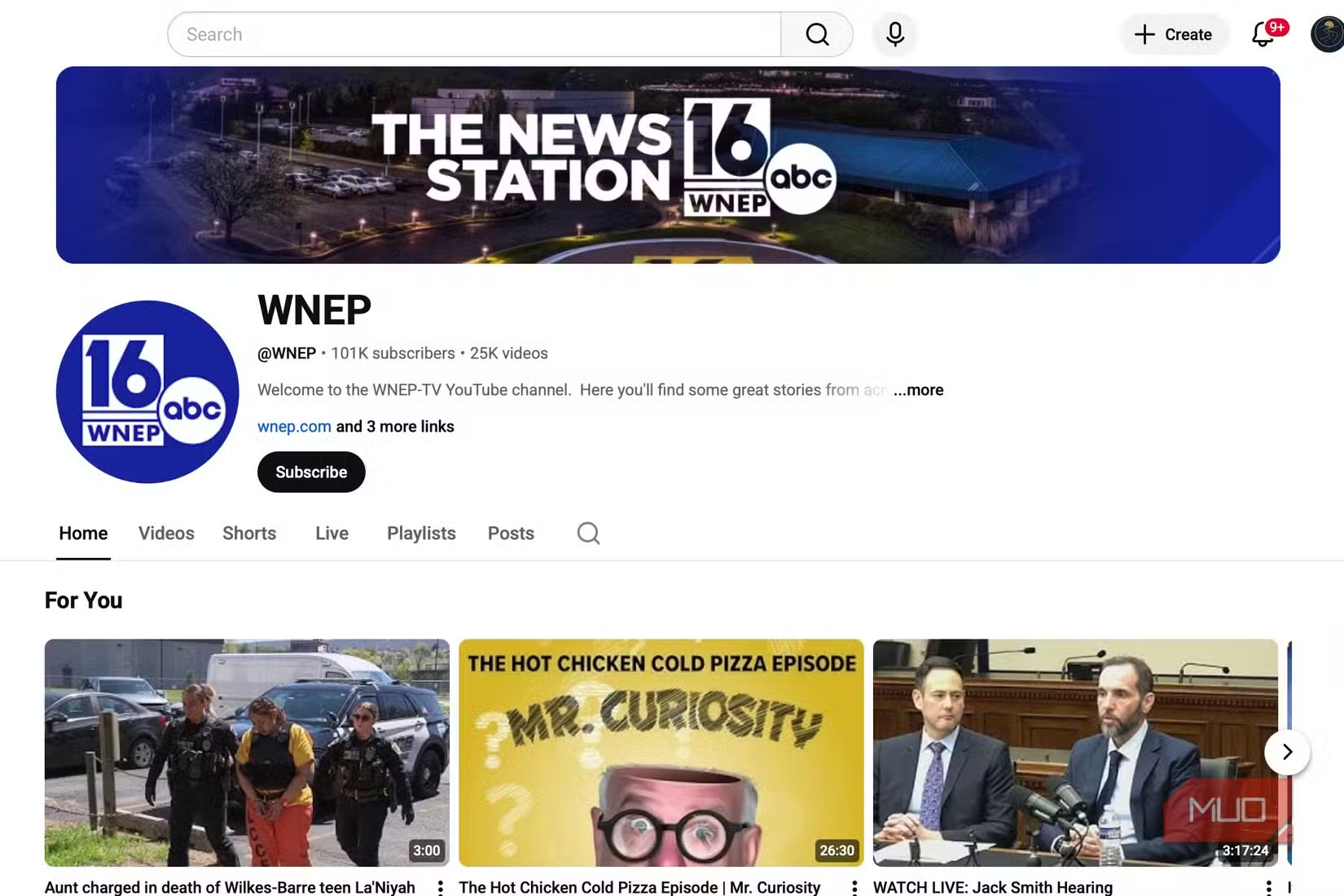
- YouTube: Many local stations stream their newscasts live on their YouTube channels
- Station websites and apps: Most local affiliates have their own free apps with live streams
Why this matters beyond saving money
The shift away from cable has real consequences for local journalism. When people cancel cable, the "broadcast TV fees" that partially funded local news production disappear.
According to industry data, 86.7% of cord-cutters cite high prices and broadcast fees as their primary reason for canceling. The money has to come from somewhere. For now, ad-supported free streaming apps and direct antenna viewing keep local stations viable. Whether that model holds as more households cut the cord remains unclear.
The 'Cable 2.0' trap to avoid
Many cord-cutters end up right back where they started. They cancel a $100/month cable bill, then subscribe to YouTube TV ($73/month), Netflix ($15), and a couple of other services. Suddenly they're paying the same amount with more passwords to manage.
“We've essentially just rebuilt the cable experience with more passwords and higher monthly premiums under the guise of 'cord cutting'.”
— Mark Thorne, Consumer Tech Advocate
Communities on Reddit and HackerNews have organized around "churning" strategies, rotating subscriptions monthly to avoid this trap. For local news specifically, the free options above mean you don't need to pay for YouTube TV or Fubo just to see your local weather forecast.
Quick-start checklist
- Check your address at RabbitEars.info to see which stations you can receive with an antenna
- If signals are strong, buy a $20-40 flat antenna and connect it directly to your TV
- If you want whole-home access, add a network tuner like HDHomeRun ($100-150 one-time cost)
- For no-hardware option, download NewsON on your streaming device or phone
- Check if your local stations have their own free apps or YouTube live streams
Logicity's Take
Frequently Asked Questions
Do I need internet to watch local news with an antenna?
No. OTA antennas receive broadcast signals directly from the air. Your TV doesn't need any internet connection to display these channels.
How much does an OTA antenna cost?
Basic flat antennas cost $15-40. Network tuners that let you watch antenna TV on multiple devices cost $100-150 as a one-time purchase with no subscription fees.
Is NewsON really free with no catch?
Yes. NewsON is ad-supported, so you'll see commercials like regular TV. But there's no subscription, no login required, and no hidden fees.
Will an antenna work in my area?
Check RabbitEars.info with your address. It shows which stations you can receive and how strong the signals are at your location.
Is the picture quality worse than cable?
Usually better. OTA signals are uncompressed, while cable providers compress their signals. Many people notice sharper images from an antenna.
More practical tech tips for getting more value from tools you already have
Need Help Implementing This?
Source: MakeUseOf
Manaal Khan
Tech & Innovation Writer
Produced with AI assistance and reviewed by the Logicity editorial team. Learn more in our Editorial Policy.