Key Takeaways
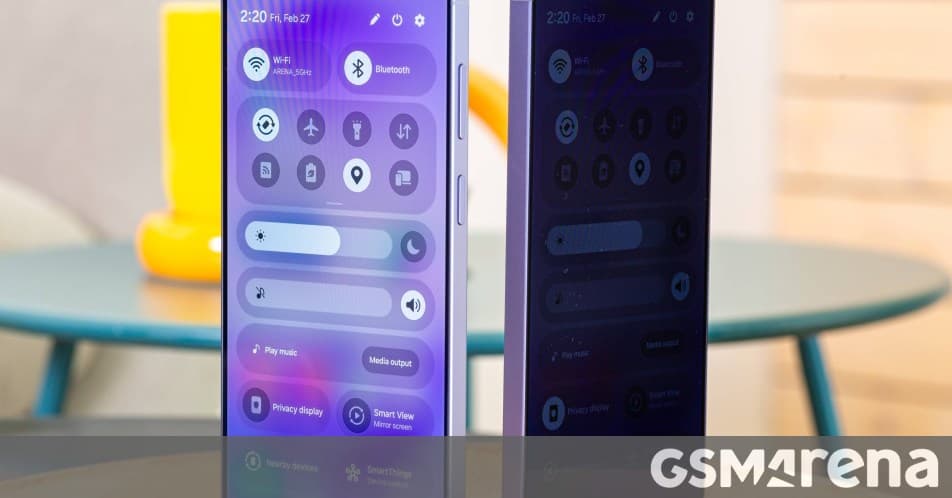
- Honor is testing privacy display technology on two upcoming devices, likely the Magic9 series
- Samsung Display will offer its Privacy Display panels to competing OEMs by the end of 2028
- Chinese display manufacturers are racing to develop alternatives to Samsung's technology
Honor is developing its own privacy display technology for upcoming flagships, partnering with Chinese panel makers rather than waiting for Samsung Display to share its screen-dimming tech. Samsung launched Privacy Display as the headline feature of the Galaxy S26 Ultra earlier this year, and the company plans to license the technology to competitors, but not until late 2028.
That three-year exclusivity window explains why Chinese OEMs are building their own solutions. Honor is reportedly testing privacy screens on two devices: one with a 6.3-inch display and another with a 6.8-inch panel. The size split suggests these are the Magic9 and Magic9 Pro, expected later this year.
What is privacy display technology?
Privacy display controls the angle at which screen content remains visible. When activated, the technology narrows the viewing cone so dramatically that people sitting beside you on a train or standing behind you in line see only a dark or blurred screen. The user looking straight at the phone sees everything normally.
Samsung's implementation in the S26 Ultra uses pixel-level light control within the OLED panel itself. This differs from the plastic privacy screen protectors that have existed for years, which physically block light but degrade image quality permanently. Samsung's approach activates on demand, preserving normal viewing angles when privacy isn't needed.
Why Chinese OEMs won't wait for Samsung
Samsung Display dominates smartphone OLED production. The company supplies panels to Apple, Google, and most Android manufacturers. But that supplier relationship doesn't mean competitors get access to every innovation. Samsung Mobile gets first crack at new panel technologies, and Privacy Display is a clear example.
Honor, Xiaomi, and other Chinese brands face an awkward choice: wait until 2028 for Samsung's proven technology, or develop alternatives with domestic panel makers like BOE, CSOT, and Visionox. They're choosing the second path.
Xiaomi's 18 Pro is also rumored to include a privacy display feature developed independently. The race is on to see whether Chinese panel technology can match Samsung's quality. Early implementations may have trade-offs in brightness, color accuracy, or the sharpness of the privacy cutoff angle.
Samsung's display business faces a strategic tension
Samsung operates two businesses that sometimes conflict. Samsung Mobile wants exclusive features to differentiate Galaxy phones. Samsung Display wants to sell premium panels to every phone maker on the planet. The 2028 timeline represents a compromise: Samsung Mobile gets a three-year head start, then Samsung Display can monetize the technology broadly.
This isn't new. Samsung Display supplied OLED panels to Apple for years while Samsung Mobile competed directly with iPhone. The display division treats its mobile division as one customer among many. But with genuinely differentiating features like Privacy Display, the internal negotiation over exclusivity periods matters.
Will Chinese privacy screens match Samsung's quality?
The honest answer: nobody knows yet. BOE and other Chinese panel makers have closed the gap with Samsung Display on standard OLED metrics like brightness and color gamut. But privacy display requires additional engineering at the subpixel level.
Key variables include how narrow the viewing angle gets, whether there's any brightness penalty when privacy mode activates, and how the transition looks when switching modes. First-generation Chinese implementations will likely have compromises. Whether those compromises matter to buyers depends on execution.
Honor's choice to test on two devices suggests confidence that the technology is close to production-ready. Testing on a single prototype is normal. Testing on both standard and Pro variants indicates planning for actual product launches.
Who actually needs this feature?
Privacy display solves a real problem for specific users. Business travelers reviewing sensitive documents in airports. Executives checking financial data in open offices. Anyone entering passwords or PINs in crowded spaces. The feature also appeals to people who simply don't want strangers reading their texts on the subway.
Whether this becomes a must-have feature or a checkbox spec remains unclear. Samsung positioned it as the S26 Ultra's marquee differentiator, which suggests internal research showed strong consumer interest. But plenty of headline features fade into obscurity after one generation.
Frequently Asked Questions
When will Honor phones get privacy display?
Honor is testing privacy display on devices expected to launch later in 2025, likely the Magic9 series. No official announcement has confirmed the feature.
Can other phone brands get Samsung's Privacy Display?
Samsung Display plans to offer Privacy Display panels to competing manufacturers by the end of 2028, giving Samsung Mobile roughly three years of exclusivity.
How does privacy display differ from a screen protector?
Privacy screen protectors are permanent physical filters that always narrow viewing angles. Privacy display is built into the panel and activates on demand, preserving normal viewing when not needed.
Which Chinese companies are making privacy display panels?
Chinese panel manufacturers including BOE are reportedly working with smartphone brands like Honor and Xiaomi to develop competing privacy display technology.
Logicity's Take
The 2028 licensing timeline tells the real story here. Samsung Display is betting that three years of Samsung Mobile exclusivity is worth more than immediate licensing revenue. That's a calculated gamble. If Chinese alternatives prove good enough, Samsung Display may find fewer takers when it finally opens the technology to all. Honor and Xiaomi aren't building alternatives because they prefer Chinese suppliers. They're building them because waiting until 2028 means ceding the mid-market privacy segment entirely.
More on Samsung's component technology strategy
Need Help Implementing This?
Looking to understand how display technology trends affect your mobile strategy? Logicity covers enterprise tech decisions. Reach out to our team for deeper analysis on hardware component roadmaps and vendor dynamics.
Source: GSMArena.com / Vlad
Manaal Khan
Tech & Innovation Writer
Produced with AI assistance and reviewed by the Logicity editorial team. Learn more in our Editorial Policy.