Key Takeaways
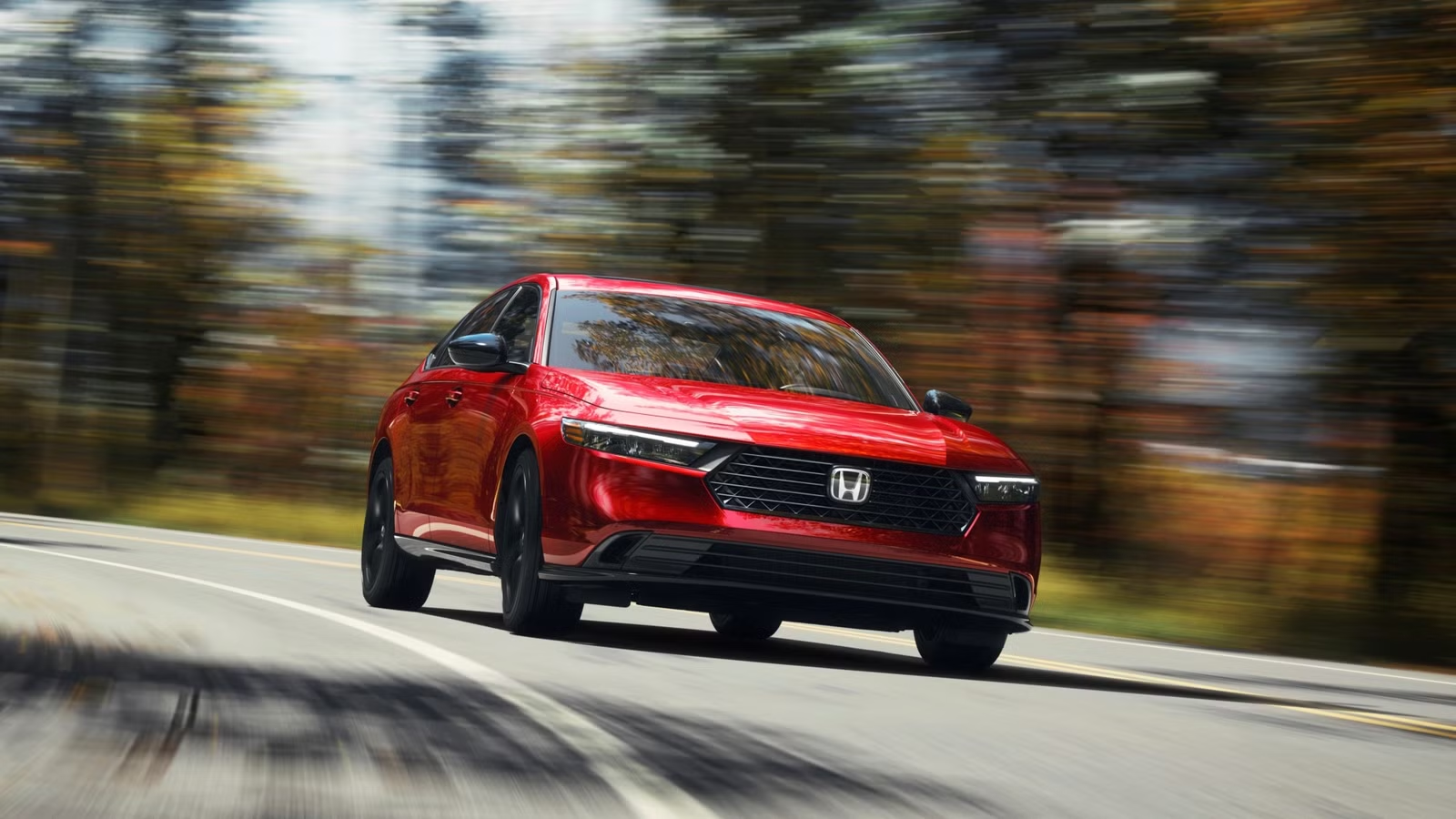
- The 2026 Honda Accord starts at $28,395, undercutting most midsize crossovers while offering superior ride quality
- The EX-L Hybrid trim at $35,095 represents the best value with leather, hybrid efficiency, and premium features
- Sedans typically deliver 15-20% better fuel economy than similarly sized crossovers
The Honda Accord remains one of the strongest arguments against the crossover craze. Starting at $28,395 for the 2026 model year, it delivers ride quality and interior refinement that rival entry-level luxury cars, all while burning less fuel and costing thousands less than comparable SUVs. For buyers tired of overpaying for lifted wagons, the math is simple.
Crossovers now account for over half of all new vehicle sales in the US. The shift made sense when families needed more cargo space or towing capacity. But most crossover buyers never haul anything larger than groceries. They pay a $5,000 to $8,000 premium for a higher seating position, then accept worse fuel economy and less engaging handling as part of the deal.
What does the 2026 Honda Accord actually cost?
Honda offers six Accord trims, spanning from the base LX to the loaded Touring Hybrid. The spread is wide enough to cover most budgets without forcing buyers into stripped models.
| Trim | Starting MSRP |
|---|---|
| LX | $28,395 |
| SE | $30,695 |
| Sport Hybrid | $33,795 |
| EX-L Hybrid | $35,095 |
| Sport-L Hybrid | $35,495 |
| Touring Hybrid | $39,495 |
The sweet spot is the EX-L Hybrid at $35,095. It pairs the more efficient hybrid powertrain with leather upholstery, power-adjustable front seats with memory, an upgraded infotainment display, and a power sunroof. That price undercuts most comparably equipped midsize crossovers by several thousand dollars.
How does the Accord drive compared to crossovers?
This is where sedans win decisively. The Accord sits lower, weighs less, and has a lower center of gravity than any crossover. On a winding road, the difference is immediate. The car turns in sharply, stays flat through corners, and communicates road texture through the steering wheel. Crossovers, with their taller bodies and softer suspensions, roll more and feel less connected.
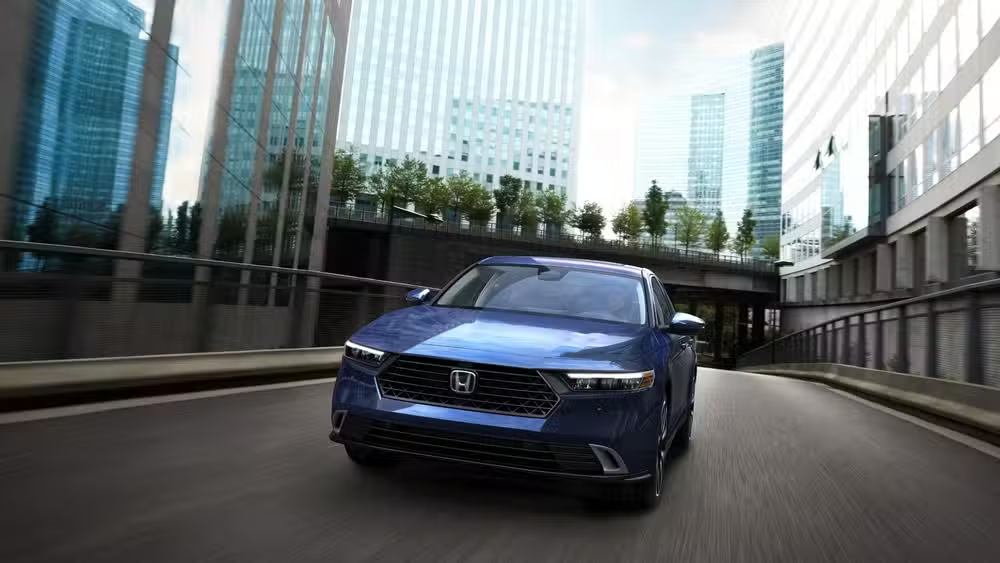
Honda has built a reputation on balanced driving dynamics. BMW gets the credit for "ultimate driving machines," but the Accord delivers a similar blend of comfort and engagement at a fraction of the price. The cabin stays quiet at highway speeds. The ride absorbs bumps without feeling floaty. When you want to push it, the car responds.
The hybrid powertrain adds to the appeal. It produces adequate power for merging and passing while returning significantly better fuel economy than crossover alternatives. Sedans typically achieve 15-20% better efficiency than similarly sized SUVs, which adds up to real money over the years of ownership.
What do you give up by choosing a sedan?
The honest answer: cargo space and ride height. The Accord trunk holds plenty for most buyers, but it cannot swallow a bicycle without folding seats. Crossovers make loading easier and offer more vertical storage. If you regularly haul gear or prefer a higher seating position, a crossover makes sense.
For everyone else, the trade-off tilts toward the sedan. You get a better driving experience, lower operating costs, and a more refined cabin. The Accord interior feels upscale enough that many buyers mistake it for a more expensive car. Honda has paid attention to material quality, ergonomics, and noise insulation in ways that crossover interiors often neglect.
Why are sedans disappearing from showrooms?
Marketing and profit margins. Automakers make more money on crossovers. Consumers have been conditioned to see SUV shapes as safer and more capable, even when the data does not support those assumptions. The result: Ford, GM, and others have abandoned sedans entirely for the American market.
Honda and Toyota kept their midsize sedans alive because they sell well globally and represent strong residual value. The Accord and Camry remain among the most reliable vehicles on the road. That reliability translates to slower depreciation and lower long-term ownership costs.
Logicity's Take
The crossover boom looks increasingly like a marketing triumph rather than a rational consumer choice. With average new car transaction prices exceeding $49,000, the Accord's combination of premium features, superior dynamics, and lower price makes it one of the smartest buys in the market. Buyers who do the math end up in sedans. Those who follow trends end up in crossovers.
Frequently Asked Questions
Is the Honda Accord bigger than a crossover?
The Accord offers comparable interior passenger space to most midsize crossovers, with similar legroom and headroom. It has less cargo volume due to its trunk design rather than a liftgate.
Which Honda Accord trim is the best value?
The EX-L Hybrid at $35,095 offers the best balance of features and efficiency. It includes leather seats, the hybrid powertrain, upgraded infotainment, and a sunroof.
How much better is sedan fuel economy vs crossovers?
Sedans typically deliver 15-20% better fuel economy than similarly sized crossovers due to lower weight, better aerodynamics, and lower ride height.
Why did American automakers stop making sedans?
Higher profit margins on SUVs and crossovers drove the decision. Ford and GM exited the sedan market to focus on trucks and SUVs, while Honda and Toyota maintained sedan production.
Need Help Implementing This?
Looking to make a smarter vehicle purchase decision? Compare total cost of ownership, including fuel costs, insurance, and depreciation, before committing to a crossover. The numbers often favor sedans like the Accord.
Source: How-To Geek
Manaal Khan
Tech & Innovation Writer
Produced with AI assistance and reviewed by the Logicity editorial team. Learn more in our Editorial Policy.