Key Takeaways
Green SM Set to Shake Up India's Ride-Hailing Market | VARINDIA News Hour
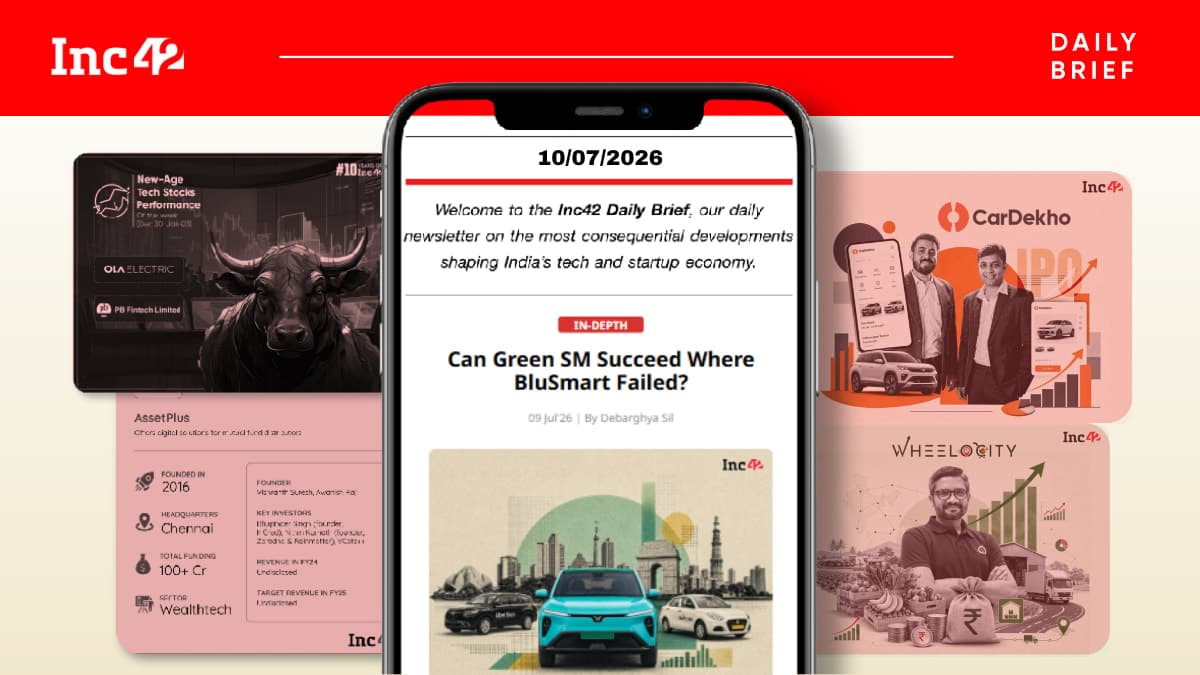
- Green SM operates a vertically integrated model: it owns vehicles, employs drivers directly, and controls the full service stack
- Drivers report inconsistent payouts and battery life limited to 6 hours, constraining utilization
- CarDekho parent Girnar Software targets a ₹15,000 Cr valuation via an IPO of up to ₹3,500 Cr this quarter
Vietnamese EV ride-hailing company Green SM launched its all-electric taxi service in Delhi NCR last month, entering a market left vacant by BluSmart's collapse. The company owns its vehicles, employs drivers on payroll, and controls the entire service stack. It's a bold model, but early reports from drivers suggest the same infrastructure bottlenecks that sank BluSmart are already surfacing.
What makes Green SM's model different?
Unlike Uber or Rapido, which aggregate independent drivers and vehicles, Green SM runs a controlled vertical. The company purchases its fleet outright, handles driver onboarding internally, and manages passenger authentication. This approach promises consistency in service quality but ties up significantly more capital in vehicles, staffing, and daily operations.
There's a strategic layer here beyond ride-hailing. Green SM functions as a demand engine for its parent company VinFast, the Vietnamese automaker that entered India last August. By absorbing VinFast inventory, the ride-hailing arm provides high-volume sales, brand exposure, and real-world testing data while VinFast builds out its Indian manufacturing and retail presence.

Where are the early friction points?
Customers have praised the cleaner, more spacious vehicles. Drivers tell a different story. The platform enforces 8 to 10 hour shifts with a minimum requirement of four daily trips. Drivers claim promised weekly payouts of ₹8,000 arrive inconsistently. Industry analysts estimate each vehicle needs at least eight daily trips with an average ticket of ₹400 to break even. Current operations don't hit that threshold.
Charging infrastructure compounds the problem. Green SM relies on company-owned charging hubs rather than third-party networks. With limited hubs available, drivers stick to routes where chargers exist, constraining trip range and geographic coverage. Battery backup reportedly lasts only up to six hours, capping vehicle utilization before a recharge becomes mandatory.
BluSmart faced identical constraints. Despite raising over $200 million and operating 8,000+ EVs across Delhi NCR and Bangalore, the company collapsed under high capital expenditure on vehicles and charging infrastructure. The unit economics never worked.
CarDekho's parent eyes ₹15,000 Cr valuation via IPO
In other Indian startup news, Girnar Software, the parent company of auto classifieds platform CarDekho, plans to file its DRHP with SEBI this quarter. The company targets an IPO in the range of ₹3,000 to ₹3,500 Cr, comprising both a fresh issue and an offer for sale.
Girnar is targeting a valuation of up to ₹15,000 Cr, 66% higher than the ₹9,000 Cr at which it was last pegged five years ago. Axis Bank, IIFL, and Goldman Sachs have been roped in to manage the listing.

Founded in 2008, the CarDekho Group operates CarDekho, BikeDekho, ZigWheels, and Powerdrift. It has expanded beyond auto classifieds into edtech via CollegeDekho, fintech through Rupyy, and shared mobility with Revv and Carrum. Total funding raised stands at $750 million.
Accel's Subrata Mitra on founder survival stories
Subrata Mitra, the Accel partner who wrote Flipkart's first institutional cheque, has launched his debut book, Down But Not Out. The book profiles ten founder journeys, but with a twist: it focuses on survival rather than success. Companies covered include BlueStone, Capillary, Uniqode, GreyOrange, and HyperVerge.
Mitra argues that the startup ecosystem fixates on the 5-10% of ventures that succeed, leaving lessons from the majority unused. He describes wanting to create a "sugarcane juicer" model where each spin feeds more juice back, improving outcomes with each iteration.
Other deals: Wheelocity, Nurix, Verloop
Rural commerce startup Wheelocity raised ₹82 Cr (approximately $8.5 million) from Lightspeed India, Grand Anicut, and angel investors. Founded in 2021, Wheelocity runs a phygital ecommerce operation delivering fresh produce and groceries to semi-urban and rural India. It claims to serve over 5 lakh households and employs more than 1,500 rural workers. Total funding now exceeds $35 million.
Mukesh Bansal's enterprise AI startup Nurix will acquire voice AI platform Verloop for an undisclosed sum. Verloop founder Gaurav Singh joins Nurix to oversee product strategy, enterprise GTM, and AI agent development. Nurix plans to integrate Verloop's stack to expand its voice and chat-based AI solutions.
Logicity's Take
Green SM's VinFast backing gives it deeper pockets than BluSmart had, but pockets don't fix infrastructure math. The 8-trip-per-day threshold with ₹400 tickets demands charging infrastructure that simply doesn't exist at scale in Delhi NCR. For fintech teams watching EV mobility, the real opportunity may lie in fleet financing and charging network investment rather than ride-hailing operations. Companies like Ather (charging networks) and RevFin (EV financing) are building the picks-and-shovels layer that all operators need.
Frequently Asked Questions
What happened to BluSmart?
BluSmart, India's largest all-electric ride-hailing service, suspended operations in early 2025 after facing severe financial difficulties. Despite raising over $200 million and operating 8,000+ EVs, high capital expenditure on vehicles and charging infrastructure broke its unit economics.
Who owns Green SM?
Green SM is owned by VinFast, the Vietnamese automaker. The ride-hailing service functions as both a mobility brand and a demand engine for VinFast's vehicle sales in India.
When is CarDekho's IPO expected?
CarDekho's parent company Girnar Software plans to file its DRHP with SEBI in Q3 2026, targeting an IPO of ₹3,000 to ₹3,500 Cr at a valuation of up to ₹15,000 Cr.
How much has CarDekho raised in funding?
CarDekho Group has raised $750 million to date across its various verticals including auto classifieds, edtech, fintech, and shared mobility.
What is Wheelocity's business model?
Wheelocity operates a phygital ecommerce platform delivering fresh produce and groceries to India's semi-urban and rural markets. It serves over 5 lakh households and employs more than 1,500 rural workers.
Nurix's Verloop acquisition reflects the broader AI startup consolidation wave
Need Help Implementing This?
Building fintech infrastructure for EV mobility or fleet operations? Logicity can connect you with implementation partners and funding networks. Reach out via our contact page.
Source: Inc42 Media / Team Inc42
Manaal Khan
Tech & Innovation Writer
Produced with AI assistance and reviewed by the Logicity editorial team. Learn more in our Editorial Policy.