GM mentioned electric vehicles 21 times on its most recent quarterly earnings call. Two years ago, that number was 82. Ford shows the same pattern. America's two largest automakers are saying less about EVs to their investors than at any point since the pandemic, according to a TechCrunch analysis of seven years of earnings transcripts.
The shift is not subtle. At their peak in late 2020, EVs accounted for roughly a third of GM's earnings call discussions. Now, the topic barely registers. What changed is not a mystery. What it means for the companies, their suppliers, and the broader electrification push is worth examining.
What the earnings call data actually shows
TechCrunch partnered with Hudson Labs, a New York financial research firm, to analyze GM and Ford quarterly earnings calls dating back to 2019. Hudson Labs used its AI research tool to tag each sentence by topic and count frequency. The results paint a clear picture of corporate priorities shifting.
GM spent an increasing amount of time discussing EVs through early 2021, with more than 100 references on each of its last two earnings calls in 2020. That represented roughly a third of total discussion time. Through 2021 to early 2025, while Biden was in office, GM dedicated about a quarter of each call to EVs.
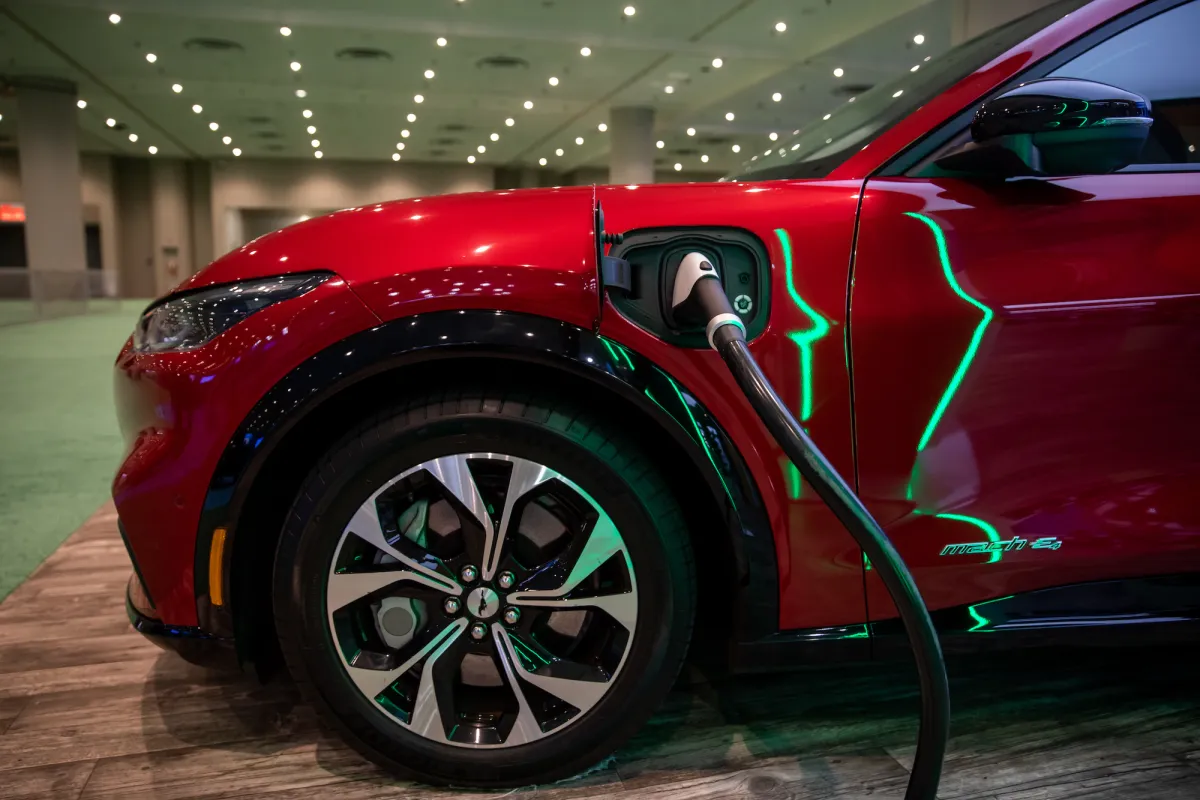
Then came the drop. From Q2 2025's 82 mentions to Q2 2026's 21. Ford follows the same trajectory. The company's first serious mass-market EV, the Mustang Mach-E, debuted in late 2019. Investor discussion peaked as deliveries ramped up, then faded.
The analysis excluded Stellantis, the third of Detroit's Big Three, for practical reasons. The company only held comprehensive earnings calls twice yearly until Q1 2026, and it historically lagged behind GM and Ford on EV adoption anyway.
Why the silence now?
Two forces converged. First, the policy environment changed sharply. After Trump regained office, his administration slashed environmental regulations that incentivized zero-emissions vehicles. The $7,500 federal tax credit for new EVs was eliminated. Tariffs dominated GM's Q1 2025 earnings call, crowding out EV discussion entirely.
Second, the companies themselves pulled back on EV commitments. Both GM and Ford have altered, delayed, or abandoned plans for new EV models over the past two years. Layoffs followed. Factory plans were scaled back. The promised all-electric future receded.
GM spokesperson Jim Cain framed the quieter approach as intentional. "Quality counts more than quantity," he said, adding that GM devotes call time to "growth opportunities like software and services and autonomous technology" alongside regulatory and trade policy impacts. He emphasized that GM remains committed to EVs as "the end game" and continues investing in technologies like lithium manganese-rich batteries to improve profitability.
“We've been very clear and consistent in communicating our view that EVs are the end game, the strength of our portfolio today, the loyalty of EV customers to the technology, awards we've won, our growing EV market share.”
— Jim Cain, GM spokesperson
Ford spokesperson David Tovar pointed forward rather than back. He cited the company's planned "Universal Electric Vehicle" platform launching next year, with a midsize pickup truck as the first product. "We think the first product rolling off the line... will hit the sweet spot of the EV market for cost, price, and technology," he said.
The gap between announcements and attention
Here is the tension. GM remains the second-largest seller of EVs in the United States. Ford still has new electric models in its pipeline. Neither company has formally abandoned electrification. But earnings calls are where companies tell investors what matters to their business. When a topic disappears from that forum, it signals something.
GM once promised to go all-electric by 2035. Now the company talks about how it has "aligned our EV capacity and manufacturing footprint with the changes in regulatory policy." That is corporate-speak for: we built our plans around incentives that no longer exist.
The data also reveals an earlier anomaly. GM's EV discussion dipped in Q1 2021, not because of strategy but because a global chip shortage dominated the conversation. Context matters. But the current decline has lasted multiple quarters and coincides with concrete policy and product changes.
Logicity's Take
Earnings call word counts are a crude metric, but they reveal priorities in a way press releases cannot fake. GM and Ford are not abandoning EVs, but they are clearly hedging. For fleet buyers and enterprise customers evaluating electrification timelines, this signals that Detroit's commitment is now contingent rather than absolute. Software, services, and autonomy are where the growth story has moved. EV buyers should expect slower model refreshes and less aggressive pricing competition from these two players.
What this means for the EV market
Tesla, BYD, and Korean automakers now face less pressure from Detroit in the EV space. GM and Ford pulling back creates room for competitors, but it also slows the overall market. When the two largest American automakers deprioritize electrification, charging infrastructure investment, supplier economies of scale, and consumer adoption all feel the effect.
For technology vendors serving the auto industry, the message is clear: software, autonomy, and services are where Detroit wants to talk. That is where R&D budgets and partnership dollars will flow. EV-specific suppliers may find tougher conversations ahead.
Another example of how major industry players are shifting investment toward AI and software over hardware
The Biden-era assumption that regulatory pressure and consumer demand would force automakers into EVs regardless of their preferences has been tested. The answer, at least for GM and Ford, is that regulatory pressure matters enormously. Remove the incentives and mandates, and the urgency disappears from the boardroom.
The bigger question Detroit is not answering
Neither company has explained what happens if the policy environment shifts again. A new administration could reinstate EV incentives. California and other states maintain their own zero-emission mandates. Europe and China continue pushing electrification. GM and Ford sell globally.
Aligning manufacturing to current policy makes sense quarter to quarter. But automotive product cycles run five to seven years. The factories being scaled back today determine what these companies can sell in 2030. If electrification accelerates elsewhere, Detroit may find itself having optimized for a moment that passed.
The earnings call data does not tell us whether GM and Ford are making a smart bet or a costly mistake. It tells us they have made a choice. And they are spending less time defending it.
Need Help Implementing This?
If your enterprise is evaluating fleet electrification or automotive technology partnerships, Logicity offers strategic briefings on OEM roadmaps and supplier dynamics. Contact us for a consultation.
Source: TechCrunch / Sean O'Kane
Huma Shazia
Senior AI & Tech Writer
Produced with AI assistance and reviewed by the Logicity editorial team. Learn more in our Editorial Policy.