Key Takeaways
- Fox will pay $160 per share for Roku, valuing the deal at $22 billion enterprise value
- The combined company would rank third in US television viewership behind YouTube and Disney
- Roku's advertising business generated $371 million in revenue last quarter, dwarfing its hardware segment
Fox Corporation announced today it will acquire Roku for $22 billion, paying $160 per share to absorb the streaming platform's 100 million households and its lucrative advertising technology. The deal would vault the combined company to third place in US television viewership, behind only YouTube and Disney.
This is Fox betting that the future of television runs through connected devices, not cable boxes. The company already owns Tubi, the free ad-supported streaming service it bought in 2020. Adding Roku brings hardware, an operating system running on millions of TVs, and an advertising engine that printed $371 million in revenue last quarter.
Why Roku's ads matter more than its hardware
Roku's streaming sticks and TVs lost $19.1 million in Q1 2026. The hardware is a means to an end. What Fox actually wants is Roku OS and the advertising infrastructure wrapped around it. That segment posted $584.1 million in gross profit for the same quarter.
The math is straightforward: Roku puts screens in living rooms at near cost, then monetizes attention through ads on The Roku Channel and across its platform. Fox sees an opportunity to pipe its live news, sports, and entertainment through this distribution layer while extracting more value from advertisers.
“Advertisers are seeking large audiences, improved digital targeting and more consistent measurement across platforms. These converging dynamics across viewing, aggregation, and advertising have fueled the rapid growth of connected TV, and we are still in the early stages of this transition.”
— Lachlan Murdoch, CEO and Chair Executive, Fox Corporation
What the combined company looks like
Fox shareholders would own 73 percent of the merged entity. Roku shareholders get 27 percent. Anthony Wood, Roku's founder and CEO, will join Fox's board and retain an unspecified operational role.
The companies expect to cut $400 million in combined expenses. Fox will take on $8 billion in debt to fund the deal. Closing is expected in the first half of 2027, pending regulatory and shareholder approval.
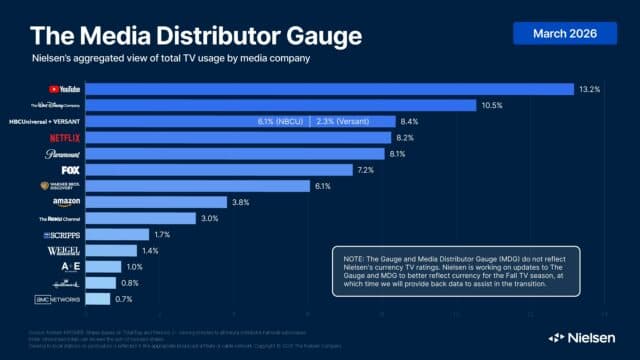
Nielsen's March 2026 data shows YouTube leading US TV viewership at 13.2 percent, followed by Disney at 10.5 percent and NBCUniversal/Versant at 8.4 percent. Fox sits fourth at 7.2 percent. The Roku Channel ranks ninth with 3 percent. Combined, Fox and Roku would claim roughly 10 percent of viewing, enough for third place.
Roku's path from pandemic boom to profitability struggles
The pandemic made Roku profitable in 2021 as homebound viewers bought streaming devices. That profitability vanished the next year and did not return until 2025. Wood framed the acquisition as acceleration, not rescue.
“Fox and Roku are committed to continuing to operate Roku as an open, partner-friendly platform and to the continued ubiquitous distribution of Fox content.”
— Joint announcement from Fox Corporation and Roku
The promise of an "open, partner-friendly platform" will face scrutiny. Online communities on Reddit and Hacker News are already debating whether Fox will push Roku toward a more closed ecosystem. Users worry about interface changes, privacy implications of Fox controlling Roku OS data, and whether competing streaming apps will get fair treatment.
Streaming consolidation continues
This deal fits a pattern. Paramount absorbed HBO Max and Warner Bros. Discovery. Disney bought out Hulu. The standalone streaming model, where every media company runs its own service at $10 to $15 per month, is collapsing into a handful of larger bundles.
Legacy broadcasters face a specific problem: younger viewers do not watch linear TV. Fox's broadcast channels, including Fox News, Fox Business, and FS1, still command substantial audiences, but growth is in streaming and connected TV. Owning Roku gives Fox a direct relationship with viewers that cable operators used to control.
The advertising angle is equally important. Connected TV ads can be targeted like digital ads but appear on the biggest screen in the house. For Fox, combining first-party data from Tubi with Roku's platform data creates an advertising product that competes more directly with YouTube and the big tech platforms.
What could block the deal
Regulatory approval is not guaranteed. The FTC under the current administration has challenged media mergers, and a deal that combines a major broadcaster with a dominant smart TV platform could draw antitrust scrutiny. Fox's ownership of both content and distribution echoes concerns that regulators raised about AT&T's acquisition of Time Warner years ago.
Shareholder approval on both sides seems likely given the premium Fox is paying. Roku's stock had struggled before this announcement, and $160 per share represents a significant bump.
Frequently Asked Questions
How much is Fox paying for Roku?
Fox is paying $160 per share, valuing the deal at approximately $22 billion enterprise value. Fox will take on $8 billion in debt to fund the acquisition.
Will Roku devices still work after the Fox acquisition?
Fox and Roku stated they will continue operating Roku as an open, partner-friendly platform. Existing devices should continue functioning, though interface and feature changes could come after the deal closes in 2027.
What happens to Tubi after Fox buys Roku?
Tubi, which Fox acquired in 2020, will likely be integrated with The Roku Channel. Both are free ad-supported streaming services, and combining them could reduce content licensing costs and consolidate ad sales.
When will the Fox Roku deal close?
The companies expect the acquisition to close in the first half of 2027, subject to regulatory approval and shareholder votes from both companies.
How many users does Roku have?
Roku reports 100 million active households using its platform across streaming sticks, smart TVs, and other devices running Roku OS.

Logicity's Take
Fox is essentially buying a toll booth. Every app on a Roku device, from Netflix to Peacock, pays Roku a cut or shows Roku's ads. Fox gets that revenue stream plus a massive first-party data asset to power its advertising business. The risk is that aggressive monetization drives consumers to Amazon Fire TV or Google TV alternatives. Wood staying involved suggests continuity, but the real test comes when Fox's quarterly earnings pressure meets Roku's current ad load.
Another mega-deal reshaping a major industry this month
Tech giants are making massive financial moves in 2026
Need Help Implementing This?
Logicity's consulting team helps media and technology companies navigate M&A integration, advertising technology strategy, and connected TV platform decisions. Contact us at consulting@logicity.in to discuss your streaming and distribution challenges.
Source: Ars Technica
Manaal Khan
Tech & Innovation Writer
Produced with AI assistance and reviewed by the Logicity editorial team. Learn more in our Editorial Policy.




