Key Takeaways
Apple Maps will power navigation in Ford's upcoming EV vehicles
- Apple's new MapKit for Automotive SDK lets automakers embed Apple Maps directly into infotainment systems, separate from CarPlay
- Ford's $30,000 midsize EV truck arriving in 2027 will be the first vehicle with the technology
- The integration feeds road data to Ford's upgraded BlueCruise, which aims for point-to-point highway autonomy by 2028
Apple announced MapKit for Automotive on July 23, a software development kit that lets carmakers bake Apple Maps directly into their vehicles. Ford will be the first automaker to ship it, starting with a $30,000 midsize electric truck in 2027.
This is not CarPlay. CarPlay mirrors iPhone apps onto the center screen. MapKit for Automotive runs natively in the vehicle's infotainment system, no phone required. That distinction matters for Ford's ambitions: the company wants its next-generation BlueCruise hands-free driving system to pull real-time road data from the embedded maps.
What does MapKit for Automotive actually do?
The SDK gives automakers access to Apple's mapping data, routing algorithms, and real-time traffic feeds. For EV owners specifically, it enables smart routing that accounts for battery state and charger locations. One feature worth highlighting: battery preconditioning. When navigation knows a fast charger is 20 minutes away, it can tell the vehicle to heat or cool the battery to the optimal temperature, cutting charge times.
Drivers get turn-by-turn directions with natural language, live incident reports, and detailed destination info. Ford says the system could also handle smart home triggers, like opening a garage door when the car approaches.
Apple is opening the SDK to any automaker, but Ford locked in the first commercial deal. The companies did not disclose financial terms.
Ford's broader EV bet
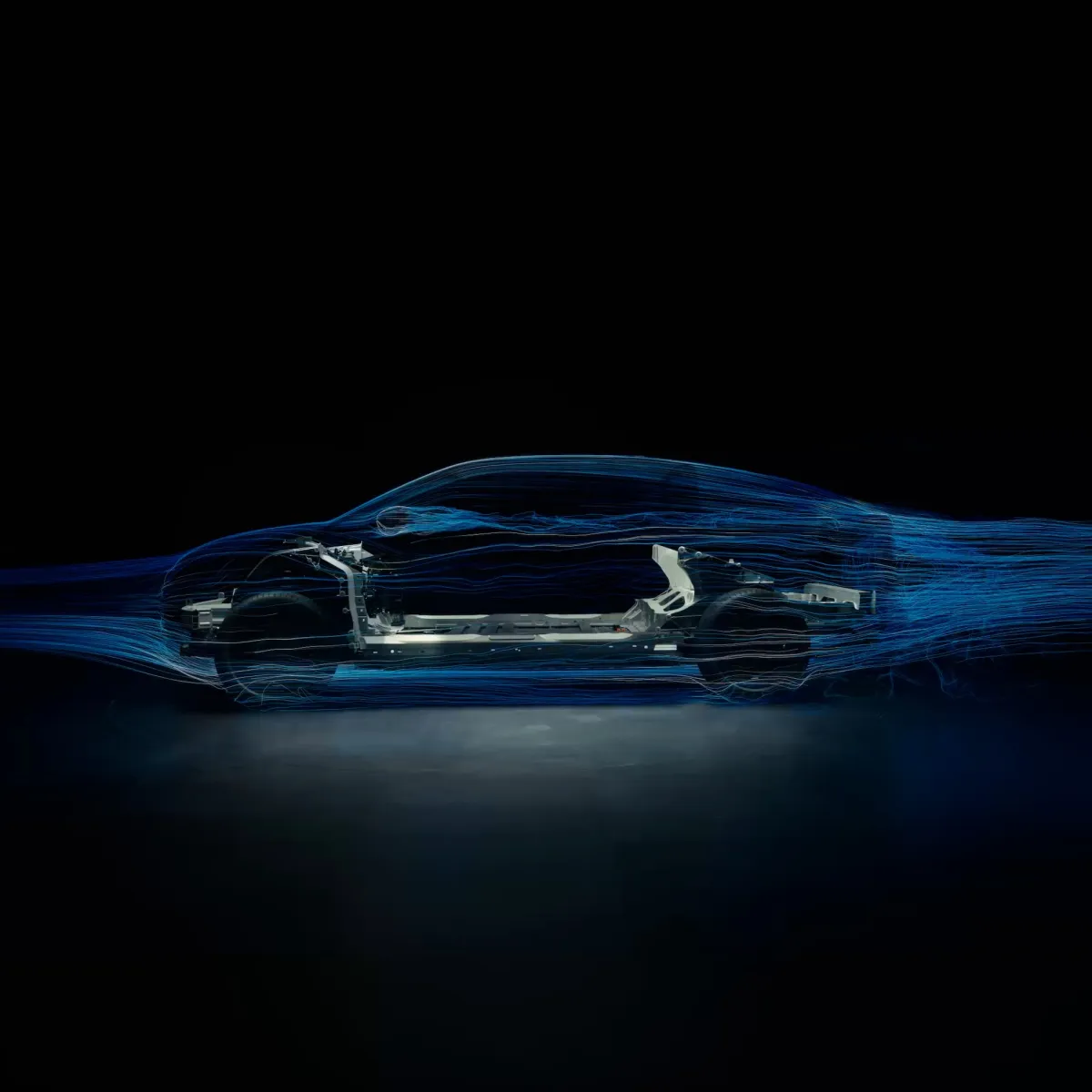
The Apple Maps integration is one piece of a larger overhaul. Ford abandoned its 100-year-old platform strategy and built a universal EV platform, or UEV, from scratch. The $30,000 midsize truck comes first, followed by a sedan, a crossover, a three-row SUV, and small commercial vans.
Ford is also using single-piece aluminum unicastings for these vehicles, a manufacturing technique Tesla popularized. Casting large body sections as one piece eliminates dozens of welds and speeds up assembly.
The infotainment and driver-assist angle may seem secondary to manufacturing changes, but Ford is clearly betting that software defines the ownership experience. An upgraded BlueCruise, expected to roll out next year, will handle entire highway journeys including on- and off-ramps. The company says point-to-point highway autonomy will follow, with eyes-off driving targeted for 2028.
Apple's hardware roadmap shapes which chips and connectivity features reach its automotive partners.
Why Ford Pro sees fleet potential
Ford's commercial division, Ford Pro, serves businesses running vehicle fleets. With maps embedded at the system level, fleet operators can route drivers to job sites, display other company vehicles on the map, and log trip data without relying on a driver's personal phone.
That integration is harder when navigation runs through CarPlay because it depends on an employee's device and Apple ID. Native maps remove that friction.
How this compares to Google and Tesla
Google has offered built-in Google Maps via Android Automotive OS since 2017, with Polestar, Volvo, and GM among its partners. Tesla builds its own navigation stack and charges for Premium Connectivity to unlock live traffic. Apple's SDK gives automakers a third option: Maps quality on par with Google, but without ceding vehicle data to an ad-driven platform.
| Platform | Native or Mirrored | EV-Specific Routing | Charger Preconditioning | Driver-Assist Data Feed |
|---|---|---|---|---|
| Apple MapKit for Automotive | Native | Yes | Yes | Yes (Ford BlueCruise) |
| Google Android Automotive OS | Native | Yes | Depends on OEM | Varies by OEM |
| Tesla Navigation | Native (proprietary) | Yes | Yes | Yes (Autopilot / FSD) |
| Apple CarPlay | Mirrored from iPhone | Yes (via phone) | No | No |
Apple's pitch to automakers is control. CarPlay requires the driver to plug in a phone; Android Automotive means Google handles the OS. MapKit for Automotive sits in the middle: Apple provides the mapping layer, but the automaker owns the rest of the stack.
Google's heavy AI investments shape how aggressively it can discount Android Automotive licensing.
Timeline: what happens next
Logicity's Take
Ford's deal signals that Apple is serious about automotive beyond CarPlay, but it also reveals Apple's limits. Apple builds no cars and has no charging network. Its leverage is software stickiness: once drivers expect Apple Maps in the dash, switching brands costs them a familiar interface. For automakers evaluating Google's Android Automotive (free with data-sharing) versus Apple's SDK (terms undisclosed), the decision hinges on data ownership and how much control they want over the user experience. Expect more OEMs to sign with Apple if the Ford rollout goes smoothly. For fleet managers using tools like [Salesforce](https://logicity.in/r/salesforce) or [HubSpot](https://logicity.in/r/hubspot) to track commercial vehicle operations, native map integration could eventually feed richer location data into CRM dashboards.
Disclosure
Some links in this post are affiliate links — Logicity earns a commission if you sign up, at no extra cost to you. We only link products we have used or actively recommend.
Frequently Asked Questions
Is Apple MapKit for Automotive the same as CarPlay?
No. CarPlay mirrors iPhone apps onto the vehicle's screen. MapKit for Automotive runs natively in the car's infotainment system and works without a connected phone.
Which Ford vehicles will get Apple Maps first?
Ford's $30,000 midsize electric truck, launching in 2027, will be the first. A sedan, crossover, three-row SUV, and commercial vans will follow on the same universal EV platform.
How does Apple Maps integration help with EV charging?
The system can precondition the battery before reaching a charger, bringing it to optimal temperature so charging is faster. It also factors battery level and charger locations into route planning.
Can other automakers use MapKit for Automotive?
Yes. Apple says the SDK is open to any automaker, though Ford is the first to sign a commercial agreement.
Will Ford BlueCruise use Apple Maps data?
Yes. The upgraded BlueCruise, expected in 2026, will receive road-level information from the embedded Apple Maps to handle highway on- and off-ramps.
Google's hardware direction influences its automotive software ambitions.
Need Help Implementing This?
If you're building fleet management or logistics software and want to integrate mapping APIs, reach out to our team for a consultation on Apple, Google, and open-source mapping options.
Source: TechCrunch / Sarah Perez, Kirsten Korosec
Huma Shazia
Senior AI & Tech Writer
Produced with AI assistance and reviewed by the Logicity editorial team. Learn more in our Editorial Policy.