Key Takeaways
- Finnish prosecutors charged the Russian captain and Azerbaijani bosun of the Fitburg for allegedly damaging two undersea cables between Finland and Estonia
- The ship allegedly dragged its anchor for 130km and had eight additional subsea cable targets before the Finnish Coast Guard stopped it
- This is the second Baltic Sea cable investigation to reach prosecution, though a previous case failed on jurisdictional grounds
Finnish prosecutors have charged the Russian captain and Azerbaijani bosun of the cargo ship Fitburg with aggravated criminal mischief and aggravated interference with telecommunications. The charges stem from suspected undersea cable sabotage that damaged critical infrastructure connecting Finland and Estonia at the turn of the year.
According to prosecutors, the Fitburg dragged its anchor across 130km of seabed, striking cables operated by Finnish telecom company Elisa and Swedish firm Arelion. More alarming: investigators allege the ship intended to hit eight additional subsea cables before the Finnish Coast Guard intervened and stopped the vessel.
What evidence points to deliberate sabotage?
The Fitburg, a 9,900 deadweight tonnage vessel owned by a Turkish entity with Russian links, allegedly dragged its anchor for over 80 miles. That's not a trivial distance. Normal anchor-dragging accidents are measured in meters, not kilometers.
Two additional crew members remain in Finnish detention while prosecutors determine whether to expand the charges. The defense attorneys have challenged Finnish jurisdiction over the case, but authorities say the courts will decide that question.
Why did a similar case fail in Finnish courts?
This is the second Baltic Sea cable investigation to reach prosecution. The first involved the Eagle S, a Russian-linked oil tanker from the so-called shadow fleet, suspected of sabotage on Christmas Day 2024. Three officers faced identical charges to the Fitburg crew.
Finnish courts dismissed that case on jurisdictional grounds. The incident occurred outside Finnish territorial waters, and the court ruled it lacked authority over the matter. Prosecutors have appealed, arguing that the effects of the crime materialized in Finland regardless of where the anchor hit the seabed.
The Fitburg case may face the same jurisdictional challenge. If Finnish courts again decline to assert authority, it would expose a significant gap in how nations can respond to infrastructure attacks in international waters.
What makes undersea cables so vulnerable?
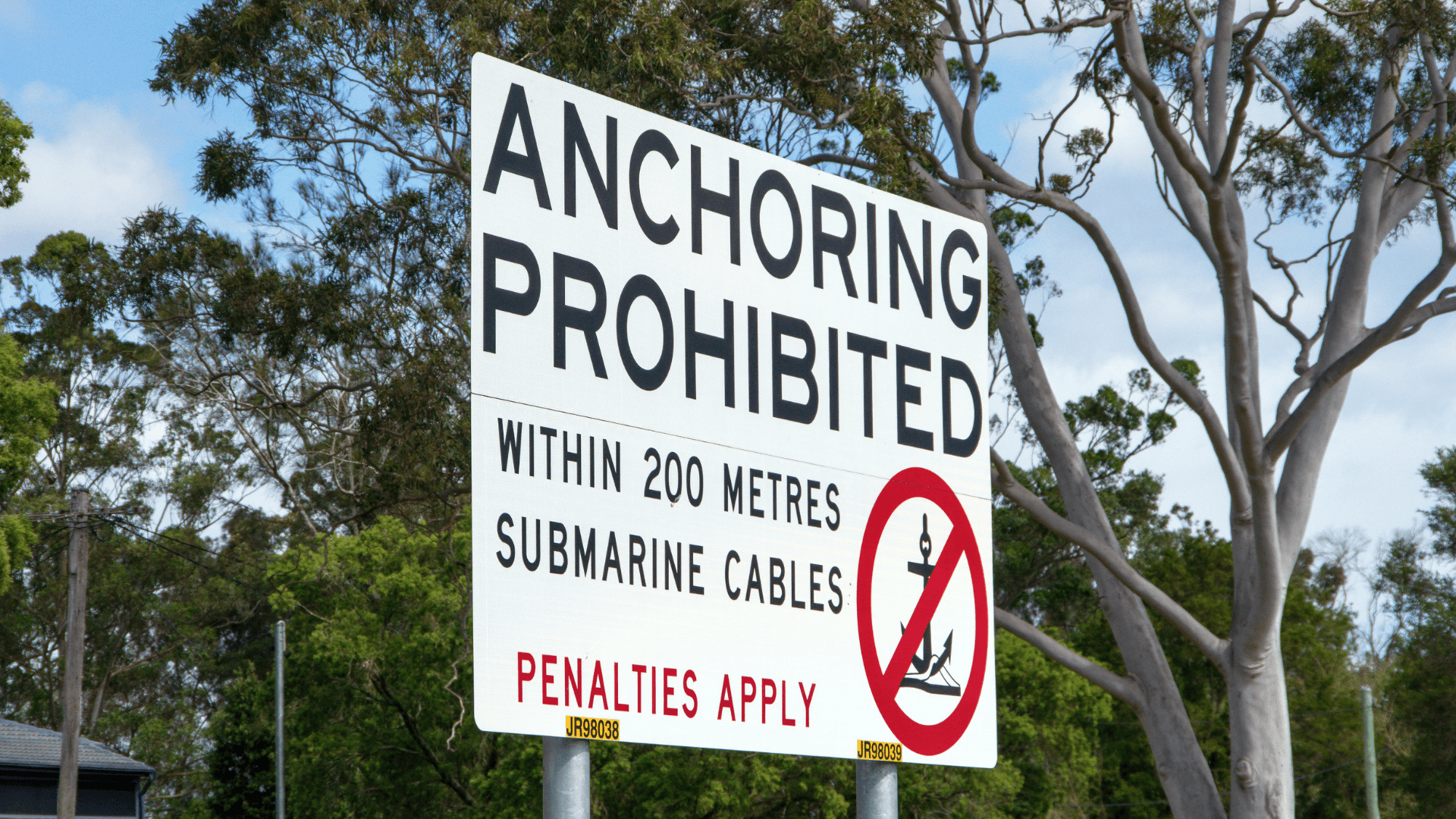
Undersea cables carry over 95% of intercontinental data traffic. For Finland, a NATO member sharing a 1,340km border with Russia, these cables are critical for telecommunications, electricity, and gas connections. Multiple incidents have struck Finnish infrastructure in recent years.
Finland has deployed a detection system called Distributed Acoustic Sensing (DAS) to protect its sea lines of communication. The technology integrates sensors into fiber optic cables that detect sound and vibrations on the seabed, including an anchor scraping across the ocean floor. Think of it as an underwater tripwire.
Is anchor-dragging becoming a gray-zone tactic?
Suspected cable attacks aren't limited to the Baltic Sea. Similar incidents have been reported in the Red Sea and Taiwan Strait. The pattern raises an uncomfortable question: Is anchor-dragging being used as a plausible-deniability tactic by state actors?
Online discussions on platforms like Reddit show widespread skepticism about the accidental nature of these events. The consensus among observers is that these incidents are no longer isolated maritime accidents but part of a calculated strategy targeting European energy and data security. One incident is an accident. A half-dozen incidents with Russian-linked vessels starts to look like a playbook.
Both private companies and governments are now exploring alternative cable routes. The EU is considering running cables under the North Pole to bypass Russia entirely. Meta is building a 50,000km undersea network connecting the US to Brazil, Africa, India, and Australia, deliberately avoiding choke points like the Red Sea and Strait of Malacca.
Data center infrastructure that depends on stable international connectivity
What happens next in the Fitburg prosecution?
The case now moves to Finnish courts, where the jurisdictional question will likely dominate early proceedings. If prosecutors can establish that Finnish law applies to damage affecting Finnish infrastructure regardless of where the anchor dropped, it would set a precedent for future prosecutions.
The defense will almost certainly argue the same point that succeeded in the Eagle S case. But prosecutors are better prepared this time. The appeal in the Eagle S case is testing the legal theory that effects-based jurisdiction can extend Finnish authority beyond territorial waters.
For NATO and the EU, the stakes extend beyond one ship and two crew members. If Western courts cannot prosecute suspected infrastructure sabotage, the gray-zone tactic becomes essentially risk-free for adversaries willing to sacrifice a few crew members and an aging cargo vessel.
Frequently Asked Questions
What is the Fitburg charged with doing?
The cargo ship allegedly dragged its anchor for 130km across the Baltic seabed, damaging undersea telecommunications cables operated by Elisa and Arelion. Prosecutors claim the crew intended to hit eight additional cable targets before the Finnish Coast Guard stopped them.
Why is jurisdiction a problem in undersea cable sabotage cases?
Undersea cables often run through international waters where no single country has automatic legal authority. Finnish courts dismissed a previous case because the incident occurred outside territorial waters. Prosecutors are now arguing that jurisdiction should follow the effects of the crime, not just the location.
How is Finland protecting its undersea cables?
Finland deployed Distributed Acoustic Sensing (DAS) technology that integrates sensors into fiber optic cables. The system detects sounds and vibrations on the seabed, alerting authorities when anchors or other objects approach critical infrastructure.
What is Russia's shadow fleet?
The shadow fleet refers to aging tankers and cargo vessels operating under murky ownership structures, often used to transport Russian oil in violation of sanctions. These ships frequently have Russian links obscured through Turkish, UAE, or other third-country registrations.
Logicity's Take
The real story here isn't whether two crew members go to prison. It's whether international law can keep pace with hybrid warfare tactics. Anchor-dragging gives nation-states plausible deniability while threatening infrastructure worth billions. Until Western courts establish clear jurisdiction over effects-based crimes, or until detection systems can prevent attacks in real-time, undersea cables remain soft targets for adversaries who understand the gap between what can be proven and what can be prosecuted.
Need Help Implementing This?
If your organization relies on undersea cable connectivity and you're assessing infrastructure resilience or redundancy planning, reach out to Logicity's research team for enterprise briefings on critical infrastructure security trends.
Source: Latest from Tom's Hardware
Huma Shazia
Senior AI & Tech Writer
Produced with AI assistance and reviewed by the Logicity editorial team. Learn more in our Editorial Policy.