Key Takeaways
- AMD's SP7 socket can deliver up to 1,400W peak power for 256-core EPYC Venice processors arriving late 2026
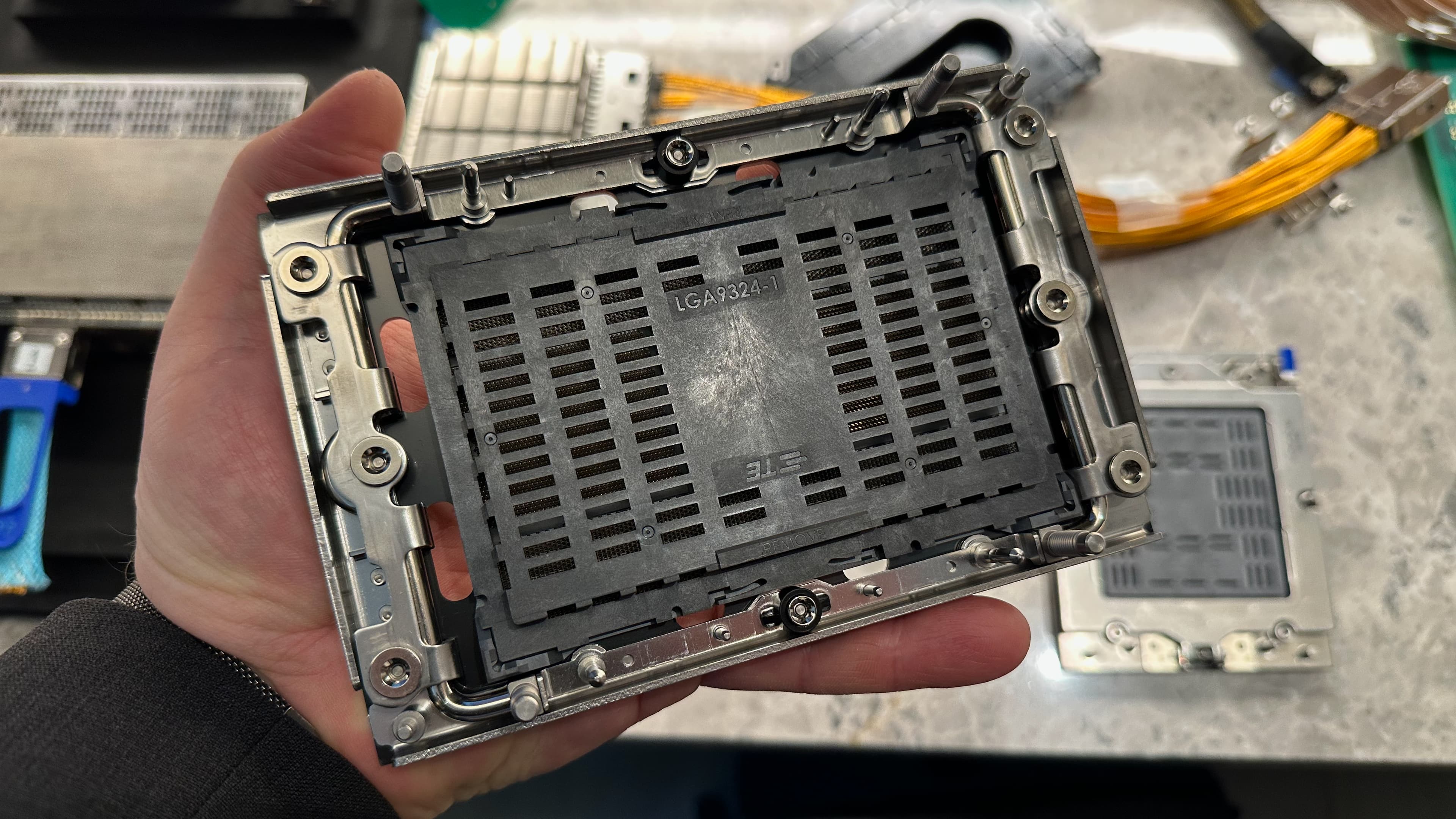
- Intel's LGA9324-1 socket uses 9,324 pins for Diamond Rapids Xeons with up to 192 cores, launching 2027
- Both platforms support 16-channel memory and PCIe 6.0, requiring liquid cooling for AI server deployments
AMD and Intel showed their next-generation server sockets at Computex 2026, and both are enormous. AMD's SP7 socket will support 256-core EPYC Venice processors with peak power delivery of 1,400W. Intel's competing LGA9324-1, with 9,324 contact points, will power Diamond Rapids Xeons starting 2027. These sockets are not incremental upgrades. They represent a fundamental shift in how server processors handle power and I/O for AI workloads.
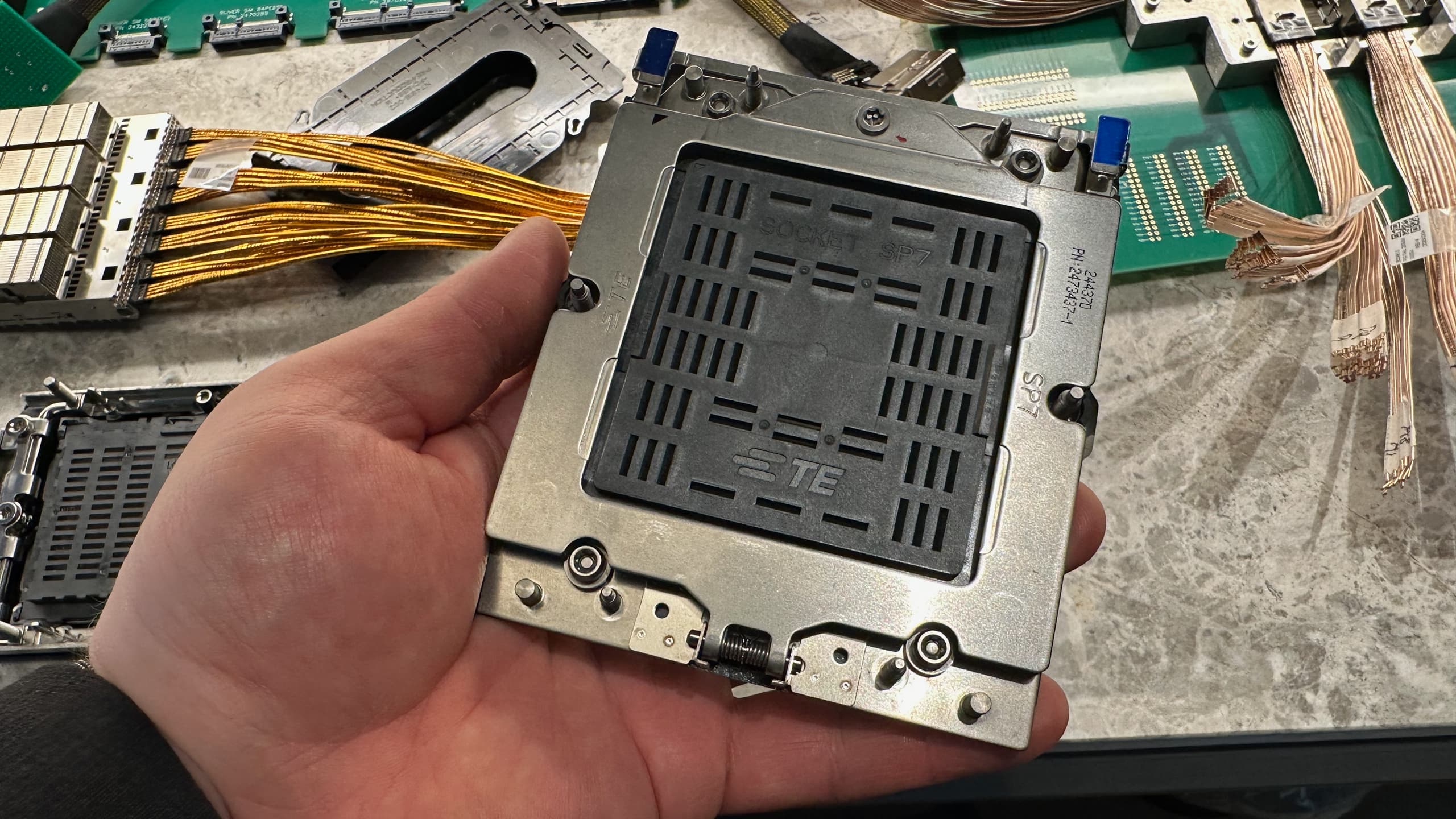
What does AMD's SP7 socket actually support?
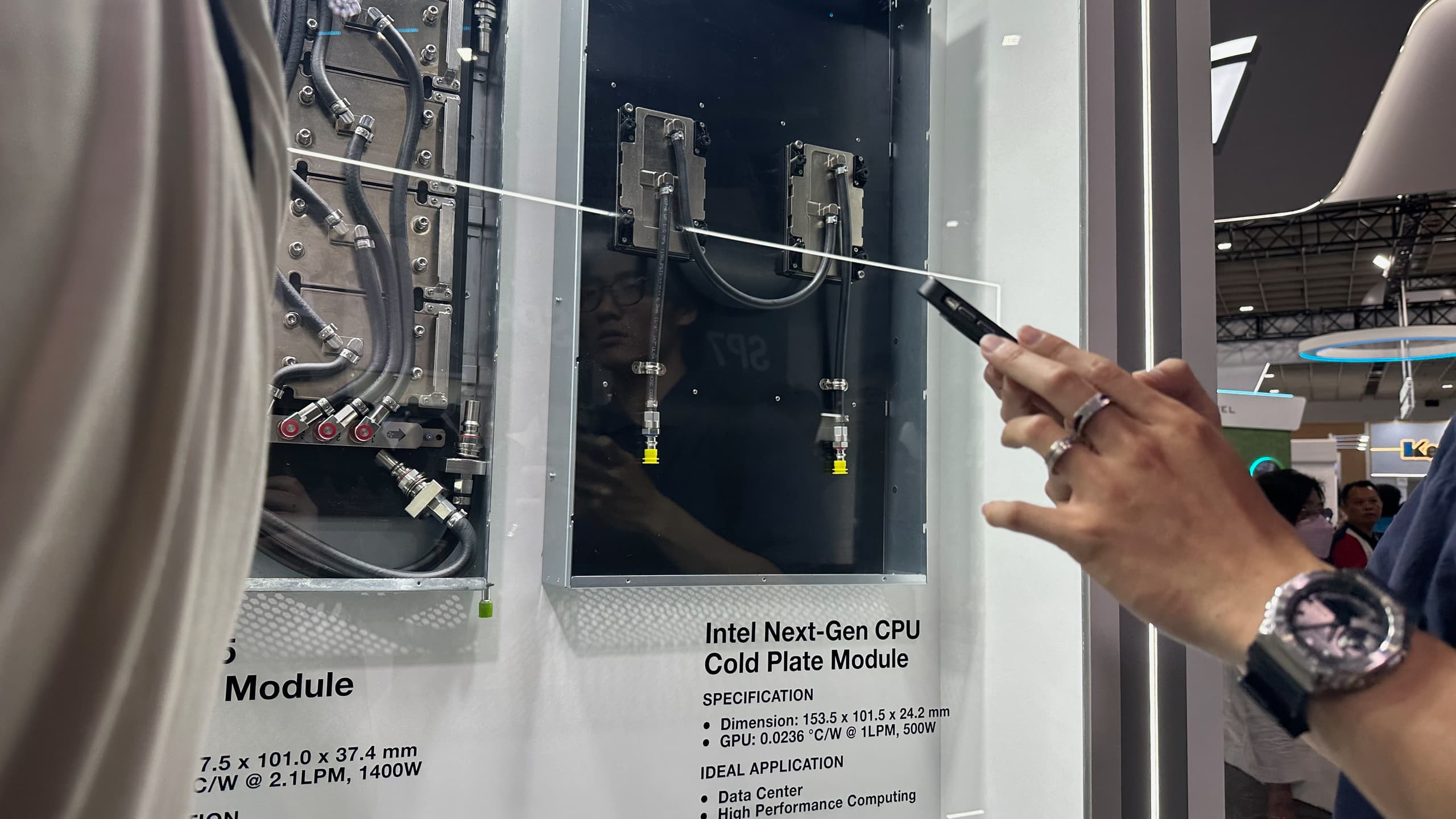
The SP7 is AMD's socket for 6th-generation EPYC Venice processors. According to information from cooling vendor Auras, the socket handles CPUs consuming up to 1,400W at peak. That figure alone explains why liquid cooling is mandatory, not optional, for these chips.
The platform supports 16 DDR6 memory channels using 12.8 GT/s MRDIMMs and up to 96 PCIe 6.0 lanes with CXL protocol support. Venice processors will pack up to 256 cores. The socket is physically massive, covering most of an adult palm, but it remains compact enough for dual-socket server designs. That means systems with 512 x86 cores become possible when Venice ships later this year.
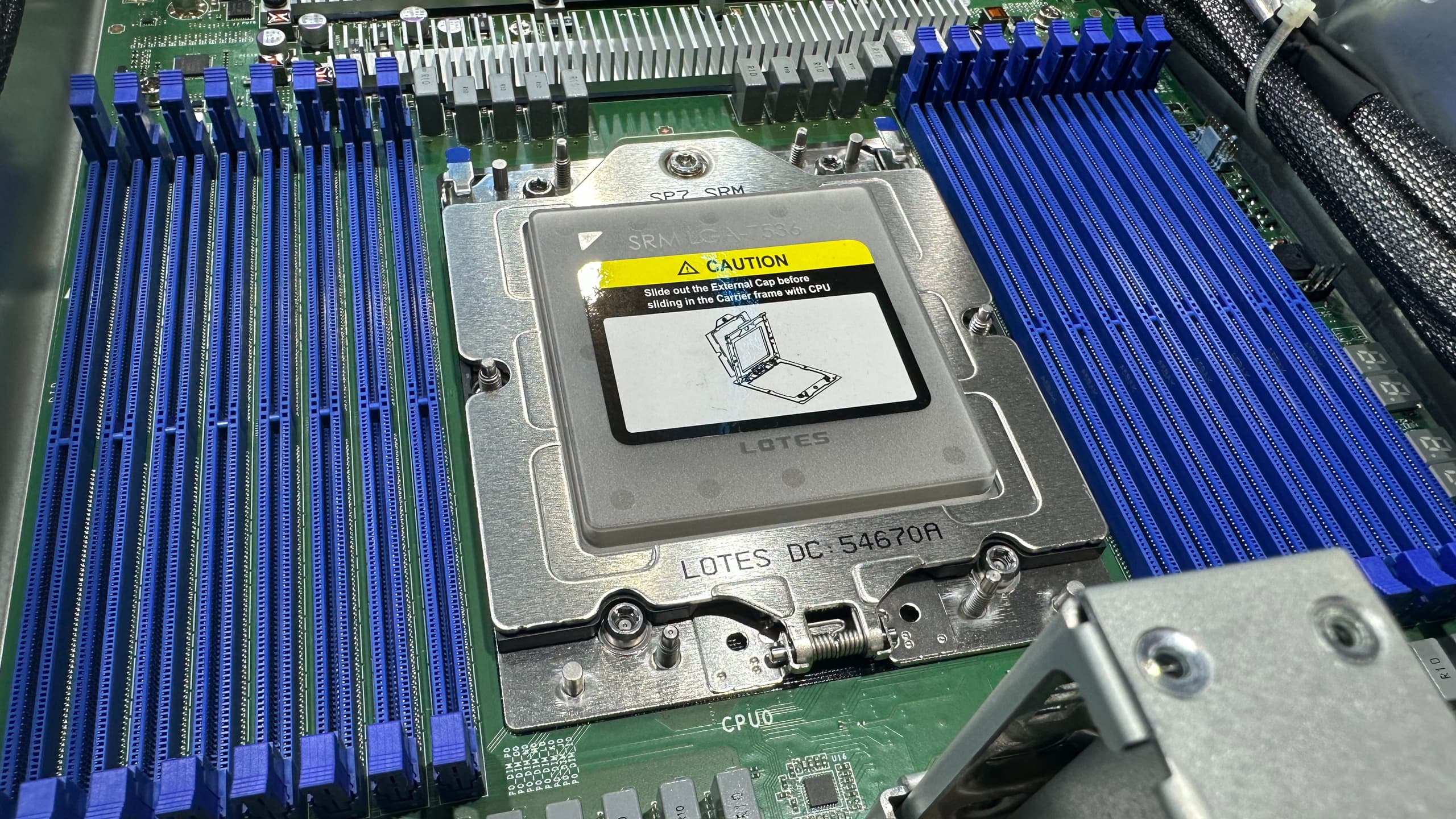
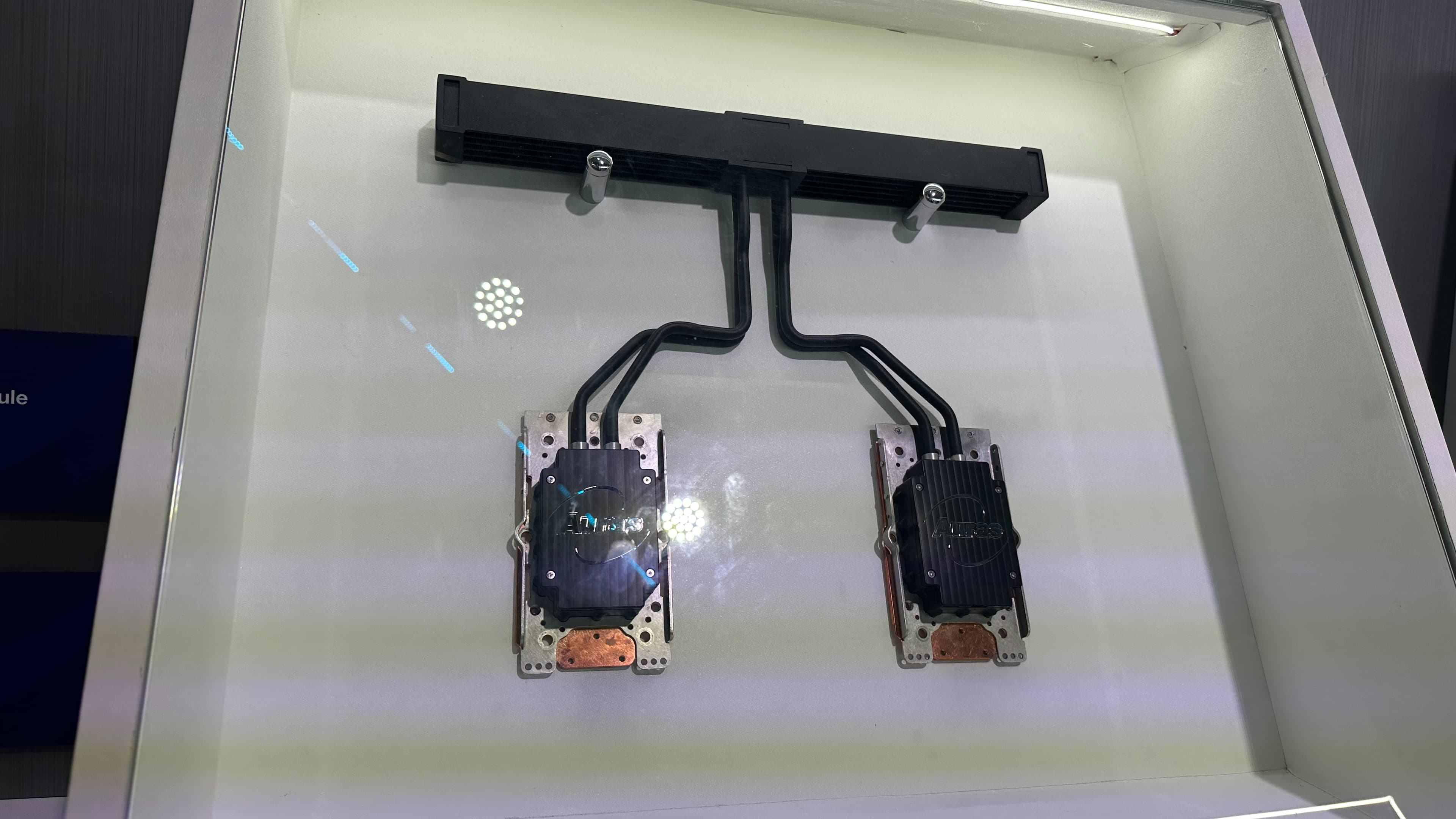
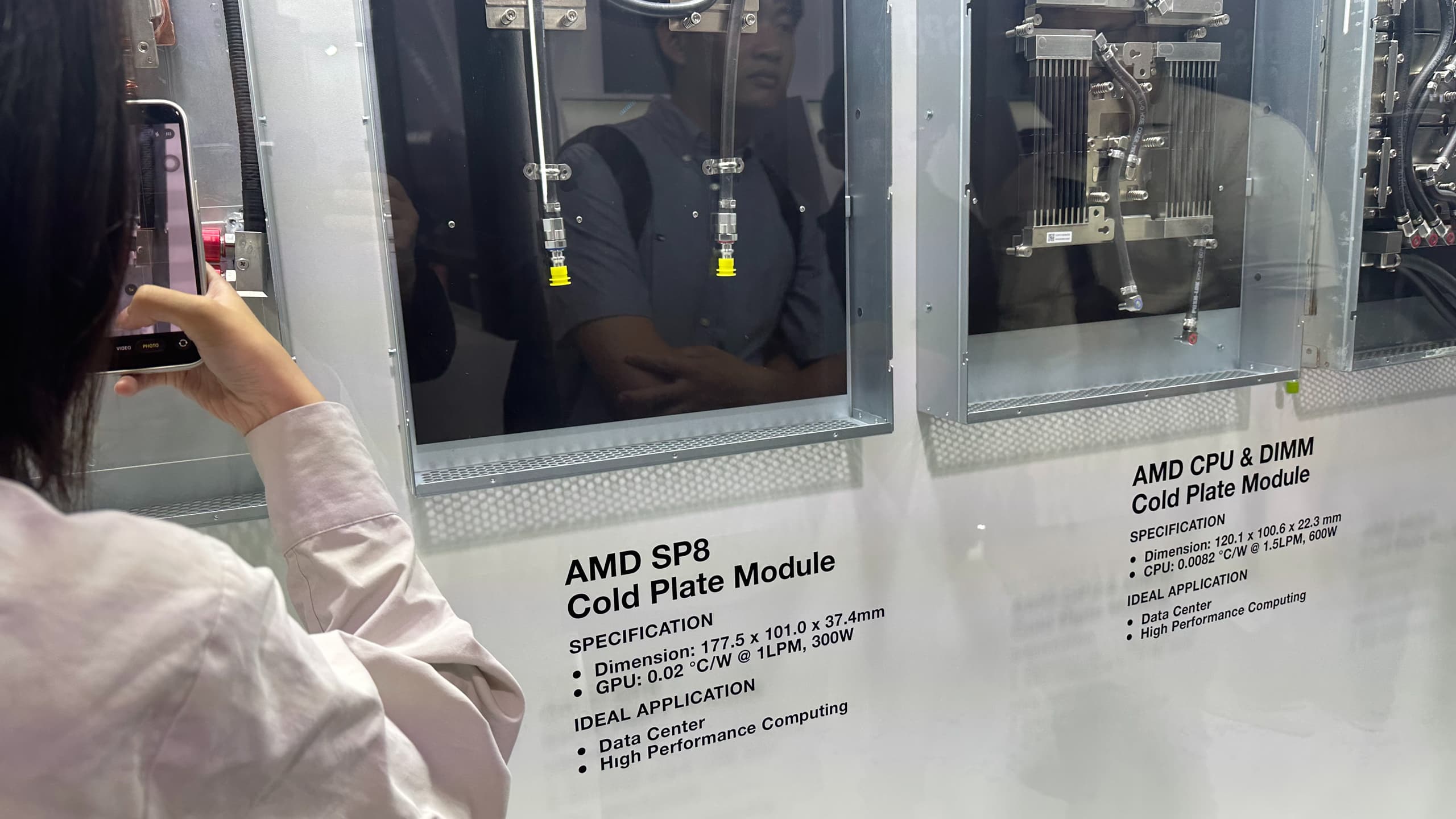
AMD is also preparing a smaller SP8 platform for customers who do not need the full core count or memory bandwidth. Auras is building water blocks for SP8 as well, suggesting these chips will still draw substantial power despite the reduced specifications.
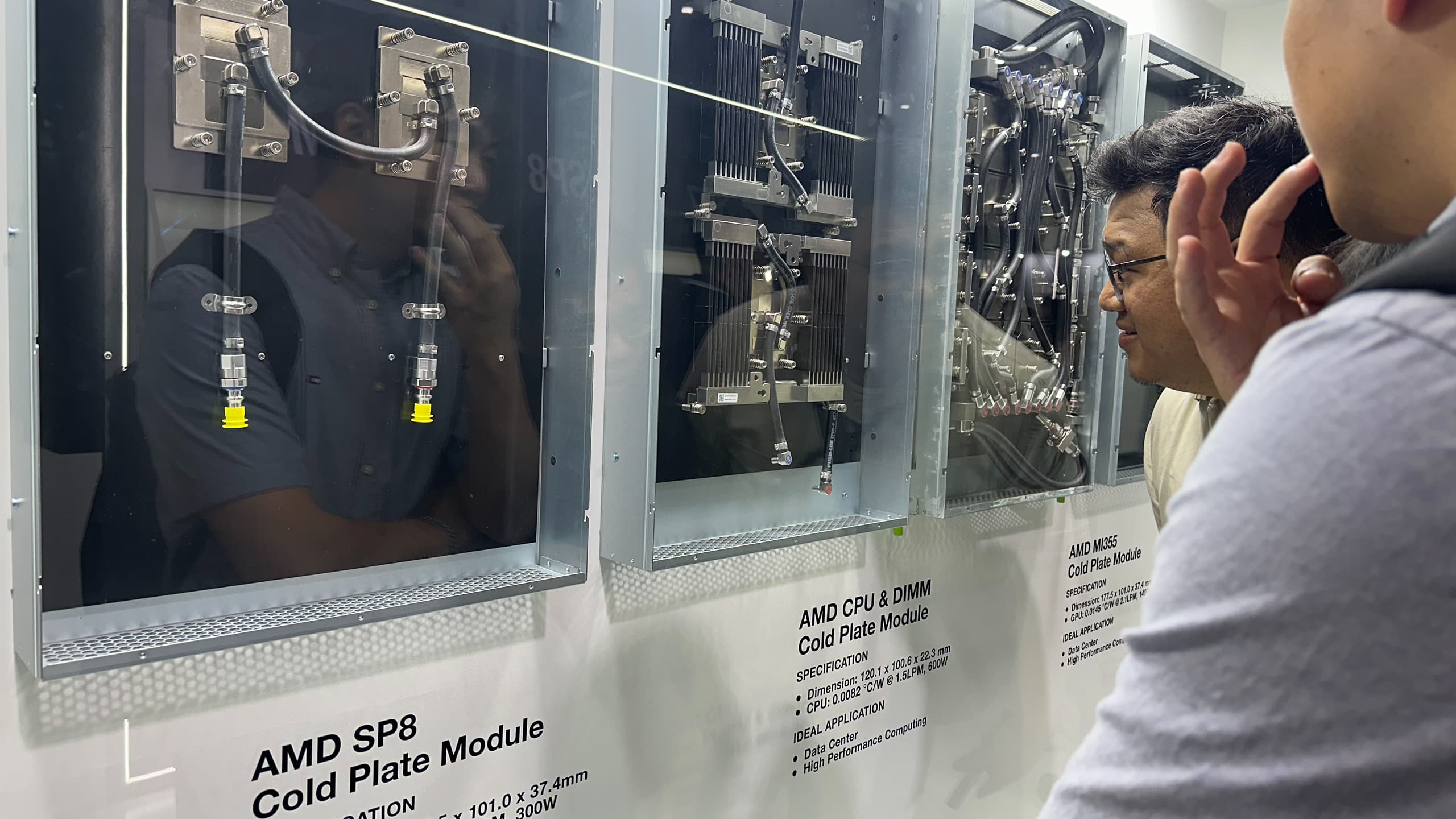
How does Intel's 9,324-pin socket compare?
Intel's LGA9324-1 socket is larger than AMD's SP7. Physically, it extends beyond the length of a human palm. The socket will support Xeon Diamond Rapids processors with up to 192 cores, a 16-channel DDR5 memory subsystem using MRDIMMs, and PCIe Gen6 lanes.
Intel has not announced official power specifications for Diamond Rapids. Based on Auras preparing water blocks for these processors, Tom's Hardware estimates processor base power between 300W and 500W, with peak consumption exceeding 1kW. The socket's size suggests it could also support Coral Rapids processors, which are expected around 2028 or 2029.
| Specification | AMD SP7 (Venice) | Intel LGA9324-1 (Diamond Rapids) |
|---|---|---|
| Max cores | 256 | 192 |
| Memory channels | 16 DDR6 | 16 DDR5 |
| Peak power | 1,400W | ~1,000W+ |
| PCIe generation | 6.0 (96 lanes) | 6.0 |
| Expected availability | Late 2026 | 2027 |
Why are these sockets so large?
The socket dimensions are a direct consequence of power delivery and I/O requirements. Supporting 16 memory channels and dozens of PCIe 6.0 lanes requires physical space for the electrical traces. Delivering over 1kW of power to a processor requires substantial contact area to manage current flow without overheating.
This is not overengineering. AI training and inference workloads demand memory bandwidth that DDR5 systems cannot provide at scale. Both AMD and Intel are building platforms that treat the CPU as a central hub for massive data movement, not just computation. The socket becomes the bottleneck if it cannot supply enough power or route enough signals.
What does this mean for AI server infrastructure?
Data center operators will need to upgrade cooling infrastructure significantly. Liquid cooling is not optional for either platform at full power draw. The 1,400W peak for AMD Venice and estimated 1kW+ for Diamond Rapids exceed what air cooling can handle efficiently.
Power delivery to racks becomes a serious constraint. A dual-socket AMD Venice server at full load could draw nearly 3kW just for the CPUs, before accounting for memory, storage, and networking. Data centers designed for 10-15kW per rack will need substantial upgrades to deploy these systems at density.
The timeline favors AMD. Venice arrives late 2026, giving AMD roughly a year head start over Intel's Diamond Rapids. For enterprises planning AI infrastructure buildouts, that gap matters. Waiting for Intel means delaying deployments; committing to AMD means potential vendor lock-in if Intel delivers compelling price-performance in 2027.
Logicity's Take
The socket size race tells us something important about where server architecture is heading. These are not CPUs in the traditional sense. They are I/O and power distribution hubs that happen to compute. AMD's 16 DDR6 channels and 1,400W peak power tell us the company expects AI workloads to remain memory-bandwidth-bound even with faster memory standards. Intel's even larger socket, despite supporting fewer cores, suggests the company is hedging for future expansion, likely Coral Rapids in 2028-2029. The real winner here is Auras and other cooling vendors, who suddenly have a captive market for expensive liquid cooling solutions.
Frequently Asked Questions
When will AMD EPYC Venice processors be available?
AMD plans to launch EPYC Venice processors with the SP7 socket in late 2026. The platform supports up to 256 cores and 1,400W peak power consumption.
How many pins does Intel's Diamond Rapids socket have?
Intel's LGA9324-1 socket has 9,324 contact points, making it physically larger than AMD's SP7. It supports Xeon Diamond Rapids processors expected in 2027.
Will these new server CPUs require liquid cooling?
Yes. Both platforms require liquid cooling for operation at full power. AMD's SP7 supports up to 1,400W peak, while Intel's Diamond Rapids is estimated to exceed 1kW peak consumption.
What memory type does AMD SP7 support?
AMD's SP7 socket supports 16 DDR6 memory channels using 12.8 GT/s MRDIMMs, a significant upgrade from current DDR5-based platforms.
Can these sockets support dual-socket server configurations?
Yes. Despite its large size, AMD's SP7 socket is compact enough for dual-socket designs, enabling servers with up to 512 cores using two EPYC Venice processors.
Need Help Implementing This?
Planning AI infrastructure upgrades for 2026-2027? Logicity can connect you with data center architects and enterprise hardware consultants who specialize in next-generation server deployments. Contact our team for vendor-neutral guidance on cooling, power delivery, and platform selection.
Source: Latest from Tom's Hardware
Huma Shazia
Senior AI & Tech Writer
Produced with AI assistance and reviewed by the Logicity editorial team. Learn more in our Editorial Policy.