Key Takeaways
- The Luce produces 1,036 horsepower from four motors, hitting 62 mph in 2.5 seconds
- Jony Ive's design prioritizes physical controls over touchscreens, bucking industry trends
- The 122-kWh battery provides over 329 miles of range with 350 kW fast charging
Ferrari has finally pulled back the curtain on the Luce, its first all-electric vehicle. The four-door supercar marks one of the Italian automaker's riskiest moves in decades. Not because it runs on batteries, but because of who designed it.
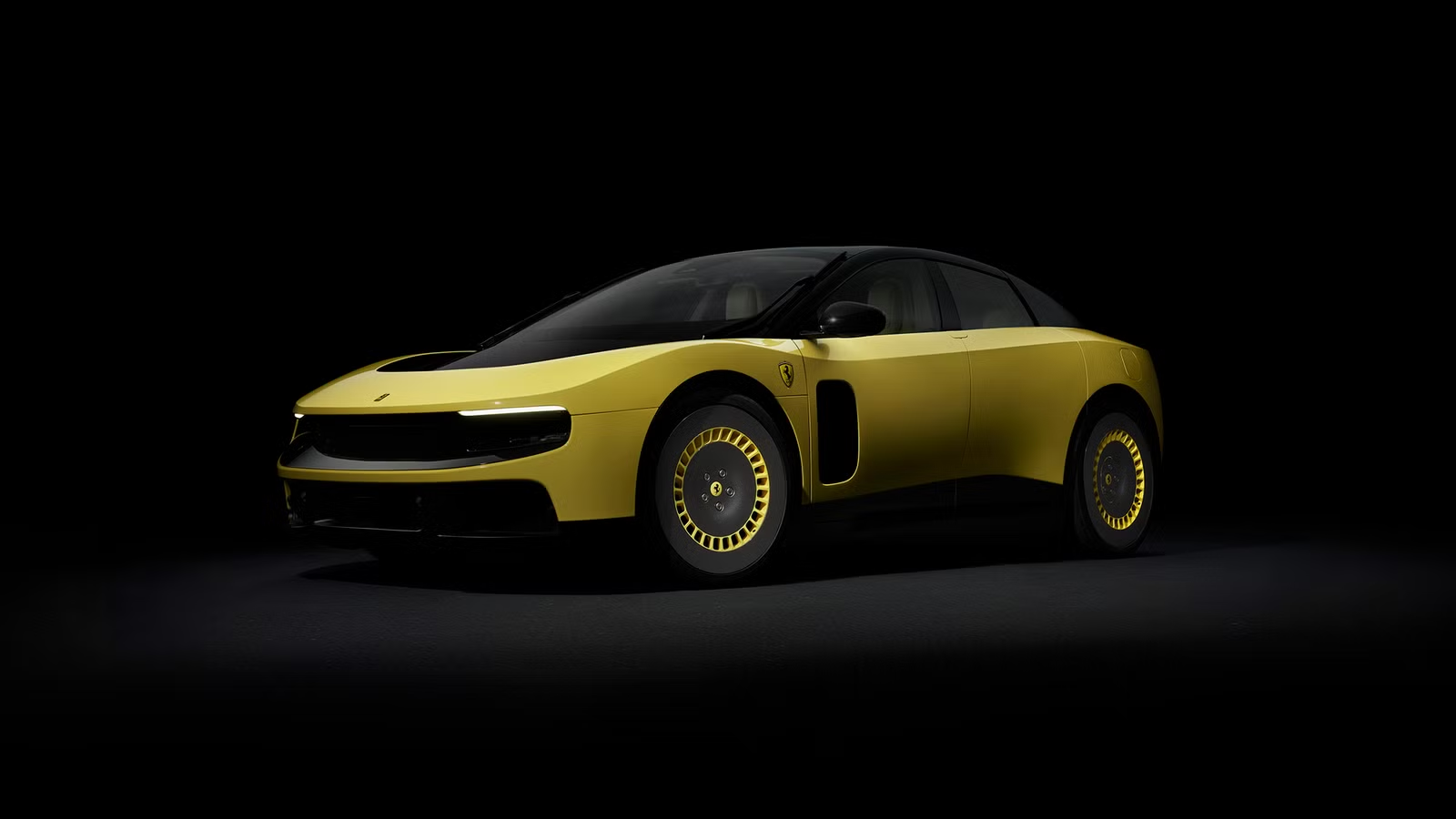
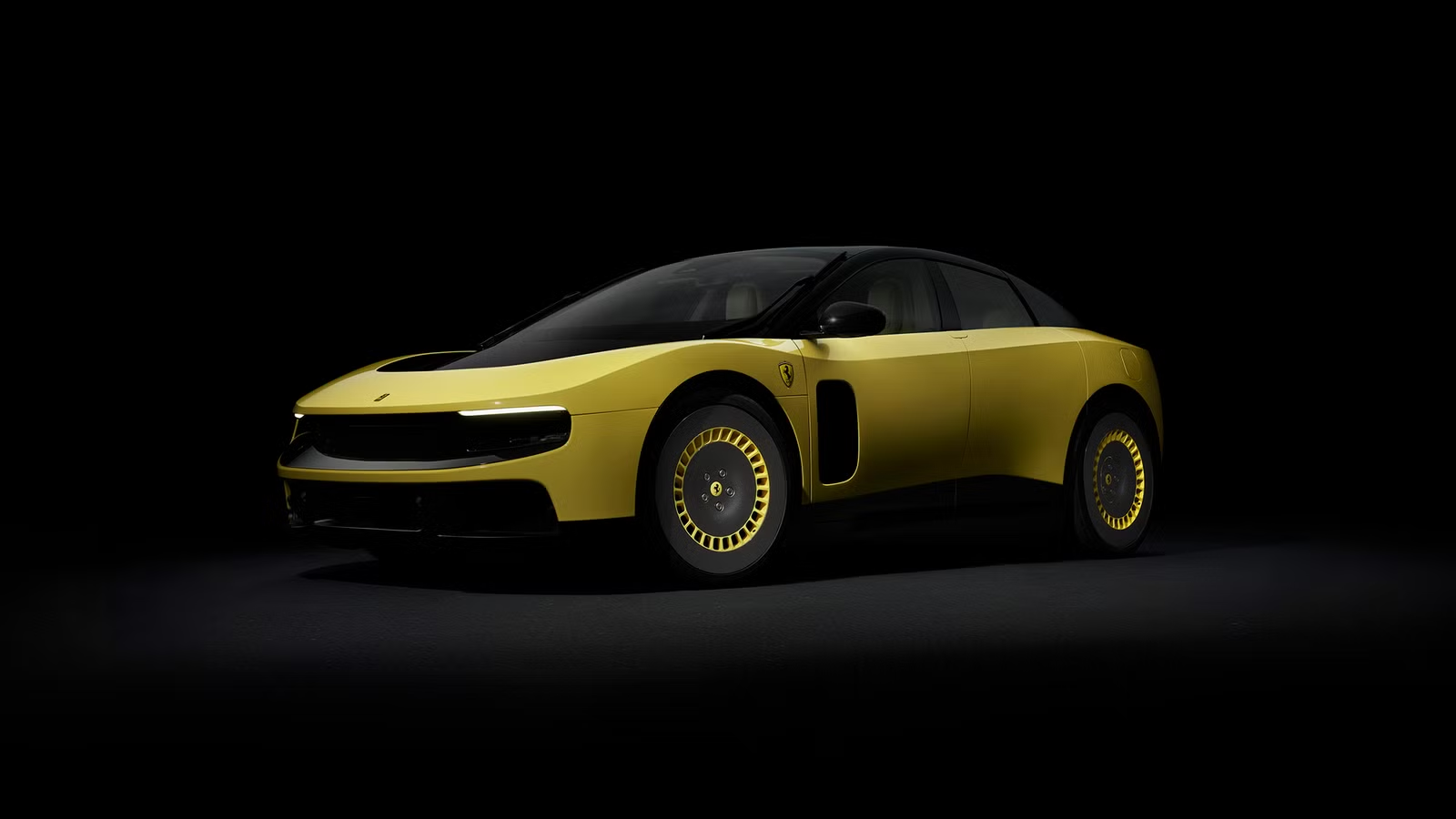
Sir Jony Ive, the former Apple design chief who shaped the iPhone's aesthetic, led the Luce's exterior and interior styling through his design collective LoveFrom. The result looks like nothing Ferrari has released before.
A Glass House on Wheels
The Luce's exterior centers on what Ferrari calls a shell-style "glass house." Ive's signature minimalism dominates. Rear-hinged passenger doors. Clean surfaces with minimal creases. Rear lights that reference classic supercars like the 360 Modena and 458 Italia while remaining distinctly modern.
Then there are the wheels. The 23-inch front and 24-inch rear diameters are the largest ever fitted to a road-going Ferrari production car. They're not just for show. The aggressive sizing supports the car's all-wheel-drive system and active suspension.
“The Luce is not merely a car, but a deliberate exercise in removing the extraneous. We wanted to return to the joy of physical engagement, where every control feels like an extension of the driver's intent rather than a digital barrier.”
— Sir Jony Ive, Founder of LoveFrom
Performance Numbers That Still Feel Like Ferrari
Whatever you think of the styling, the Luce's performance numbers are unmistakably Ferrari. Four electric motors combine to produce 1,036 horsepower. Engage launch control, and that figure climbs to 1,050 horsepower.
The sprint to 124 mph takes 6.8 seconds. Top speed is 193 mph. These are supercar numbers, delivered silently.
Ferrari engineered a clever solution to the instant-torque problem that makes some EVs feel jarring. Drivers can use the right paddle shifter to customize torque delivery, creating a more progressive acceleration curve. The F80-based active suspension and independently-steered rear axle keep the 4,982-pound car nimble despite its weight.
“This marks the most significant architectural departure in our history. Balancing the raw, visceral emotion of a Ferrari with the silent, instant torque of pure electric propulsion was our greatest engineering challenge to date.”
— Benedetto Vigna, CEO of Ferrari
Battery and Charging
The Luce carries a 122-kWh battery pack. Ferrari claims a range "in excess of" 329 miles, though testing isn't complete. The 800-volt architecture allows fast charging at up to 350 kW. A 20-minute charge recovers up to 70 kWh of capacity.
Aggressive plate-based cooling and strategically placed vents help sustain performance over longer drives. This matters. Many high-performance EVs throttle power after sustained hard driving. Ferrari clearly wants the Luce to maintain its performance character on track days.
An Interior That Rejects the Touchscreen Era
The cabin is where Ive's Apple heritage collides most directly with his love of mechanical objects. The Luce blends analog dials and physical controls with OLED displays. This isn't the screen-everywhere approach of Tesla or even some traditional automakers.
The speedometer is mechanical. A 12-inch center touchscreen exists, but it shares space with an analog clock and aluminum switches for common features like climate control. Two Manettino dials control EV modes (from Range to Performance) and driving dynamics.
The key is worth noting. It features an E Ink screen and starts the car when placed in the center tunnel and pressed down. It's a small detail that captures the car's philosophy: physical interaction over software abstraction.
Enthusiast Reactions Are Split
The Luce has ignited fierce debate in automotive communities. On Reddit's r/cars and Hacker News, reactions fall into two camps.
Purists criticize what they call an "Apple-fied" design. The minimalist exterior lacks the aggressive lines and visual drama associated with Ferraris. The glass house aesthetic feels suburban to some, luxury appliance to others.
Tech-focused observers see something different. They praise Ferrari for bucking the industry trend toward software-heavy interiors. The emphasis on tactile controls feels like a deliberate statement against the direction most automakers are taking.
Logicity's Take
What We Don't Know Yet
Ferrari hasn't announced pricing, though expectations put it well above €500,000. Production numbers remain undisclosed. Delivery timelines are unclear.
The company also hasn't completed range testing. The "in excess of 329 miles" claim could shift. Real-world performance driving will certainly reduce that figure, as with all EVs.
Frequently Asked Questions
How much horsepower does the Ferrari Luce have?
The Luce produces 1,036 horsepower from its four-motor powertrain, rising to 1,050 horsepower with launch control engaged.
What is the range of the Ferrari Luce EV?
Ferrari claims a range in excess of 329 miles from the 122-kWh battery, though testing isn't yet complete.
Who designed the Ferrari Luce?
Sir Jony Ive, the former Apple Chief Design Officer, designed the Luce's exterior and interior through his collective LoveFrom.
How fast can the Ferrari Luce charge?
The Luce supports 350 kW fast charging on its 800-volt architecture. Ferrari says a 20-minute charge recovers up to 70 kWh.
Does the Ferrari Luce have a touchscreen?
Yes, but it's paired with mechanical controls. The 12-inch center display shares space with an analog clock, aluminum switches, and a mechanical speedometer.
Another story of industry giants navigating high-stakes business decisions
Need Help Implementing This?
Source: How-To Geek
Huma Shazia
Senior AI & Tech Writer
Produced with AI assistance and reviewed by the Logicity editorial team. Learn more in our Editorial Policy.