Key Takeaways
- The device generates stable, continuous electricity from evaporating water without batteries or fuel
- It works with ordinary tap water or seawater but not purified water
- Three functional layers handle evaporation, ion transport, and charge collection
What the Researchers Built
Researchers at the Laboratory of Nanoscience for Energy Technology (LNET) at Ecole Polytechnique Fédérale de Lausanne (EPFL) in Switzerland have developed a device that continuously generates electricity from evaporating water. The system requires ordinary ion-containing water, such as tap water or seawater. It does not work with highly purified water.
The technology is a hydrovoltaic device. This class of technology harvests electricity from the evaporation-driven motion of water molecules and dissolved ions across engineered surfaces. No chemical fuel. No moving parts. Just water evaporating across nanostructured silicon.
The 2026 study, published in Nature Communications, transformed earlier experimental work into a functional three-layer electricity generator. According to the team, the device produces stable, continuous output while matching or exceeding comparable hydrovoltaic systems.

How the Three-Layer System Works
The device is built around three functional regions. Each handles a different stage of the energy conversion process.
At the top interface, water gradually evaporates into the air. This creates a continuous upward flow of liquid toward the surface. As water molecules leave as vapor, dissolved ions like sodium and chloride redistribute within the remaining liquid. This creates uneven ion concentrations and chemical potential differences across the system.
The middle layer handles ion transport. The evaporation-driven ion movement contributes to charge separation and voltage generation within the device.
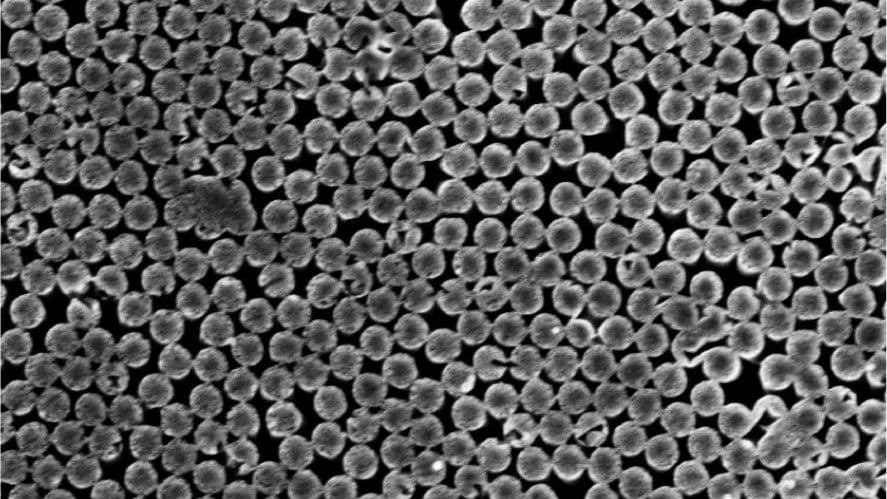
At the bottom sits a nanostructured silicon electrode composed of oxide-coated silicon nanopillars. When liquid contacts these charged surfaces, ions reorganize near the interface. This forms an electrical double layer, a nanoscale region of charge separation between the solid surface and the surrounding liquid. Surface chemical reactions and ion distribution generate the electrical output.
From Research Tool to Power Source
The system builds on earlier work by the same group, published in 2024. That research created an experimental platform to study the hydrovoltaic effect in detail. The initial setup used a hexagonal network of silicon nanopillars separated by tiny channels through which water could evaporate.
The 2024 platform demonstrated that when water moves and evaporates across charged nanostructures, dissolved ions can reorganize. This creates measurable electrical effects at the surface. At the time, it was primarily a research tool rather than a practical power source.
The 2026 version adds heat and sunlight to boost performance. The combination of evaporation, thermal input, and light creates conditions for continuous electricity generation.
Potential Applications
The researchers point to battery-free sensors, wearable electronics, and similar low-power applications as targets. A device that runs on ambient humidity, body heat, and indirect sunlight could eliminate battery replacement in remote sensors or medical wearables.
The requirement for ion-containing water is both a constraint and a feature. Tap water and seawater work. Distilled or deionized water does not. This means the device cannot generate power from pure condensation alone, but coastal and humid environments offer natural working fluid.
Logicity's Take
What Comes Next
The immediate next steps involve scaling the device and testing it in real-world conditions. Laboratory performance often differs from field deployment. Questions remain about long-term durability, output consistency across humidity levels, and manufacturing cost.
For engineers evaluating energy harvesting options, hydrovoltaic devices join piezoelectric, thermoelectric, and photovoltaic systems as potential candidates for ambient power collection. Each has trade-offs. This one requires water and ions but works in low light.
Frequently Asked Questions
What is a hydrovoltaic device?
A hydrovoltaic device harvests electricity from the evaporation-driven motion of water molecules and dissolved ions across engineered surfaces. No batteries or chemical fuel required.
Why doesn't the device work with purified water?
The device requires dissolved ions like sodium and chloride to generate electricity. Purified water lacks these ions, so no charge separation occurs.
What applications could use hydrovoltaic power?
Battery-free sensors, wearable electronics, and remote monitoring devices are potential targets. Any low-power application in humid environments could benefit.
How does this compare to solar power?
Hydrovoltaic devices work in low-light conditions where solar panels underperform. However, they require ambient humidity and ion-containing water, which limits deployment environments.
Need Help Implementing This?
Source: Latest from Tom's Hardware
Huma Shazia
Senior AI & Tech Writer
Produced with AI assistance and reviewed by the Logicity editorial team. Learn more in our Editorial Policy.