Key Takeaways
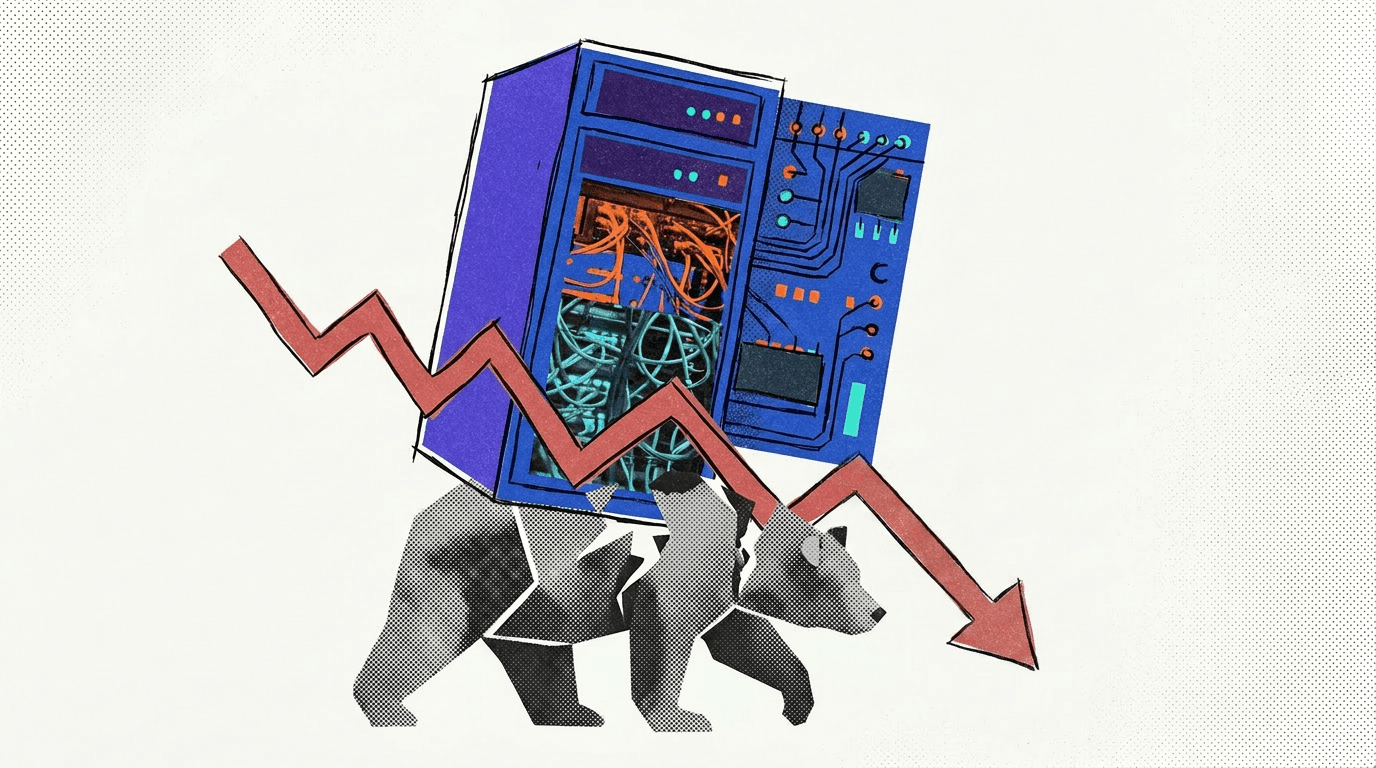
- Unlike dot-com startups, AI companies carry significant debt for physical infrastructure, spreading crash risk beyond shareholders
- AI lacks traditional software economics: compute costs scale with usage, making margins thin and vulnerable to price wars
- Apple's restraint on AI spending may prove strategically wise as competitors pour billions into unfamiliar territory
Aswath Damodaran, the NYU finance professor known for his valuation models, says a potential AI crash would inflict broader damage than the dot-com bust. The reason is structural: AI companies have financed massive physical infrastructure with debt, not just equity. When the dot-com bubble burst, shareholders took the hit. An AI correction would ripple through bondholders, lenders, and the broader economy.
Speaking on the Intangible Economy podcast, Damodaran laid out a sobering case against current AI valuations and the business models underpinning them. For founders and product teams building in this space, his argument raises questions about unit economics, competitive moats, and the timeline for AI monetization.
Why AI doesn't scale like Netflix
Damodaran's core critique targets the assumption that AI is a software business. It isn't, he argues. Traditional software enjoys near-zero marginal costs. Add a million users, and your expenses barely budge. AI works differently.
Every inference burns compute. Every query costs money. Damodaran compares AI economics to Spotify rather than Netflix. Netflix spreads its fixed content costs across a growing subscriber base, improving margins with scale. Spotify pays per stream, so growth doesn't automatically mean better economics. AI follows the Spotify pattern.
This distinction matters for anyone building AI products. Growth paired with thin margins can destroy value, not create it. And margins are already under pressure from Chinese competitors like DeepSeek, which are pushing prices lower.
The debt problem dot-com didn't have
The dot-com crash wiped out roughly $5 trillion in market cap between 2000 and 2002. Pets.com and Webvan vanished. But those companies had no revenue and, crucially, no debt. When they went to zero, shareholders lost everything, but the damage stopped there.
Today's AI buildout looks different. Hyperscalers are spending north of $200 billion annually on data centers, chips, and energy infrastructure. Estimates suggest 40 to 50 percent of this is debt-financed. If AI revenues disappoint, the losses don't stay contained to stock prices. Lenders take hits. Credit tightens. The effects spread.
“The scary thing is the big stories you tell that can justify AI, if they come true, are going to create some insane costs for society that we better start thinking about right now.”
— Aswath Damodaran, NYU Stern School of Business
The bull case has its own problem
Damodaran calls the optimistic AI scenario the "AI fever dream." To justify current valuations, AI companies need to replace jobs wholesale, not just sell productivity tools. But if AI actually delivers on that promise, the professor estimates half of white-collar workers could lose employment. The technology succeeds, and society absorbs massive costs.
This creates a strange dynamic. The bear case means investors lose money. The bull case means workers lose jobs. Neither outcome is purely positive, and both carry risks that extend well beyond quarterly earnings.
Big tech is building infrastructure it doesn't understand
Damodaran owns five of the Magnificent Seven stocks, including Amazon, which he's held since 1997. He says he now has to analyze these companies differently. Instead of tracking margins and new product lines, he's watching capital expenditures and depreciation schedules.
These were capital-light businesses. They grew without building factories. Now they're constructing massive data centers that depreciate over ten years but could become obsolete in five. "I'm not sure they really know what they're getting themselves into," Damodaran says.
Apple, by contrast, has drawn criticism for not investing aggressively in AI. Damodaran sees this as a strength. "We undervalue restraint in business," he argues. Apple can watch competitors make expensive mistakes and learn from them without burning billions in unfamiliar territory.
What this means for builders
Damodaran's analysis is macro, but it has implications for anyone shipping AI products. If compute costs don't fall dramatically, unit economics stay challenging. If competitors undercut on price, margins compress further. If the bull case requires job replacement at scale, go-to-market gets politically complicated.
None of this means AI products aren't viable. It means the path to profitability may be narrower than current valuations assume. Teams building in this space should stress-test their models against rising compute costs, price wars, and longer sales cycles than enterprise software typically sees.
Logicity's Take
Damodaran's warning deserves attention, but his Spotify comparison understates inference cost improvements. Costs per token have dropped roughly 10x over the past 18 months across providers. The real question for builders is whether your product can monetize at current costs, not theoretical future costs. If your unit economics require another 5x cost reduction, you're betting on a timeline you don't control. Teams should model for flat or modestly declining compute costs, not exponential drops. Build margins at today's prices, treat future savings as upside.
Frequently Asked Questions
Why would an AI crash be worse than dot-com?
Dot-com companies were equity-financed with minimal debt. AI infrastructure is heavily debt-financed. A crash would hit bondholders and lenders, not just shareholders, creating broader economic ripples.
Does AI have software-like profit margins?
No. Unlike traditional software where marginal costs approach zero, AI inference requires compute for every use. Costs scale with usage, similar to Spotify's per-stream royalties rather than Netflix's fixed content costs.
How much are big tech companies spending on AI infrastructure?
Hyperscalers are spending over $200 billion annually on AI infrastructure, including data centers, chips, and energy. Estimates suggest 40-50% is debt-financed.
Why does Damodaran praise Apple's AI approach?
Apple has invested conservatively in AI compared to competitors. Damodaran argues this lets Apple learn from others' expensive mistakes rather than pouring billions into unfamiliar infrastructure.
See how AI agents are being deployed in production workflows today
Need Help Implementing This?
Building AI products with sustainable unit economics? Logicity helps teams model compute costs and stress-test margins. Reach out at hello@logicity.in.
Source: The Decoder / Matthias Bastian
Huma Shazia
Senior AI & Tech Writer
Produced with AI assistance and reviewed by the Logicity editorial team. Learn more in our Editorial Policy.