Key Takeaways
- NASA's Swift Boost mission launches June 27 to rescue the Swift Observatory from orbital decay
- The LINK spacecraft will dock with Swift and tug it to a higher orbit, extending its life by 5-10 years
- Increased solar activity has accelerated atmospheric drag, making Swift fall faster than projected
NASA's Swift Boost mission will launch on June 27 from Kwajalein Atoll in the South Pacific to rescue the Neil Gehrels Swift Observatory, a 20-year-old space telescope that's falling toward Earth faster than anyone expected. A robotic spacecraft called LINK, built by Arizona company Katalyst Space Technologies, will dock with Swift and drag it to a higher orbit.
The mission is a race against physics. Swift launched in 2004 to study gamma-ray bursts and has detected over 1,500 of these cosmic explosions. It still works fine. But increased solar activity during Solar Cycle 25 has expanded Earth's upper atmosphere, creating more drag on satellites in low orbit. Swift's altitude has been dropping faster than NASA's original models predicted.
How will the rescue work?
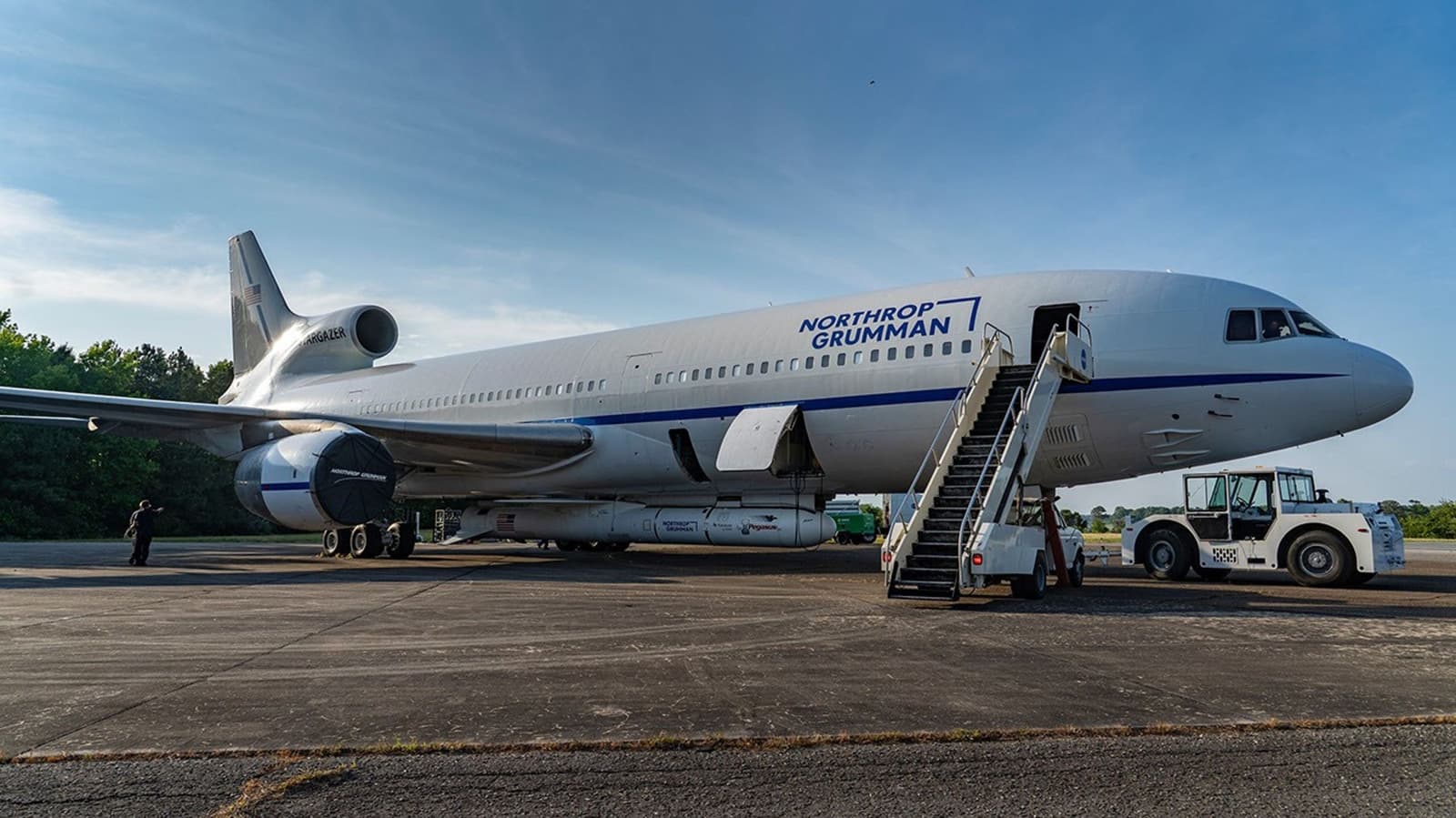
The launch sequence is unusual. Engineers at NASA's Wallops Flight Facility in Virginia attached the LINK spacecraft to a Northrop Grumman Pegasus XL rocket on June 9. Three days later, they bolted the rocket to the belly of Stargazer, a modified L-1011 aircraft. The plane left Wallops on June 18 and is now at Kwajalein Atoll waiting for launch day.
On June 27, Stargazer will climb to about 40,000 feet and release the Pegasus XL. The rocket will free-fall for several seconds before igniting its motors and delivering LINK to orbit in roughly 10 minutes. Once there, LINK will rendezvous with Swift, dock with it, and fire its own thrusters to push the telescope into a higher, more stable orbit.
If successful, the mission should extend Swift's operational life by 5 to 10 years.
Why does Swift still matter?
Swift started as a gamma-ray burst specialist but evolved into something more valuable: a rapid-response observatory that alerts other telescopes when something interesting happens in the sky. NASA calls it a "dispatcher." When a sudden X-ray source or gamma-ray flash appears, Swift spots it first and broadcasts coordinates so bigger instruments like the James Webb Space Telescope can follow up.
This happened with a 13-billion-year-old supernova. Swift detected the X-ray source; James Webb and other observatories gathered the data that confirmed what it was. Without Swift's quick positioning, the window might have closed before anyone else looked.
“Given how quickly Swift's orbit is decaying, we are in a race against the clock, but by leveraging commercial technologies that are already in development, we are meeting this challenge head-on.”
— Shawn Domagal-Goldman, NASA
A test case for orbital servicing
Swift Boost is about more than one telescope. It's a proof of concept for orbital servicing, the ability to repair, refuel, or reposition satellites already in space. Most satellites today are designed as disposable. When they run out of fuel or drift too low, they become debris. Katalyst's LINK spacecraft represents a different approach: extend what works instead of replacing it.
For space agencies and commercial operators, this has obvious appeal. Building and launching a new satellite costs hundreds of millions of dollars. If a robotic tug can keep a functional satellite working for another decade at a fraction of that cost, the economics shift. Swift Boost will test whether the technology actually delivers.
Logicity's Take
This mission matters beyond astronomy. If LINK successfully docks with and boosts Swift, it validates a commercial market for orbital servicing that companies like Northrop Grumman (with its MEV vehicles) and Astroscale are also chasing. The business model is straightforward: charge satellite operators less than replacement cost to extend asset life. For enterprise CTOs managing any kind of infrastructure, the principle is familiar. Sometimes the best ROI comes from maintenance, not replacement. NASA partnering with a small Arizona startup rather than a legacy contractor also signals where the agency sees innovation happening.
Frequently Asked Questions
Why is the Swift telescope falling faster than expected?
Increased solar activity during Solar Cycle 25 has expanded Earth's upper atmosphere, creating more drag on satellites in low orbit. Swift is experiencing more atmospheric resistance than NASA's original models projected.
How long will the Swift Boost mission extend the telescope's life?
NASA estimates the mission will add 5 to 10 years of operational life to the Swift Observatory by moving it to a higher, more stable orbit.
What is orbital servicing?
Orbital servicing is the capability to repair, refuel, or reposition satellites already in space rather than letting them become debris or fall to Earth. The Swift Boost mission tests commercial technology for boosting satellites to higher orbits.
Who built the LINK spacecraft for Swift Boost?
Katalyst Space Technologies, a company based in Tempe, Arizona, built the LINK robotic spacecraft under a partnership with NASA.
Another look at how technology economics shift over decades
Need Help Implementing This?
At Logicity, we help technology leaders understand emerging trends and make informed decisions. Subscribe to our newsletter for weekly analysis of the stories shaping tech strategy.
Source: Engadget
Huma Shazia
Senior AI & Tech Writer
Produced with AI assistance and reviewed by the Logicity editorial team. Learn more in our Editorial Policy.




