Key Takeaways
- Claude produces bare wireframes but excels at collaborative iteration and hands you raw HTML you can host anywhere
- Gamma and Canva deliver more polished first drafts but lock you into proprietary platforms
- The real test isn't the first output. It's how well each tool handles your follow-up edits
The Test Setup
Tech journalist Bryan M. Wolfe ran a straightforward experiment. He asked Claude, Gamma, and Canva to build the same portfolio page using identical prompts. Then he pushed each tool with follow-up requests to see how they adapted.
The initial prompt was deliberately vague: "I would like you to create a portfolio page for a new photographer new on the scene." No design specs. No style preferences. Just an open-ended request to see what each tool would produce on its own.
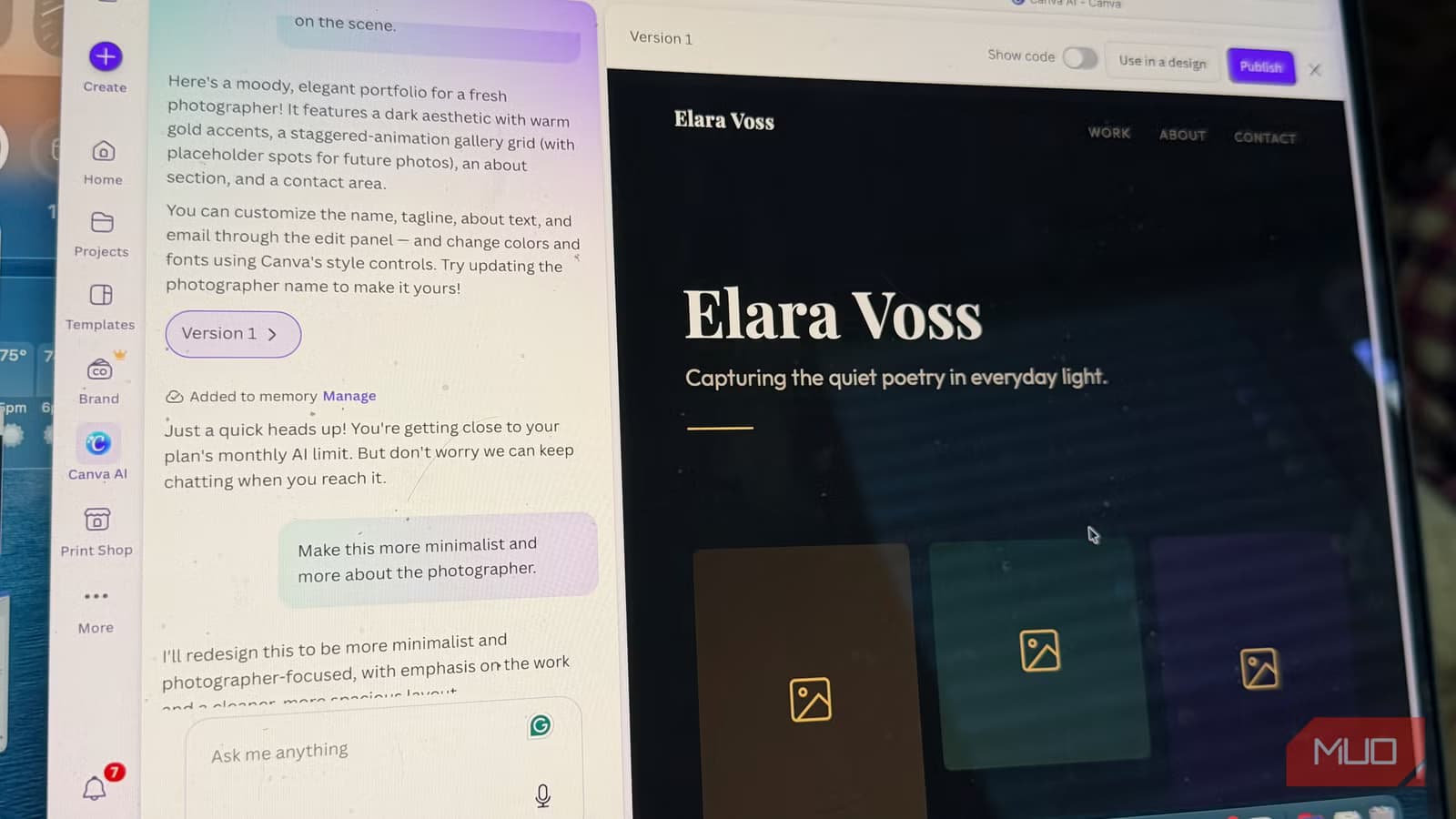
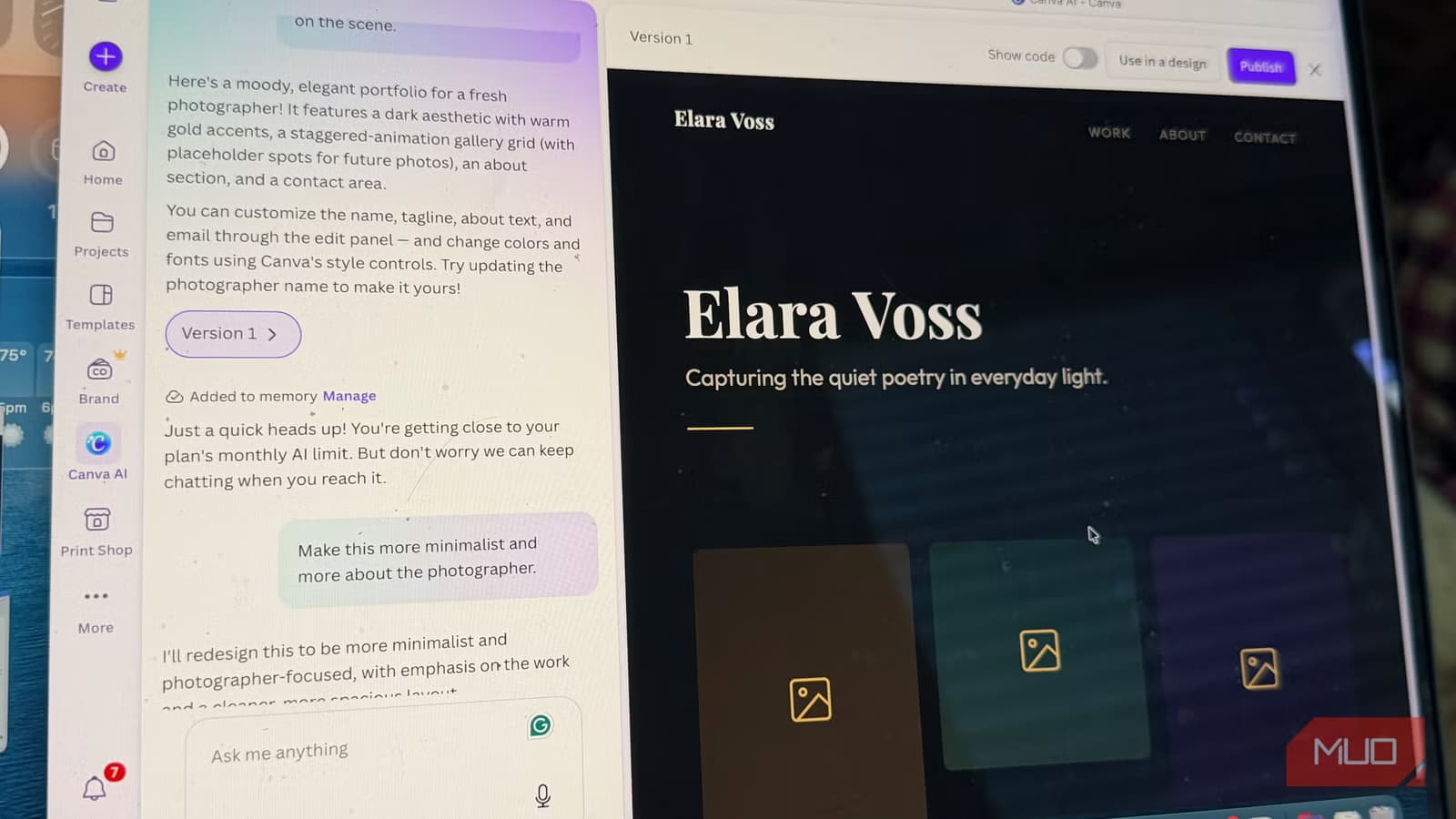
The follow-up prompt tested adaptability: "Make this more minimalist and more about the photographer." This matters more than most people realize. The back-and-forth is where you actually shape something worth publishing.
Claude: The Collaborative Wireframer
Claude's first draft was the barest of the three. Clean layout, readable structure, but closer to a wireframe than a finished design. If you need something launch-ready immediately, this isn't your tool.

But Claude handled edits differently than its competitors. Instead of blindly rewriting the page, it asked clarifying questions. "What's the vibe?" "What needs to stand out?" That made the process feel like a collaboration rather than a transaction. It nailed the HTML updates every time.
The major advantage: Claude hands you raw HTML. You own the code. Host it for free on GitHub Pages or Netlify. Pass it to a developer. Drop it into a CMS. No proprietary lock-in. No monthly hosting fees.
The free version handles the entire process without restrictions. Generate, revise, and refine as many times as you need. Claude Pro at $20 per month unlocks more powerful models for complex layout requests.
Deep dive into Claude Pro capabilities beyond basic generation
Gamma and Canva: Visual Polish, Platform Lock-In
Gamma and Canva took the opposite approach. Both delivered visually complete first drafts. More color. More polish. Closer to something you could actually show a client without embarrassment.
Canva now claims 265 million monthly active users for its AI-first visual suite. Gamma recently hit $100 million in annual recurring revenue with 70 million users globally. These numbers reflect a real preference for speed and immediate visual gratification.
The tradeoff is control. Both platforms keep your work inside their ecosystems. You can export, but you don't get clean code you can maintain or modify independently. For many users, that's fine. For developers or anyone who needs long-term ownership, it's a dealbreaker.
The Velocity vs Control Divide
Discussions on Reddit's r/webdev and Hacker News highlight a recurring tension. Many developers argue that Canva and Gamma win on immediate visual results for non-technical users. But Claude's raw HTML output is the only viable path for anyone who needs to actually own or maintain their code long-term.
This isn't a flaw in any tool. It's a fundamental split in what users need. If you're building a quick portfolio to share at a networking event next week, Gamma or Canva will get you there faster. If you're building something you'll iterate on for years, Claude's approach pays off.
How They Stack Up
| Feature | Claude | Gamma | Canva |
|---|---|---|---|
| First Draft Quality | Wireframe-level | Polished | Polished |
| Iteration Style | Conversational, asks questions | Direct revisions | Direct revisions |
| Code Ownership | Full HTML export | Platform-locked | Platform-locked |
| Free Tier | Unlimited generation | Limited features | Limited features |
| Best For | Developers, long-term projects | Quick presentations | Visual-first users |
Which One Should You Use?
The answer depends on your constraints. Need something visually complete today? Gamma or Canva. Building a site you'll maintain and expand? Claude. Working with a developer who'll take over the code? Claude. Just want to impress someone at a coffee meeting? Either of the visual-first tools.
Canva's 2026 State of Marketing and AI Report notes that 97% of marketing leaders now use AI daily. The challenge isn't finding a tool that can do the job. It's finding one that fits how you actually work.
Logicity's Take
Frequently Asked Questions
Frequently Asked Questions
Can I use Claude's portfolio output for free?
Yes. Claude's free version lets you generate, revise, and refine portfolios without restrictions. You get raw HTML you can host on free platforms like GitHub Pages or Netlify.
Which AI tool creates the most polished first draft?
Gamma and Canva both produce more visually complete first drafts than Claude. Claude's initial output is closer to a wireframe that needs iteration.
Do I own the code from Gamma or Canva portfolios?
Not in the same way. Both platforms keep your work within their ecosystems. You can export, but you don't get clean, maintainable HTML like Claude provides.
How much does Claude Pro cost?
Claude Pro costs $20 per month. It gives you access to more powerful models that handle complex layout requests better than the free tier.
Which AI design tool is best for developers?
Claude. It outputs raw HTML you can host anywhere, modify freely, and integrate into existing projects without platform dependencies.
Need Help Implementing This?
Source: MakeUseOf
Huma Shazia
Senior AI & Tech Writer
Produced with AI assistance and reviewed by the Logicity editorial team. Learn more in our Editorial Policy.