Key Takeaways
- Claude Code's VS Code extension keeps the AI connected to your file structure and git context, reducing context-switching
- Visual diffs and color-coded file changes make reviewing AI-generated code faster than terminal output
- The embedded mode catches bugs earlier and makes fewer mistakes on projects where frontend and backend must stay in sync
Terminal Mode Works. Until It Doesn't.
Claude Code launched as a terminal tool, and for quick tasks, it still works well. You stay close to where code runs. Commands feel fast. But anyone who has managed a complex project through a terminal window knows the limits. Text scrolls past faster than you can track. Chat history needs manual clearing. Finding a bug across several files turns into an exercise in frustration.
Jorge Aguilar, writing for MakeUseOf, argues that moving Claude Code into VS Code solves most of these problems. The extension puts the AI directly inside your editor, where your files already live. Instead of jumping between windows, everything fits together.
What Changes Inside VS Code
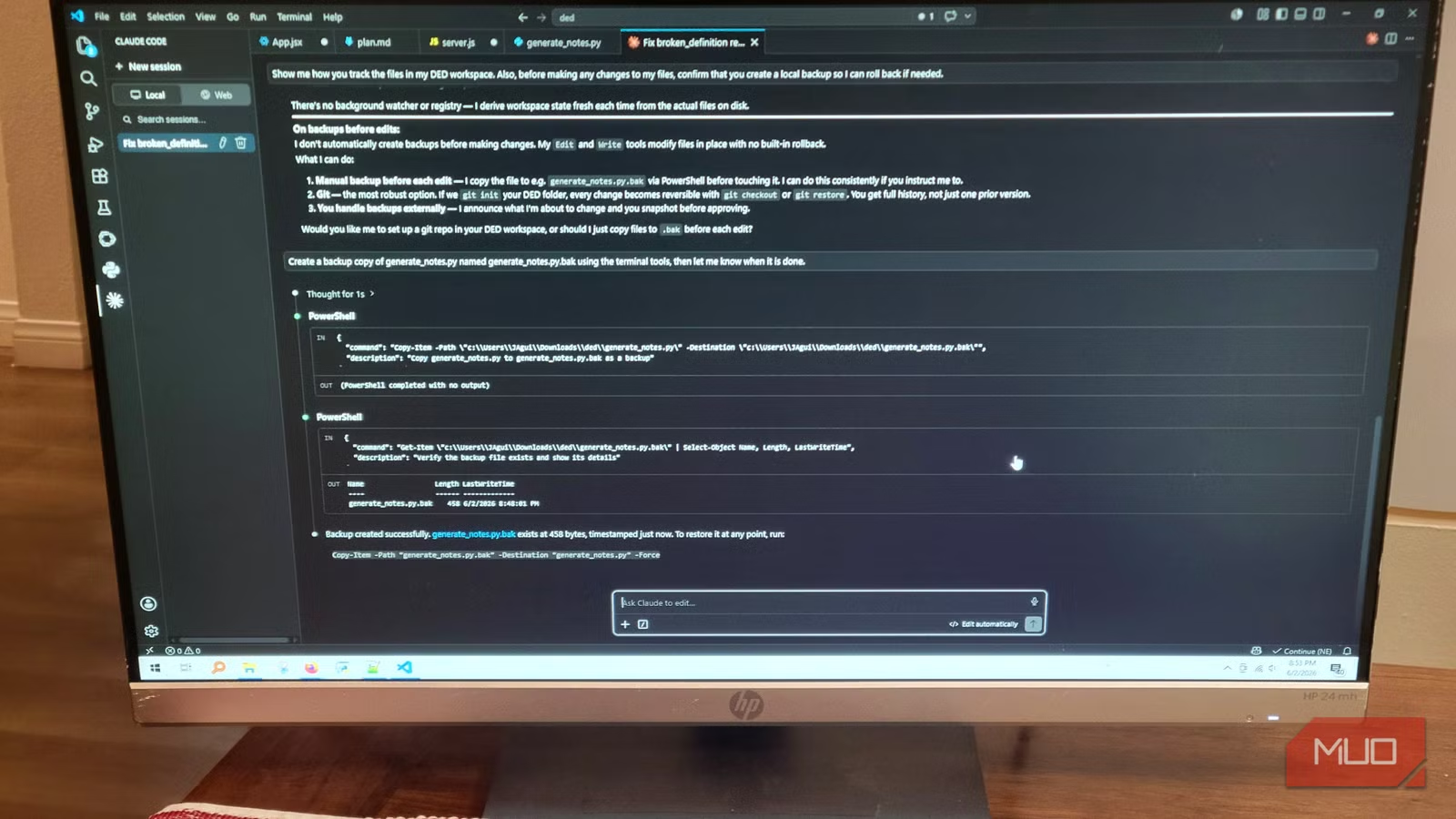
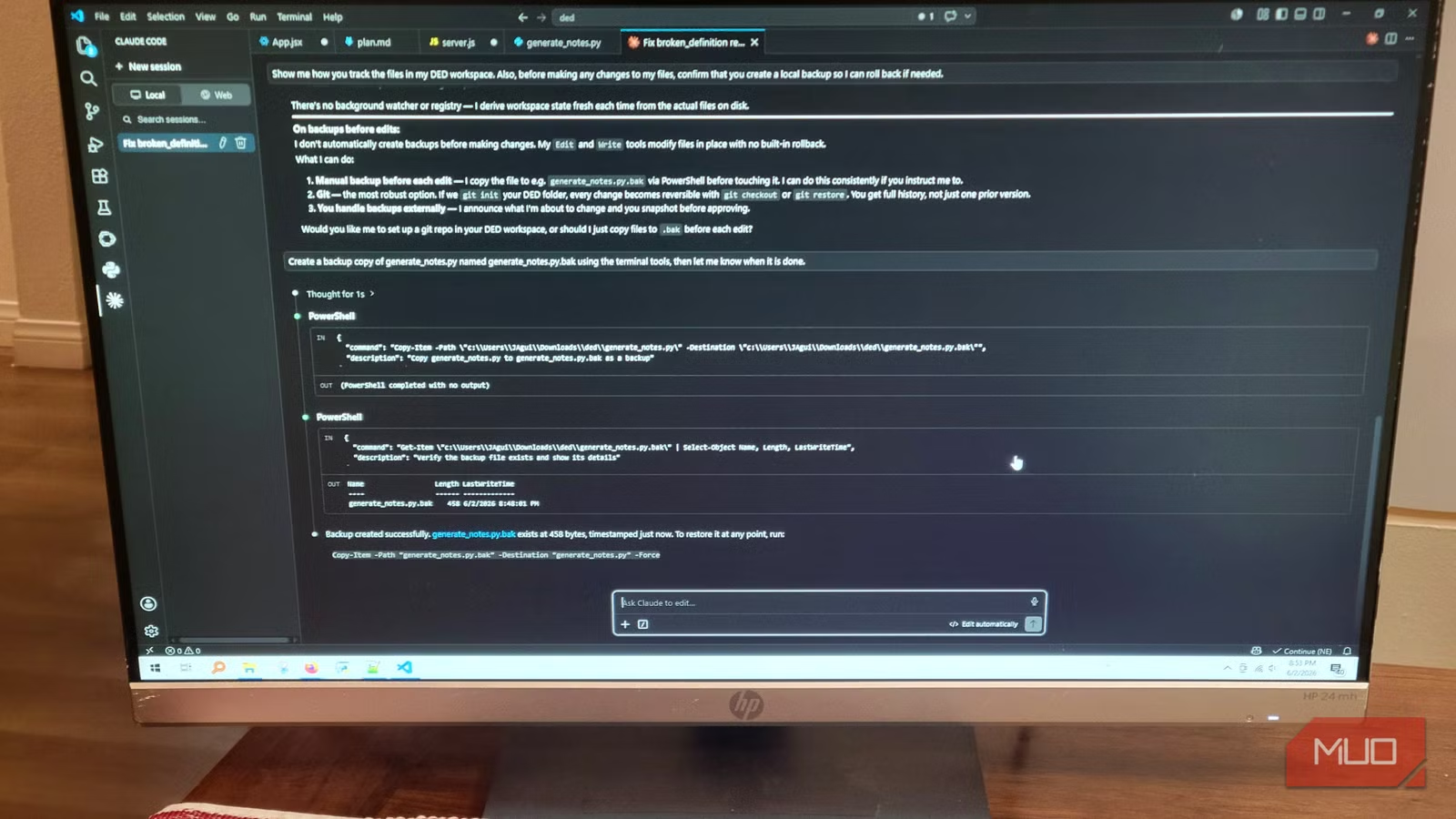
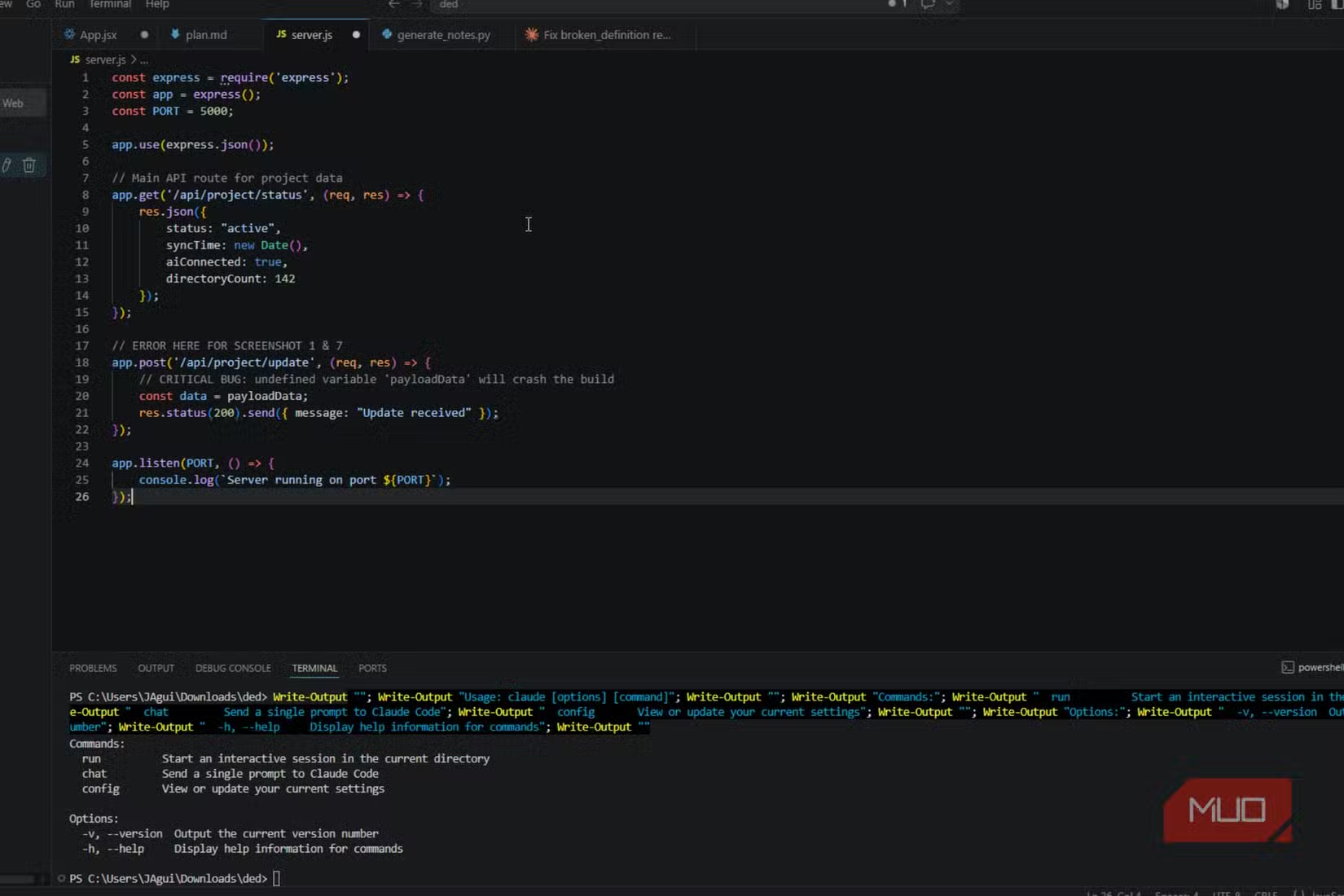
The VS Code extension gives Claude access to your local file structure and git context. That matters. When the AI knows which files exist, how they relate, and what changed recently, it makes better suggestions. Aguilar reports that the embedded mode feels more accurate and produces fewer mistakes, especially on larger projects where frontend and backend code must stay in sync.
- Visual diffs with proper color coding show exactly which files Claude touched
- You can add notes directly to AI-generated plans, flag mistakes, and point out what it missed
- Your existing editor plugins and tools keep working alongside the AI
- The chat interface stays connected to your codebase, not isolated in a separate window
Aguilar's workflow starts by asking Claude to draft a plan based on project requirements. The plan opens like any other file. He reviews it, edits it, and watches the diffs as Claude works. That visibility makes it easier to keep the whole project in his head while the AI handles implementation.
The Agentic Difference
Claude Code operates as an agentic layer. It can debug, refactor, and navigate projects autonomously. In terminal mode, that autonomy can feel opaque. You issue a command, text scrolls, and you hope it worked. In VS Code, you see each step. The AI references your file structure and git history. You catch problems before they compound.
“The true revolution isn't just an AI that writes code; it's an AI that understands your repository's unique architectural constraints as well as your senior lead.”
— Dr. Elena Vance, Lead AI Researcher at Anthropic
This shift matters for enterprise teams. When an AI agent can read your codebase's structure, it stops suggesting generic solutions. It starts suggesting solutions that fit your architecture.
Terminal vs IDE: The Developer Debate
Not everyone agrees that VS Code mode is better. On Reddit's r/programming, senior developers argue that terminal mode stays faster for simple tasks. The CLI doesn't load a full editor. You type a command and get a result. For quick fixes, that speed advantage holds.
But for multi-file refactoring, debugging across modules, or any task where you need to see relationships between files, the VS Code extension pulls ahead. Visual diffs beat scrolling through terminal output. Color-coded changes beat grepping through logs.
HackerNews discussions raise another concern: security. Giving an AI agent autonomous git access carries risk. Multiple commenters recommend using Claude's Plan Mode to review proposed changes before letting the model commit anything. That extra step adds friction but prevents the AI from pushing broken code.
When to Use Which Mode
Terminal mode still makes sense for quick, isolated tasks. Need to generate a utility function? Terminal. Want to ask a one-off question about syntax? Terminal. The overhead of loading VS Code isn't worth it for a 30-second interaction.
But for anything involving multiple files, architectural decisions, or debugging that spans modules, VS Code mode wins. The visual context, diff tools, and file awareness compound into real time savings. Estimates suggest developers using AI-integrated IDE environments save an average of $150 per month in time value on routine tasks.
Another example of Claude's autonomous task execution capabilities
The Bigger Picture
Claude Code's VS Code mode represents a larger trend. AI coding tools are moving from standalone chatbots to embedded assistants. The difference isn't cosmetic. When an AI lives inside your development environment, it gains context. It sees your files, your history, your patterns. That context makes it useful instead of generic.
Google's Antigravity and other competitors are chasing the same vision. But Aguilar argues Claude Code currently leads in this embedded, context-aware approach. Whether that lead holds depends on how fast rivals can integrate their tools into developer workflows with the same depth.

Logicity's Take
Frequently Asked Questions
Does Claude Code's VS Code extension cost extra?
The extension uses the same Claude Code subscription. No additional cost applies for using it inside VS Code instead of the terminal.
Can Claude Code commit changes to git automatically?
Yes, but developers recommend using Plan Mode to review proposed changes before allowing commits. Autonomous git access carries risk if changes aren't verified.
Is terminal mode faster than VS Code mode?
For quick, isolated tasks, yes. Terminal mode skips editor loading time. But for multi-file work, VS Code mode's visual context usually saves more time than it costs.
Does Claude Code work with editors other than VS Code?
Claude Code started as a terminal tool that works independently. The VS Code extension is currently the primary IDE integration, though terminal mode works alongside any editor.
Need Help Implementing This?
Source: MakeUseOf
Huma Shazia
Senior AI & Tech Writer
Produced with AI assistance and reviewed by the Logicity editorial team. Learn more in our Editorial Policy.