Key Takeaways
- Over 900 outage reports in India alone highlight the risk of single-provider AI dependency
- 99.85% uptime still means potential hours of disruption for mission-critical workflows
- Multi-provider AI strategies are now essential for business continuity planning
Read in Short
ChatGPT experienced a major global outage affecting both consumer and business users. With 79% reporting complete service failures, this incident exposes the risk of building workflows on a single AI provider. Smart businesses are now diversifying their AI stack.
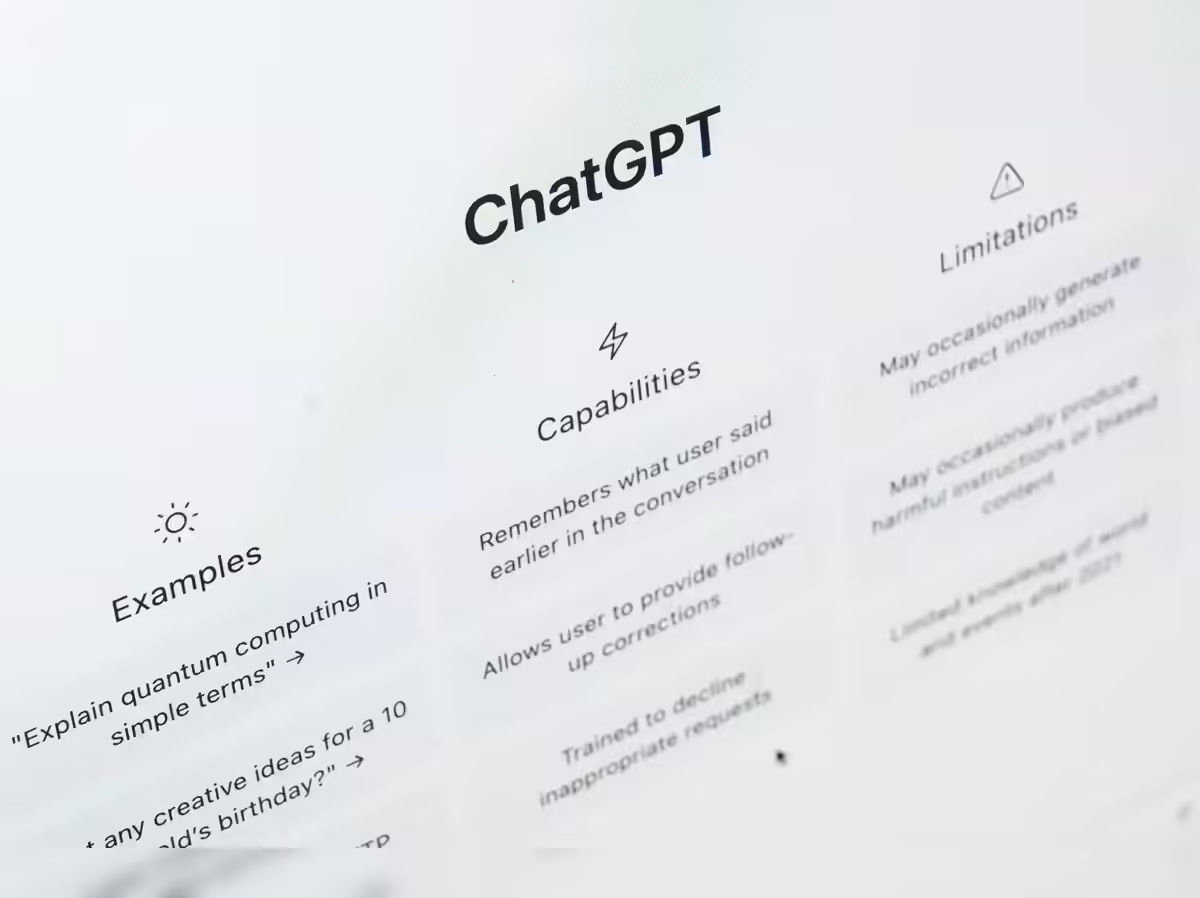
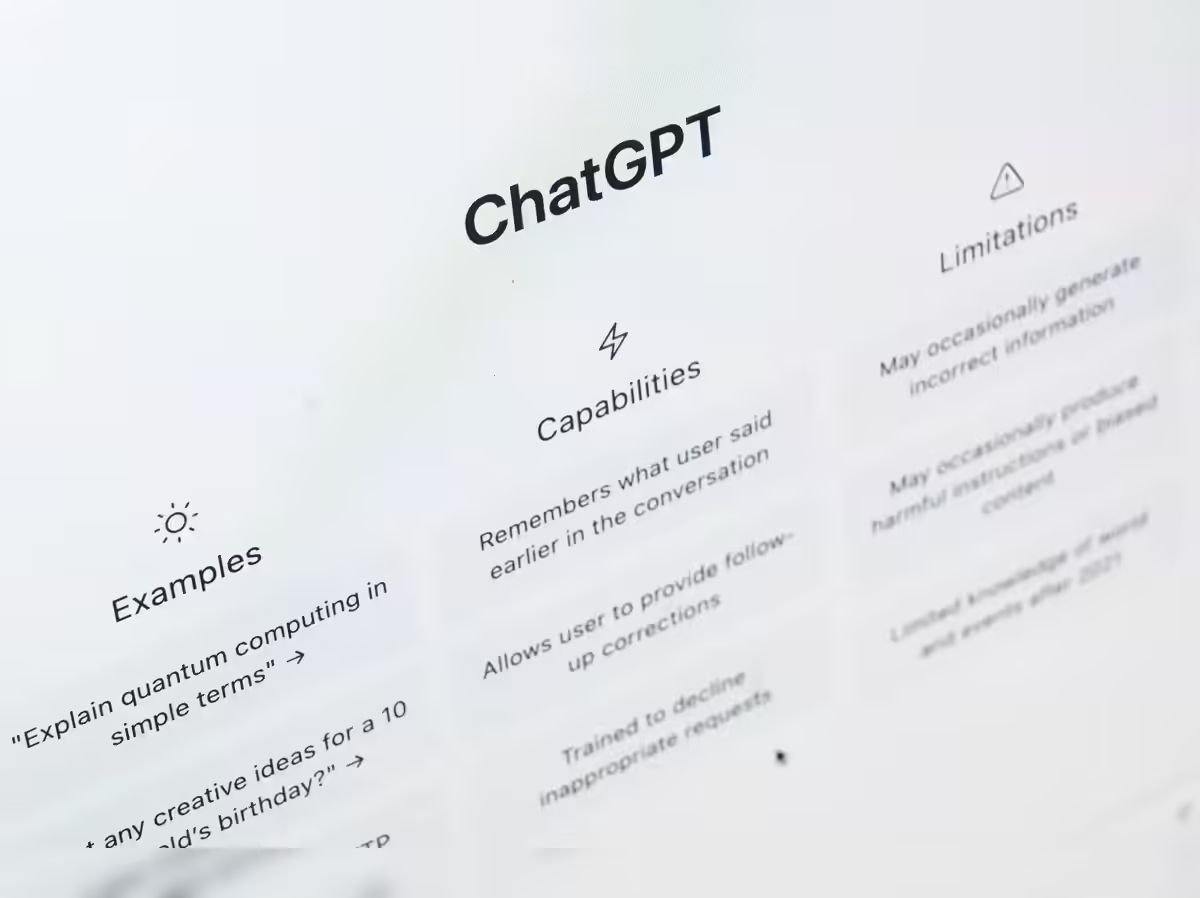
According to [The Economic Times](https://economictimes.indiatimes.com/tech/technology/chatgpt-down-for-several-users-openai-says-monitoring-recovery/articleshow/130396436.cms), OpenAI's ChatGPT reported widespread issues for users globally, with Downdetector showing over 900 outage reports in India as of 8:23 PM, affecting both the main service and ChatGPT Business users.
If your customer support team uses ChatGPT to draft responses, your developers rely on it for code review, or your marketing team generates content with it daily, you just got a wake-up call. The question isn't whether AI tools will go down. It's whether your business can keep running when they do.
What Happened During the ChatGPT Outage?
OpenAI confirmed service disruptions affecting both ChatGPT and Codex, their AI coding assistant. The breakdown of reported issues tells a concerning story for business users.
- 79% experienced complete service unavailability
- 11% faced mobile app failures
- 5% couldn't access the web browser interface
- ChatGPT Business users faced additional issues lasting up to an hour after account changes
OpenAI's status page showed system uptime dropping to 99.85%. That sounds impressive until you do the math. For a service running 24/7, that translates to roughly 13 hours of potential downtime annually. If your operations depend on AI availability during critical business hours, that's a problem.
Why Should Business Leaders Care About AI Downtime?
The real cost of this outage isn't measured in minutes of inconvenience. It's measured in stalled workflows, missed deadlines, and frustrated customers. Consider what happens across your organization when ChatGPT goes dark.
| Department | Common ChatGPT Use | Downtime Impact |
|---|---|---|
| Customer Support | Draft responses, translate queries | Response times spike 3-5x |
| Development | Code review, debugging assistance | Sprint velocity drops 15-25% |
| Marketing | Content drafts, social copy | Campaign delays, missed deadlines |
| Sales | Email personalization, research | Slower outreach, lower conversion |
| Legal | Contract review, compliance checks | Deal delays, risk exposure |
A 2024 survey by Salesforce found that 67% of businesses using generative AI have integrated it into daily operations. When that tool disappears, there's often no backup plan. Teams either wait or revert to manual processes they've already forgotten how to do efficiently.
How Much Does AI Downtime Cost Your Business?
Let's put real numbers to this. The average knowledge worker using AI tools saves 2-3 hours daily on routine tasks. During an outage, that productivity gain evaporates.
For a 50-person team heavily reliant on AI tools, a single day of downtime could cost ₹7.5-12.5 lakhs in lost productivity. That doesn't account for downstream effects: delayed customer responses, missed opportunities, or the compounding impact of backed-up work.
The ChatGPT Business tier specifically saw issues where users encountered errors for up to an hour after upgrading accounts or adding seats. For companies scaling their AI adoption, this creates an additional operational risk during growth phases.
Building an AI Redundancy Strategy That Works
The solution isn't to abandon AI. It's to stop treating it like electricity that's always available. Smart businesses are building redundancy into their AI infrastructure the same way they do for cloud services and data storage.
The Multi-Provider Approach
Companies with mature AI strategies maintain relationships with at least two major providers. When ChatGPT goes down, Claude or Gemini can handle critical workflows. The switching cost is far lower than the downtime cost.
- Audit your AI dependencies: Map which teams use which tools for what tasks
- Identify critical vs. nice-to-have: Customer support AI is critical; internal brainstorming is not
- Establish backup providers: Test alternatives before you need them urgently
- Create manual fallback procedures: Document how to handle top 5 tasks without AI
- Set up monitoring: Know when your AI tools go down before your team tells you
The businesses that handled this outage well weren't caught off guard. They'd already tested what happens when ChatGPT is unavailable and had workflows ready to activate.
Learn how to assess and respond to third-party service vulnerabilities in your tech stack
Comparing AI Providers for Business Continuity
Not all AI providers are interchangeable, but for most business use cases, you can maintain 80% functionality by switching between major platforms. Here's how the top options compare for enterprise reliability.
| Provider | Uptime SLA | Enterprise Support | API Reliability |
|---|---|---|---|
| OpenAI (ChatGPT) | 99.9% target | Priority for Enterprise | Generally strong, occasional outages |
| Anthropic (Claude) | 99.9% target | Enterprise tier available | Strong track record |
| Google (Gemini) | 99.95% for Workspace | Integrated with GCP support | Enterprise-grade infrastructure |
| Microsoft (Copilot) | 99.9% for M365 | Full enterprise support | Azure-backed reliability |
The key insight here isn't which provider is best. It's that no provider is perfect. The companies using AI most effectively treat it like any other critical infrastructure: with redundancy, monitoring, and contingency plans.
What This Outage Reveals About AI Vendor Lock-In
There's a deeper strategic issue exposed by this incident. Many businesses have built their AI workflows entirely around OpenAI's ecosystem. Custom GPTs, fine-tuned models, integrated APIs. That investment creates switching costs that make diversification feel expensive.
“The best time to plan for AI downtime is when everything is working. The second best time is right after an outage reminds you why it matters.”
— Enterprise risk management principle
But the cost of vendor lock-in during an outage is far higher than maintaining flexibility. Progressive companies are now building abstraction layers that allow them to swap AI providers without rewriting their entire integration. It's more work upfront, but it's insurance that pays off.
Understand the broader risks and opportunities in the AI provider landscape
Action Items for Your Next Leadership Meeting
This outage is a forcing function. Use it to get AI resilience on your leadership agenda before the next incident catches your organization unprepared.
Executive Checklist: AI Business Continuity
1. Request an AI dependency audit from your tech team within 2 weeks. 2. Identify your top 3 mission-critical AI workflows. 3. Assign owners to test backup providers for each critical workflow. 4. Include AI downtime scenarios in your next business continuity review. 5. Set a budget for multi-provider AI infrastructure in your next planning cycle.
The companies that move on this now will have a competitive advantage when the next outage hits. And given the rapid scaling of AI infrastructure globally, outages aren't becoming less common. They're becoming more impactful as our dependency deepens.
Frequently Asked Questions
Frequently Asked Questions
How long was ChatGPT down during this outage?
OpenAI reported degraded performance and connection failures, with the investigation ongoing at the time of reporting. ChatGPT Business users specifically faced errors lasting up to an hour after account changes. The full duration varied by region and user type.
Is ChatGPT Enterprise more reliable than the free version?
ChatGPT Enterprise offers priority access and dedicated support, but this outage affected both consumer and business tiers. Enterprise customers may see faster resolution, but they're not immune to platform-wide issues. True reliability requires multi-provider strategies.
How much does it cost to implement AI redundancy?
Basic redundancy (maintaining accounts with 2-3 providers, training staff on alternatives) costs relatively little beyond additional subscription fees. A full abstraction layer for seamless switching typically requires 2-4 weeks of developer time for initial setup, depending on integration complexity.
Which AI provider has the best uptime record?
All major providers target 99.9%+ uptime, and all have experienced outages. Google's infrastructure tends to be most robust due to their cloud expertise, but for most businesses, the answer is to not rely on any single provider for critical workflows.
Should we build internal AI tools instead of using external providers?
For most businesses, the answer is no. Building and maintaining AI infrastructure requires significant expertise and investment. The better approach is to use external providers strategically while maintaining flexibility to switch between them when needed.
Logicity's Take
We've been building AI-powered applications for clients using both OpenAI and Anthropic's Claude API, and outages like this are exactly why we recommend multi-provider architectures from day one. Here's what we've learned shipping production AI systems: the switching cost between providers is lower than most teams assume. The core prompting patterns work across ChatGPT and Claude with minor adjustments. What does cost money is building your integration in a way that makes switching impossible. When we build AI features into client applications, we abstract the provider layer so the business logic doesn't care whether it's talking to OpenAI or Anthropic. It adds maybe 15-20% to initial development time, but it's saved clients from exactly this scenario. For Indian businesses specifically, there's another angle here: international AI services can have regional connectivity issues that compound global outages. Having a fallback isn't just about provider failures. It's about the entire chain between your users and these services. If your team is scrambling every time ChatGPT hiccups, that's a fixable architecture problem, not an inevitable cost of using AI.
Need Help Building Resilient AI Systems?
Logicity helps businesses implement AI solutions that don't fall over when a single provider has a bad day. From multi-provider integrations to custom AI agents built on Claude's API, we build systems that keep running. Get in touch to discuss your AI infrastructure strategy.
Source: Tech-Economic Times / ET
Huma Shazia
Senior AI & Tech Writer
Produced with AI assistance and reviewed by the Logicity editorial team. Learn more in our Editorial Policy.