Key Takeaways
Can John Ternus Save Apple From Falling Behind?

- John Ternus takes over as Apple CEO in under two months with software quality as a key challenge
- iMessage's proprietary lock-in remains Apple's strongest retention tool, especially among US teens
- iOS has lost most of its feature advantage over Android, making Messages even more critical
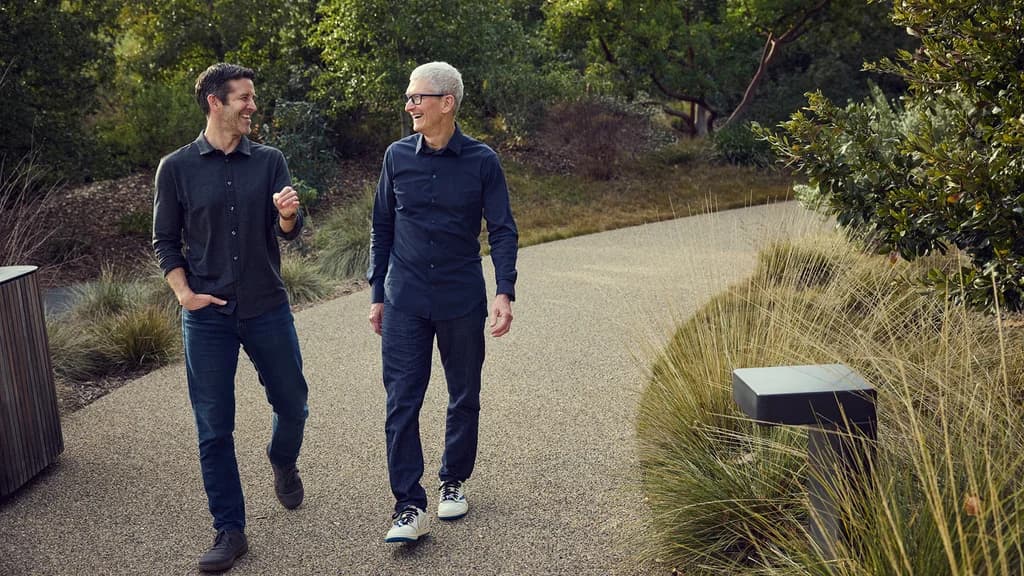
John Ternus becomes Apple CEO in less than two months. He inherits a company worth over $4.5 trillion, stock near an all-time high of $300 per share, and hardware products that dominate their categories. But Apple's software story is less flattering. The Messages app, arguably the most important piece of software Apple makes, has stagnated while competitors have improved. Ternus needs to fix this.
Why Messages matters more than any other Apple app
The Messages app handles iMessage, the blue-bubble protocol that carries genuine cultural weight in the United States. Court documents from 2021 revealed that Apple executives explicitly acknowledged iMessage's proprietary nature gives the company a competitive advantage. They were right to protect it.
Consider the numbers: 87% of US teenagers own an iPhone, according to Piper Sandler's 2024 survey. That demographic loyalty traces directly back to iMessage. Green bubbles carry social stigma in American high schools. Parents buy iPhones for their kids because their kids demand iPhones. The cycle reinforces itself.
But this lock-in only works if the Messages app itself remains good enough that users don't seek alternatives. That's where Apple has a problem.
iOS has lost its software edge
Smartphone operating systems have existed for nearly two decades. In the early years, iOS won clearly. It looked better, worked more intuitively, and offered more advanced features than Android. That gap has closed to near zero.
Feature parity benefits consumers. They can choose from a wider range of devices without sacrificing functionality. But it forces Apple to work harder on differentiation. When Android can match most iOS capabilities, the remaining friction points become existential for Apple's retention strategy.
iMessage fills this gap. It's the primary reason many users won't switch to Android, not because iOS is better, but because leaving iMessage means leaving their social circles. Apple knows this. The 2021 court documents showed executives discussing how to prevent iMessage from becoming cross-platform precisely because doing so would remove a barrier to switching.
What Ternus brings to the job
Ternus has served as Apple's Senior VP of Hardware Engineering since 2021. He oversaw iPhone, iPad, Mac, Apple Watch, and AirPods development. Most significantly, he led Apple's transition to custom silicon. The M-series chips represent Apple's most important hardware achievement in a decade.
That hardware background is precisely why software should concern observers. Ternus knows how to ship excellent physical products. He hasn't demonstrated the same capability with software. Tim Cook wasn't a software executive either, but he inherited an iOS that was still ahead of competitors. Ternus inherits one that has fallen behind in key areas.
The Messages app exemplifies this decline. Features that users have requested for years remain missing or poorly implemented. Meanwhile, competitors like Telegram, WhatsApp, and even Google Messages have added capabilities Apple won't match. Apple finally announced RCS support in 2024, years after the rest of the industry adopted it.
The strategic question Ternus must answer
Apple faces a choice. It can continue treating Messages as a lock-in mechanism, prioritizing proprietary control over user experience. Or it can invest heavily in making Messages genuinely best-in-class, competing on quality rather than switching costs.
The first approach has worked for years. It may continue working. But generational shifts happen. WhatsApp dominates messaging outside the US. A generation of international users has no attachment to blue bubbles. If Apple ever loses its grip on American teenagers, the iMessage advantage evaporates.
The second approach requires genuine software investment. Apple has the resources. Whether it has the organizational will is another question. Hardware teams ship products that generate revenue directly. Software teams ship features that users expect for free. The incentive structures differ.
Logicity's Take
For AI builders and product teams, Apple's Messages situation illustrates a classic platform tension: lock-in versus quality. Apple chose lock-in and is now paying the technical debt. Teams building communication tools should note that proprietary advantages decay. WhatsApp and Telegram invested in cross-platform excellence. Signal invested in privacy and security. Apple invested in exclusivity. Only one of these strategies requires your product to actually be better than alternatives. The others rely on friction that competitors can eventually reduce. For teams evaluating communication infrastructure, tools like [Slack](https://logicity.in/r/slack) for internal messaging or [Intercom](https://logicity.in/r/intercom) for customer communication offer the integration depth that Apple's consumer approach lacks.
Disclosure
Some links in this post are affiliate links — Logicity earns a commission if you sign up, at no extra cost to you. We only link products we have used or actively recommend.
Frequently Asked Questions
When does John Ternus become Apple CEO?
Ternus takes over in less than two months from the source publication date. Tim Cook announced his retirement in May 2025, with the transition effective January 2026.
Why is iMessage so important to Apple's business?
iMessage creates switching costs. Users who rely on blue-bubble messaging face social friction if they move to Android. Court documents from 2021 confirmed Apple executives view this proprietary nature as a competitive advantage.
Has Apple added RCS support to Messages?
Yes, Apple announced RCS support in 2024, years after Android devices adopted the standard. This allows better messaging between iPhone and Android users but doesn't eliminate iMessage's proprietary features.
What percentage of US teens use iPhones?
According to Piper Sandler's 2024 survey, 87% of US teenagers own an iPhone, making the demographic heavily dependent on iMessage for social communication.
Need Help Implementing This?
Building messaging or communication features into your product? Our team can help you navigate platform choices and integration strategies. Contact Logicity for a consultation on communication infrastructure that scales.
Source: Fast Company / Michael Grothaus
Huma Shazia
Senior AI & Tech Writer
Produced with AI assistance and reviewed by the Logicity editorial team. Learn more in our Editorial Policy.