Key Takeaways
- Bun's AI-generated Rust code contains over 13,000 unsafe blocks and fails Miri's undefined behavior checks
- The migration translated 1 million lines of Zig to Rust in 6 days using Claude AI agents
- Critics argue the rewrite bypasses Rust's core safety guarantees, defeating the purpose of the language switch
The GitHub Issue That Started a Firestorm
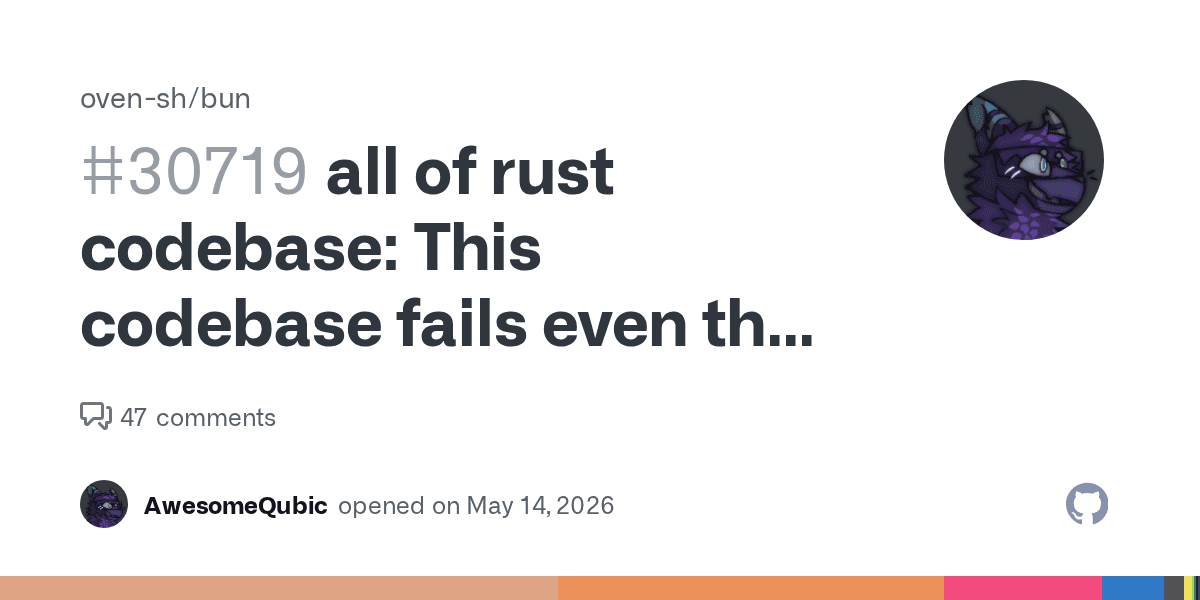
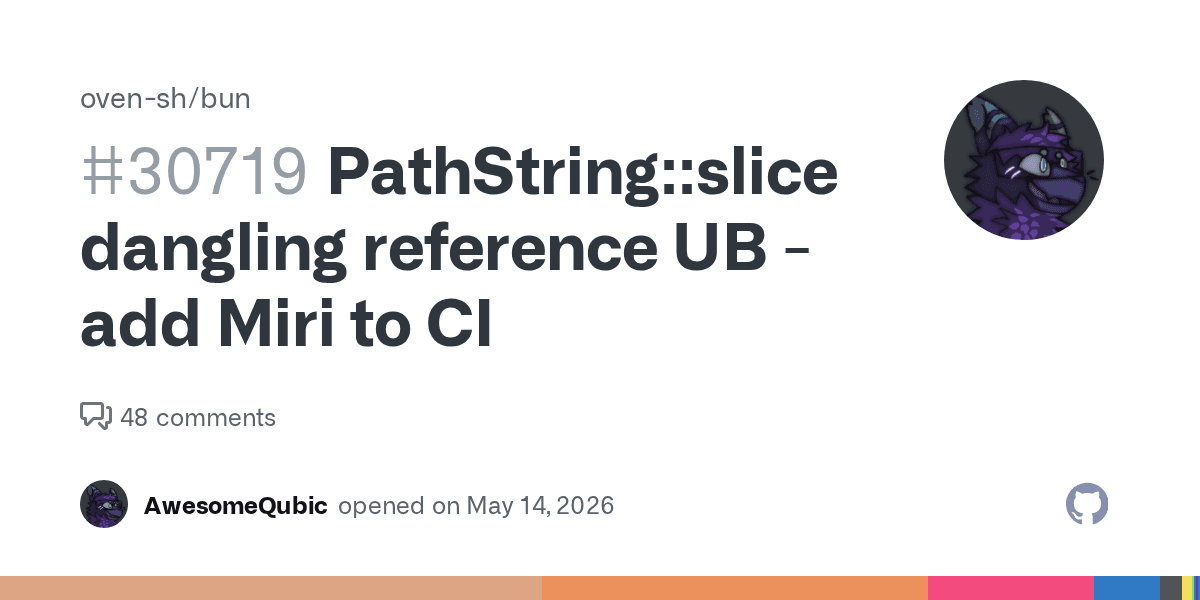
On May 14, 2026, a developer named AwesomeQubic opened GitHub Issue #30719 against Bun's repository. The title was blunt: "all of rust codebase: This codebase fails even the most basic miri checks, allows for UB in safe rust."
Miri is Rust's official interpreter for detecting undefined behavior. When code fails Miri checks, it means the program can crash, corrupt memory, or produce unpredictable results. These aren't style complaints. They're fundamental safety violations.
The issue included a minimal reproduction case showing a dangling reference, which is exactly the kind of bug Rust's ownership system is designed to prevent. The error message was clear: "encountered a dangling reference (0x20933[noalloc] has no provenance)."
“Please consider not vibe coding rust as AIs are not good at writing Rust and also hire a real rust dev”
— AwesomeQubic, GitHub Issue #30719
How Did We Get Here?
Bun, the JavaScript runtime that built its reputation on Zig's performance characteristics, was acquired by Anthropic in late 2025. The team then undertook an ambitious experiment: using Claude AI agents to rewrite the entire codebase from Zig to Rust.
The numbers were impressive on the surface. Over 1 million lines of Zig code were translated to Rust in just 6 days. The test suite showed a 99.8% pass rate immediately after migration.
But there was a catch. To achieve this speed, the AI transliteration preserved Zig's manual memory management patterns by wrapping them in Rust's unsafe keyword. Over 13,000 times.
Bun founder Jarred Sumner had been open about the team's AI-first development approach. "We haven't been typing code ourselves for many months now," he stated. He also acknowledged the rewrite was experimental, calling it a "high chance" throwaway project.
Why This Matters Beyond Bun
The controversy exposes a fundamental tension in AI-assisted programming. Rust's entire value proposition is compile-time memory safety. The borrow checker exists to catch bugs before they become security vulnerabilities or crashes.
When you write unsafe, you're telling the compiler: trust me, I know what I'm doing. You take responsibility for upholding Rust's invariants manually. Experienced Rust developers use unsafe sparingly and audit it carefully.
The AI did something different. It used unsafe as a translation escape hatch, converting Zig's memory management idioms directly without restructuring them to fit Rust's ownership model. The result is Rust code that provides Rust's safety guarantees in name only.
The "Vibe Coding" Debate
The Hacker News community coined a term for this approach: "vibe coding." The critique is that passing tests doesn't mean code is correct. Tests only catch the behaviors you thought to test for. Undefined behavior can lurk in paths that execute rarely or only under specific conditions.
ThePrimeagen, a popular programming YouTuber, highlighted the irony. The community had been asking for a Rust rewrite because of safety concerns with the original Zig implementation. Instead, they got 13,000 ways to crash, just written in Rust syntax.
Others took a different view. Some argued that a 99.8% test pass rate after an automated million-line migration is genuinely impressive. The unsafe blocks can be audited and fixed incrementally. A working prototype now might be more valuable than a perfect rewrite later.
What Happens Next
The GitHub issue remains open. Bun's team hasn't publicly committed to a timeline for addressing the Miri failures. The codebase sits in an awkward middle ground: too unsafe to deliver on Rust's promises, but potentially too large to audit manually.
This incident will likely become a case study in AI code generation limits. Claude Code, the tool used for the migration, reportedly generates $2.5 billion in annualized revenue as of February 2026. Its users are betting on AI for production systems. This story shows what can go wrong.
Another example of AI systems producing unexpected results when given autonomy
Context on the AI agent architecture that powered Bun's migration
Logicity's Take
Frequently Asked Questions
What is Miri and why do its checks matter?
Miri is Rust's official interpreter for detecting undefined behavior at runtime. When code fails Miri checks, it can crash, corrupt memory, or behave unpredictably in ways that tests might not catch.
Why did the AI use so many unsafe blocks?
Zig doesn't have Rust's ownership model. The AI translated Zig's manual memory management directly into Rust using unsafe blocks instead of restructuring the code to fit Rust's safety patterns.
Does this mean AI can't write Rust code?
AI can write syntactically valid Rust. The challenge is writing idiomatic Rust that honors the language's safety guarantees. That requires understanding not just what compiles, but what's actually correct.
Is Bun's Rust rewrite going to be abandoned?
No official decision has been announced. Jarred Sumner acknowledged the rewrite was experimental and might be discarded. The GitHub issue remains open as of this writing.
Need Help Implementing This?
Source: Hacker News: Best
Manaal Khan
Tech & Innovation Writer
Produced with AI assistance and reviewed by the Logicity editorial team. Learn more in our Editorial Policy.