Key Takeaways
- BlueStone reported ₹6 Cr profit in Q1 FY27, reversing a ₹35 Cr loss from the same quarter last year
- Operating revenue grew 50% year-over-year to ₹737 Cr, with 39% same-store sales growth
- Repeat customers now account for 60% of revenue, lowering customer acquisition costs
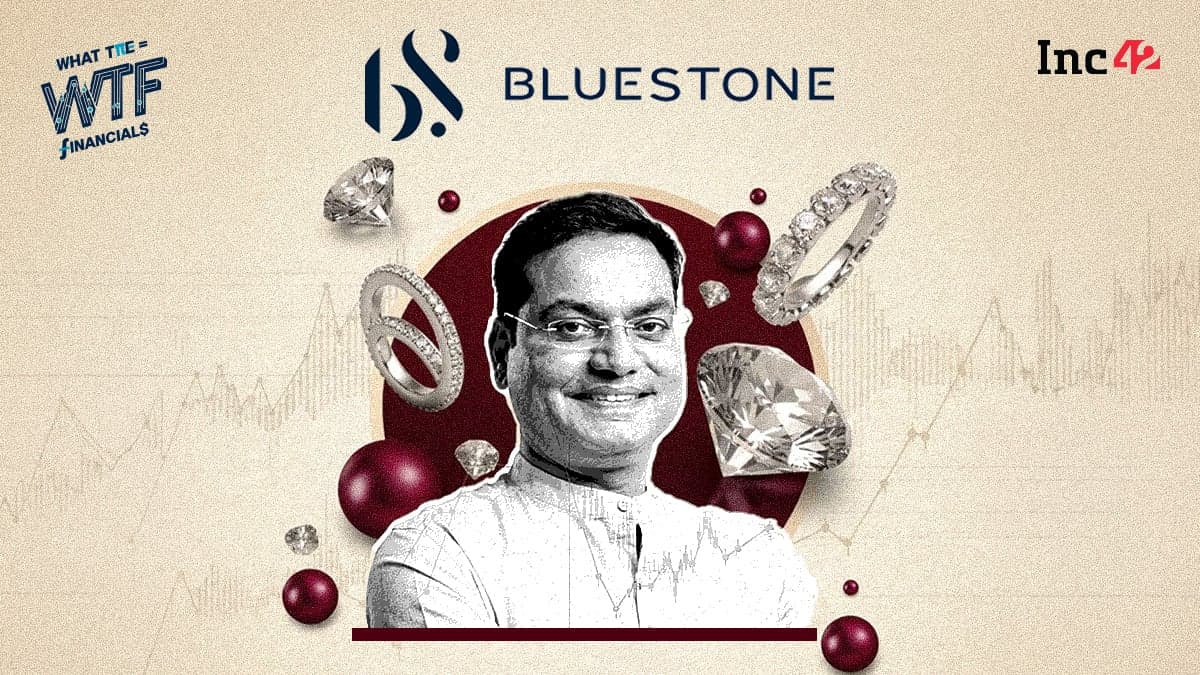
BlueStone, the omnichannel jewelry company eyeing a public listing, posted a consolidated profit of ₹6 Cr in Q1 FY27. A year ago, the company lost ₹35 Cr. Operating revenue climbed 50% year-over-year to ₹737 Cr, giving investors fresh evidence that the business model is working ahead of a potential IPO.
The profit figure needs context, though. BlueStone earned ₹31 Cr in Q4 FY26, meaning the sequential drop was 81%. Quarterly swings in jewelry retail are common: wedding seasons, gold price movements, and store expansion timing all affect margins. The company's total expenses rose 38% YoY to ₹745 Cr, with raw materials alone eating ₹712 Cr.
What drove the 50% revenue jump?
Two numbers stand out. Same-store sales growth hit 39% year-over-year. That metric isolates performance at stores open for at least a year, filtering out the contribution of new locations. When SSSG outpaces store expansion, it signals genuine demand rather than growth by footprint alone.
The second number: repeat customers generated nearly 60% of revenue. For a jewelry retailer, that ratio is significant. Customer acquisition in this category is expensive. High-ticket purchases require trust, which takes marketing spend and time to build. Once a customer returns, margin improves because the acquisition cost is already amortized.
CEO Gaurav Singh Kushwaha pointed to product design as a factor. "This performance is particularly satisfying as it came despite the rise in custom duty on gold from 6% to 15%, reflecting the structural drivers we have consistently spoken about," he said. In other words, BlueStone believes its design innovation lets it absorb commodity volatility better than competitors selling more generic inventory.
Store expansion: still aggressive
BlueStone ended Q1 with 352 stores in 139 cities. It opened 12 new locations and entered five new Tier-II and Tier-III cities during the quarter. No stores were closed.
The company's thesis is that branded jewelry remains underpenetrated outside metros. "Revenue productivity and unit economics in these markets remain robust," BlueStone said in its investor statement. The omnichannel model, which combines physical stores with online discovery and try-at-home services, lets the company test smaller markets without committing to flagship-sized real estate.
How does BlueStone compare to Titan's CaratLane?
Both companies compete in the same segment: design-forward, mid-to-premium jewelry with strong online presence. CaratLane, acquired by Titan in 2016, benefits from Titan's balance sheet and distribution muscle. BlueStone, founded in 2011 by IIT-Bombay alumnus Kushwaha, has raised over $75 million from investors including Accel and Kalaari Capital.
BlueStone filed for an IPO with SEBI in late 2024, aiming to raise approximately ₹900 Cr. The Q1 profit, modest as it is, strengthens the narrative that the company can operate sustainably without perpetual cash infusions. Public markets have punished loss-making consumer startups in recent years. Consistent profitability, even thin, changes the conversation.
What should finance teams watch?
Raw material costs dominate BlueStone's expense structure. Of ₹745 Cr in total expenses, ₹712 Cr went to raw materials. That's 96%. Gold and diamond prices, import duties, and currency fluctuations flow directly to the bottom line. Any company considering a supplier or investment relationship with BlueStone should model for commodity sensitivity.
The standalone adjusted PAT, which BlueStone highlighted separately, stood at ₹14 Cr. The company also reported standalone EBITDA of ₹55 Cr, more than doubling from ₹23 Cr a year ago. These adjusted figures exclude certain accounting treatments under Ind AS. Investors and analysts will scrutinize which metric the company emphasizes as it approaches public markets.
Shares of BlueStone closed at ₹608.45 on the BSE, up 1.48% on the day the results were announced.
Logicity's Take
BlueStone's 60% repeat-customer revenue is the number finance teams should circle. In jewelry, where trust is everything and acquisition costs are brutal, that ratio suggests durable unit economics. The sequential profit drop looks alarming but is less important than the year-over-year swing from loss to profit. For IPO watchers: if BlueStone can hold profitability through Q2 and Q3 (slower wedding seasons), the listing story gets much stronger. The real test is whether margins hold as gold duty increases work through inventory cycles.
Frequently Asked Questions
Is BlueStone profitable?
Yes. BlueStone reported a consolidated profit of ₹6 Cr in Q1 FY27, reversing a ₹35 Cr loss from the same quarter last year. The company's standalone adjusted PAT was ₹14 Cr.
When is BlueStone's IPO?
BlueStone filed its IPO papers with SEBI in late 2024, aiming to raise approximately ₹900 Cr. The exact listing date has not been announced.
How many stores does BlueStone have?
BlueStone operates 352 stores across 139 cities in India as of Q1 FY27. It opened 12 new stores during the quarter.
Who owns BlueStone?
BlueStone was founded by Gaurav Singh Kushwaha, an IIT-Bombay alumnus. Investors include Accel, Kalaari Capital, and others who have collectively invested over $75 million.
How does BlueStone make money?
BlueStone sells jewelry through an omnichannel model combining online sales, physical retail stores, and try-at-home services. Nearly 60% of its revenue comes from repeat customers.
Need Help Implementing This?
Logicity helps fintech and finance teams track startup financials, IPO filings, and market trends. Subscribe to our newsletter for weekly analysis on India's tech ecosystem, or reach out for custom research briefs tailored to your investment thesis.
Source: Inc42 Media / Akshit Pushkarna
Huma Shazia
Senior AI & Tech Writer
Produced with AI assistance and reviewed by the Logicity editorial team. Learn more in our Editorial Policy.