Key Takeaways
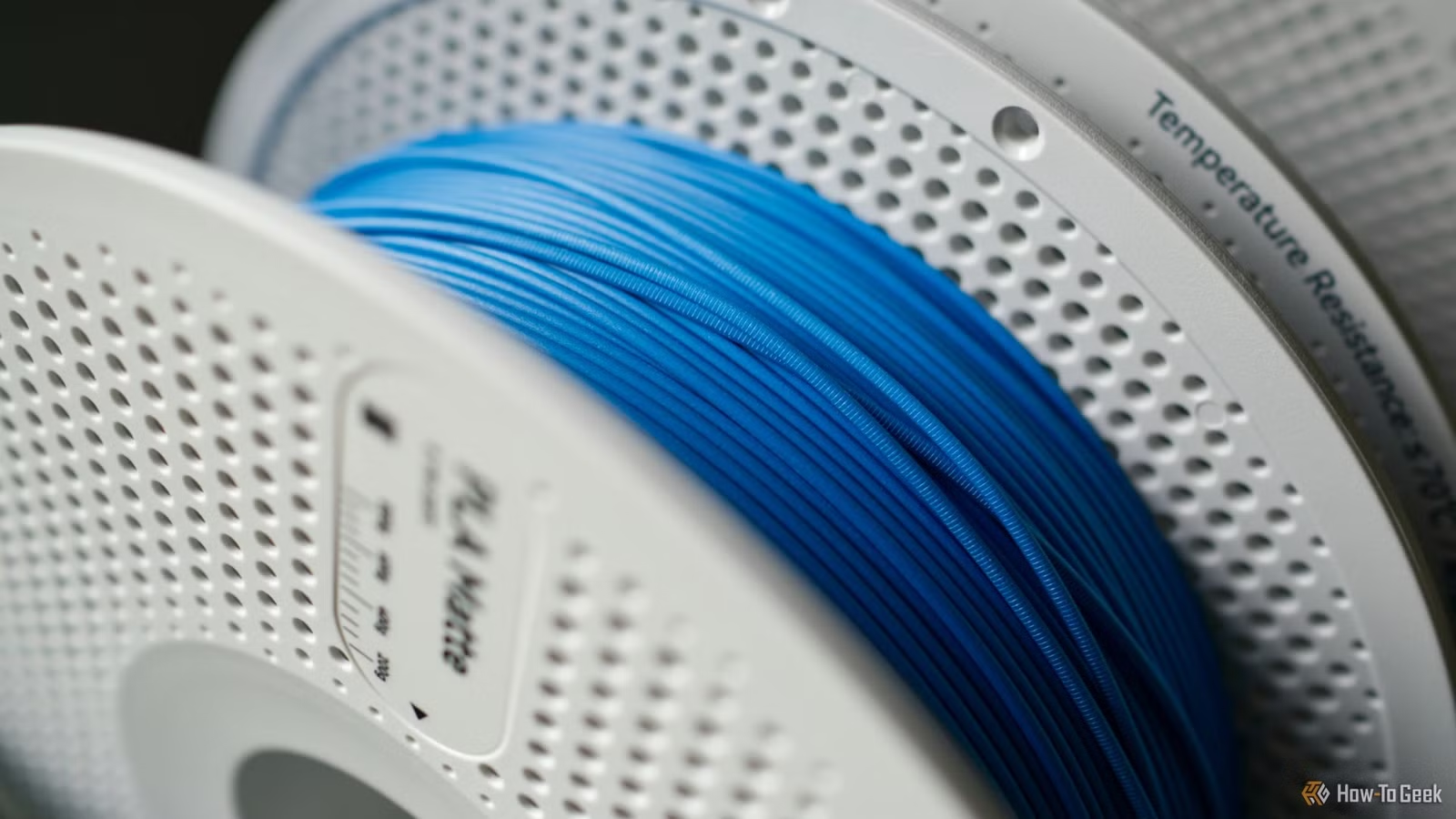
- Bambu Lab's new Pure PLA costs $25/roll and carries GREENGUARD and EU toy-safety certifications
- Standard PLA emits up to 200 billion ultrafine particles per minute during printing
- Colored PLA releases 2-10x more VOCs than natural filament
Bambu Lab just launched a filament called "Pure" with certifications for low emissions and toy safety, and the subtext is hard to miss: if this one needed special formulation to be safe, what does that say about every other PLA spool on the market?
The $25 filament contains five ingredients: polylactic acid, an acrylic copolymer, pigments, ethylene bis-stearamide, and asbestos-free talc. Bambu Lab claims it meets UL GREENGUARD 2904 standards for indoor air quality and EN 71 for EU toy safety. The company published lab data showing low formaldehyde, VOC, and PM2.5 emissions, comparing its print output favorably to burning a candle or sitting inside a car.
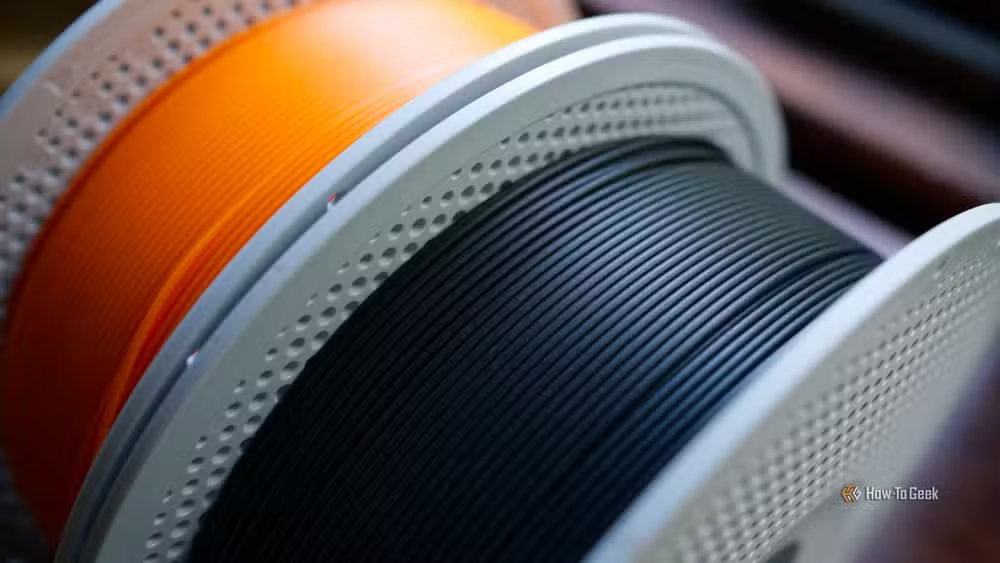
For now, Pure is available in five colors: pale pink, pale blue, orange, white, and black. No fancy finishes, no blends. The limited palette reflects the trade-off: fewer additives means fewer color options.
Why standard PLA isn't as safe as people assume
PLA earned its "safe" reputation because its base ingredient, polylactic acid, comes from corn starch. That plant origin became a marketing story. The problem is that heating any thermoplastic to 200°C releases particles and chemicals regardless of where the raw material came from.
Research from Georgia Tech and the EPA found that standard PLA printing can emit up to 200 billion ultrafine particles per minute. Colored PLA performs worse: studies show it releases 2-10x more VOCs than natural, uncolored filament. One study even detected nickel in PLA samples and found higher concentrations of PM2.5 compared to ABS, which has a worse reputation for emissions.
Dr. Rodney Weber, a professor at Georgia Tech who has studied printer emissions, puts it bluntly: "The idea that PLA is completely safe is a misconception. Any thermoplastic, when heated, will release particles and chemical compounds."
What Pure PLA actually changes
The real innovation here is transparency. By listing exactly five ingredients and publishing emission data, Bambu Lab is doing something rare in the filament industry: acknowledging that additives matter. Most PLA manufacturers don't disclose what they add during processing, from colorants to flow modifiers to stabilizers.
The GREENGUARD certification means independent testing confirmed low chemical emissions. EN 71 certification means the printed objects passed EU standards for children's toys. Both certifications require third-party verification, not just manufacturer claims.
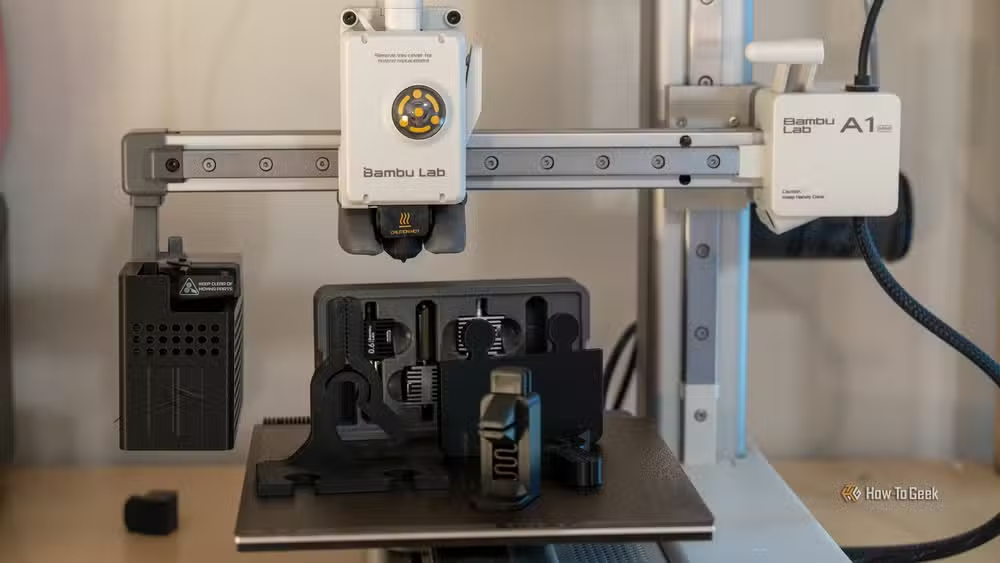
Bambu Lab is also careful with its food-safety claims. The company says the ingredients are "food contact certified" for dry foods, but stops short of calling printed objects food-safe. That distinction matters. Even certified materials can become problematic once printed, because the layer-by-layer process creates microscopic gaps where bacteria can grow.
Is the $5 premium worth it?
At $25 versus $20 for standard Bambu Lab PLA, the price difference is modest. The harder question is whether certifications solve your actual problem. If you're printing in a bedroom or home office without ventilation, Pure PLA reduces one category of risk. It doesn't eliminate the need for an enclosure or air filtration.
The limited color selection is a real constraint for anyone doing decorative prints. Five colors won't satisfy hobbyists used to choosing from dozens of finishes. And Bambu Lab's published data, while detailed, comes from its own marketing materials. Independent testing would carry more weight.
Stefan Hermann, the 3D printing YouTuber behind CNC Kitchen, has tested filament emissions extensively. His view: "This isn't about fear-mongering. It's about understanding that proper ventilation and material selection matter." Pure PLA is one answer. An enclosure with a HEPA filter is another. Running your printer in a garage instead of a bedroom is a third.
The bigger picture for 3D printing safety
The 3D printing materials market is projected to hit $41.5 billion by 2030. PLA holds over 70% of hobbyist filament sales. If health concerns change buying behavior even slightly, manufacturers will follow Bambu Lab's lead with their own certified formulations.
That's probably a good outcome. The 3D printing community has treated ventilation as optional for years. Having a major manufacturer admit that standard materials have issues could shift the conversation.
Whether Pure PLA becomes a category or stays a niche product depends on what competitors do next. Prusa, Polymaker, and other filament makers now face a simple question: if Bambu Lab can reformulate PLA for lower emissions, why can't they?
Logicity's Take
Bambu Lab is doing something clever here. By launching a "pure" variant, they're creating a premium product while simultaneously defining everything else as impure. The certifications are real, but the marketing is equally important. Expect every major filament brand to have a low-emission line within 18 months, and expect the industry to quietly stop calling standard PLA "safe" without qualifications.
Frequently Asked Questions
Is regular PLA filament dangerous?
Not acutely dangerous, but research shows it emits ultrafine particles and VOCs during printing. In poorly ventilated spaces, these emissions can accumulate to levels that affect air quality. The risk increases with colored filaments and longer print times.
What certifications does Bambu Lab Pure PLA have?
UL GREENGUARD 2904 for indoor air quality and EN 71 for EU toy safety standards. Both require third-party testing.
Can you print food-safe items with PLA Pure?
Bambu Lab says the ingredients are food-contact certified for dry foods, but the layer-by-layer printing process creates gaps where bacteria can grow. Most experts don't recommend 3D printed items for repeated food contact.
How much does Bambu Lab Pure PLA cost?
$25 per roll, compared to $20 for standard Bambu Lab PLA. It's currently available in five colors only.
Do I still need ventilation when printing with Pure PLA?
Lower emissions don't mean zero emissions. An enclosure with a HEPA filter or printing in a ventilated space is still recommended, especially for long prints.
Need Help Implementing This?
Setting up proper ventilation for your 3D printer or evaluating low-emission filaments for your workflow? Reach out to Logicity for guidance on making your makerspace safer without overcomplicating your setup.
Source: How-To Geek
Huma Shazia
Senior AI & Tech Writer
Produced with AI assistance and reviewed by the Logicity editorial team. Learn more in our Editorial Policy.