Key Takeaways
Austria Wants the EU to Host Anthropic After US Export Curbs
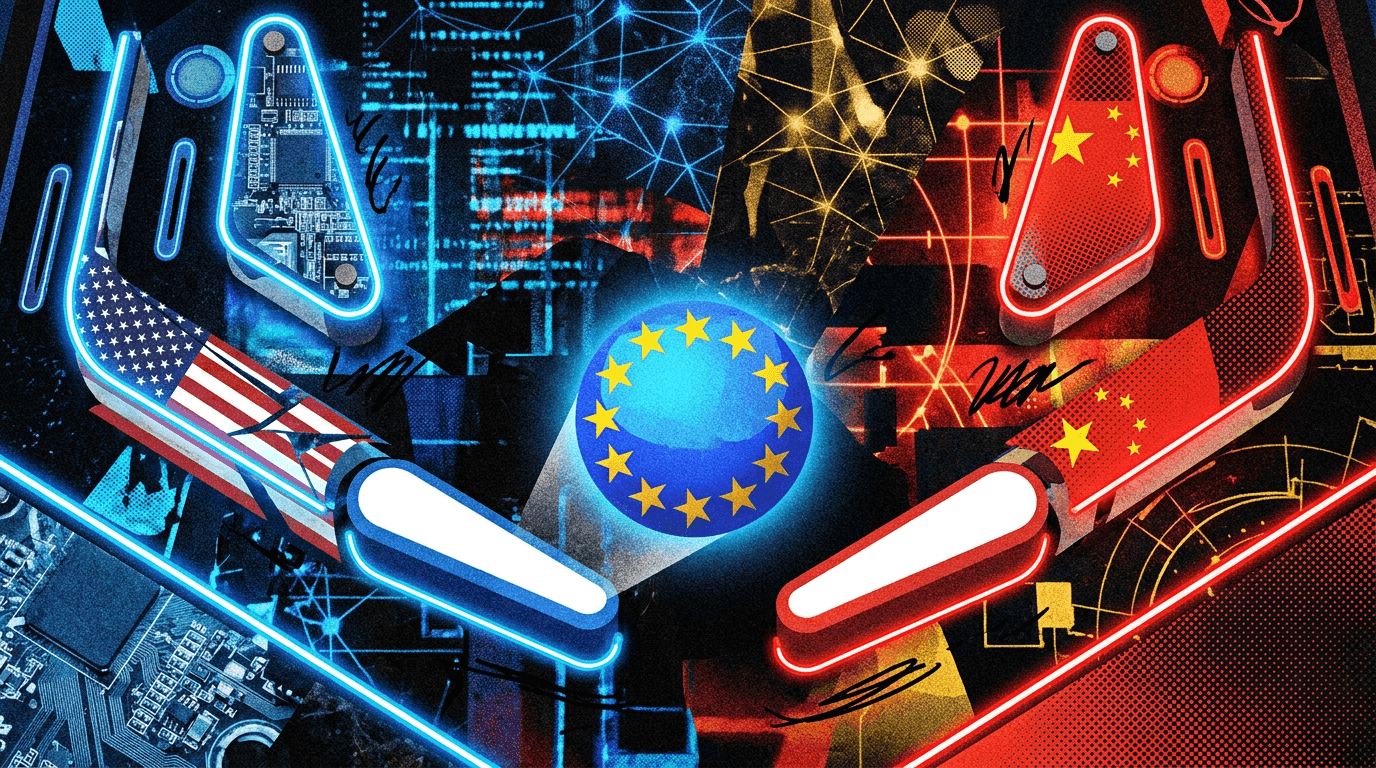
- The US blocked European access to the latest AI models from OpenAI and Anthropic, exposing deep tech dependency
- Austria's Alexander Pröll proposed attracting Anthropic to the EU with regulatory certainty and capital
- The proposal is largely symbolic; Anthropic is unlikely to relocate given its US government ties and Trump administration posture
Austria's State Secretary for Digitalization Alexander Pröll has formally proposed that the EU attract Anthropic to relocate its headquarters to Europe. The move comes after the US government blocked or delayed European access to frontier AI models from both OpenAI and Anthropic, a decision that cut off 450 million EU citizens from the latest AI capabilities overnight.
The proposal, outlined in a letter to EU Commissioner for Technological Sovereignty Henna Virkkunen, reads more like a distress signal than a practical blueprint. Two decades of digital policy failures have left Europe dependent on American AI infrastructure. But proposing to poach a company with deep Pentagon ties during an adversarial trade environment is ambitious, to put it generously.
What did Austria actually propose?
Pröll laid out his reasoning in both the official letter and a public LinkedIn post. His core argument: "A technology that you don't produce yourself and can only use with permission is not a tool. It is a dependency."
The pitch centers on Anthropic's public commitment to AI safety. Pröll argues the company would find a natural home in Europe, where it could operate free from the pressures of the US's current political climate. "Anthropic is a company that views the ethical use of AI not as a marketing ploy, but as a core conviction," Pröll wrote, according to the Austrian Kronen Zeitung. "This company would not be constrained in Europe; it would be set free."
Europe would offer legal certainty under the AI Act, access to a 450-million-person market, and capital. The letter formally requests the Commission review the possibility.
Why Anthropic won't relocate
The initiative faces three problems. First, Anthropic is deeply embedded in US national security infrastructure. Its models reportedly serve the NSA, and in its recent Pentagon dispute over AI deployments, the company's primary concern was protecting US citizens. Mass surveillance abroad wasn't on the agenda.
Second, the Trump administration has adopted a retaliatory posture toward companies that appear disloyal. Moving headquarters to the EU would invite scrutiny Anthropic cannot afford.
Third, the company looks cosmopolitan from a European perspective, but it operates on a fundamentally American axis. Safety-focused marketing shouldn't be confused with geopolitical neutrality.
The EU Commission is unlikely to act on the request. The letter itself only calls for a review, not a concrete plan.
Chinese models: alternative or different trap?
AI investor Xiaoyin Qu has floated a different scenario. European and US companies alike could adopt Chinese AI models, running them locally on their own GPUs and fine-tuning with proprietary data. This would reduce dependence on OpenAI and Anthropic while preserving control.
Qu points to eroding trust in US companies after incidents like Anthropic's handling of Fable, and flags a worst-case scenario for America: if Chinese open-source models gain market share and get optimized for Huawei chips instead of Nvidia, China could dominate both the model and chip layers simultaneously.
For Europe, though, this just trades one dependency for another. Open-source licenses can change. The best models could be withheld. Chinese AI researchers already use Cold War rhetoric that doesn't suggest long-term generosity. Beijing will support Europe only while doing so hurts Washington.
What leverage does Europe actually have?
OpenAI, Anthropic, and other frontier labs depend on European revenue to fund billion-dollar training runs and data center expansion. The US market alone may not cover those costs. This gives Europe some negotiating power, though not much.
The EU's real path forward requires building its own AI infrastructure. That means compute, models, and talent retention. France's Mistral AI represents one attempt, but it remains far from frontier capability. The €1 billion EuroHPC supercomputing initiative is a start, but estimates suggest the EU needs €20 billion annually to compete with US and Chinese investment levels.
Europe currently captures roughly 27% of global AI private investment compared to over 60% for the US. None of the world's top ten AI companies are headquartered in the EU.
Logicity's Take
For AI builders in Europe, this story is less about Anthropic's hypothetical relocation and more about infrastructure risk. If you're building products on Claude or GPT-4, you now have a concrete example of access being switched off at the policy level. European teams should evaluate local deployment options, consider open-weight alternatives like Llama or Mistral's models, and build abstractions that allow model switching. The companies best positioned are those treating frontier models as interchangeable components rather than locked-in dependencies.
Frequently Asked Questions
Did the US actually block Anthropic and OpenAI models in Europe?
Yes. The US government blocked or delayed access to the latest models from both companies for foreign nationals, including EU citizens.
Is Austria's proposal to relocate Anthropic realistic?
No. Anthropic has deep ties to US national security agencies and operates in a political environment where relocating would invite retaliation. The proposal is largely symbolic.
Can European companies just use Chinese AI models instead?
Technically yes, but it trades one dependency for another. Open-source licenses can change, and China's cooperation with Europe is strategic, not principled.
What European AI alternatives exist?
France's Mistral AI is the most prominent EU-based frontier AI company. The EU has also invested €1 billion in supercomputing infrastructure through EuroHPC.
How much does Europe invest in AI compared to the US?
Europe captures about 27% of global AI private investment versus over 60% for the US. Estimates suggest the EU needs €20 billion annually to compete.
Related analysis on how AI disruption is forcing European and global firms to rethink their business models
Need Help Implementing This?
Building AI products that can survive geopolitical disruption? Logicity helps teams architect model-agnostic infrastructure and evaluate open-weight alternatives. Get in touch for a technical review.
Source: The Decoder / Matthias Bastian
Manaal Khan
Tech & Innovation Writer
Produced with AI assistance and reviewed by the Logicity editorial team. Learn more in our Editorial Policy.