Key Takeaways
Schumer Promotes Safe Banking Act To Help Legal Cannabis Retailers
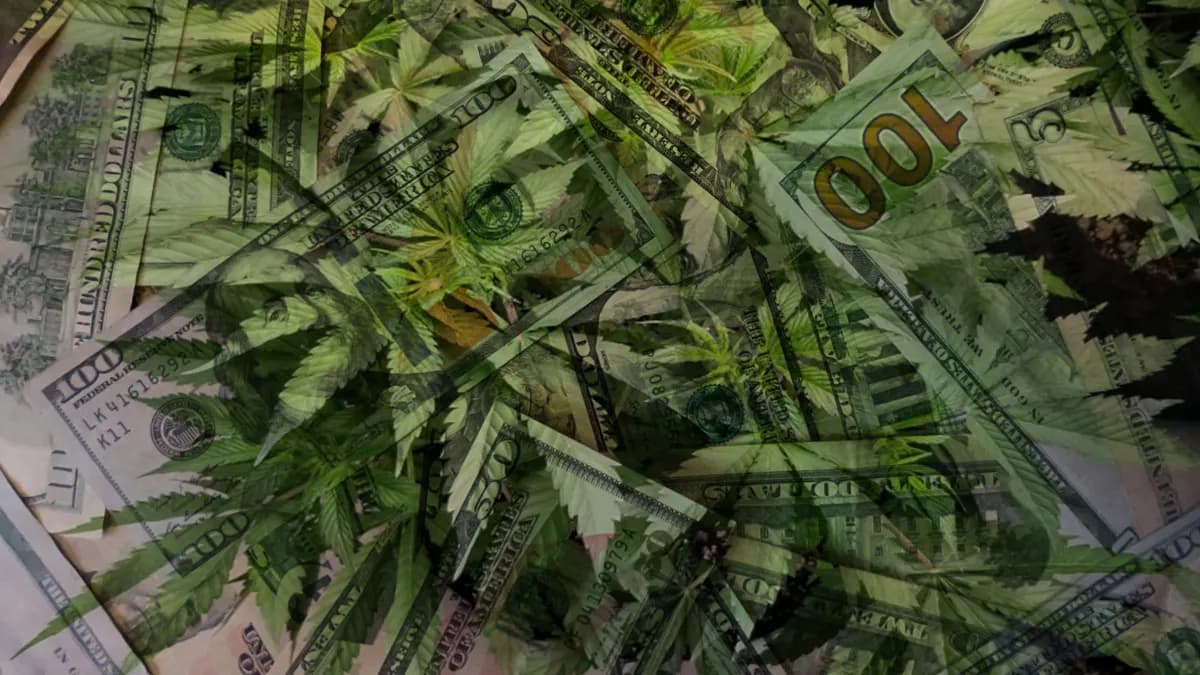
- The SAFE Banking Act of 2026 would give banks legal protection to serve state-legal cannabis businesses
- Only 816 banks (about 20% of U.S. banks) currently serve cannabis-related businesses
- The bill has passed the House seven times but never cleared the Senate
A bipartisan group of senators reintroduced the SAFE Banking Act on June 29, 2026, aiming to finally give banks legal cover to serve the $30 billion cannabis industry. The timing matters: medical cannabis was recently reclassified from Schedule I to Schedule III, removing some federal stigma. But banks still face regulatory uncertainty when taking deposits from dispensaries and growers.
Senator Jeff Merkley (D-OR) leads the effort alongside Elizabeth Warren (D-MA), Lisa Murkowski (R-AK), and Steve Daines (R-MT). Representative David Joyce (R-OH) introduced companion legislation in the House with seven co-sponsors. The bipartisan backing signals that the issue cuts across typical party lines, with both business interests and public safety concerns driving support.
Why do cannabis businesses still operate in cash?
Federal law creates the problem. Cannabis remains a controlled substance at the federal level, even where states have legalized it. Banks that take deposits from cannabis businesses risk violating federal money laundering statutes. Most banks simply refuse the risk.
The Financial Crimes Enforcement Network reported that 816 banks worked with cannabis-related businesses as of 2024. That sounds like progress until you realize it represents roughly one-fifth of all U.S. banks. The other 80% stay away entirely.
The result: dispensaries handle enormous amounts of cash. They pay employees in cash, pay taxes in cash, and store cash on premises. This creates obvious security problems. Merkley called the situation "dangerous for our communities," noting it encourages "robberies, money laundering, and organized crime."
What would the SAFE Banking Act actually do?
The legislation targets the regulatory ambiguity that keeps banks away. Under SAFE Banking, federal regulators could not penalize banks for serving state-legal cannabis businesses. They could not terminate deposit insurance, discourage services, or pressure banks to drop cannabis clients.
The bill extends protections beyond dispensaries themselves. Businesses that provide services to cannabis companies, such as marketing agencies, law firms, and accounting practices, would also fall under the safe harbor. Hemp and CBD businesses get similar protection.
American Bankers Association President Rob Nichols endorsed the bill: "The SAFE Banking Act would provide banks with a clear federal safe harbor, allowing them to serve state-legal businesses while increasing transparency for law enforcement and reducing risks to the public."
Eight years of near-misses
This legislation has a frustrating history. The original version, called the Marijuana Business Access to Banking Act, appeared in 2013. Representatives Ed Perlmutter (D-CO) and Danny Heck (D-WA) introduced it. The bill evolved into SAFE Banking in 2017.
Since then, the House has passed some version of SAFE Banking seven times. The Senate has never followed. Various factors have stalled progress: conservative opposition, competing legislative priorities, and disagreements over how broad the protections should extend.
The Schedule III reclassification of medical cannabis may change the calculus. While recreational cannabis remains Schedule I, the rescheduling signals federal recognition that cannabis has legitimate medical uses. That softened stance could make senators more willing to address the banking problem directly.
The state-level backdrop
California legalized medical cannabis in 1996. Colorado and Washington became the first states to legalize recreational use in 2012. Today, 24 states plus Washington D.C. allow recreational cannabis, and dozens more permit medical use.
The patchwork creates the federal-state conflict at the heart of the banking problem. A dispensary operating legally under Colorado law is technically violating federal drug statutes. Banks caught in the middle have mostly chosen caution.
Logicity's Take
The SAFE Banking Act addresses a genuine infrastructure gap for cannabis businesses, but tech vendors should watch this space carefully. If banking access opens up, cannabis companies will rapidly need the same financial tooling as any other business: CRM systems, invoicing software, accounting platforms. Currently, many mainstream SaaS vendors avoid the industry due to payment processor restrictions. A federal safe harbor could trigger a land rush as vendors like [Salesforce](https://logicity.in/r/salesforce) and [HubSpot](https://logicity.in/r/hubspot) reconsider their terms of service. Payment processors and fintech startups specializing in cannabis would also see reduced compliance burdens.
Disclosure
Some links in this post are affiliate links — Logicity earns a commission if you sign up, at no extra cost to you. We only link products we have used or actively recommend.
Frequently Asked Questions
Has the SAFE Banking Act ever passed Congress?
The SAFE Banking Act has passed the House seven times since 2017 but has never been approved by the Senate.
How many banks currently serve cannabis businesses?
About 816 banks serve cannabis-related businesses according to 2024 data from the Financial Crimes Enforcement Network. That represents roughly 20% of U.S. banks.
What changed with cannabis scheduling in 2026?
Medical cannabis was reclassified from Schedule I (alongside heroin) to Schedule III, acknowledging its accepted medical uses. Recreational cannabis remains Schedule I.
Would SAFE Banking legalize cannabis federally?
No. The SAFE Banking Act only addresses banking access. It does not change cannabis legality at the federal level. It simply protects banks from penalties for serving businesses that are legal under state law.
Who supports the SAFE Banking Act?
The bill has bipartisan support from senators including Jeff Merkley (D-OR), Elizabeth Warren (D-MA), Lisa Murkowski (R-AK), and Steve Daines (R-MT). The American Bankers Association has also endorsed it.
Need Help Implementing This?
If you're building fintech products or considering the cannabis market, reach out to the Logicity team for analysis on regulatory developments affecting your product roadmap.
Source: Banking Dive
Huma Shazia
Senior AI & Tech Writer
Produced with AI assistance and reviewed by the Logicity editorial team. Learn more in our Editorial Policy.




