Key Takeaways
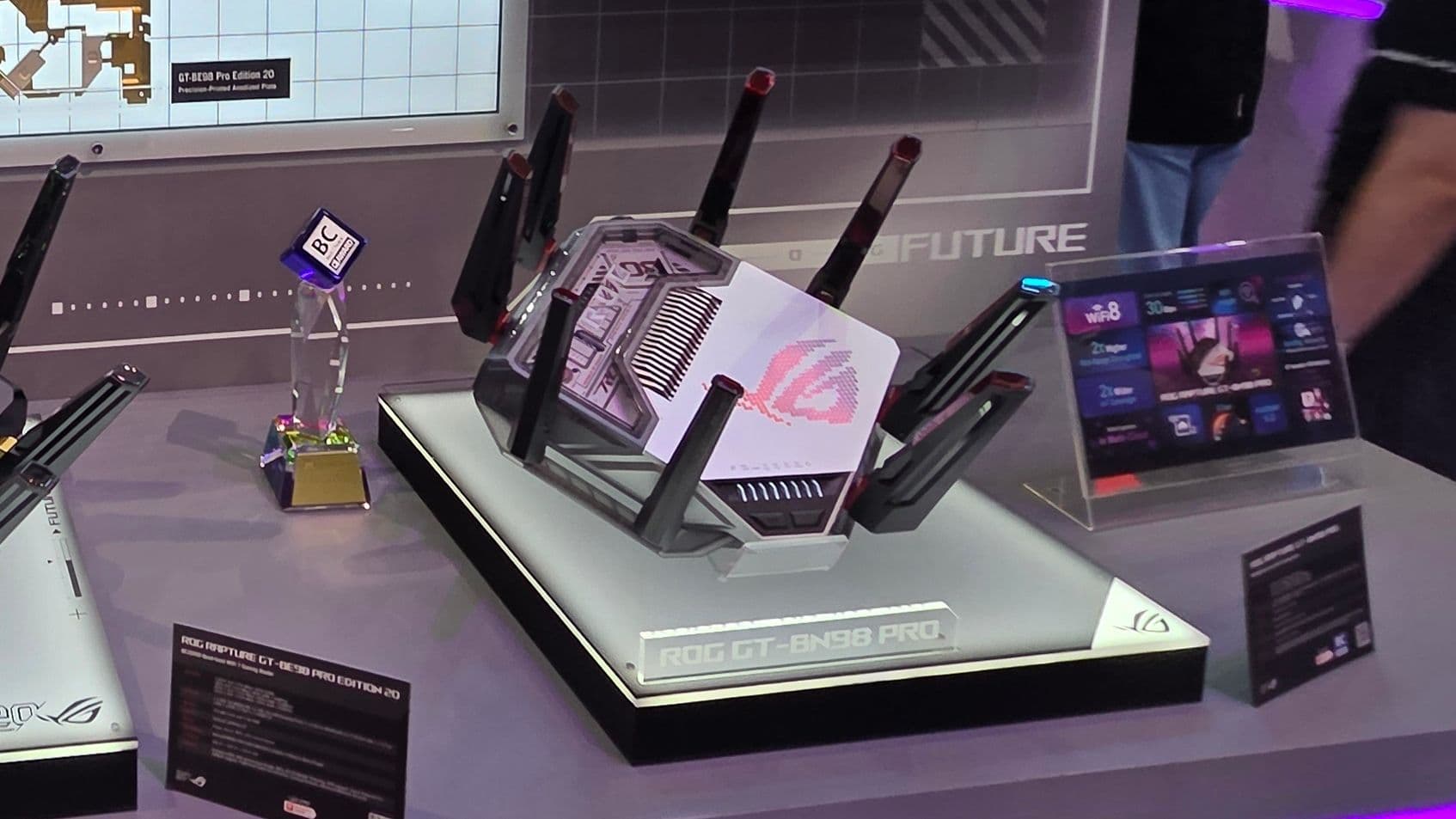
- Asus claims the GT-BN98 Pro delivers up to 2x median throughput and 2x greater IoT coverage compared to Wi-Fi 7
- The router includes dual 10GbE ports that can be aggregated into a 20 Gbps link
- Wi-Fi 8 devices won't be common until 2028 or later, making this an early-adopter purchase
Wi-Fi 8 Arrives Before You Can Use It
Asus has pulled back the curtain on its first Wi-Fi 8 router. The ROG Rapture GT-BN98 Pro follows closely behind TP-Link's Archer 8 tease last week, signaling that router makers are racing to claim the next-generation wireless crown.
There's a catch. The official Wi-Fi 8 standard (IEEE 802.11bn) won't be finalized until 2028. No phones, laptops, or gaming consoles currently support it. Buying this router means betting on a future that's still two years out.
That hasn't stopped Asus from making bold claims. The company says the GT-BN98 Pro delivers up to 2x improvement in median throughput and 2x greater coverage for IoT devices compared to Wi-Fi 7. It also promises lower latency through Multi-AP coordination, a Wi-Fi 8 feature that intelligently manages interference across multiple access points.
Logicity's Take
Same Design, New Guts
Visually, the GT-BN98 Pro looks nearly identical to its predecessor, the ROG Rapture GT-BE98 Pro Wi-Fi 7 router. Eight antennas, front LED panel, exposed heatsink, clear ROG branding panel. The exterior design carries over unchanged.
The difference is inside. Asus is using an unnamed Wi-Fi 8 chipset, though the company hasn't provided concrete benchmark numbers. All the performance claims come from Wi-Fi 8's inherent advantages rather than proprietary Asus engineering.
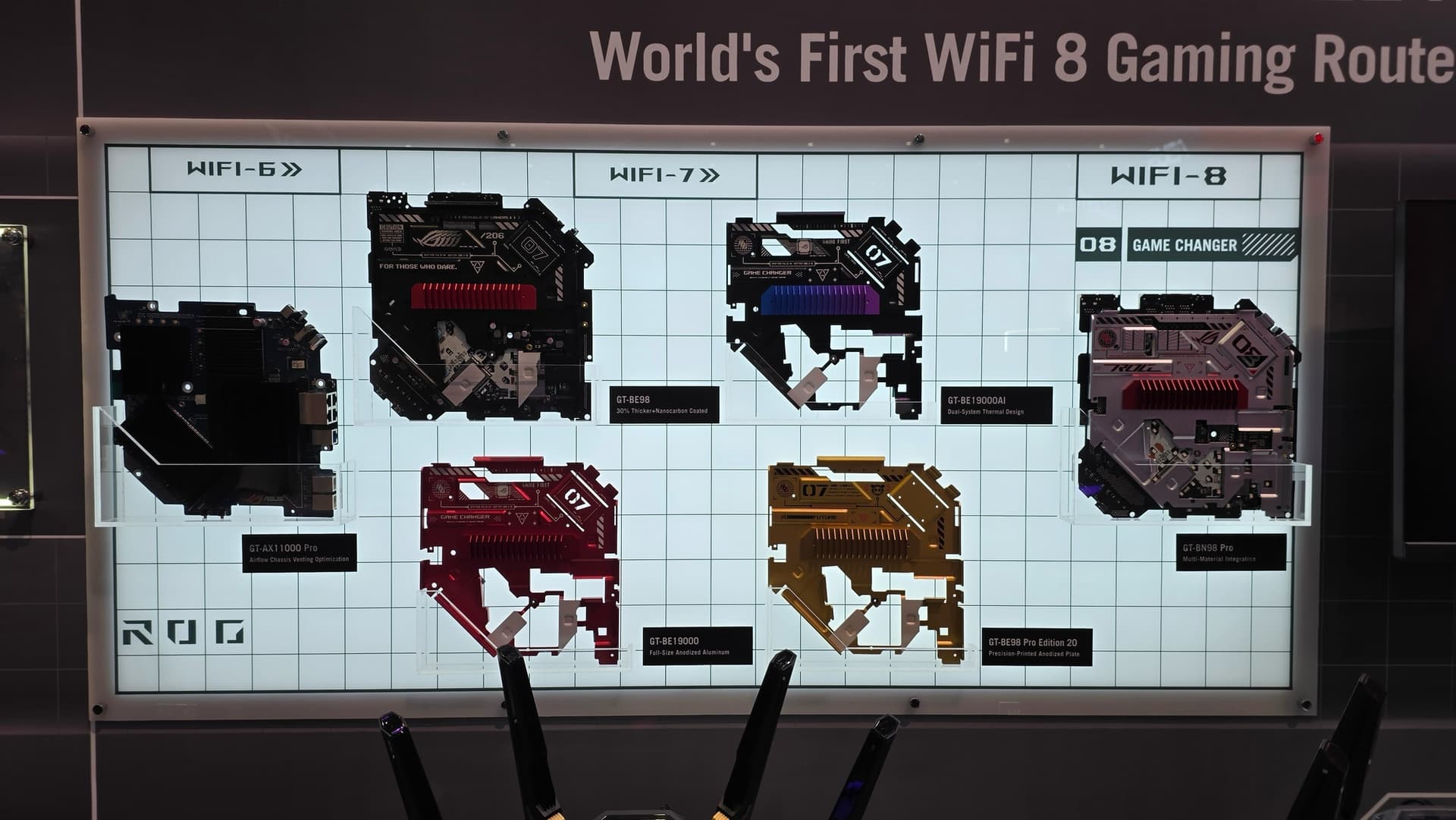
Asus has, however, made thermal improvements. The router features 35% better heat dissipation efficiency compared to the Wi-Fi 7 model, achieved through a nanocarbon coating and redesigned airflow. For a device with this much networking hardware crammed inside, better cooling matters.
Gaming Features and AI Optimization
Asus bundles its AI Game Boost feature, which automatically optimizes gaming traffic across both wired LAN ports and Wi-Fi connections. The company claims a 34% reduction in gaming latency through its three-level acceleration system.
There's also adaptive QoS powered by GTNet. This provides on-demand bandwidth allocation and network optimizations tailored to specific online games. Whether these software features deliver noticeable improvements depends heavily on your network congestion and the games you play.
“The GT-BN98 Pro represents our commitment to pushing the boundaries of wireless reliability, focusing on Ultra-High Reliability and intelligent traffic management as we transition into the Wi-Fi 8 era.”
— ASUS Product Manager, ROG Networking Division
Wired Connectivity Remains Strong
The wired port selection is where the GT-BN98 Pro shines for current use cases. The router includes:
- Four 2.5 GbE LAN ports (one configurable as WAN)
- One 1 GbE LAN port
- One 10 GbE LAN/Gaming port
- One 10 GbE WAN port
- One USB 2.0 port
- One USB 3.0 port
The two 10 GbE ports can be aggregated to form a single 20 Gbps link. For users with 10 Gbps internet connections or heavy local network traffic, this is a meaningful upgrade over most consumer routers.
Community Skepticism Is Warranted
Discussion on Reddit's r/HomeNetworking and Hacker News centers on a simple problem: no consumer devices support Wi-Fi 8. Your phone won't use it. Your laptop won't use it. Your PlayStation won't use it.
Enthusiasts are most interested in the hardware's cooling improvements and 10GbE port density. These features work today, regardless of the Wi-Fi standard. The Wi-Fi 8 capabilities themselves are future-proofing for a future that hasn't arrived.
Asus hasn't announced pricing. Based on the ROG Rapture GT-BE98 Pro's $700+ launch price, expect the Wi-Fi 8 version to command a significant premium. The company expects to ship the router in Q4 2026 or possibly Q1 2027.
Compare how MSI is approaching the high-end router market with Wi-Fi 7
Should You Wait for Wi-Fi 8?
For most buyers, no. Wi-Fi 7 routers are mature, widely supported, and available at reasonable prices. Unless you need the 10GbE port density specifically, there's little practical reason to buy a Wi-Fi 8 router in 2026 or early 2027.
The calculus changes if you're building out a long-term networking infrastructure and don't want to replace hardware when Wi-Fi 8 devices eventually arrive. Even then, you're paying for years of capability you can't use.
Frequently Asked Questions
When will Wi-Fi 8 devices be available?
The Wi-Fi 8 standard (IEEE 802.11bn) is expected to be finalized in 2028. Consumer devices like phones and laptops won't widely support it until 2028 or later.
Is the Asus ROG Rapture GT-BN98 Pro backward compatible with Wi-Fi 7 and earlier?
Yes. Like all Wi-Fi routers, the GT-BN98 Pro will work with devices using older standards. You just won't get Wi-Fi 8 speeds until you have Wi-Fi 8 client devices.
How much will the ROG Rapture GT-BN98 Pro cost?
Asus hasn't announced pricing. The predecessor Wi-Fi 7 model launched above $700, so expect a premium over that.
What is Multi-AP coordination in Wi-Fi 8?
Multi-AP coordination allows multiple access points to work together to reduce interference and improve connectivity. It's a key Wi-Fi 8 feature designed for homes and offices with multiple routers or mesh systems.
When will the GT-BN98 Pro be released?
Asus expects to ship the router in Q4 2026 or Q1 2027.
Need Help Implementing This?
Source: Latest from Tom's Hardware
Manaal Khan
Tech & Innovation Writer
Produced with AI assistance and reviewed by the Logicity editorial team. Learn more in our Editorial Policy.