Key Takeaways
- Arm has secured $2 billion in AGI CPU commitments for FY2027 and FY2028, double its original forecast
- Even with $2 billion in sales, Arm will capture only low single-digit server market share according to Mercury Research
- Arm plans to ship $90-100 million worth of AGI CPUs in Q4 2026, with production starting in H2 2026
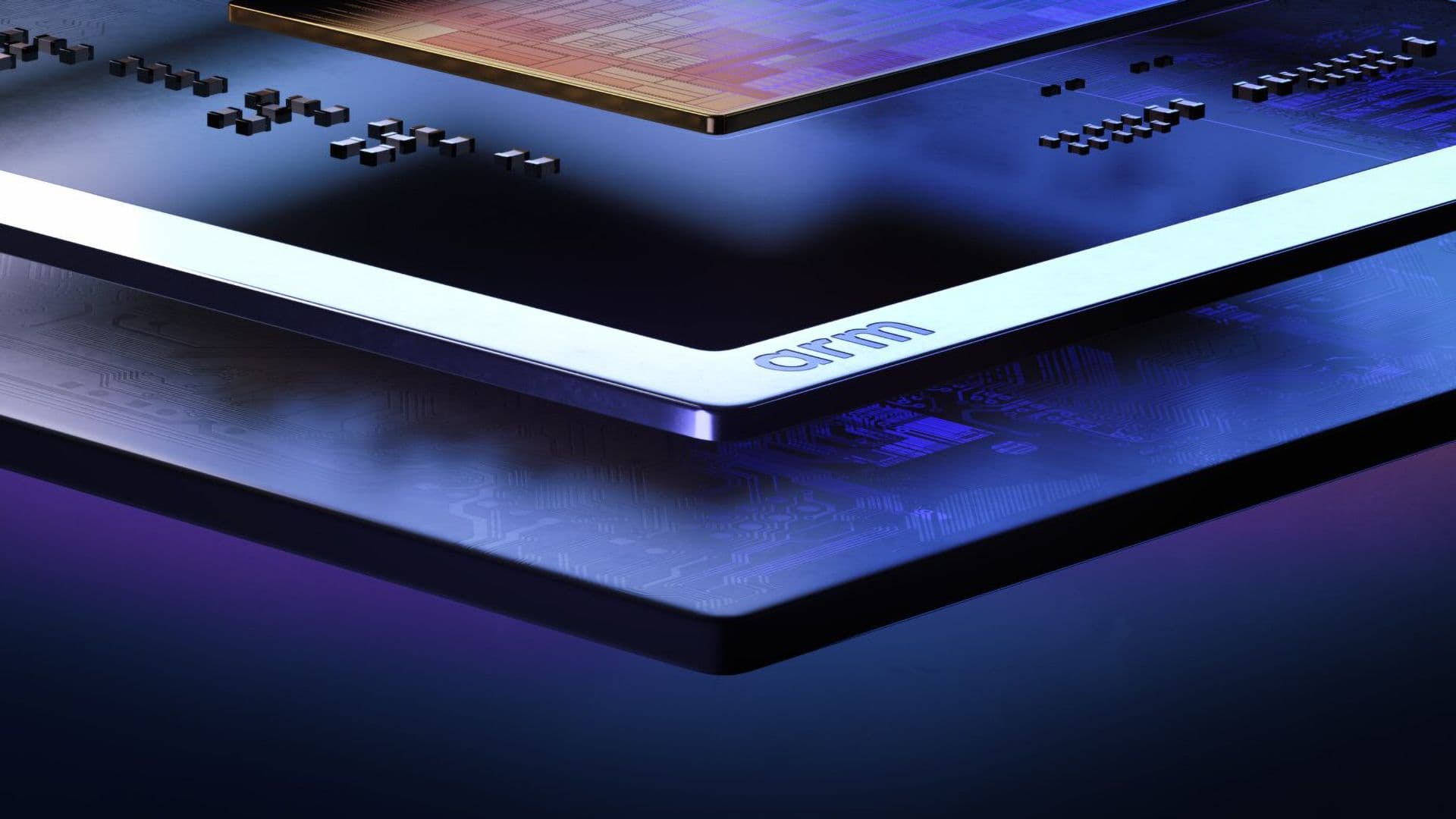
Arm's first foray into selling physical server CPUs is off to a hot start. The company has locked in over $2 billion in customer commitments for its AGI processor across fiscal years 2027 and 2028. That's more than double what Arm projected when it unveiled the chip at its "Arm Everywhere" event in late March.
But here's the sobering reality: even $2 billion in sales won't move the needle much. According to Dean McCarron, president of Mercury Research, Arm's server market share will remain in the "low single digits" even if it ships every dollar of those commitments on schedule.
The Scale Problem
AMD and Intel shipped just under 20 million data center CPUs in 2025, worth tens of billions of dollars combined. Intel alone earned $16.8 billion from server processor sales last year. Against that backdrop, Arm's $2 billion target looks less like a conquest and more like a foothold.
“Arm's market share will be in the low single digits even if it manages to ship $2 billion worth of CPUs in two years... the scale of the incumbents is just that massive.”
— Dean McCarron, President of Mercury Research
McCarron estimates that Arm would need roughly 4% unit share of the current server CPU market to hit its $2 billion revenue target. For context, AMD's EPYC processors averaged about $1,325 per unit in 2025. Arm's AGI chips are expected to command premium pricing, but the volume gap remains enormous.
From IP Licensor to Chip Maker
This represents a fundamental shift for Arm. The company has spent decades licensing chip designs to other manufacturers. Apple, Qualcomm, and Amazon all build their own Arm-based processors using Arm's intellectual property. Now Arm is selling finished silicon directly to data center operators.
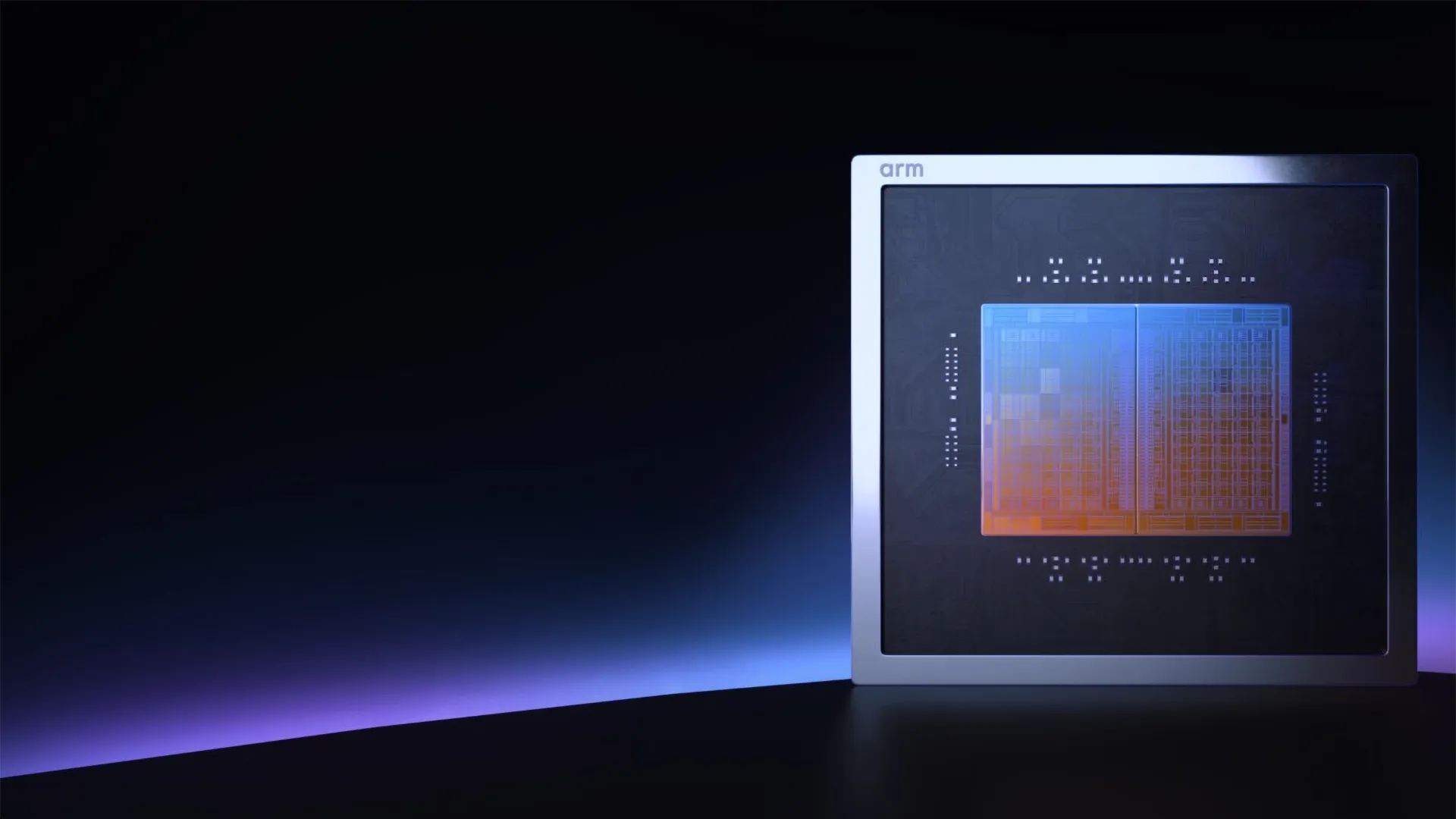
The AGI CPU, announced on March 24, 2026, packs 136 single-threaded Neoverse V3 cores. Arm calls it "production silicon," meaning the design is final. Manufacturing begins in the second half of 2026, with initial shipments expected in Q4. The company projects $90 to $100 million in AGI CPU shipments for that quarter alone.
The Long-Term Bet
Arm is playing a longer game. By fiscal year 2031, the company expects to generate $15 billion annually from AGI CPU sales and another $10 billion from IP licensing. That would push total revenue to $25 billion per year, up from $2.61 billion in FY2026. It's a nearly tenfold increase.
“Customer response to the Arm AGI CPU is already strong, with more than $2 billion in commitments already on the books... doubling our expectations in just six weeks.”
— Rene Haas, CEO of Arm
The timing aligns with rising demand for "agentic AI" workloads, where AI systems orchestrate multiple tasks autonomously rather than responding to single queries. These workloads tend to be CPU-intensive, which plays to Arm's strengths in power efficiency.
Why Data Centers Are Listening
Arm's pitch centers on power efficiency. The company claims its architecture can deliver $10 billion in capital expenditure savings for data center operators per gigawatt of power consumed. With electricity costs and cooling requirements dominating data center budgets, that's a compelling argument.
Cloud providers like Amazon and Microsoft have already invested heavily in custom Arm-based chips for their own infrastructure. Amazon's Graviton processors power a significant portion of AWS workloads. Arm's AGI CPU offers a ready-made alternative for companies that lack the engineering resources to design their own silicon.
How AI training data shapes unexpected behaviors in production systems
The Incumbents Aren't Standing Still
Intel and AMD have decades of data center relationships, established software ecosystems, and massive manufacturing scale. Intel's struggles in recent years have created openings, but the company still commands the largest share of the server market. AMD has gained ground steadily with its EPYC line, now a credible alternative for enterprise workloads.
Arm's challenge isn't just building a competitive chip. It's convincing IT departments to recompile software, retrain staff, and rearchitect deployments around a new instruction set. That inertia has historically been x86's strongest moat.
Logicity's Take
What to Watch
- Q4 2026 shipment numbers: Arm's $90-100 million target will be the first real test of manufacturing readiness
- Customer announcements: Which hyperscalers and enterprises commit publicly to AGI CPU deployments
- Software ecosystem development: Tools and frameworks optimized for Arm server workloads
- Intel and AMD pricing responses: Whether incumbents cut prices to defend share
Frequently Asked Questions
What is Arm's AGI CPU?
It's Arm's first physical server processor, featuring 136 Neoverse V3 cores. Unlike Arm's traditional business of licensing chip designs, the AGI CPU is a finished product sold directly to data center customers.
How much server market share will Arm capture?
Mercury Research estimates Arm will achieve low single-digit market share even with $2 billion in sales, roughly 4% of the current server CPU market by units.
When will Arm's AGI CPU be available?
Production begins in H2 2026, with initial customer shipments expected in Q4 2026. Arm projects $90-100 million in shipments for that quarter.
Why is Arm entering the server CPU market now?
Rising demand for AI workloads, particularly agentic AI that requires sustained CPU performance, creates an opening. Arm's power efficiency advantages become more valuable as data center electricity costs rise.
How does Arm's AGI CPU compare to Intel and AMD?
Direct benchmarks aren't yet available, but Arm emphasizes power efficiency and claims $10 billion in potential savings per gigawatt for data center operators. Intel and AMD offer mature software ecosystems and established enterprise relationships.
Need Help Implementing This?
Source: Latest from Tom's Hardware
Huma Shazia
Senior AI & Tech Writer
Produced with AI assistance and reviewed by the Logicity editorial team. Learn more in our Editorial Policy.