Key Takeaways
- Saudi Aramco is negotiating a $200 million investment in London-based Humanoid at a $1 billion valuation
- If completed, this would create the UK's first robotics unicorn
- The deal signals growing Middle Eastern appetite for humanoid robotics as the sector heats up globally
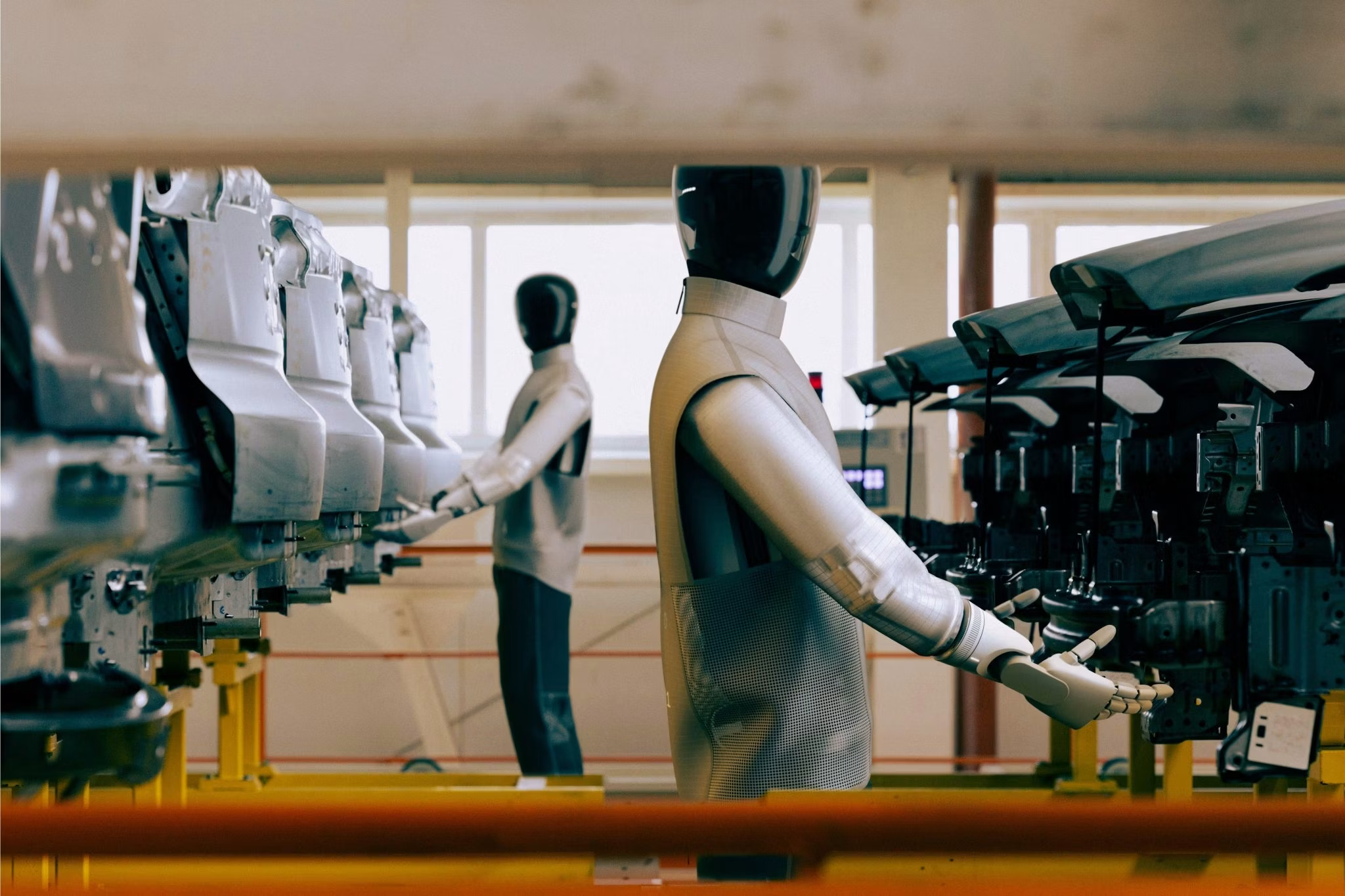
Saudi Aramco is in advanced talks to invest $200 million in London-based robotics startup Humanoid, a deal that would value the company at roughly $1 billion and mint the UK's first robotics unicorn, according to Sifted.
The discussions mark a significant bet by the Saudi oil giant on humanoid robotics, a sector that has attracted a surge of capital since 2023 as companies race to build machines that can work alongside humans. For Humanoid, which has operated in relative stealth mode, the Aramco backing would provide both capital and a powerful strategic partner with deep pockets and ambitious automation goals.
Why Aramco is betting on humanoid robots
The investment fits squarely into Saudi Arabia's Vision 2030 strategy, which aims to diversify the kingdom's economy beyond oil dependence. Aramco, through its ventures arm Prosperity7 and other investment vehicles, has been placing aggressive bets on frontier technologies including AI, robotics, and clean energy.
Humanoid robots represent a particularly compelling opportunity for the Saudis. The kingdom is building massive infrastructure projects like NEOM that will require significant automation. A humanoid robot fleet could address labor shortages while positioning Saudi Arabia as a hub for advanced manufacturing and robotics deployment.
For founders watching this space, the Aramco interest validates a thesis that's been building for two years: sovereign wealth funds and major industrials see humanoid robots as strategic assets, not just venture bets. That changes the funding calculus considerably.
The global humanoid race intensifies
Humanoid enters a crowded field. Tesla's Optimus program has grabbed headlines, while Figure AI raised $675 million at a $2.6 billion valuation in early 2024. Agility Robotics secured partnerships with Amazon. Boston Dynamics, now owned by Hyundai, remains a formidable player. Chinese competitors including Unitree and Fourier Intelligence have demonstrated increasingly capable machines at lower price points.
What separates winners from also-rans in this market remains unclear. Hardware capabilities are converging. The differentiation will likely come from software, manufacturing scale, and go-to-market strategy. A billion-dollar war chest with Aramco backing could help Humanoid compete on all three fronts.
What a UK robotics unicorn means for European tech
The UK has struggled to produce hardware unicorns compared to the US and China. Most European tech success stories have been in software and fintech. A Humanoid unicorn would signal that European robotics can compete at the highest level, potentially attracting more talent and capital to the sector.
The deal also highlights a shift in funding geography. Middle Eastern capital is increasingly flowing to European deeptech, filling a gap left by more cautious European VCs. For founders building capital-intensive hardware companies, cultivating relationships with Gulf investors may become essential.
Logicity's Take
This deal, if it closes, tells us more about investor appetite than about Humanoid's technical lead. We've seen little public demonstration of the company's capabilities compared to Figure or Tesla. The $1 billion valuation appears driven by category momentum and strategic fit with Aramco's automation ambitions rather than proven technology. For robotics founders, the lesson is clear: find strategic investors who need what you're building, not just financial backers who want returns. Aramco isn't writing a $200 million check for a 3x return; they're buying optionality on automation infrastructure.
Questions founders should be asking
The humanoid robotics market remains unproven at commercial scale. No company has deployed meaningful numbers of humanoid robots in productive industrial settings. The technology works in demos and controlled environments. Whether it works in the chaos of real warehouses and factories is another matter entirely.
Founders in adjacent spaces should watch how Humanoid deploys this capital. Will they invest in manufacturing capacity, suggesting confidence in near-term commercial deployment? Or will the money go primarily to R&D, indicating the technology needs more work? The answer will signal where the industry actually stands, not where press releases claim it stands.
Frequently Asked Questions
How much is Aramco investing in Humanoid?
Saudi Aramco is in talks to invest $200 million in the London-based robotics startup, according to Sifted's exclusive report.
What would Humanoid's valuation be after the Aramco deal?
The deal under discussion would value Humanoid at approximately $1 billion, making it a unicorn and the UK's first robotics company to reach that milestone.
Who are Humanoid's main competitors in the humanoid robotics space?
Major competitors include Tesla's Optimus program, Figure AI (valued at $2.6 billion), Agility Robotics (partnered with Amazon), Boston Dynamics (owned by Hyundai), and Chinese companies like Unitree and Fourier Intelligence.
Why is Saudi Aramco interested in humanoid robots?
The investment aligns with Saudi Arabia's Vision 2030 diversification strategy. Aramco sees humanoid robots as strategic assets for automating infrastructure projects and reducing dependence on oil revenues.
Another recent unicorn minting in the deeptech space
Need Help Implementing This?
Building a hardware startup that could attract strategic investors? Our team covers fundraising strategies, investor mapping, and go-to-market planning for deeptech founders. Get in touch at founders@logicity.in.
Source: Sifted
Manaal Khan
Tech & Innovation Writer
Produced with AI assistance and reviewed by the Logicity editorial team. Learn more in our Editorial Policy.