Key Takeaways
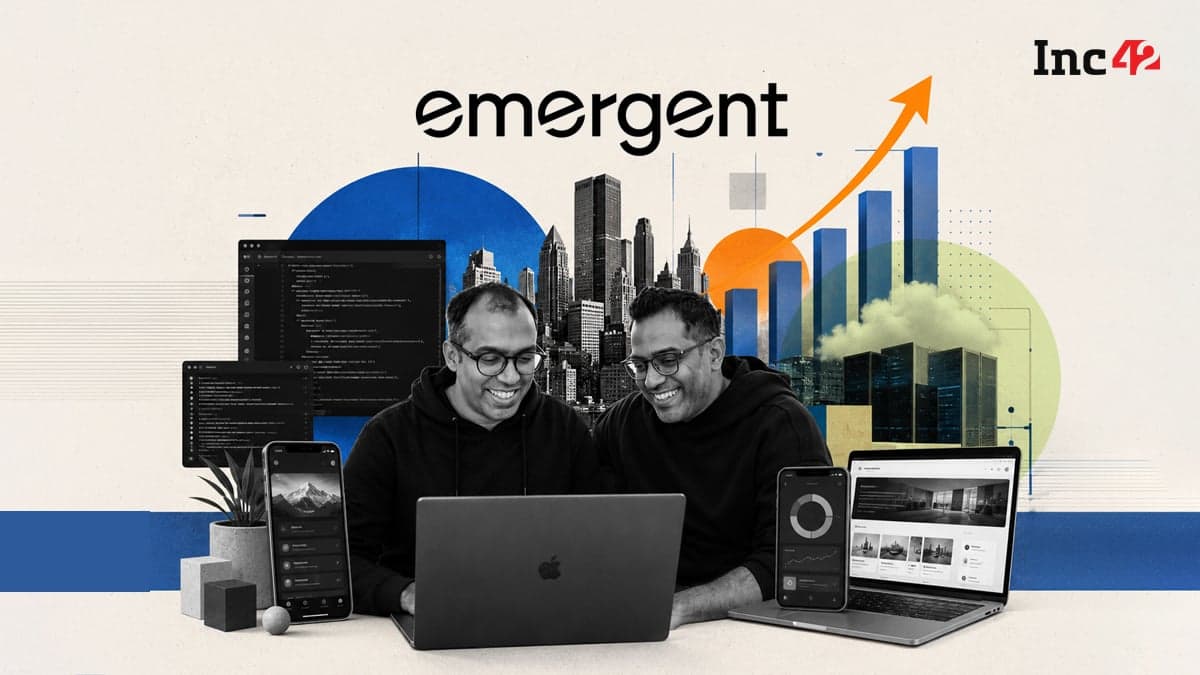
- Emergent raised $130M at a $1.5B valuation, becoming India's sixth unicorn of 2026
- The startup reports $120M annualized revenue and 4X growth in paying users since its last round
- Founded by Dunzo cofounder Mukund Jha, Emergent lets non-technical users build apps through AI agents
Emergent, the AI software creation platform founded by former Dunzo cofounder Mukund Jha, has raised $130 million in a Series C round led by Creaegis. The funding values the company at $1.5 billion, making it India's sixth unicorn of 2026 and the third homegrown AI startup to cross that threshold, after Krutrim and Sarvam.
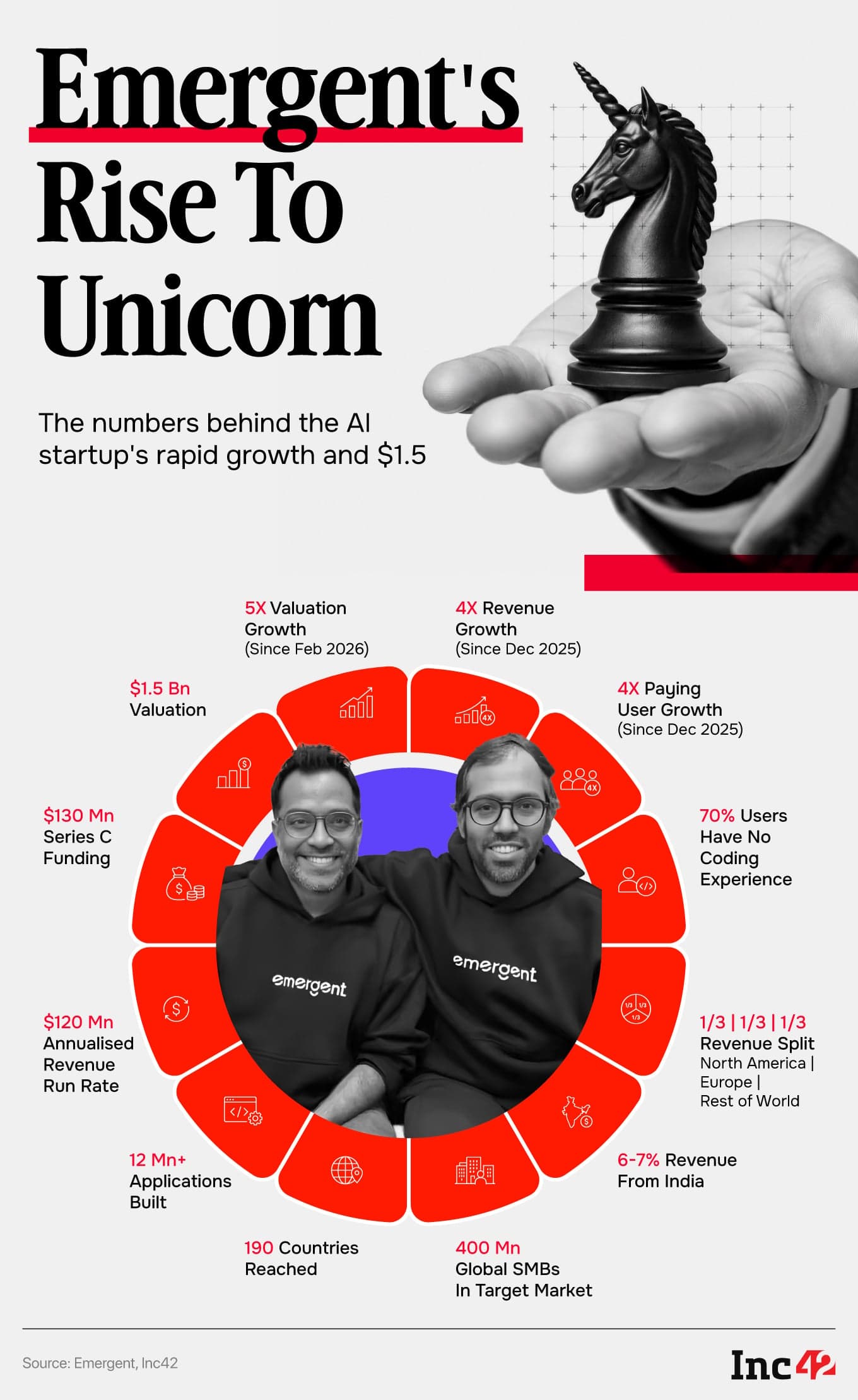
MNI Ventures, Claypond Capital, and Sentinel Global joined as co-lead investors. Existing backers Khosla Ventures, SoftBank Vision Fund 2, Lightspeed, and Y Combinator also participated. Total funding now stands at $230 million.
The speed of Emergent's ascent stands out. Founded in 2024, the startup hit unicorn status within two years of incorporation. Five months ago it closed a $70 million Series B from SoftBank and Khosla. Before that, a $23 million Series A led by Lightspeed in September 2025, and a $7 million seed from Y Combinator and Together Fund.
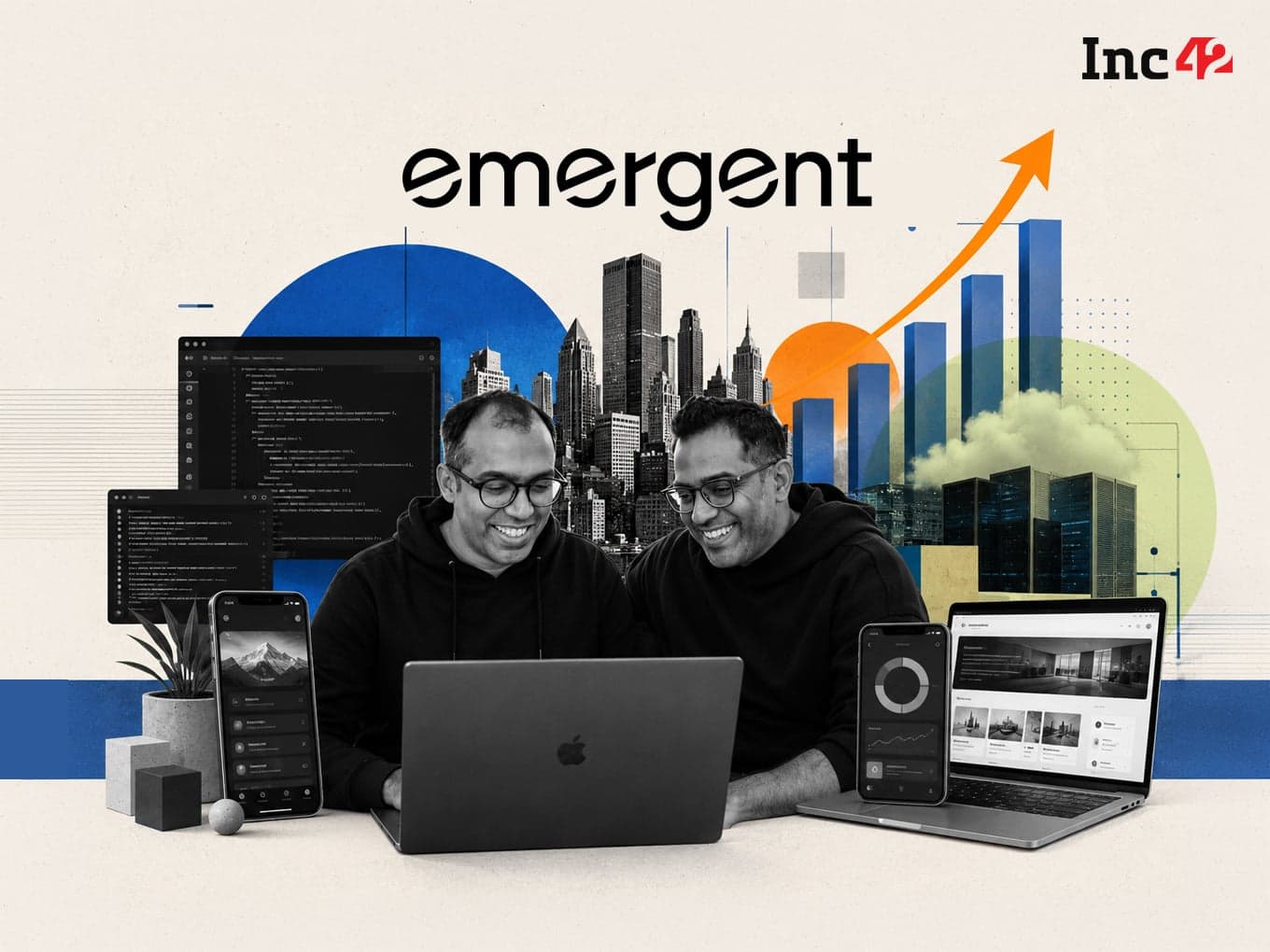
What does Emergent actually build?
Emergent lets entrepreneurs and small businesses create production-ready web and mobile applications using autonomous AI agents. No coding required. According to Mukund Jha, nearly 70% of its users have zero prior coding experience. More than 12 million apps have been built on the platform by users across 190 countries.
The company started as a coding agent but pivoted toward enabling non-technical users to build full-stack software through conversational AI. Its latest evolution moves further into business automation. Emergent calls this shift from 'prompt-to-app' to 'prompt-to-operations.' The recently launched Wingman platform lets users automate scheduling, lead generation, and operational workflows without writing code.

How strong are the underlying metrics?
Unlike many AI startups raising on narrative alone, Emergent claims concrete traction. Mukund Jha told Inc42 that revenue and paying users have grown 4X since the Series B. Customer acquisition costs have dropped, gross margins have improved, and retention remains strong. He declined to share specific figures.
The company reports an annualized revenue run rate of approximately $120 million, up around 20% quarter-over-quarter. Revenue splits roughly into thirds: North America, Europe, and the rest of the world. India contributes 6 to 7 percent of total revenue.
Why focus on small businesses instead of enterprise?
Enterprise customers account for less than 5% of Emergent's revenue. That's a deliberate choice. Mukund Jha framed the reasoning this way: there are roughly 400 million small businesses globally, responsible for nearly half of world GDP and almost 70% of employment. Yet this segment remains underserved by software.
Emergent wants to become the 'operating system for small businesses.' The company plans to expand into enterprise only after strengthening product-market fit in the SMB segment. For comparison, no-code platforms like Bubble and Softr also target builders without engineering teams, though Emergent's AI-first approach differentiates it.
Disclosure
Some links in this post are affiliate links — Logicity earns a commission if you sign up, at no extra cost to you. We only link products we have used or actively recommend.

Where will the $130M go?
Emergent hasn't finalized internal allocation, but Jha outlined three priorities. A significant portion will fund engineering hires. The company is scaling its San Francisco office from eight people and evaluating expansion into Europe. It will also invest in open-source AI research and accelerate go-to-market efforts across international markets.
The startup is adding headcount in India as well. For teams using Emergent alongside other productivity tools, workflow platforms like Zapier or Make can connect AI-generated apps to existing business systems.
India's 2026 unicorn streak continues
Emergent follows Square Yards, which became India's 131st unicorn less than a month ago. The broader pattern: investor appetite for AI-native software platforms remains strong, especially those enabling non-technical users to build production-ready applications. Capital continues flowing into the AI coding space despite broader market caution.
Emergent is the third Indian AI startup to reach unicorn status, joining Krutrim and Sarvam. The distinction: Emergent's path ran through clear revenue milestones rather than pure research bets.
Logicity's Take
Emergent's numbers look real. A $120M ARR with 4X growth since the last round suggests actual product-market fit, not just hype. The SMB focus is smart. Enterprise deals take 6-18 months to close; small businesses convert fast and churn visibility comes quickly. The risk? At $1.5B valuation, Emergent needs to sustain 50%+ annual growth for years. If AI coding tools commoditize, or if larger players like Replit or even Microsoft Copilot move aggressively into the same segment, that multiple compresses fast. For fintech teams evaluating similar tools: watch whether Emergent ships enterprise-grade security and compliance features in 2026. That's where the SMB-to-enterprise expansion usually stalls.
Frequently Asked Questions
What is Emergent's valuation after the Series C round?
Emergent is valued at $1.5 billion following its $130 million Series C round led by Creaegis.
Who founded Emergent?
Emergent was founded in 2024 by Mukund Jha, cofounder of Dunzo, along with his brother Madhav Jha.
How much revenue does Emergent generate?
The company reports an annualized revenue run rate of approximately $120 million, growing around 20% quarter-over-quarter.
How many apps have been built on Emergent's platform?
Over 12 million apps have been created by users across 190 countries, with nearly 70% of users having no prior coding experience.
Is Emergent an Indian unicorn?
Yes. Emergent is India's sixth unicorn of 2026 and the third AI-focused startup to reach unicorn status after Krutrim and Sarvam.
Need Help Implementing This?
If you're evaluating AI-powered development platforms or exploring automation tools for your fintech team, reach out to the Logicity team for guidance on tool selection and implementation strategy.
Source: Inc42 Media / Ankush Das
Huma Shazia
Senior AI & Tech Writer
Produced with AI assistance and reviewed by the Logicity editorial team. Learn more in our Editorial Policy.