Key Takeaways
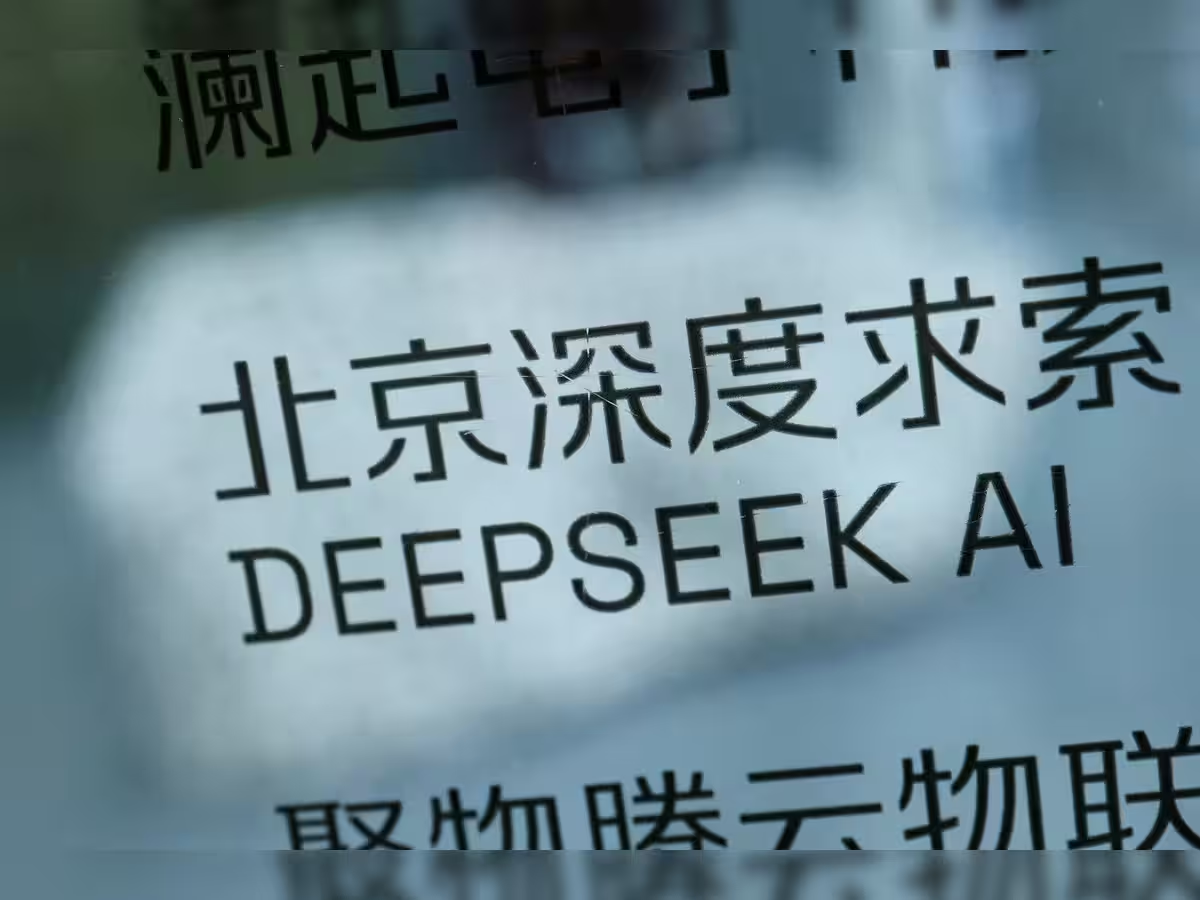
- DeepSeek targets $74 billion valuation in new funding round, up 11% from June
- Company aims to file for Shanghai STAR Market IPO by end of 2025
- Rising AI infrastructure costs forced founder Liang Wenfeng to abandon his no-outside-funding stance
DeepSeek is preparing another fundraising round at a $74 billion valuation, just weeks after closing a $7.4 billion raise in June. The Hangzhou-based AI startup is also in early talks to file for an IPO on Shanghai's STAR Market before year-end, according to sources cited by Reuters.
The back-to-back funding rounds represent an 11% valuation jump from 450 billion yuan to 500 billion yuan in a matter of weeks. DeepSeek is reportedly seeking up to 50 billion yuan ($7.4 billion) in this new round.
Why is DeepSeek raising again so quickly?
The speed signals two things: investor appetite remains strong for China's breakout AI company, and the costs of staying competitive are climbing faster than founder Liang Wenfeng anticipated.
DeepSeek shook global markets in early 2025 when it released models that matched leading US systems at a fraction of the training cost. That efficiency advantage won headlines. But maintaining it requires significant capital expenditure on data centers, AI agents, and engineering talent. The company recently announced plans to double headcount across all departments.
There's also a chip problem. Reuters reported earlier this month that DeepSeek is developing its own AI inference chip, a project requiring expensive chip-design engineers. US export restrictions on advanced semiconductors to China make this kind of vertical integration increasingly necessary for Chinese AI firms.
Who backed DeepSeek's June round?
The June raise assembled a strategic investor base. Liang Wenfeng personally committed 20 billion yuan. Tencent Holdings put in 10 billion yuan, making it the largest external shareholder. Battery giant CATL contributed 5 billion yuan.
China's national AI fund also participated, a signal of DeepSeek's strategic importance to Beijing's goal of building domestic AI champions independent of US technology. Other investors included NetEase, JD.com, IDG Capital, Loyal Valley Capital, Monolith Management, and Shixiang Capital.
Until June, DeepSeek had rejected all outside funding. Liang had bankrolled the company through his quantitative hedge fund, High-Flyer. The shift to external capital marks a significant strategic pivot.
What's the competitive pressure?
DeepSeek faces stiff competition at home. ByteDance and Alibaba have poured resources into their own AI efforts. Well-funded startups including Zhipu AI, Moonshot, and MiniMax are racing to capture enterprise and consumer markets.
The Chinese AI sector has entered an arms race where capital determines survival. Efficiency gains only matter if you have the compute to deploy them at scale. DeepSeek's lean-cost reputation got it attention. Holding the frontier requires money.
Why the STAR Market?
Shanghai's STAR Market, launched in 2019, was designed as China's answer to Nasdaq. It allows companies to list without profitability requirements, making it attractive for high-growth tech firms burning cash on R&D.
A STAR Market IPO would give DeepSeek access to domestic capital markets and align the company with Beijing's technology self-sufficiency goals. The internal target is to complete an IPO filing this year, though sources caution that terms and timelines remain fluid.
Logicity's Take
DeepSeek's rapid-fire fundraising reveals the uncomfortable truth behind its efficiency narrative: low-cost training is a one-time advantage, but competing at the frontier of AI is expensive on an ongoing basis. The $74 billion valuation puts DeepSeek in the same league as Anthropic (valued at $60 billion in January 2025), despite DeepSeek being significantly younger and having less US enterprise penetration. Watch whether the STAR Market IPO actually happens. A successful listing would create China's first publicly traded AI-native company and give Beijing a domestic alternative to US-listed tech giants.
Frequently Asked Questions
How much is DeepSeek worth now?
DeepSeek is targeting a 500 billion yuan ($74 billion) valuation in its upcoming funding round, up from 450 billion yuan ($66 billion) in June 2025.
When will DeepSeek go public?
DeepSeek has set an internal target to complete an IPO filing on Shanghai's STAR Market by the end of 2025, though plans remain at early stages.
Who are DeepSeek's biggest investors?
Tencent Holdings is the largest external shareholder after investing 10 billion yuan in June. CATL, China's national AI fund, NetEase, and JD.com also participated.
Why did DeepSeek start accepting outside funding?
Rising costs of AI development, including data centers, chip design, and engineering talent, forced founder Liang Wenfeng to abandon his previous no-outside-funding policy.
Another major AI-adjacent investment reshaping the global tech funding landscape
Need Help Implementing This?
If you're a founder or CTO navigating AI strategy or fundraising decisions, reach out to our team at Logicity. We track the moves that matter and can connect you with the right resources.
Source: Tech-Economic Times / ET
Huma Shazia
Senior AI & Tech Writer
Produced with AI assistance and reviewed by the Logicity editorial team. Learn more in our Editorial Policy.




