Key Takeaways
SpaceX Shares Fall Below $135 IPO Price For The First Time
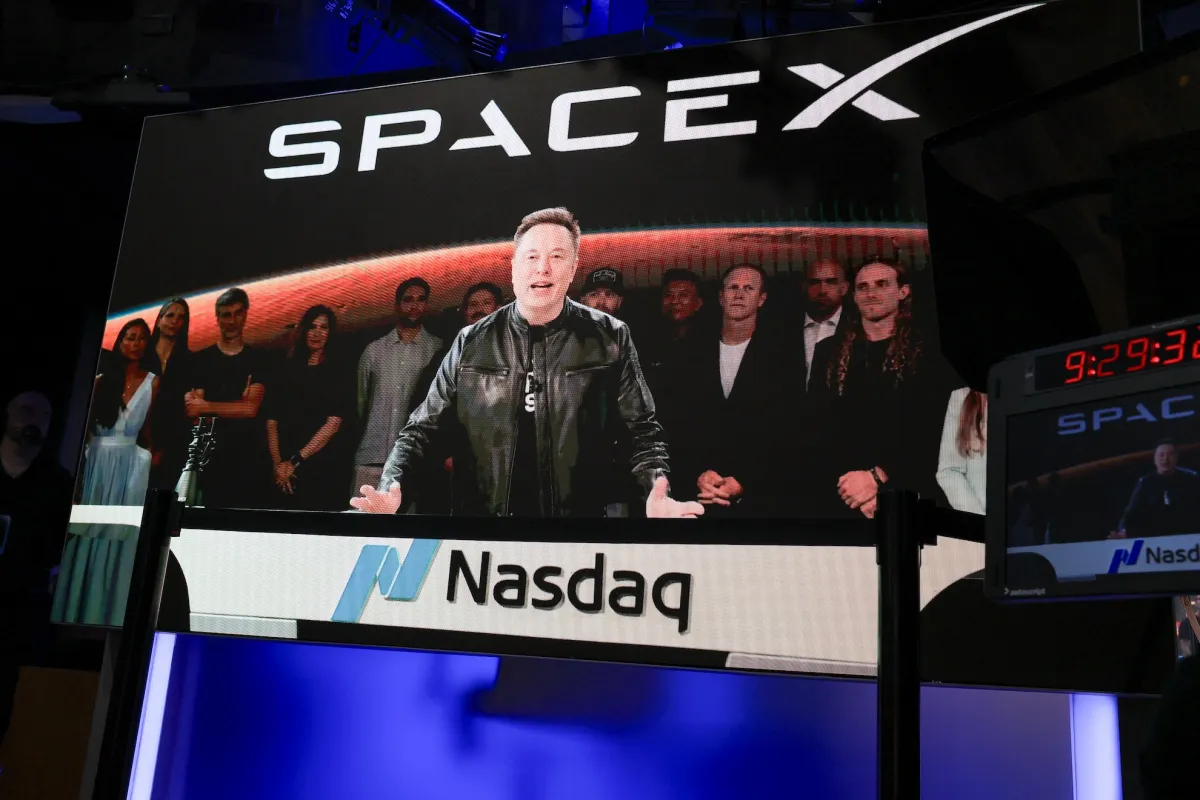
- SpaceX shares briefly dropped below $135, the June 12 IPO price, after peaking above $200 in the days following the offering
- Only 4% of SpaceX shares trade publicly, creating thin volume and volatile price swings
- Thursday's Starship test launch is the first since a May booster failure and the first since the IPO
SpaceX shares slipped below $135 on Wednesday, dipping beneath the price Elon Musk's company set for its June 12 IPO that raised nearly $86 billion. The stock touched $133 before recovering to hover around the IPO level. One month after going public, the company that briefly rivaled Amazon and Microsoft in market cap faces its first sustained downturn and a high-stakes rocket test on Thursday.
What happened to the post-IPO rally?
SpaceX shares surged past $200 in the days after listing on the Nasdaq. That run didn't last. The stock has declined almost every week since, shedding roughly a third of its peak value. Bonds the company issued after the IPO are also underwater.
Part of the volatility stems from a thin float. Only 4% of SpaceX's total shares trade publicly. Low supply plus relentless attention creates exaggerated swings on modest volume. But thin floats don't explain a month-long slide. Markets appear to be reassessing the premium they're willing to pay for Musk's interplanetary ambitions, part of a broader cooldown in tech stocks.
Why SpaceX's price matters beyond SpaceX
The company's valuation is a proxy for investor appetite for moonshot bets. Anthropic and OpenAI have both filed confidentially for IPOs. Neither has set a date, but bankers and founders are watching SpaceX's tape to gauge how aggressive they can be on pricing. A prolonged SpaceX slump could cool expectations for AI IPOs that carry similar blends of hype, massive capital needs, and long roads to profitability.
SpaceX also carries symbolic weight. It's the first megacap tech IPO since the 2022 downturn, and its performance signals whether public markets have truly reopened for companies valued on vision rather than near-term earnings.
Thursday's Starship test adds uncertainty
On Thursday, SpaceX will launch Starship for the first time since a booster failure in May and the first time as a public company. The rocket remains in active development. Failures are expected, by design. SpaceX's approach is to fly, fail, and fix.
This flight won't attempt to recover the booster or upper stage. Both will simulate a landing in the Gulf of Mexico, meaning both will end in controlled explosions regardless of whether the flight plan succeeds. For long-time SpaceX watchers, that's routine. For new retail shareholders, watching an $86 billion company's flagship product deliberately explode may require a different stomach.
The durability question
SpaceX's revenue base is solid. The company operates the only reusable orbital rocket, dominates commercial launch contracts, and runs Starlink, a satellite internet service with over 6,000 satellites in orbit and growing subscription revenue. The question isn't whether SpaceX is a real business. It's whether the business justifies a valuation that at its peak matched two of the most profitable companies in history.
Musk has promised Mars colonies, point-to-point Earth travel, and a Starlink constellation that could eventually serve billions. Those are decade-long bets. Public markets, historically, have punished companies that ask shareholders to wait that long. The next few weeks will test whether SpaceX can hold investor confidence through the inevitable setbacks of rocket development.
Logicity's Take
The SpaceX IPO was always a referendum on patience. Musk resisted going public for years precisely because he didn't want quarterly scrutiny on a company that measures progress in test explosions. Now he has both the capital and the scrutiny. For CTOs and founders watching the AI IPO pipeline, the lesson so far: a blockbuster debut doesn't guarantee a stable stock. Anthropic and OpenAI may want to leave more upside on the table at pricing rather than risk a similar comedown.
Frequently Asked Questions
Why did SpaceX shares fall below the IPO price?
A combination of thin trading volume (only 4% of shares are public), broader tech stock weakness, and investor reassessment of the premium on Musk's long-term vision.
What is the SpaceX float and why does it matter?
The float is the percentage of shares available for public trading. SpaceX's 4% float is unusually small, meaning modest buy or sell orders can cause large price swings.
How does SpaceX's stock affect OpenAI and Anthropic IPO plans?
Both companies have filed confidentially for IPOs. SpaceX's performance is a signal of public market appetite for high-valuation, pre-profit tech companies.
What happens in Thursday's Starship launch?
SpaceX will test the Starship rocket with planned water landings in the Gulf of Mexico. Both booster and upper stage will end in explosions by design, as the company is not attempting recovery on this flight.
Another high-profile tech IPO in progress with a massive valuation.
Need Help Implementing This?
Planning your company's public market strategy or navigating investor communications during volatile periods? Contact Logicity's advisory network for introductions to IR specialists and capital markets advisors.
Source: TechCrunch / Sean O'Kane
SpaceX Stock Recovers to $135.27 After Intraday Low; AI IPO Watchers Take Note
The new article provides specific trading details: the stock dipped below $133 at one point before recovering to close at $135.27. It adds context about the post-IPO trajectory (stock initially rose above $200), explains the volatility due to the small 4% float, and notes that SpaceX bonds are also suffering. Additionally, it mentions Anthropic and OpenAI have confidentially filed for IPOs and are watching SpaceX's performance.
Huma Shazia
Senior AI & Tech Writer
Produced with AI assistance and reviewed by the Logicity editorial team. Learn more in our Editorial Policy.