Key Takeaways
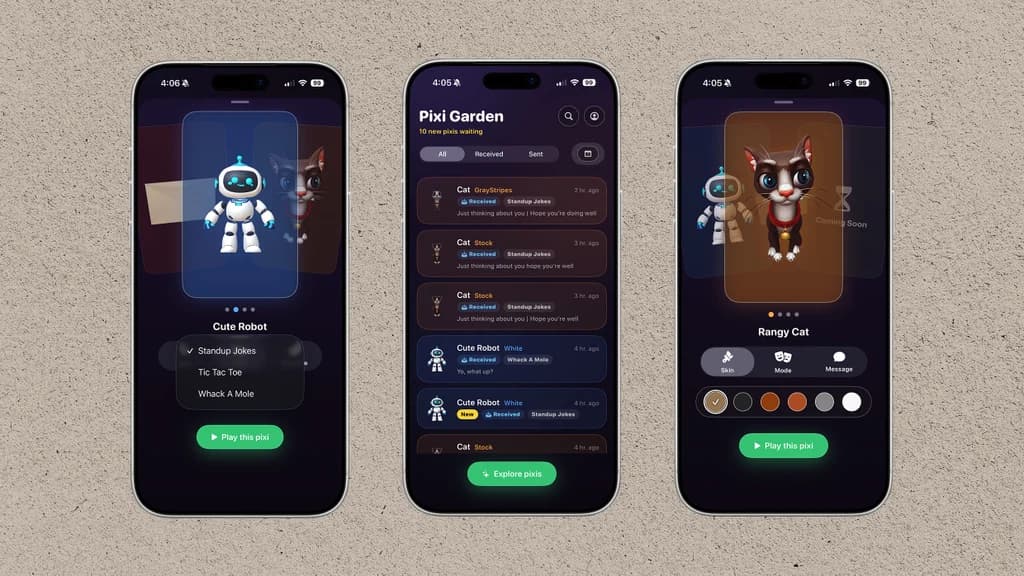
- Pixi Platforms lets users send AR characters that react to sound and movement, all processed on-device
- Founder Mark Drummond argues phones beat headsets for short AR experiences because they're already everywhere
- The app runs lightweight AI locally, avoiding cloud uploads to protect user privacy
Mark Drummond spent years building augmented reality for headsets at Apple and SRI International. Now he's betting that the iPhone in your pocket is the better AR device. His startup, Pixi Platforms, just launched an iOS app that lets users send animated 3D characters to each other. A talking cat tells dad jokes. A robot plays tic-tac-toe. An envelope follows you across the room while delivering a message.
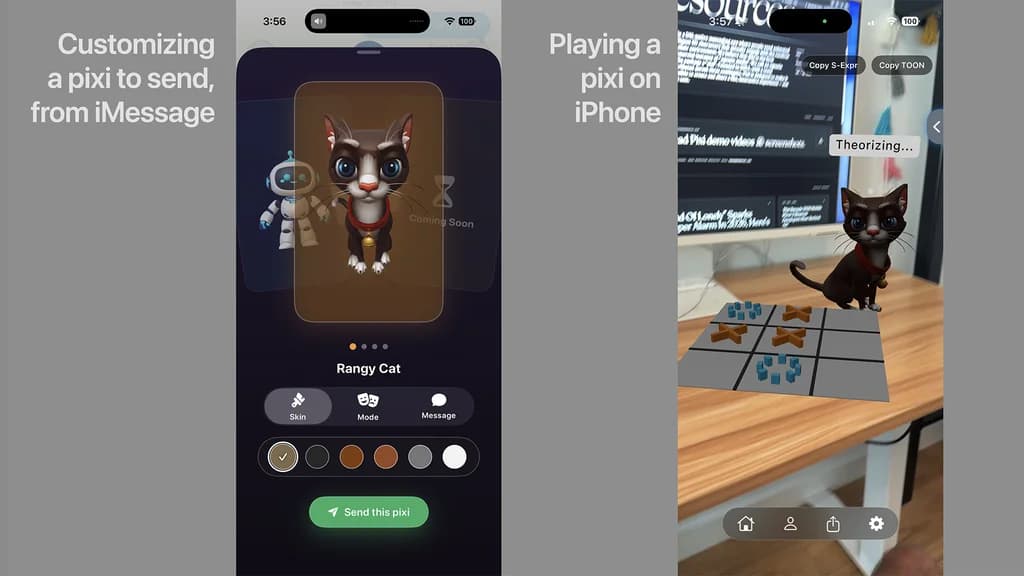
The pitch is straightforward: AR greeting cards that feel present because they react to what's happening around them. The cat responds to dog barks. Characters turn toward sounds. It's less about spectacle and more about making digital objects feel like they belong in your living room.
Why phones beat headsets for casual AR
Drummond's résumé includes work on Apple Vision Pro. But he's arrived at a contrarian conclusion: for brief, shareable moments, phones win. Two reasons. First, over a billion iPhones already exist in people's hands. Vision Pro has sold perhaps a few hundred thousand units. Second, when you hold up a phone, multiple people can look at the screen together. Headsets are isolating by design.
"It's like a magic looking glass," Drummond told Fast Company. The phone becomes a window into an augmented layer, not a face-mounted computer that cuts you off from everyone else in the room.
This philosophy shapes what Pixi builds. The company isn't chasing immersive 30-minute experiences. It's targeting the quick, social interaction: send a character, get a laugh, move on. That use case doesn't need spatial audio or hand tracking. It needs a camera, a screen, and AI that can make the character feel alive.
On-device AI and the privacy calculation
Here's where Pixi makes a technical choice that product teams should note. The characters react to audio and video from the phone's sensors. They hear barks, music, voices. In a typical cloud-first architecture, that data would flow to servers for processing. Pixi keeps everything local.
"These devices, if you're really engaging them in an AR sense, they're sucking up a lot of very personal data," Drummond said. "And we just decided that should never leave the device."
The tradeoff: Pixi's four-person team uses frontier AI models during development, but the shipped app runs lighter-weight models that fit on the phone's neural engine. That limits what characters can do. But it also means Pixi never stores your living room audio on a server somewhere.
For developers weighing similar decisions, the lesson is that on-device AI is now capable enough to power real-time reactive characters. Apple's Core ML and Neural Engine have matured to the point where this is feasible without cloud round-trips. The privacy story becomes a product differentiator, not just a compliance checkbox.
The brand-safe angle
Fast Company's framing mentions "brand-safe AR characters," which hints at Pixi's likely business model. Consumer apps are notoriously hard to monetize. But if Pixi can license custom AR mascots to brands, that opens a B2B revenue stream. Imagine a cereal company's tiger delivering a promotional message, or a sports team's mascot wishing fans happy birthday.
This would position Pixi against AR marketing platforms and experiential agencies, not against consumer messaging apps like iMessage or Snapchat. The $31 billion AR market (projected for 2024 by Statista) has plenty of room for niche players who can deliver polished, turnkey character experiences.
What's missing from the pitch
Pixi is iOS-only for now. No Android, no web. That limits the addressable audience, though it simplifies development and lets the team optimize for Apple's AR frameworks. The app is also user-to-user, which means both sender and recipient need Pixi installed. Network effects are hard to bootstrap when you're asking people to download an app just to receive a message.
The bigger question: will people care enough about AR greeting cards to form a habit? Snapchat proved AR filters could go mainstream, but those live inside an app people already open daily. Pixi is asking users to adopt a new app for a single, occasional use case. That's a tough sell unless the brand partnerships drive downloads.
Logicity's Take
Pixi's bet on local AI processing is smart positioning. As regulators and consumers grow warier of always-listening devices, "your data never leaves your phone" is a credible selling point. But the real opportunity here is B2B, not consumer. If Pixi can become the Canva of AR characters, letting marketers spin up branded experiences without custom development, they sidestep the cold-start problem of building a two-sided messaging network. For AI builders, the technical takeaway is clear: on-device inference is now good enough for real-time character animation. The cloud is optional.
Frequently Asked Questions
What is Pixi Platforms?
Pixi Platforms is a startup founded by Apple and SRI International alum Mark Drummond. It offers an iOS app that lets users send augmented reality characters to each other as animated messages.
Does the Pixi app upload audio or video to the cloud?
No. Pixi runs lightweight AI models directly on the iPhone, so audio and video data from your camera and microphone stays on the device and is not uploaded to external servers.
Is Pixi available on Android?
Currently, Pixi is only available for iPhone and iPad. There's no announced timeline for an Android version.
How do AR characters in Pixi react to the environment?
Characters use on-device AI to respond to sounds like dog barks or music, and they track movement in the room using the phone's camera and sensors.
What is the business model for Pixi?
While specifics aren't confirmed, the company's focus on brand-safe characters suggests a B2B model where brands could license custom AR mascots for marketing and promotional campaigns.
Need Help Implementing This?
Building on-device AI experiences or exploring AR for your product? Logicity covers the tools and tactics that help product teams ship faster. Subscribe to our newsletter for weekly breakdowns of what's working in AI product development.
Source: Fast Company / Steven Melendez
Manaal Khan
Tech & Innovation Writer
Produced with AI assistance and reviewed by the Logicity editorial team. Learn more in our Editorial Policy.