Key Takeaways
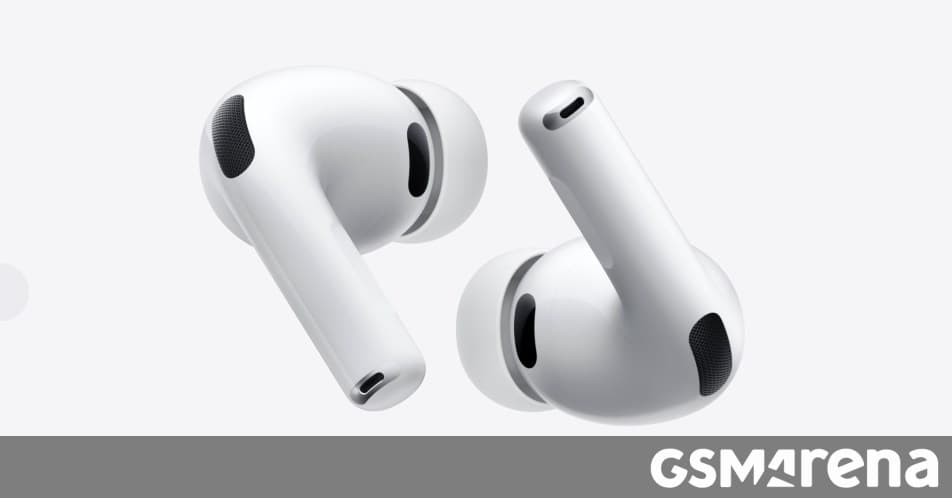
- Apple's camera-equipped AirPods are now targeted for late 2027, delayed from an earlier 2025 timeline
- The cameras will feed visual context to Siri AI rather than capture photos or video
- External indicator lights will signal when data is being sent to the cloud
Apple is building AirPods with built-in cameras, but you will not see them until late 2027. Bloomberg's Mark Gurman, citing people familiar with the project, reports the earbuds have slipped from an earlier target of this year. The delay? Apple is not satisfied with the AI experience.
The cameras are not for selfies or video calls. They act as eyes for Siri, feeding visual context to Apple's AI so the assistant can understand what is happening around you. Apple calls the feature Visual Intelligence.
Why the two-year delay?
Back in May, Gurman reported Apple had entered final development on the camera-equipped AirPods, codenamed B798. At the time, a launch this year seemed plausible. That timeline is now out.
The sticking point is AI performance. Apple apparently wants the camera-fed Siri to deliver genuinely useful, context-aware responses before shipping. A voice assistant that can see but cannot think clearly enough is worse than one that stays in your pocket.
“The cameras aren't intended for capturing photos or videos. Instead, they act as eyes for Siri, providing visual context to Apple's AI, allowing the assistant to better understand the user's surroundings.”
— Mark Gurman, Bloomberg Tech Correspondent
Gurman notes the earbuds will launch alongside Apple's second-generation foldable iPhone and a special 20th anniversary iPhone model. That positions the camera AirPods as part of a coordinated 2027 hardware refresh, not a standalone experiment.
What will these AirPods actually do?
The low-resolution cameras sit in the stems. Apple is exploring features like contextual reminders and turn-by-turn walking directions powered by what the cameras see. Imagine asking Siri to remind you to buy milk when you pass a grocery store, and Siri knows you are passing one because it can see the sign.
One interesting detail: external indicator lights on the stems will notify people nearby whenever data is being sent to the cloud. This is Apple's answer to the inevitable privacy question. If the earbuds are watching, others will know.
The design choice echoes Meta's approach with Ray-Ban smart glasses, which also include a visible LED when the camera is active. Apple seems to be acknowledging that wearable cameras create social tension, and transparency is the path to acceptance.
How does this compare to Meta's smart glasses?
Meta's Ray-Ban glasses already offer multimodal AI. You can ask the assistant what you are looking at, and it will describe it. The glasses launched in 2023 and have been updated since.
Apple's pitch is different. Glasses are always visible. Earbuds are not. Placing cameras in AirPods means the technology disappears into something people already wear. The trade-off: a camera angle that looks sideways from your ears rather than straight ahead from your eyes.
Community reactions on Reddit and Hacker News show skepticism about both privacy and battery life. Constant camera-powered AI processing drains batteries fast. Apple will need to solve that before shipping.
The broader 2027 hardware strategy
Apple is lining up a significant product wave for late 2027. The camera AirPods, a second-generation foldable iPhone, and a 20th anniversary iPhone all share the same window. This is not a coincidence.
Taken together, the lineup suggests Apple sees 2027 as a transition year. The foldable phone signals new form factors. The anniversary iPhone marks two decades since the original. And the camera AirPods position wearables as AI peripherals, not just audio devices.
If the AI experience is not ready, Apple has shown it will wait. The company pulled the plug on AirPower rather than ship a compromised product. The camera AirPods could face the same fate if Visual Intelligence does not meet the bar.
What we still don't know
Gurman's report leaves key questions open. Pricing is unknown. So is whether these will be called AirPods Ultra, AirPods Pro with cameras, or something else. Apple has not confirmed any of this publicly.
The camera resolution remains vague. Low-resolution is the only specification Gurman mentions. That is enough for AI context but not for photography. Whether Apple will ever allow photo capture is unclear.
Battery life remains the elephant in the room. Current AirPods Pro offer about six hours of listening time. Adding always-on or frequently-on camera processing could cut that significantly.
Frequently Asked Questions
When will Apple release AirPods with cameras?
Bloomberg's Mark Gurman reports a late 2027 launch, delayed from an earlier 2025 target.
What are the cameras in the new AirPods for?
The cameras provide visual context to Siri AI, enabling features like contextual reminders and walking directions. They are not designed for photos or video.
Will people know when the AirPods cameras are active?
Yes. Apple is adding external indicator lights on the stems that activate when data is sent to the cloud.
How do Apple's camera AirPods compare to Meta Ray-Ban glasses?
Both offer AI that can see. Meta's glasses provide a forward-facing view, while AirPods cameras sit in the ear stems. The AirPods form factor is less visible but may offer a less useful camera angle.
Why did Apple delay the camera AirPods?
According to Gurman, Apple was not satisfied with the AI experience and chose to wait rather than ship a subpar product.
Logicity's Take
Apple is betting that AI needs eyes, not just ears. But putting cameras in earbuds is a harder sell than glasses. The angle is awkward, the privacy optics are tricky, and the battery math is brutal. The 2027 timeline suggests Apple knows this is a multi-year problem. If Visual Intelligence works, it could make AirPods the default AI interface. If it does not, this becomes another AirPower.
Both stories involve 2027 hardware deadlines shaping Apple's product decisions
Need Help Implementing This?
Planning for AI-driven wearable integrations or enterprise audio tech? Logicity.in covers the intersection of hardware, AI, and business strategy. Subscribe for weekly analysis on emerging tech that matters for product teams.
Source: GSMArena.com / Siddharth
Huma Shazia
Senior AI & Tech Writer
Produced with AI assistance and reviewed by the Logicity editorial team. Learn more in our Editorial Policy.