Key Takeaways
RERIGHT · Monzo co-founder Blomfield joins Anthropic

- Tom Blomfield, Monzo co-founder and Y Combinator partner, joins Anthropic to tackle compute availability
- The hire signals that AI infrastructure is now a commercial and operational problem, not just a technical one
- Anthropic continues aggressive recruiting from OpenAI, Google DeepMind, and Microsoft
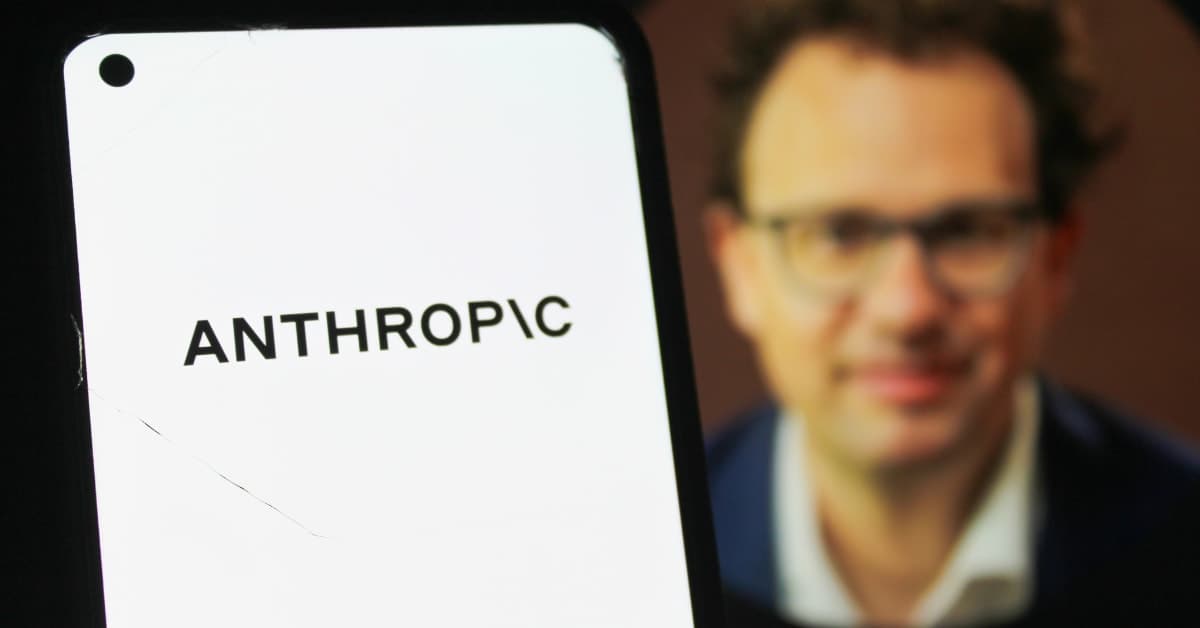
Anthropic has hired Tom Blomfield, co-founder and former CEO of UK challenger bank Monzo, to address compute availability challenges. Blomfield announced he is taking a leave of absence from his role as general partner at Y Combinator to join the AI company, according to LinkedIn News.
The appointment is the latest in a string of high-profile recruits from outside traditional AI research circles. It also confirms what many in the industry suspected: running frontier AI models is no longer primarily an algorithm problem. It's a logistics, capital, and operations problem.
Why hire a fintech founder for compute?
Blomfield built Monzo from a startup into one of the UK's largest digital banks, managing millions of customers on infrastructure that could never go down. Banking regulators don't accept "we're working on reliability." Uptime and trust are non-negotiable.
Gail Weiner, founder of the UK's AI Trust Architect, explained why the hire makes sense despite seeming unconventional. "Look at what compute actually is at Anthropic now: commitments to a million Google TPUs, multiple gigawatts of capacity coming online, deals worth tens of billions," she wrote. "That stopped being a purely technical problem some time ago."
Weiner added that Anthropic "went and got someone who built a regulated bank from nothing, where reliability and trust were conditions of existing at all, not features to add later."
Anthropic's hiring spree continues
Blomfield joins a roster of recent recruits that reads like a greatest-hits list of AI and tech leadership. Andrej Karpathy, a founding member of OpenAI and former head of AI at Tesla, joined Anthropic's pretraining team to advance large language model research. In April, Microsoft executive Eric Boyd announced he would lead Anthropic's infrastructure team.
The pattern is clear. Anthropic is pulling talent from OpenAI, Google DeepMind, Microsoft, and now Y Combinator. The AI talent wars have reached a point where companies are recruiting across industry boundaries, valuing operational experience as much as research credentials.
Claude's commercial momentum
The infrastructure push comes as Anthropic expands its product offerings. Last week, the company announced Claude Cowork, an agentic experience, is now available on mobile and web in beta for Max plan subscribers. The company plans to expand access to additional pricing tiers.
"Everyone asks AI for answers. Handing it the work is different, and people keep giving Claude bigger jobs," Anthropic said in a blog post. "Work like that doesn't fit in one sitting. It accumulates overnight, between meetings, on the train. Until today, Cowork lived on your laptop, so the work stopped when you stepped away. Now it doesn't."
PYMNTS Intelligence research suggests Claude holds a strong position among enterprise users. Eighty-one percent of workers who use Claude said AI is either essential to their job or substantially improves their productivity. That figure exceeded five other tools in the study: Perplexity, Meta AI, Microsoft's Copilot, Google's Gemini, and OpenAI's ChatGPT.
Disclosure
Some links in this post are affiliate links — Logicity earns a commission if you sign up, at no extra cost to you. We only link products we have used or actively recommend.

What compute availability actually means
For AI companies, compute isn't just about having enough GPUs or TPUs. It's about securing long-term contracts with cloud providers, negotiating power agreements for data centers, managing supply chains for specialized hardware, and ensuring models can scale to meet demand without outages.
Anthropic's commitment to "a million Google TPUs" and "multiple gigawatts of capacity" puts it in a league where failures cascade into millions of dollars of lost revenue and damaged trust. Blomfield's experience managing Monzo's infrastructure under banking regulations, where downtime can trigger regulatory action, maps directly onto these challenges.

Logicity's Take
This hire signals a maturation in how AI companies think about their biggest bottleneck. Compute isn't a research problem anymore; it's a supply chain and operations problem. For fintech teams watching AI infrastructure costs, this is instructive. The same discipline that makes banking systems reliable, redundancy, capacity planning, regulatory-grade uptime, is now table stakes for frontier AI. Anthropic is betting that operational excellence will separate winners from also-rans, not just model performance.
Frequently Asked Questions
Who is Tom Blomfield?
Tom Blomfield co-founded Monzo, one of the UK's largest digital-only banks, and served as its CEO. He later became a general partner at Y Combinator before joining Anthropic.
What will Tom Blomfield do at Anthropic?
Blomfield will focus on compute availability issues as Anthropic expands its AI capabilities and infrastructure.
Why is compute a challenge for AI companies?
Training and running large language models requires massive amounts of specialized hardware, power, and data center capacity. Securing reliable access to these resources is now a commercial and operational challenge, not just a technical one.
What other executives has Anthropic hired recently?
Anthropic recently recruited Andrej Karpathy from OpenAI/Tesla for its pretraining team and Eric Boyd from Microsoft to lead infrastructure.
Another perspective on how AI governance and infrastructure are converging
Need Help Implementing This?
Building AI infrastructure or integrating AI tools into your fintech stack? Contact Logicity for guidance on vendor selection, infrastructure planning, and implementation strategy.
Source: PYMNTS | / PYMNTS
Manaal Khan
Tech & Innovation Writer
Produced with AI assistance and reviewed by the Logicity editorial team. Learn more in our Editorial Policy.