Key Takeaways
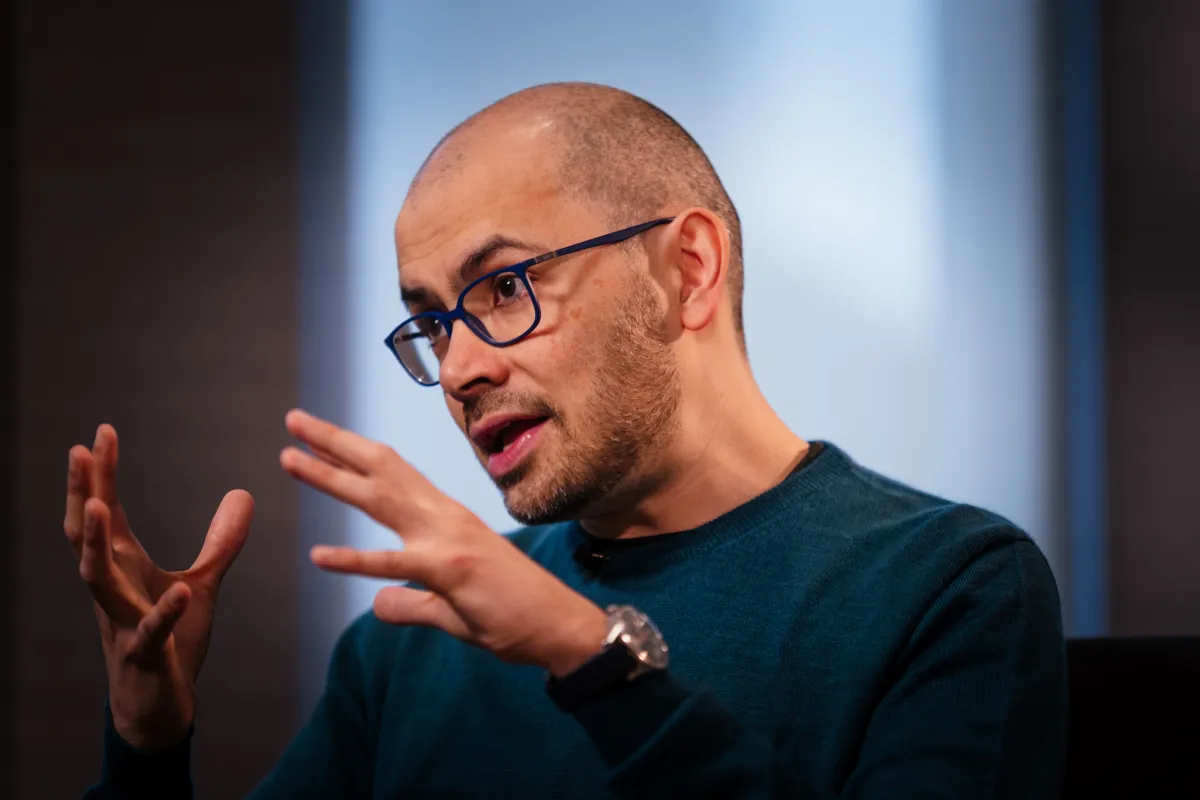
- Hassabis proposes a FINRA-style self-regulatory organization for frontier AI, funded by industry but backed by government
- Frontier labs would voluntarily share models for review up to 30 days before release under the proposed framework
- The proposal comes after criticism of ad hoc government reviews of Anthropic's Mythos and OpenAI's Sol models
Demis Hassabis, CEO of Google DeepMind, wants an independent standards body to regulate frontier AI models before they reach the public. In a detailed post on X titled "A Framework for Frontier AI and the Dawning of a New Age," Hassabis outlined a system modeled on FINRA, the self-regulatory organization that oversees U.S. broker-dealers. Under his proposal, AI labs would voluntarily submit models for review up to 30 days before release, with mandatory compliance following once the assessment protocol proves effective.
The timing is pointed. Government reviews of Anthropic's Mythos and OpenAI's Sol drew sharp criticism for lacking technical expertise and offering little transparency about release decisions. Hassabis is pitching an alternative: hand those decisions to a new organization staffed by technical experts and open-source representatives, funded by AI labs themselves but operating independently with government backing.
What would a FINRA-style AI regulator look like?
FINRA oversees more than 3,400 broker-dealer firms in the U.S., funded by the industry it regulates rather than taxpayers. Hassabis envisions a similar structure for AI. The standards body would employ technical experts drawn from frontier labs and the open-source community. It could outsource specialized evaluations to the growing number of AI safety organizations focused on particular risk categories.
The model addresses a practical problem: government agencies lack the expertise to evaluate models that even their creators don't fully understand. A self-regulatory body staffed by industry insiders would have the technical knowledge. The tradeoff is independence. FINRA has faced criticism for being too cozy with the firms it regulates. An AI equivalent would face similar scrutiny.
"The strength of this approach is it would be technically focused, while at the same time supporting innovation and incentivising responsible behaviour," Hassabis wrote. "It is designed to keep up with the field's acceleration and adapt to the biggest risks as they are identified, and could be ratcheted up if the seriousness of the situation demands."
Why the White House probably won't create an AI regulator
Hassabis is threading a needle. White House AI advisor Sriram Krishnan, who also serves as a general partner at a16z, recently dismissed the idea of an executive-branch AI regulator outright. "There will not be an FDA for AI," he said. The Trump administration has shown little appetite for new regulatory agencies in any sector.
A self-regulatory organization sidesteps that objection. It wouldn't require new legislation or executive action to create. Labs could establish it voluntarily, then seek formal government recognition once it demonstrates value. That's roughly how FINRA emerged from its predecessor organizations over decades.
The question is whether voluntary participation means anything. If a lab believes its model would fail review, what stops it from skipping the process? Hassabis's framework envisions formalization "quickly following" proof of concept, meaning models would eventually need to pass review to deploy in the U.S. But that transition requires either legislation or executive action, both politically unlikely in the current climate.
The real target: legitimacy
Hassabis may be playing a longer game. Frontier labs face a legitimacy problem. The public doesn't trust them to self-police. Governments don't trust them either but lack the capacity to regulate effectively. The result is ad hoc reviews like those applied to Mythos and Sol, satisfying no one.
A standards body, even a voluntary one, creates a framework for demonstrating responsibility. Labs that participate can point to third-party review. Labs that don't look like they have something to hide. Over time, that dynamic could make participation effectively mandatory regardless of legal requirements.
DeepMind has over $21 billion in cumulative Google investment behind it. Hassabis isn't calling for regulation because he's worried about his own lab's viability. He's proposing a structure that larger, better-resourced labs can meet more easily than smaller competitors. That's the cynical read. The charitable read: he genuinely believes frontier models pose risks that require external review, and he's proposing the most politically viable path to get there.
Logicity's Take
Hassabis is betting that self-regulation beats no regulation. He's probably right that the alternative is either chaotic ad hoc reviews or nothing at all. But the FINRA comparison cuts both ways. Financial self-regulation didn't prevent the 2008 crisis. An AI standards body funded by the labs it oversees will face constant pressure to approve borderline models rather than slow billion-dollar release schedules. The proposal's real value may be less about safety outcomes and more about creating a framework that can evolve into something stronger when political winds shift.
Frequently Asked Questions
What is the FINRA model Hassabis referenced?
FINRA (Financial Industry Regulatory Authority) is a self-regulatory organization that oversees U.S. broker-dealers. It's funded by the industry it regulates but operates independently with government backing. Hassabis proposes a similar structure for frontier AI oversight.
Would AI labs be required to submit models for review?
Initially, participation would be voluntary. Hassabis envisions labs sharing models up to 30 days before release. Mandatory compliance would follow once the assessment protocol proves effective, though that transition would require government action.
Which AI models have already undergone government review?
The U.S. government performed ad hoc reviews of Anthropic's Mythos and OpenAI's Sol models. Both reviews drew criticism for lacking technical expertise and offering little transparency about decision-making.
Does the White House support creating an AI regulator?
No. White House AI advisor Sriram Krishnan stated there will not be an FDA for AI. A self-regulatory organization like Hassabis proposes could bypass the need for executive action to establish.
Context on the frontier vs. open-source gap that regulation proposals must address
Another major development in frontier model releases
Need Help Implementing This?
If you're building AI products and navigating compliance considerations, reach out to our team at Logicity for analysis of how emerging regulatory frameworks could affect your deployment timelines.
Source: TechCrunch / Russell Brandom
Huma Shazia
Senior AI & Tech Writer
Produced with AI assistance and reviewed by the Logicity editorial team. Learn more in our Editorial Policy.




