Key Takeaways
- AMD acquired MEXT, gaining AI-powered memory tiering technology that lets applications treat flash storage as DRAM
- The technology could reduce data center operating costs by up to 50% while increasing effective memory capacity 4x on existing hardware
- MEXT's Predictive Memory Engine uses AI to anticipate which data needs to move from flash back to DRAM before applications request it
AMD acquired MEXT, a startup that developed technology allowing NAND flash storage to masquerade as DRAM for applications. The deal gives AMD a potential answer to one of the biggest bottlenecks facing data centers: memory constraints that throttle AI workloads long before processors hit their limits.
Terms of the acquisition remain undisclosed. What AMD did reveal is its intent: fold MEXT's Predictive Memory Engine into its data center portfolio and target the exploding memory demands of AI inference and training workloads.
Why memory, not compute, is the AI bottleneck
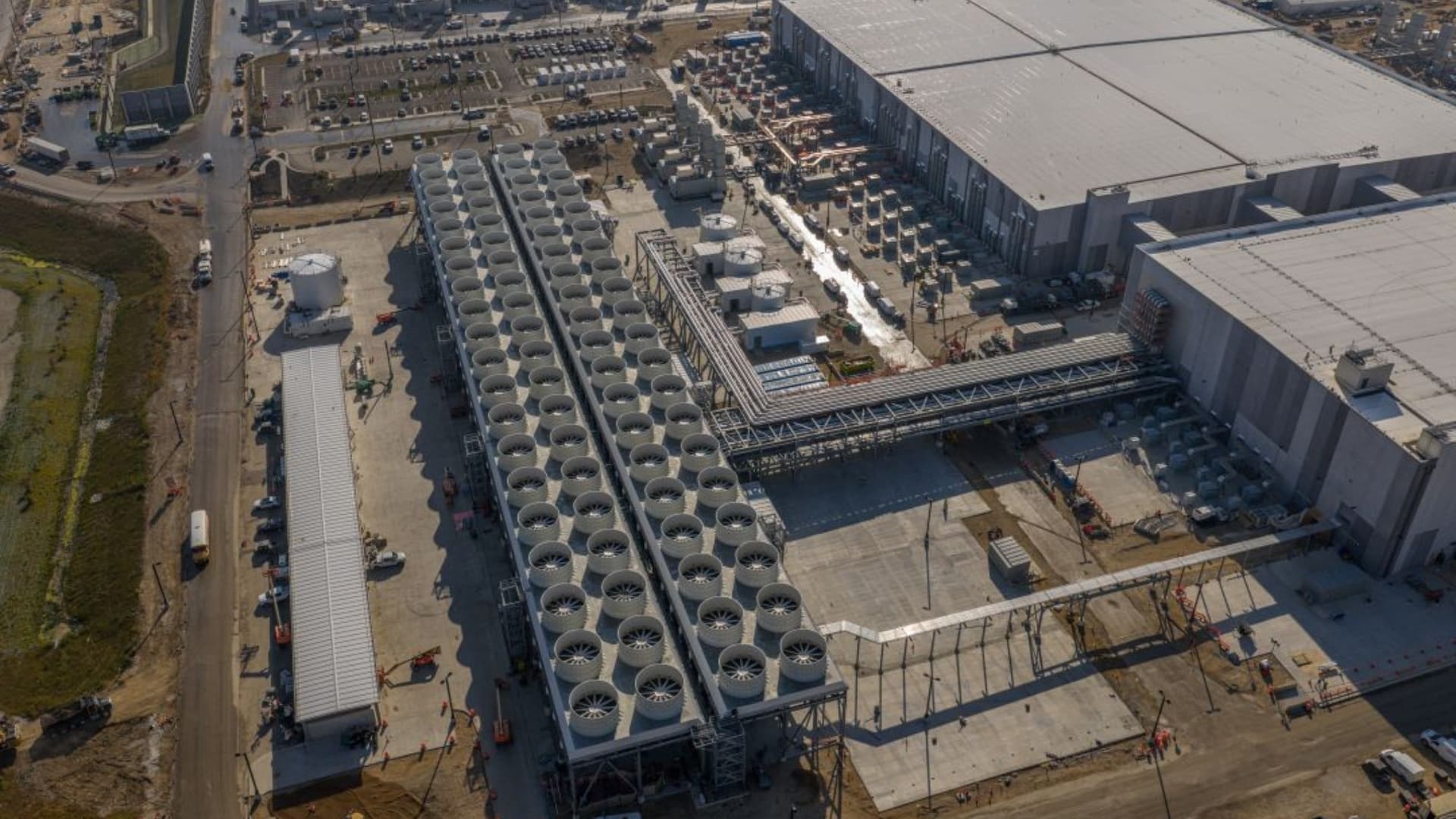
Here's the uncomfortable truth for data center operators: GPUs and CPUs often sit partially idle because there isn't enough DRAM to feed them. As AI models balloon in size, memory capacity has become the chokepoint. You can add more accelerators, but if your memory pool can't hold the model or the working dataset, you're leaving silicon underutilized.
DRAM is fast but expensive. NAND flash costs roughly 50 times less per gigabyte. The problem is latency. Flash is orders of magnitude slower than DRAM, so simply swapping data to an SSD the old-fashioned way tanks performance. MEXT's approach tries to eliminate that penalty through prediction.
How MEXT's Predictive Memory Engine works
MEXT's system continuously monitors memory access patterns. Its AI models learn which data blocks are "cold" (infrequently accessed) and which are "hot" (needed imminently). Cold data gets pushed to flash. Hot data gets pulled back into DRAM before the application asks for it. The swap happens transparently, meaning applications see one large memory pool and never know they're hitting flash.
The critical piece is the prediction. If the engine guesses wrong, you get latency spikes when an application requests data still sitting on flash. Get it right, and you effectively multiply your usable memory capacity without paying DRAM prices.
The numbers AMD is betting on
AMD claims MEXT's technology could cut infrastructure operating costs by up to 50% and increase effective memory capacity by 4x on existing systems. Those are aggressive numbers. Whether they hold up depends entirely on workload characteristics. AI inference with predictable access patterns? Probably a good fit. Erratic, random-access workloads? Harder to predict, and prediction failures mean latency hits.
The technology also complements memory compression. Combine tiering with compression and you can stretch effective capacity even further. For cloud providers and enterprises running large-scale AI deployments, the cost savings could be substantial.
Where this fits in AMD's data center strategy
AMD already sells EPYC processors, Instinct accelerators, and networking gear for data centers. Adding memory tiering software extends its value proposition from silicon to system-level optimization. It's a play to capture more of the total cost of ownership conversation with hyperscalers and enterprise buyers.
The acquisition also brings talent. MEXT's team has deep expertise in memory architectures, infrastructure software, and large-scale computing. AMD gets intellectual property and the people who built it.
Community skepticism and technical concerns
Online discussion on r/hardware and Hacker News has been cautiously optimistic but not uncritical. The main concern: latency penalties when the prediction engine misses. Some users noted parallels to Intel's discontinued Optane memory, which tried to bridge the DRAM-storage gap with a different approach. Optane had performance advantages but struggled commercially. Others questioned how MEXT will integrate with AMD's ROCm software stack compared to NVIDIA's more mature memory management tooling.
There's also the question of wear. NAND flash has limited write endurance. If the tiering system shuffles data aggressively, you could burn through SSD lifespans faster than expected. The long-term total cost of ownership calculation depends on how efficiently the engine manages write amplification.
What happens next
AMD plans to incorporate MEXT into its data center product portfolio, though the company hasn't announced specific products or timelines. Expect integration with EPYC platforms first, then potentially expansion to Instinct accelerator systems where memory constraints are most acute.
For data center operators, the real test will be production deployments. Lab benchmarks showing 50% cost reductions mean little if the prediction engine misfires under real-world load patterns. AMD will need to prove this works at scale before hyperscalers and enterprises commit.
Logicity's Take
This acquisition signals AMD recognizes that winning in AI infrastructure isn't just about faster chips. It's about system-level efficiency. Memory tiering is unsexy plumbing, but it directly attacks the economics that make large AI deployments prohibitively expensive. If MEXT's prediction engine works as advertised, AMD gains a differentiation angle NVIDIA doesn't currently offer. The risk is execution: memory tiering has been promised before and disappointed. AMD bought the technology and the team. Now it has to ship.
Frequently Asked Questions
What is MEXT's memory tiering technology?
MEXT developed an AI-based system that automatically moves infrequently accessed data from expensive DRAM to cheaper NAND flash storage, then predicts when that data will be needed and moves it back before applications request it. This lets applications treat the combined DRAM and flash as a single large memory pool.
How much could MEXT's technology reduce data center costs?
AMD claims the technology could reduce infrastructure operating costs by up to 50% and increase effective memory capacity by 4x on existing systems. Actual savings depend on workload characteristics and how well the prediction engine performs.
Will MEXT work with existing AMD processors?
AMD plans to integrate MEXT into its data center portfolio, which includes EPYC processors and Instinct accelerators. The company hasn't announced specific compatibility details or release timelines.
How does MEXT compare to Intel Optane?
Both technologies address the gap between DRAM and storage, but differently. Optane used a distinct memory technology with faster access times than NAND. MEXT uses standard NAND flash combined with AI prediction to hide latency. Optane was discontinued; MEXT takes a software-centric approach with commodity flash.
What are the risks of using flash as DRAM?
The main risks are latency spikes when the prediction engine fails to pre-fetch needed data, and increased SSD wear from frequent data movement. The technology works best for workloads with predictable memory access patterns.
Another look at how major tech companies are building AI infrastructure for specialized workloads
Need Help Implementing This?
Logicity can help your team evaluate memory optimization strategies for AI infrastructure. Contact us for consulting on data center efficiency, hardware selection, and workload optimization.
Source: Latest from Tom's Hardware
Manaal Khan
Tech & Innovation Writer
Produced with AI assistance and reviewed by the Logicity editorial team. Learn more in our Editorial Policy.