Key Takeaways
- Alibaba released its first suite of AI models designed specifically for robotic hardware, not text-based chatbots
- The Qwen Robot Suite supports 20+ different robot hardware embodiments through a unified interface
- China's tech giants are pivoting toward 'agentic AI' that can execute complex physical tasks in manufacturing and logistics
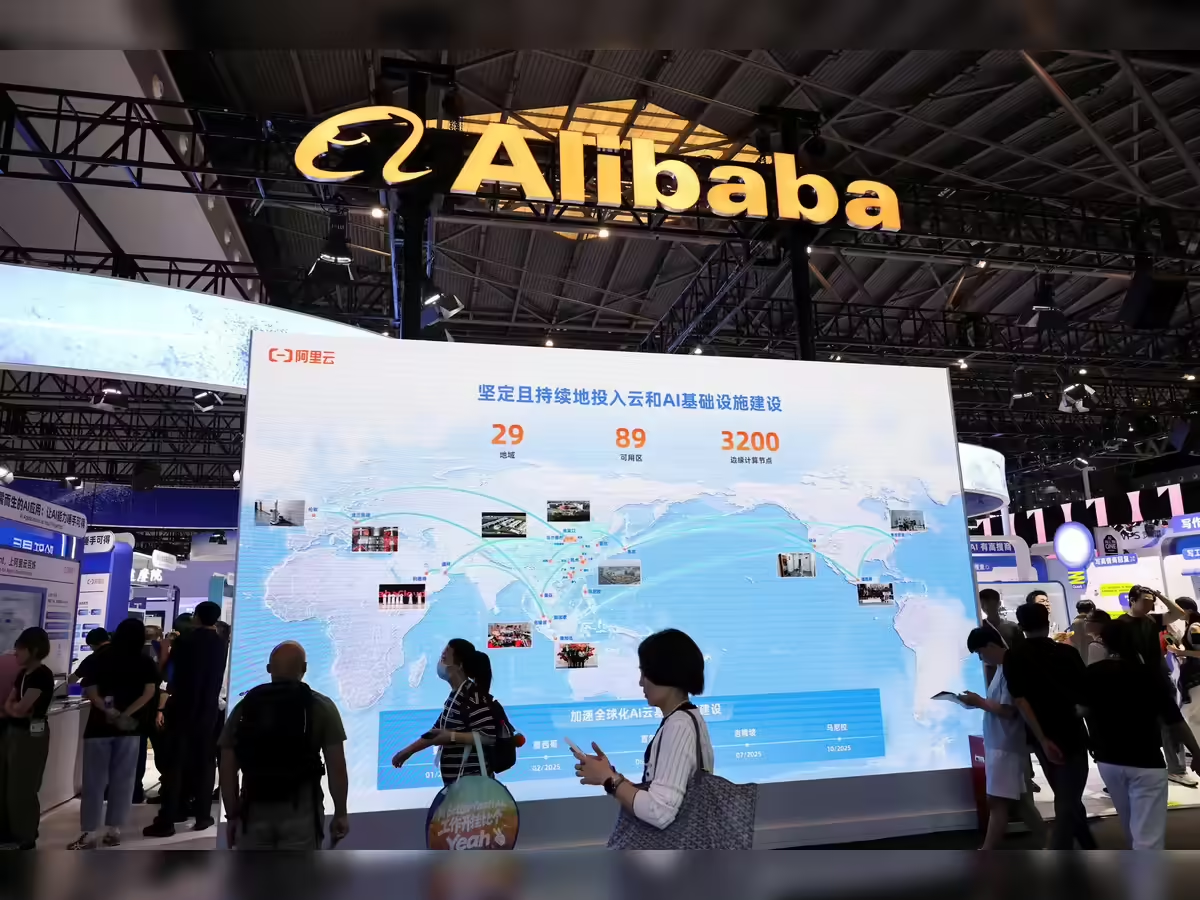
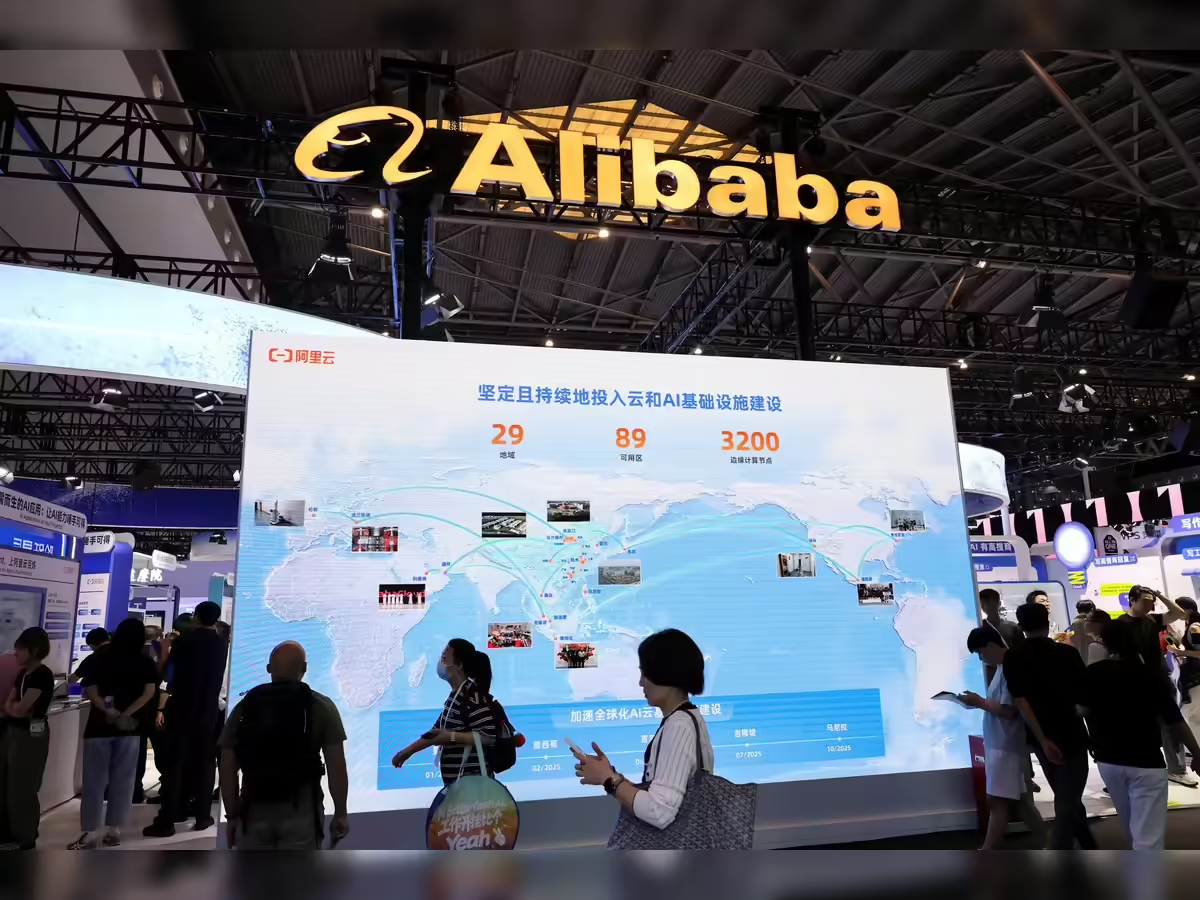
Alibaba on Tuesday released its first AI models designed specifically for robots, marking the Chinese tech giant's formal entry into embodied AI. The move reflects a broader industry shift: China's largest tech companies are moving past chatbots toward agents that can manipulate physical objects, perceive their environment, and execute multi-step tasks without constant human oversight.
The release positions Alibaba alongside Tencent, Baidu, and a growing roster of Chinese startups racing to embed AI directly into industrial hardware. The logic is straightforward: chatbots generate engagement, but robots that assemble products, sort packages, or manage warehouse operations generate revenue at scale.
What did Alibaba actually release?
Alibaba's Tongyi Lab unveiled the Qwen Robot Suite, a collection of AI models built to run on physical robotic hardware. The suite includes Qwen-RobotManip, which handles precision manipulation tasks like assembly and sorting. According to internal benchmarks, Qwen-RobotManip achieved a 45% success rate on the RoboChallenge generalist track for complex manipulation.
That number might sound modest, but the generalist track tests robots on tasks they weren't specifically trained for. A model that succeeds nearly half the time on novel manipulation challenges is genuinely useful in controlled industrial settings where operators can monitor and intervene.
The unified interface is perhaps the most interesting technical detail. Alibaba claims the models work across more than 20 different robot hardware configurations. This matters because robotic AI has historically required extensive retraining for each new physical platform. A model that generalizes across arm configurations, grippers, and sensor layouts dramatically reduces deployment time and cost.
Why China's tech giants are pivoting to physical AI
The chatbot wars have a ceiling. Once you've built a capable text model, differentiation becomes difficult. Users struggle to distinguish between ChatGPT, Claude, Qwen, and Baidu's Ernie in everyday tasks. The competition compresses margins and turns AI into a commodity.
Physical automation is different. A robot that can reliably pick irregular objects from a bin, assemble components with sub-millimeter precision, or navigate a cluttered warehouse floor solves problems that human labor currently handles. The value capture is direct: replace or augment expensive human workers in manufacturing, logistics, and assembly.
China has specific incentives to accelerate this transition. Its manufacturing base is enormous, its labor costs are rising, and its population is aging. The government has explicitly prioritized robotics and AI in industrial policy. Companies that can deploy capable robotic AI at scale will capture a significant share of what Beijing considers a strategically critical market.
How does this compare to Western competitors?
Tesla's Optimus humanoid robot and Boston Dynamics' Atlas represent the high-profile American competition. Both have demonstrated impressive physical capabilities in controlled demos. But they remain far from commercial deployment at scale.
Alibaba's approach differs. Rather than building custom humanoid hardware, the Qwen suite targets existing industrial robots. The strategy bets that software, not hardware, is the bottleneck. If you can make a standard robotic arm significantly smarter through better AI, you don't need to wait for humanoid robotics to mature.
Developer communities on HackerNews and r/MachineLearning have noted that Alibaba's open-weights strategy gives researchers access to fine-tune the models for specific applications. Some expressed skepticism about real-world performance in cluttered environments compared to proprietary systems, but the accessibility angle has generated genuine interest from industrial automation researchers.
What are the practical limitations?
The 45% success rate on generalist tasks highlights the gap between demos and deployment. Industrial operations require reliability above 99% for critical tasks. Robots that fail half the time on novel challenges need significant human oversight, which limits the cost savings.
Alibaba claims Qwen3.7-Max can sustain autonomous execution for 35 hours without performance degradation in internal tests. That's impressive for continuous operation, but internal benchmarks rarely survive contact with factory floors. Dust, vibration, temperature variation, and unexpected obstacles all stress AI systems in ways that lab conditions don't.
The fundamental shift claim is accurate, even if the current capabilities remain limited. Vision-language models that can understand both what they see and what they're instructed to do enable robots that can follow natural language commands in physical space. That's genuinely new territory for industrial automation.
What comes next?
Alibaba will likely deploy these models first in its own logistics network. The company operates massive fulfillment centers that handle millions of packages daily. That's a controlled environment with standardized objects and predictable workflows, ideal for validating robotic AI before selling it to external customers.
The competitive pressure from Tencent, Baidu, and Chinese robotics startups like Unitree will accelerate iteration. Unlike the chatbot market, where user preferences are subjective, robotic AI success is measurable. Either the arm picks the object or it doesn't. That clarity will push rapid improvement cycles.
The US-China AI competition extends to export controls that affect companies like Alibaba
Frequently Asked Questions
What is the Alibaba Qwen Robot Suite?
It's Alibaba's first collection of AI models designed specifically for robotic hardware, including models for manipulation, perception, and autonomous task execution across 20+ different robot configurations.
How does Alibaba's robot AI compare to Tesla Optimus?
Alibaba focuses on software for existing industrial robots rather than building custom humanoid hardware like Tesla's Optimus. The strategy prioritizes faster deployment on standard robotic arms.
Can developers access Alibaba's robot AI models?
Yes, Alibaba is releasing the Qwen suite with open weights, allowing researchers and developers to fine-tune the models for specific industrial applications.
What is the success rate of Alibaba's robot manipulation AI?
Alibaba reports a 45% success rate on the RoboChallenge generalist track, which tests robots on novel manipulation tasks they weren't specifically trained to perform.
Logicity's Take
Alibaba's bet on industrial robotics over chatbots reflects a pragmatic read of where AI value will accumulate. Consumer chatbots face commoditization and thin margins. Robotic AI that demonstrably reduces manufacturing costs commands premium pricing and sticky enterprise contracts. The open-weights approach is strategically smart: it builds developer ecosystem support while Alibaba captures the integration revenue from companies deploying these models on real hardware.
Need Help Implementing This?
If you're evaluating robotic AI for manufacturing or logistics automation, Logicity can help you assess vendor options and deployment strategies. Contact our team for independent analysis of the rapidly evolving industrial AI landscape.
Source: Tech-Economic Times / ET
Huma Shazia
Senior AI & Tech Writer
Produced with AI assistance and reviewed by the Logicity editorial team. Learn more in our Editorial Policy.




