Key Takeaways
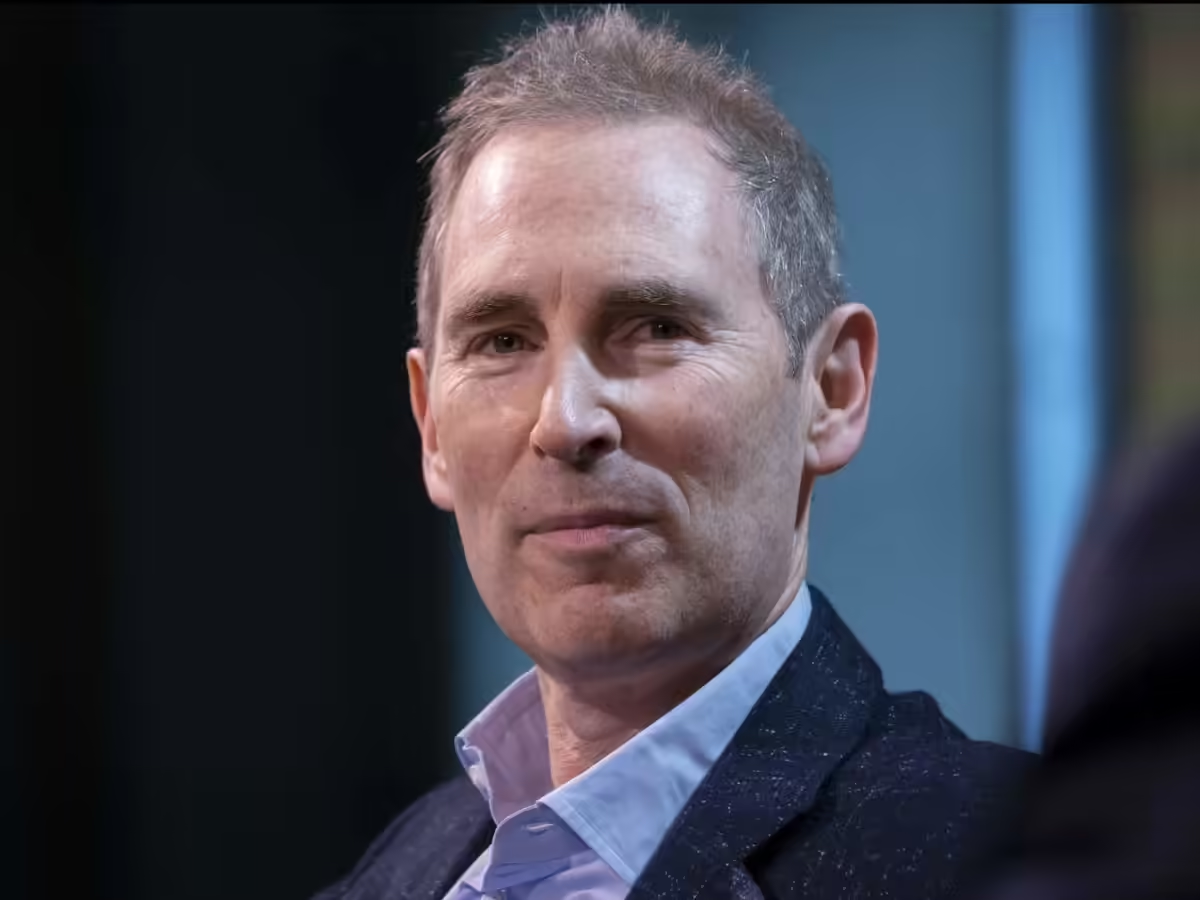
- Amazon CEO Andy Jassy confirmed the company is actively evaluating acquisition targets in India, including quick commerce players
- Amazon announced an additional $13 billion investment in India by 2030, bringing total planned outlay to $48 billion
- The company plans to open 20+ fulfillment centers and 100+ last-mile delivery stations this year
Amazon is open to acquiring Indian companies, including quick commerce startups, CEO Andy Jassy said during his India visit this week. The statement signals a potential inorganic push into a market where Amazon has struggled to keep pace with 10-minute delivery players like Zepto, Blinkit, and Swiggy Instamart.
Asked whether Amazon would consider buying quick commerce companies or investing in Indian AI startups like Sarvam AI and Emergent Labs, Jassy told the Economic Times the company evaluates targets based on three criteria: technology, customer experience, and talent.
“We like other companies, we're looking at companies we think have tech and customer experiences and talent that would be great for our customers, great in combination with our company.”
— Andy Jassy, CEO, Amazon
Jassy added that Amazon has previously acquired companies that "made an impact in our business in India" and would "continue to look at that actively." He did not name specific targets or sectors beyond confirming interest in quick commerce.
What did Jassy announce for Amazon India?
The CEO met Prime Minister Narendra Modi on Thursday and announced an additional $13 billion investment in India by 2030. This raises Amazon's planned India outlay to $48 billion, up from $35 billion announced earlier. The money will fund AI and cloud infrastructure expansion.
On the ground, Amazon is accelerating its logistics buildout. The company plans to open more than 20 fulfillment centers and over 100 last-mile delivery stations this year. Jassy visited an Amazon Now microfulfillment center in Mumbai during his trip, a facility type designed for faster deliveries.
Will Amazon invest in Indian AI startups?
Jassy stopped short of confirming direct investments in Indian AI companies, despite being asked specifically about sovereign AI players. Instead, he pointed to Amazon's existing government collaboration.
“We work closely with the government on their AI capabilities. We have 8,500 GPUs we launched for startups in conjunction with the government here. We've trained 10 million people on cloud and AI.”
— Andy Jassy, CEO, Amazon
The non-answer is notable. India has been pushing for "sovereign AI" development, encouraging global tech firms to back homegrown AI companies rather than simply selling cloud services. Amazon's response suggests it prefers infrastructure partnerships over equity stakes in Indian AI startups, at least for now.
Why quick commerce matters for Amazon India
Amazon's interest in quick commerce acquisitions reflects a strategic gap. While the company dominates traditional e-commerce alongside Flipkart, it arrived late to the 10-minute delivery race. Zepto, Blinkit, and Swiggy Instamart have captured urban grocery and essentials spending that once flowed through Amazon's platform.
Building quick commerce organically is expensive and slow. Dark stores, hyperlocal logistics, and the operational intensity of sub-hour delivery require a different playbook than Amazon's warehouse model. Acquiring an existing player would give Amazon instant infrastructure, customer habits, and operational knowhow.
The complication: India's quick commerce leaders are well-funded and growing. Zepto raised $1 billion in 2024. Blinkit is backed by Zomato's public market resources. Swiggy Instamart has similar backing. Any acquisition would require significant capital and potentially regulatory scrutiny.
What Amazon has acquired in India before
Jassy referenced past acquisitions that "made an impact" without naming them. Amazon's notable Indian deals include the 2016 purchase of Emvantage Payments (UPI technology) and stakes in companies like More Supermarkets through its investment vehicle. The company also tried to acquire Future Group's retail assets before that deal collapsed in a legal battle with Reliance.
The Future Group episode showed Amazon's appetite for retail acquisitions in India and the regulatory and competitive obstacles it can face. Any quick commerce deal would likely draw similar attention.
Logicity's Take
Jassy's openness to acquisitions is less surprising than his timing. Amazon rarely telegraphs M&A interest this directly. The public statement could be positioning: signaling to founders that Amazon is a buyer, or to competitors that it won't cede quick commerce without a fight. The $48 billion commitment gives Amazon negotiating leverage. It can credibly threaten to build rather than buy. Watch which quick commerce players suddenly become more open to strategic discussions.
Frequently Asked Questions
Which quick commerce companies could Amazon acquire in India?
Amazon did not name specific targets. India's major quick commerce players include Zepto (independently valued at over $5 billion), Blinkit (owned by Zomato), and Swiggy Instamart (part of Swiggy). Smaller regional players could also be targets.
How much is Amazon investing in India by 2030?
Amazon's total planned investment in India is now $48 billion by 2030, following the additional $13 billion commitment announced during Jassy's visit. The funds will primarily go toward AI and cloud infrastructure.
Is Amazon investing in Indian AI startups?
Andy Jassy did not confirm direct investments in Indian AI startups. He highlighted Amazon's infrastructure collaboration with the Indian government, including 8,500 GPUs for startups and training 10 million people on cloud and AI skills.
Why is Amazon interested in quick commerce in India?
Quick commerce has captured urban grocery and essentials spending with 10-minute delivery promises. Amazon arrived late to this segment and may view acquisitions as faster than building dark store networks and hyperlocal logistics from scratch.
Another major tech investment story with AI implications
Need Help Implementing This?
If you're building in e-commerce, quick commerce, or AI infrastructure and want to understand how strategic investments from global players could affect your roadmap, reach out to the Logicity team for analysis and advisory.
Source: Tech-Economic Times / ET
Huma Shazia
Senior AI & Tech Writer
Produced with AI assistance and reviewed by the Logicity editorial team. Learn more in our Editorial Policy.




