Key Takeaways
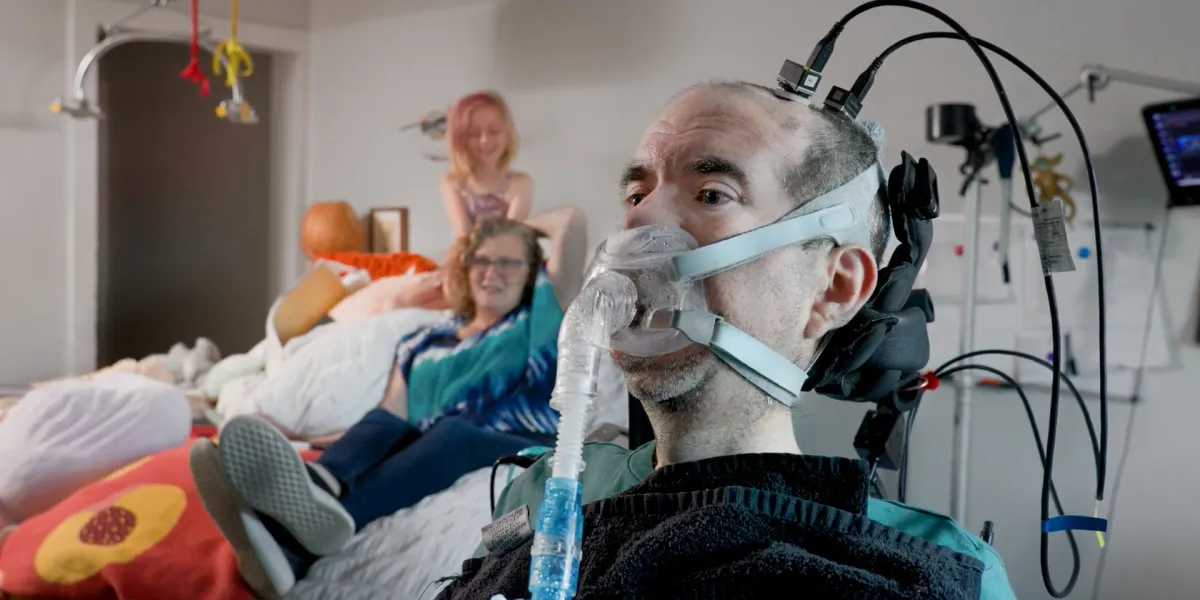
- Casey Harrell has logged over 3,800 hours of independent BCI use at home without researchers present
- The system now achieves 99% accuracy with a 125,000-word vocabulary
- Harrell uses the device to work, send emails, and communicate with his family using a synthetic version of his pre-ALS voice
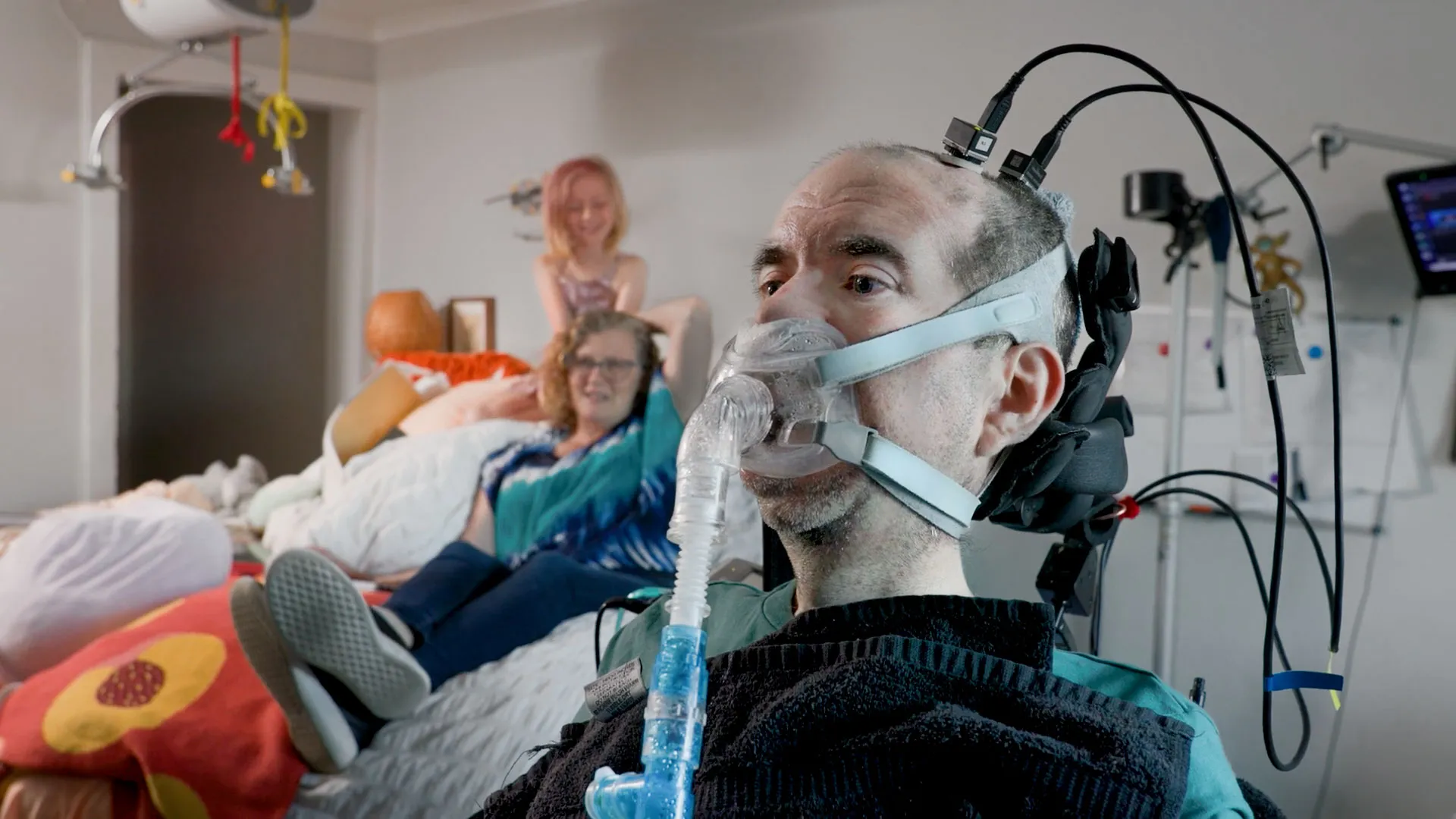
Casey Harrell, a 48-year-old environmental activist with ALS, has become the first person to use a speech brain-computer interface as a daily tool rather than a lab experiment. Since surgeons implanted 256 electrodes in his brain in July 2023, Harrell has logged more than 3,800 hours of independent use at home. He now works, emails, browses the web, and talks to his young daughter through the device.
The UC Davis research team behind the implant published their findings today in Nature Medicine. Their data shows the system has maintained 99% accuracy over nearly three years, defying early concerns that scar tissue might degrade electrode performance. "He's the first power user of a speech BCI," says Sergey Stavisky, a neuroengineer on the team.
How the brain-computer interface decodes speech
The system works by reading activity from Harrell's speech motor cortex, the brain region that controls the muscle movements we use to speak. Four arrays of 64 electrodes each sit embedded in his precentral gyrus. These connect to two "pedestal" docking points on the exterior of his skull, which a caregiver plugs into a computer each morning.
American English uses 39 phonemes. The team's algorithm maps Harrell's neural patterns to each phoneme, then assembles phonemes into words. "We first go from brain data to phonemes, and then from phonemes to words," explains Nicholas Card, a neuroengineer at UC Davis. On the first day of testing in August 2023, Harrell achieved 99.6% accuracy with a 50-word vocabulary. That vocabulary now spans 125,000 words.
What changed to make independent use possible?
In 2023, researchers had to visit Harrell's home each time he wanted to use the device. They would physically connect him, run calibration, and disconnect him at the end of each session. That model couldn't scale to daily life.
The team automated much of the startup process. Today, Harrell's care partner handles the physical connection. "He'll wake up, get plugged in, and just get going," says Stavisky. Harrell now uses the BCI for up to 12 hours a day without any researcher present.
This shift matters beyond convenience. "For these technologies to be relevant for patients, we really need to test them in settings in which they will eventually be used," says Mariska Vansteesel, a BCI researcher at Utrecht Medical Center who was not involved in the trial. Real-world data proves the device holds up outside controlled conditions.
Features Harrell requested himself
Living with the device revealed needs the lab hadn't anticipated. Harrell asked for a "privacy mode" that stops the system from decoding his brain activity and automatically deletes any decoded text. He also requested a profanity filter for conversations with his daughter.
The cursor control feature transformed his daily workflow. Harrell can now navigate his personal computer, send text messages and emails, and continue his work as an environmental advocate. The device outputs speech using a synthetic voice modeled on recordings of Harrell before ALS took his natural voice.
“Living with a disease like ALS, you are supposed to have diminished dreams. I do not.”
— Casey Harrell
Why the electrodes haven't degraded
Brain implants face a biological problem: the body treats electrodes as foreign objects. Scar tissue can form around them, blocking the electrical signals researchers need to capture. Many BCIs lose fidelity over months or years.
Harrell's implant has now operated for nearly three years with stable performance. The Nature Medicine paper reports consistent signal quality across the 22.6-month study period. Researchers don't fully understand why some implants resist scarring better than others, but Harrell's case demonstrates long-term viability is possible.
What this means for commercial BCI development
Companies like Neuralink and Synchron are racing to bring BCIs to market. Harrell's case provides the longest real-world dataset for a speech BCI used independently. The 3,800 hours of home use dwarf previous studies that measured performance in controlled lab sessions lasting hours or days.
The privacy mode feature addresses a concern that has dogged the industry: if a device can read your brain, who controls that data? Harrell's ability to pause decoding and delete outputs offers one model for consent in neural interfaces. Online communities discussing the trial on Reddit and HackerNews have highlighted this feature as a necessary baseline for ethical BCI deployment.
Logicity's Take
The real breakthrough here isn't the implant. It's the shift from "patient in a study" to "person using a tool." Harrell's 3,800 hours prove a speech BCI can survive the messiness of daily life. For the industry, the next question is cost. This system required a five-hour surgery, 256 electrodes, and years of a research team's attention. Scaling that to the roughly 30,000 people diagnosed with ALS each year will require radically simpler hardware and software. The science works. The economics don't, yet.
Frequently Asked Questions
How accurate is Casey Harrell's brain-computer interface?
The system achieves 99% accuracy with a vocabulary of 125,000 words. On the first day of testing in 2023, it reached 99.6% accuracy with a smaller 50-word vocabulary.
How long has Harrell used the BCI independently?
Harrell has logged over 3,800 hours of independent home use over nearly three years, without researchers present during sessions.
Can Harrell control what the BCI decodes from his brain?
Yes. The team added a 'privacy mode' at Harrell's request. When active, the system stops decoding brain activity and deletes any decoded text automatically.
Does scar tissue affect the implant's performance over time?
In Harrell's case, signal quality has remained stable for nearly three years. While scar tissue is a known risk for brain implants, his electrodes have not shown degradation.
What tasks can Harrell perform with the BCI?
Beyond speaking, Harrell uses cursor control to send emails, browse the web, and continue his work as an environmental activist. He also uses a profanity filter when talking to his daughter.
Need Help Implementing This?
Logicity tracks developments in neural interfaces, assistive technology, and AI-driven healthcare. Subscribe to our newsletter for weekly updates on the technologies reshaping accessibility and human-computer interaction.
Source: MIT Technology Review
Manaal Khan
Tech & Innovation Writer
Produced with AI assistance and reviewed by the Logicity editorial team. Learn more in our Editorial Policy.